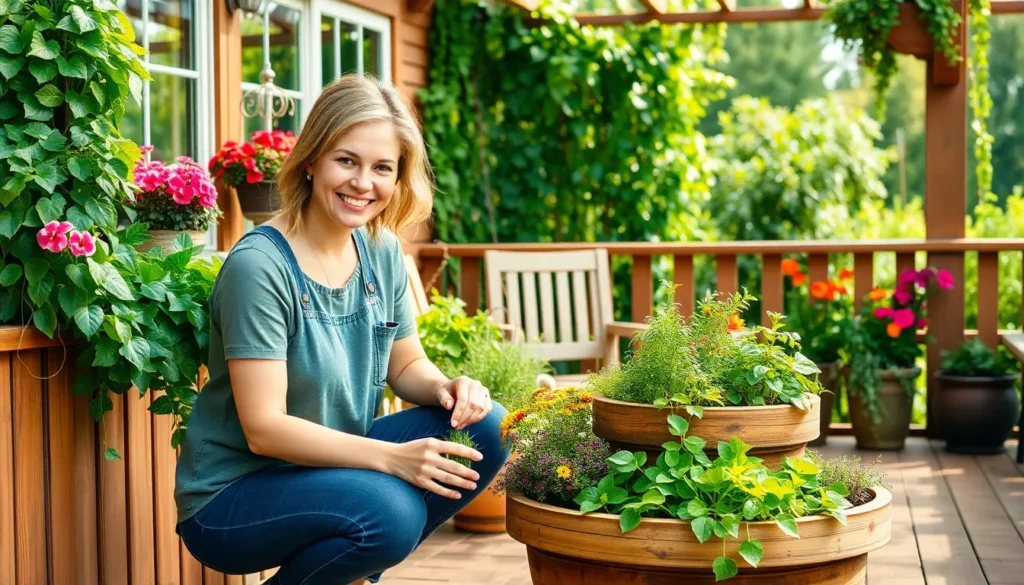
We’ve all dreamed of transforming our ordinary deck into a vibrant garden oasis that becomes the envy of the neighborhood. Whether you’re working with a sprawling outdoor space or a cozy apartment balcony, deck gardening offers endless possibilities to create your personal green sanctuary.
The beauty of deck gardens lies in their versatility and accessibility. We can grow everything from aromatic herbs and colorful flowers to fresh vegetables and cascading vines, all while maximizing limited space through clever design and strategic plant placement.
What makes deck gardening even more appealing is how it instantly elevates your outdoor living experience. We’re not just talking about pretty plants here – we’re discussing a complete lifestyle upgrade that brings nature to your doorstep, reduces stress, and creates an inviting space for entertaining guests or enjoying quiet morning coffee moments.
Vertical Garden Walls for Maximum Space Utilization
Deck garden spaces benefit tremendously from vertical growing answers that transform walls into productive growing areas. We can maximize our growing potential by utilizing vertical surfaces that would otherwise remain unused.
Living Wall Planters and Trellises
Modular living wall systems create stunning displays while maximizing plant capacity on deck walls. We recommend pocket planters made from felt or fabric that hold multiple plants in compact vertical arrangements. These systems typically accommodate 12-20 plants per square meter depending on plant size and spacing requirements.
Wooden trellis structures provide excellent support for climbing vegetables like beans, peas, and cucumbers. Cedar and redwood trellises resist weather damage naturally while offering attractive frameworks for our deck gardens. Standard trellis panels measure 6 feet by 2 feet and support up to 30 pounds of plant weight when properly anchored.
Metal grid systems offer durability and clean aesthetics for modern deck designs. Galvanized steel grids withstand harsh weather conditions and support heavier plants like tomatoes and squash. We can attach individual planters at various heights to create customized growing arrangements.
Hanging Pocket Gardens
Fabric pocket planters maximize growing space by utilizing vertical hanging areas around deck perimeters. These multi pocket systems typically feature 6-12 individual growing compartments per unit and work exceptionally well for herbs, strawberries, and small flowering plants.
Recycled plastic bottle gardens provide cost effective vertical growing answers using materials we already have available. We can create hanging systems using 2 liter bottles with drainage holes, supporting approximately 8-10 bottles per hanging strand. This method works particularly well for lettuce, spinach, and other leafy greens.
Tiered hanging baskets create cascading garden displays that draw the eye upward while conserving deck floor space. Three tier systems typically span 4-5 feet in vertical height and accommodate plants with different water and light requirements at various levels.
Climbing Plant Support Systems
Wire mesh panels create excellent climbing surfaces for vigorous plants like morning glories, pole beans, and flowering vines. We install these panels against deck railings or walls using brackets that maintain 2-3 inches of clearance for air circulation.
String and stake systems offer flexible support for lightweight climbing plants while remaining nearly invisible once vegetation fills in. Vertical strings spaced 6 inches apart provide adequate support for most climbing varieties and allow easy harvest access.
Bamboo teepee structures add visual interest while supporting multiple climbing plants in compact footprints. These triangular supports typically measure 6-8 feet tall and accommodate 3-4 climbing plants per structure. We position teepees in large containers or directly in raised bed sections of our deck gardens.
Container Garden Arrangements for Every Deck Size

Container gardens offer endless possibilities for creating stunning deck displays that work with any space constraint. We’ll explore three versatile approaches that maximize your deck’s potential while delivering impressive visual impact.
Large Planter Combinations
Large planters create bold focal points that transform spacious decks into garden showcases. We recommend oversized containers that accommodate perennial flowers, annual blooms, ornamental grasses, and even small shrubs or trees for year-round interest. Mixing various heights and colors within these substantial planters produces lush environments that serve as natural conversation starters.
Combining different plant types in large containers allows for ever-changing seasonal displays. Tall ornamental grasses provide structure while colorful annuals add seasonal flair. Small trees offer permanent framework while perennials ensure consistent blooms throughout growing seasons. This layered approach creates depth and visual complexity that makes deck spaces feel like established garden rooms.
Coordinating planter colors with your deck materials enhances the overall aesthetic appeal. Natural tone containers blend seamlessly with wood decking while adding decorative elements like pebbles or ground cover provides additional texture. These finishing touches elevate simple container arrangements into sophisticated garden displays.
Multi-Level Container Displays
Vertical arrangements maximize limited square footage by utilizing hanging planters, tiered stands, and stacked pots for comprehensive coverage. Trailing vines, petunias, ferns, and ivy thrive in hanging baskets positioned at various heights. This approach creates visual layers that make small decks appear larger and more established.
Tiered planting systems accommodate different plant types while maintaining organization and accessibility. Succulents flourish in upper tiers where drainage is optimal while herbs occupy middle levels for easy harvesting. Lower tiers support larger plants that require more soil volume. This systematic arrangement ensures each plant receives appropriate growing conditions.
Strategic plant placement in multi-level displays creates cascading effects that soften deck edges. Hanging baskets positioned at varying heights establish rhythm while tiered stands provide stable platforms for different sized containers. This organized approach simplifies maintenance while maximizing visual impact in confined spaces.
Rolling Garden Carts
Mobile container systems provide flexibility for optimizing sunlight exposure and changing deck layouts as needed. Rolling carts accommodate various pot sizes while enabling easy repositioning throughout seasons. We find this particularly valuable for small or multifunctional deck spaces where adaptability is essential.
Weather protection becomes effortless with wheeled garden systems that roll into covered areas during storms. This mobility extends growing seasons while protecting delicate plants from harsh conditions. Lightweight decorative carts or repurposed furniture with casters offer practical answers for ever-changing garden management.
Maintenance accessibility improves significantly when containers can be moved for watering, pruning, or seasonal care. Rolling systems allow us to bring plants closer for detailed work while ensuring optimal growing positions during normal operation. This combination of convenience and functionality makes rolling gardens ideal for busy gardeners who want maximum flexibility.
Herb Garden Setups for Culinary Enthusiasts

Fresh herbs at your fingertips transform everyday cooking into culinary artistry. These specialized deck garden arrangements bring the convenience of homegrown flavors directly to your outdoor kitchen space.
Kitchen Herb Spiral Gardens
Spiral herb gardens maximize growing space while creating stunning visual centerpieces for our deck areas. These innovative designs use a curved, ascending pattern that allows us to plant different herbs at various elevations and microclimates. We can position sun-loving herbs like rosemary and thyme at the top while placing moisture-loving basil and parsley in the lower sections.
Construction involves creating a raised spiral bed using stones, bricks, or recycled materials. The design naturally provides excellent drainage at higher levels and retains more moisture in lower areas. We’ll find that this setup makes harvesting incredibly convenient since all herbs remain easily accessible from multiple angles.
Plant selection becomes strategic with spiral gardens since we can accommodate 8-12 different herb varieties in a compact 4-foot diameter space. Mediterranean herbs thrive in the upper, drier sections while culinary staples like cilantro and chives flourish in the moister lower areas.
Hanging Herb Garden Systems
Hanging herb planters free up valuable deck floor space while keeping our favorite cooking herbs within arm’s reach. These systems work particularly well for decks with limited square footage since they use vertical growing space. We can easily rearrange individual hanging baskets to optimize sun exposure throughout the growing season.
Installation requires sturdy overhead support from pergolas, awnings, or dedicated hanging hardware rated for plant weight. Each basket typically holds 2-3 herb plants and should include drainage holes to prevent waterlogging. We’ll want to position heavier herbs like oregano and sage in lower tiers for stability.
Maintenance becomes simpler with hanging systems since we can rotate baskets for even growth and easy harvesting. Water collection trays prevent dripping onto deck surfaces while maintaining proper moisture levels. Popular herb combinations include basil with cherry tomatoes or mint with strawberry plants for companion growing benefits.
Compact Herb Planter Boxes
Self-contained herb planters offer the ultimate flexibility for deck gardening enthusiasts who want mobile growing answers. These small-scale containers typically measure 12-18 inches and can accommodate 3-4 herb plants while fitting perfectly on deck rails or side tables. We can move them throughout the day to follow optimal sunlight patterns.
Material choices include cedar wood, composite materials, or modern self-watering systems that reduce daily maintenance requirements. Built-in drainage systems prevent root rot while water reservoirs in advanced models provide consistent moisture for 3-5 days. These planters work exceptionally well for heat-sensitive herbs like lettuce and cilantro.
Arrangement strategies allow us to create themed herb collections such as Italian cooking herbs (basil, oregano, parsley) or tea garden mixes (mint, chamomile, lemon balm). We can stack multiple planter boxes on tiered stands to create vertical growing displays while maintaining easy access for daily harvesting and care.
Flower Garden Designs for Colorful Appeal
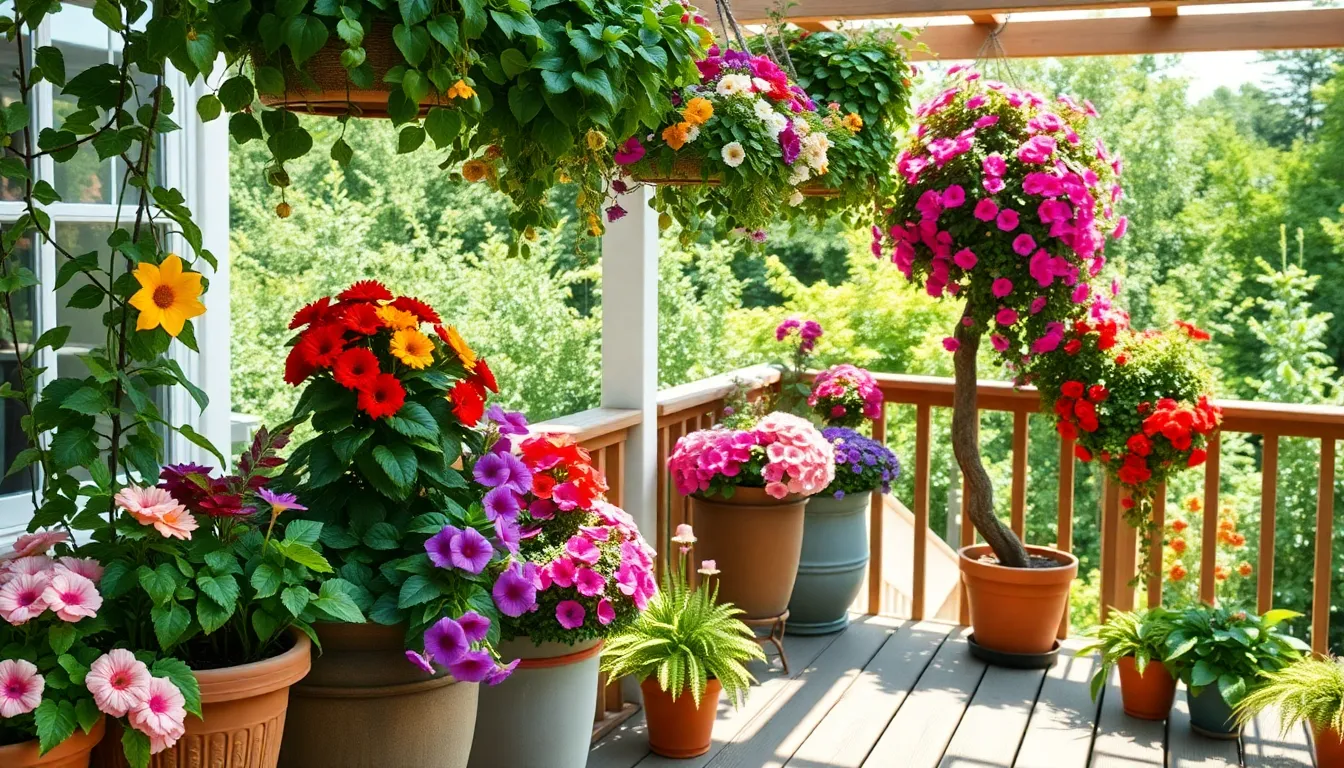
Creating stunning flower displays on your deck transforms ordinary outdoor spaces into vibrant garden showcases. We’ll explore strategic approaches that maximize color impact while ensuring continuous blooms throughout the growing season.
Seasonal Bloom Rotations
Timing your plantings creates a deck garden that delivers color from spring through fall. We recommend starting with tulips for early spring displays, followed by zinnias that thrive during summer heat, and finishing with asters that provide autumn appeal.
Layered planting techniques ensure seamless transitions between blooming periods. Place early flowering varieties like crocuses and daffodils in front containers, while positioning later bloomers such as chrysanthemums and ornamental kale in background planters.
Container swapping allows us to maintain peak visual appeal throughout each season. Replace spent spring bulbs with summer annuals like marigolds and petunias, then transition to fall favorites including pansies and ornamental cabbage as temperatures cool.
Pollinator-Friendly Flower Arrangements
Native plant selections attract beneficial pollinators while requiring minimal maintenance. We suggest incorporating coneflowers and black-eyed Susans, which provide essential nectar sources for local bee and butterfly populations.
Diverse flowering schedules support pollinators throughout their active seasons. Mix early bloomers like wild bergamot with mid-season favorites such as bee balm, then add late-flowering asters to extend the nectar availability into fall.
Clustered plantings create more effective pollinator magnets than scattered individual plants. Group three to five containers of the same flowering species together to form substantial color blocks that attract pollinators from greater distances.
Cascading Flower Displays
Hanging basket arrangements maximize vertical growing space while creating dramatic visual impact. Plants like ivy, ferns, and flowering vines work exceptionally well in suspended containers, allowing trailing growth to soften deck railings and corners.
Tiered planter systems add dimensional depth to flat deck surfaces. We use graduated container heights or specialized shelving units to stack plants vertically, creating layered displays that showcase different flower varieties at multiple eye levels.
Overflow planting techniques blur the boundaries between containers and create abundant displays. Allow trailing varieties like bacopa and lobelia to spill over planter edges, creating the impression of overflowing abundance that makes deck gardens appear more established and lush.
Vegetable Garden Solutions for Small Spaces
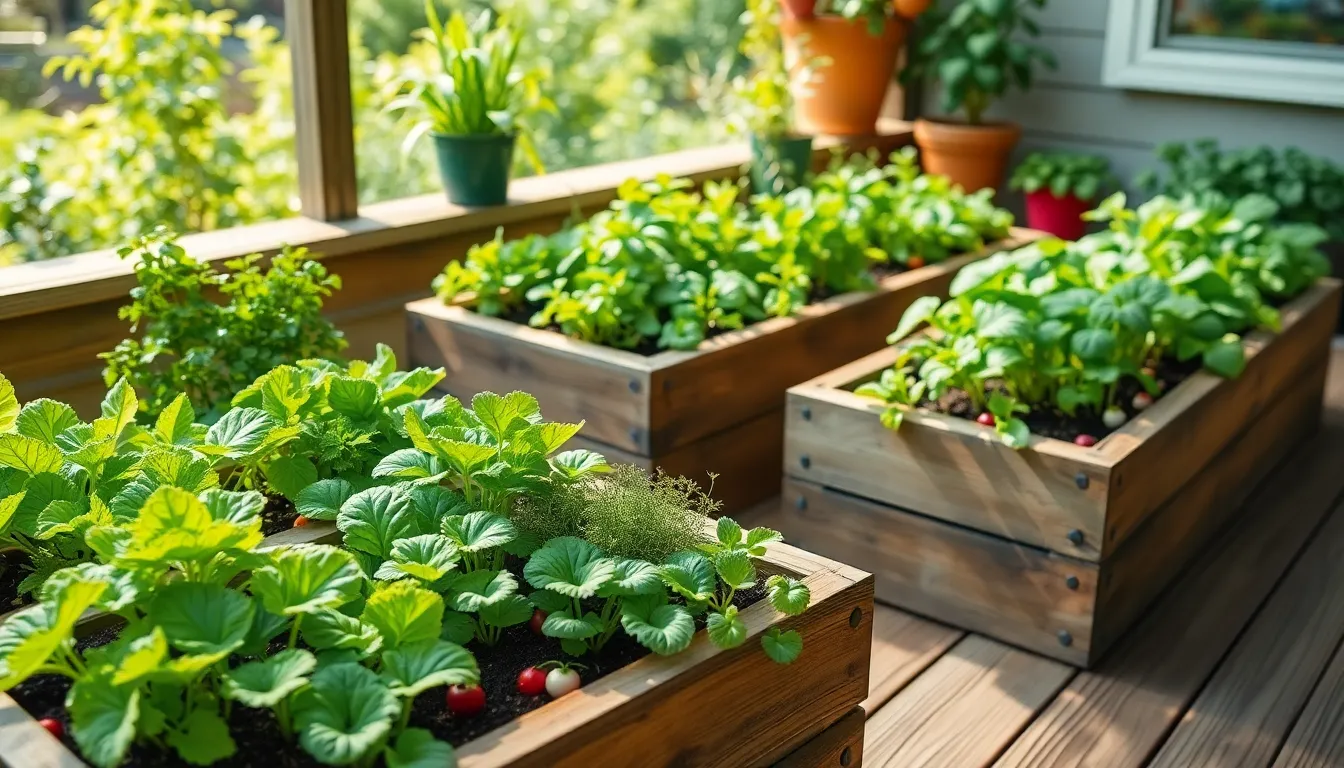
Growing vegetables on our deck doesn’t require a sprawling backyard when we carry out space-maximizing techniques. Container gardening and vertical answers allow us to cultivate fresh produce even in the smallest outdoor areas.
Raised Bed Garden Boxes
Building raised bed garden boxes transforms our deck into a productive vegetable haven with superior growing conditions. We can customize these boxes to fit our exact deck dimensions while improving drainage and soil quality compared to traditional ground planting.
Accessibility becomes a major advantage when we construct raised beds at comfortable heights for maintenance and harvesting. People with mobility issues find these elevated gardens reduce bending and strain during gardening activities. We recommend building boxes between 6-12 inches deep for most vegetables like lettuce, herbs, and radishes.
Materials for our raised bed construction include cedar, composite lumber, or galvanized steel for durability against weather elements. Corner brackets and screws create sturdy joints that withstand seasonal temperature changes and moisture exposure.
Square Foot Gardening Methods
Dividing our deck garden beds into 1’x1′ grid sections maximizes productivity through intensive planting strategies. Each square foot accommodates different vegetables based on their mature size requirements and growth patterns.
Grid-based planting systems allow us to grow 16 carrots, 9 beets, or 1 tomato plant per square foot depending on the crop variety. We can optimize space by following recommended plant spacing per square foot guidelines that prevent overcrowding while maximizing yields.
Crop rotation becomes simplified when we track what grows in each grid section throughout the growing season. Planning tools like garden journals or mobile apps help us document which vegetables thrive in exact deck locations with varying sunlight exposure.
Succession Planting Strategies
Staggered planting schedules ensure continuous harvests throughout the growing season by replacing mature crops with new seedlings. We plant fast-maturing varieties like lettuce and radishes every 2-3 weeks for steady fresh vegetable supplies.
Continuous harvest techniques involve removing outer leaves from plants like kale and Swiss chard while allowing inner growth to continue producing. This method extends the productive life of each plant and maximizes our limited deck garden space.
Timing becomes crucial when we coordinate harvesting mature vegetables with planting new seeds in the same containers. Spring lettuce harvests create space for summer tomatoes, while fall plantings of cool-season crops replace heat-sensitive summer varieties.
Succulent Garden Arrangements for Low Maintenance
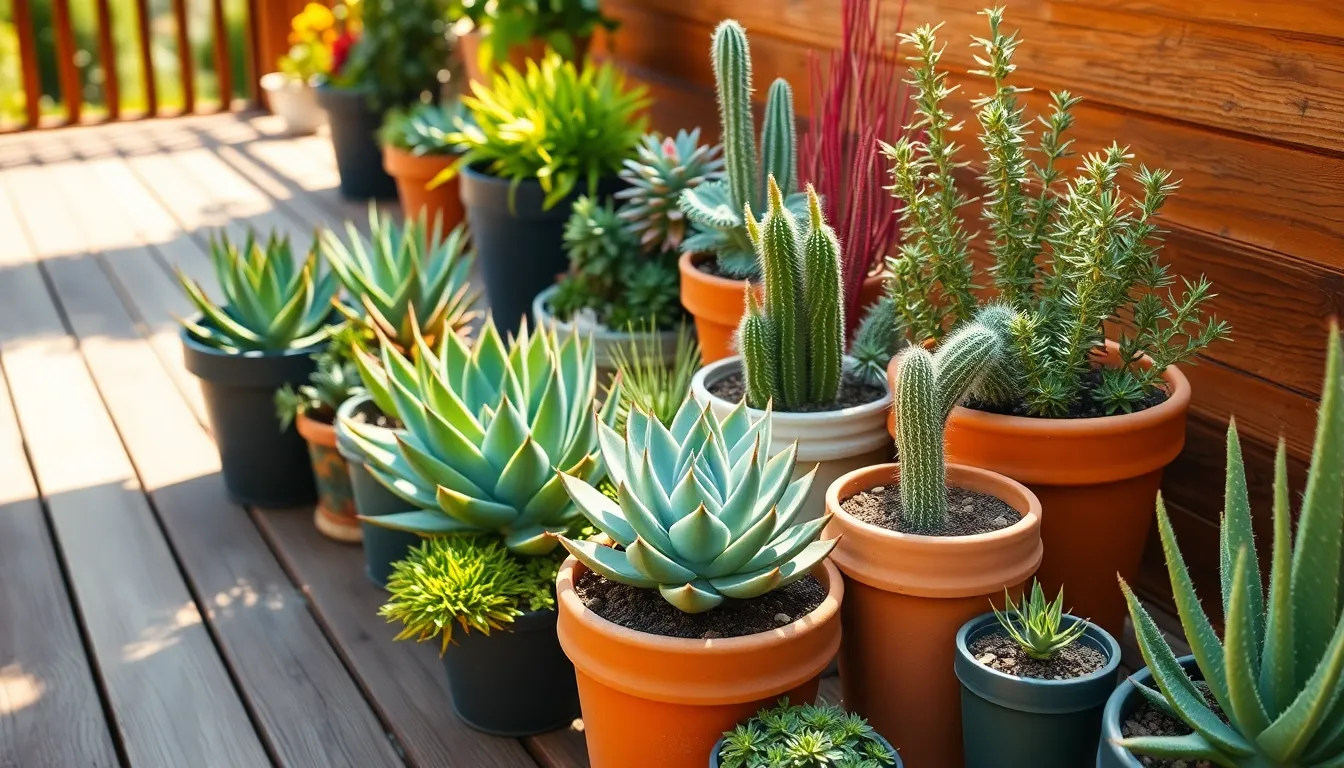
We’ve discovered that succulents offer the perfect solution for deck gardeners seeking stunning displays without constant upkeep. These remarkable plants thrive in containers with proper drainage and require minimal water, making them ideal for busy lifestyles.
Desert-Themed Container Gardens
Desert-themed arrangements bring the beauty of arid landscapes directly to your deck space. We recommend combining succulents like agave and various cacti species with hardy perennials such as yucca or ornamental grasses for added height and texture. These plantings require well-draining soil and infrequent watering sessions, creating highly drought-resistant displays that practically maintain themselves.
Sandy or pebble mulches work exceptionally well in these arrangements, helping retain what little moisture these plants need while improving the authentic desert aesthetic. Native plants from arid climates perform best in these setups since they’re naturally adapted to harsh conditions and require less fertilizer, water, and pest control than non-native alternatives.
Mixed Succulent Displays
Mixed arrangements allow us to create layered, textural displays by combining various succulent species in single containers. Popular combinations include rosette-forming echeveria paired with trailing string-of-pearls and upright aeoniums for dramatic vertical interest. We can also incorporate sedum and haworthia varieties to add diverse shapes, sizes, and colors that create visual appeal throughout the seasons.
Choosing plants with similar light and water requirements ensures healthy growth while reducing maintenance demands significantly. These versatile displays adapt easily to changing preferences since we can rotate or rearrange individual plants as needed without disrupting the entire arrangement.
Drought-Resistant Plant Combinations
Combining succulents with other drought-resistant plants creates even more resilient deck gardens that require minimal intervention. We love pairing these low-maintenance favorites with lavender, rosemary, and ornamental grasses for varied textures and seasonal interest. Native plant selections work particularly well since they’re already adapted to local growing conditions and weather patterns.
These water-wise combinations thrive in terra-cotta pots and recycled containers, offering both cost-effective and stylish display options. Adding artificial turf or gravel ground cover beneath containers further reduces maintenance needs while creating cohesive design themes across your entire deck garden space.
Privacy Garden Screens Using Plants
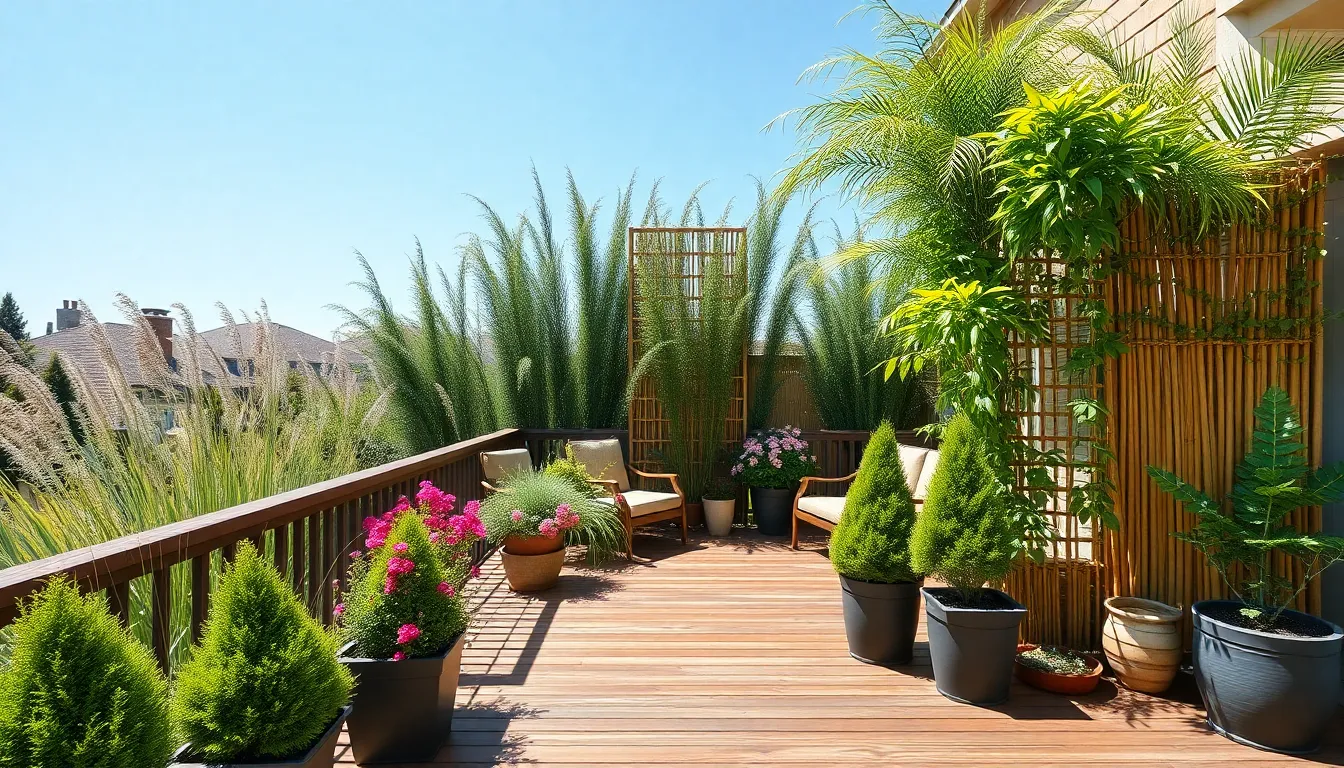
Creating natural privacy screens transforms your deck into a secluded outdoor sanctuary while adding beautiful greenery to your space. Plants offer an eco-friendly alternative to artificial barriers and provide year-round benefits beyond privacy.
Bamboo and Tall Grass Barriers
Bamboo screens create instant natural barriers that grow quickly and provide excellent privacy coverage. We recommend clumping bamboo varieties like fountain bamboo or golden bamboo for deck installations since they won’t spread aggressively. These eco-friendly options can reach heights of 6-12 feet and create dense screening within just one growing season.
Tall grasses establish dramatic privacy walls with minimal maintenance requirements. Pampas grass grows 8-10 feet tall and produces stunning feathery plumes, while fountain grass creates softer 4-6 foot barriers with cascading foliage. We suggest planting these grasses in large containers or raised planters around your deck’s perimeter for maximum impact.
Container placement strategies maximize screening effectiveness when using bamboo and tall grasses. Position planters at staggered heights and varying distances to create natural-looking barriers that block sight lines from multiple angles. This approach works particularly well for decks that need privacy from neighboring properties or busy streets.
Flowering Vine Privacy Walls
Climbing vines transform ordinary structures into living privacy screens that bloom throughout the growing season. Clematis produces abundant flowers in purple, pink, or white and can climb 8-15 feet on trellises or arbors. Wisteria creates stunning cascading blooms but requires sturdy support structures due to its weight when mature.
Trellis systems support flowering vine growth while creating instant vertical privacy barriers. We recommend installing wooden or metal trellises at least 6 feet tall and securing them firmly to deck railings or posts. Wire mesh panels work well for lighter vines like morning glories or sweet peas.
Seasonal maintenance ensures continuous coverage throughout the year. Prune flowering vines after their blooming period to encourage new growth and prevent them from becoming too heavy for their supports. Many flowering vines like honeysuckle and jasmine provide fragrant blooms that enhance your deck’s sensory appeal.
Evergreen Shrub Arrangements
Evergreen shrubs provide year-round privacy screening that maintains its effectiveness through all seasons. Boxwood creates neat, formal barriers that can be trimmed to exact heights and shapes, while holly offers natural protection with its spiky leaves and colorful berries.
Strategic placement creates layered privacy zones using different evergreen varieties at varying heights. We suggest positioning taller shrubs like arborvitae or juniper at 6-8 feet for primary screening, then adding medium-height options like yew or privet at 3-4 feet for additional coverage.
Container gardening accommodates evergreen installations on decks where permanent planting isn’t possible. Large planters measuring at least 24 inches wide and deep provide adequate root space for most evergreen shrubs. These arrangements can be moved seasonally to optimize privacy coverage or accommodate deck furniture changes.



Water Garden Features for Deck Spaces
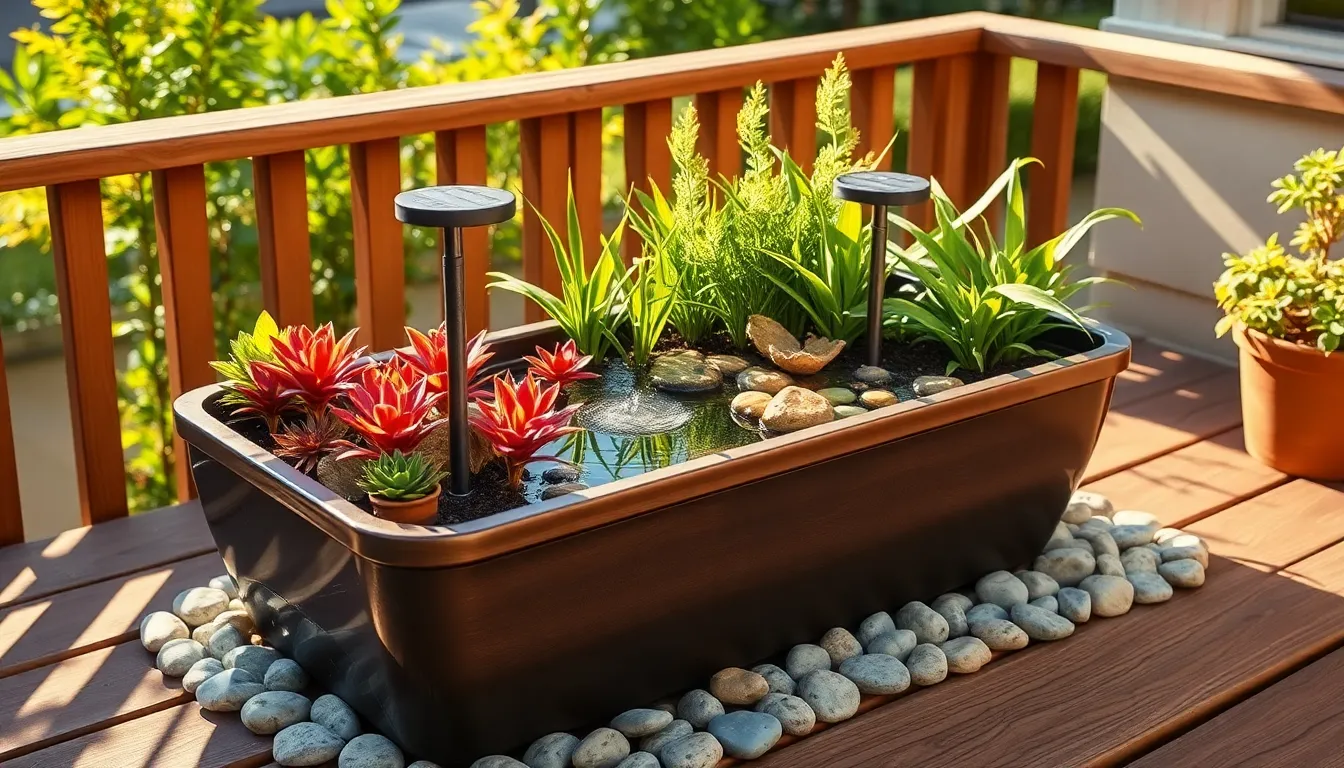
Water features transform ordinary deck gardens into tranquil retreats that engage multiple senses. We’ll explore three practical approaches to incorporating water elements that enhance your deck’s ambiance while remaining manageable for any space.
Container Water Gardens
Container water gardens offer the perfect solution for creating miniature aquatic ecosystems on decks of any size. We recommend using large ceramic pots, half barrels, or specialized water garden containers that hold at least 15-20 gallons for optimal plant health and water stability.
These self-contained systems work beautifully in small deck spaces where traditional water features aren’t feasible. You can position multiple containers at different heights to create visual depth and accommodate various aquatic plants with different water depth requirements.
Maintenance becomes straightforward with container water gardens since you control every aspect of the environment. We suggest adding aquatic fertilizer tablets monthly during growing season and installing a small submersible pump for water circulation when temperatures exceed 75°F.
Small Fountain Installations
Small fountain installations provide the soothing sound of moving water while serving as stunning focal points for deck gardens. We’ve found that tabletop fountains ranging from 12-24 inches work exceptionally well for most deck spaces without overwhelming the area.
Solar-powered options eliminate the need for electrical connections and reduce operating costs significantly. These units typically feature built-in LED lighting that creates magical evening ambiance while extending your deck’s usable hours into twilight.
Tiered fountain designs maximize visual impact in compact spaces by creating multiple water levels within a single unit. We recommend choosing materials like natural stone or ceramic that complement your existing deck garden containers and withstand outdoor weather conditions year-round.
Aquatic Plant Displays
Aquatic plant displays bring vibrant life to deck water features while providing natural filtration for cleaner, healthier water systems. We suggest starting with hardy varieties like water hyacinth, water lettuce, and dwarf cattails that thrive in container environments.
Floating plants such as water lilies create dramatic visual anchors while their broad leaves provide shade that helps control algae growth. These plants typically require 6-8 hours of direct sunlight daily and water depths of 12-18 inches for optimal blooming.
Marginal plants like arrowhead, pickerel rush, and sweet flag add vertical interest around container edges while serving as natural biological filters. We recommend planting these species in aquatic baskets filled with clay-based aquatic soil to prevent root spread and simplify seasonal maintenance.
Seasonal Garden Rotation Ideas
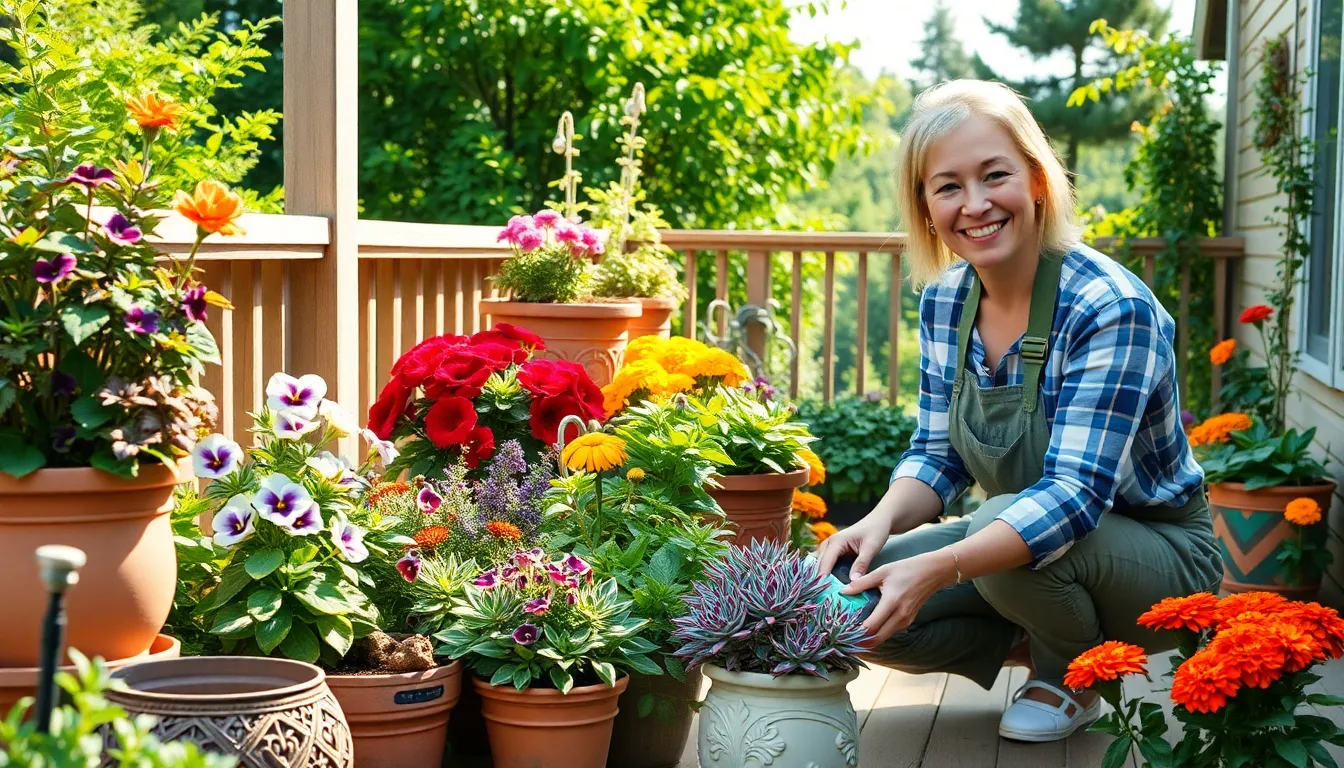
Rotating plants throughout the seasons keeps deck gardens vibrant and ensures optimal growing conditions year round. We’ll explore strategic timing and plant selection to maximize your deck’s potential through every season.
Spring Planting Schedules
Plan your spring planting after the last frost date to protect tender seedlings. We recommend starting with cool season annuals like pansies and snapdragons during early to mid spring when temperatures remain mild. Container friendly vegetables such as lettuce, radishes, and herbs thrive in spring’s abundant sunlight and moderate conditions.
Succession planting maximizes your harvest and extends blooming periods. Stagger new plantings every two weeks to ensure continuous blooms and fresh produce throughout the season. This technique works particularly well for quick growing crops like lettuce and radishes in your deck containers.
Timing your transplants correctly prevents shock and promotes healthy growth. Start seeds indoors 4-6 weeks before outdoor planting or purchase established seedlings from local nurseries. Monitor soil temperature in your containers, as it warms faster than ground soil and may be ready for planting earlier than traditional garden beds.
Summer Heat Management
Position containers strategically to protect plants during peak summer temperatures. Move sensitive plants to partial shade areas of your deck or install shade cloths to filter intense afternoon sun. Drought tolerant species like succulents, lavender, and sedum handle heat stress better than traditional annuals.
Mulch container soil to reduce water evaporation and maintain consistent moisture levels. Apply 2-3 inches of organic mulch around plants, leaving space near stems to prevent rot. This simple step can reduce watering frequency by up to 50% during hot summer months.
Water timing becomes critical during extreme heat periods. Schedule watering sessions for early morning or late evening to minimize water loss through evaporation. Check container moisture daily, as deck surfaces can reflect additional heat and dry out soil faster than ground level gardens.
Choose heat loving plants like petunias and marigolds for summer displays. These species actually thrive in high temperatures and provide continuous color throughout the season. Group containers with similar water needs together to streamline your maintenance routine.
Fall and Winter Garden Transitions
Remove spent summer annuals before the first frost to make room for cool season replacements. Replace heat loving plants with autumn flowers like chrysanthemums and ornamental cabbage that tolerate cooler temperatures. These transitions should happen gradually as temperatures begin dropping consistently.
Protect container roots from freezing temperatures using insulation techniques. Move pots to sheltered areas like covered porches or wrap them with insulating materials such as burlap or bubble wrap. Container plants face greater freeze risk than ground planted species since roots aren’t insulated by surrounding soil.
Winter rotations focus on hardy plants that withstand harsh conditions. Evergreens, ornamental grasses, and hardy perennials work well in protected deck locations during cold months. Add seasonal decorative elements like evergreen boughs and winter themed accents to maintain visual interest.
Lighting extends your deck garden’s appeal throughout shorter winter days. Install accent lighting to highlight evergreen arrangements and create ambiance during long winter evenings. Solar powered options provide eco friendly illumination without running electrical cables across your deck.
Budget-Friendly Garden Solutions
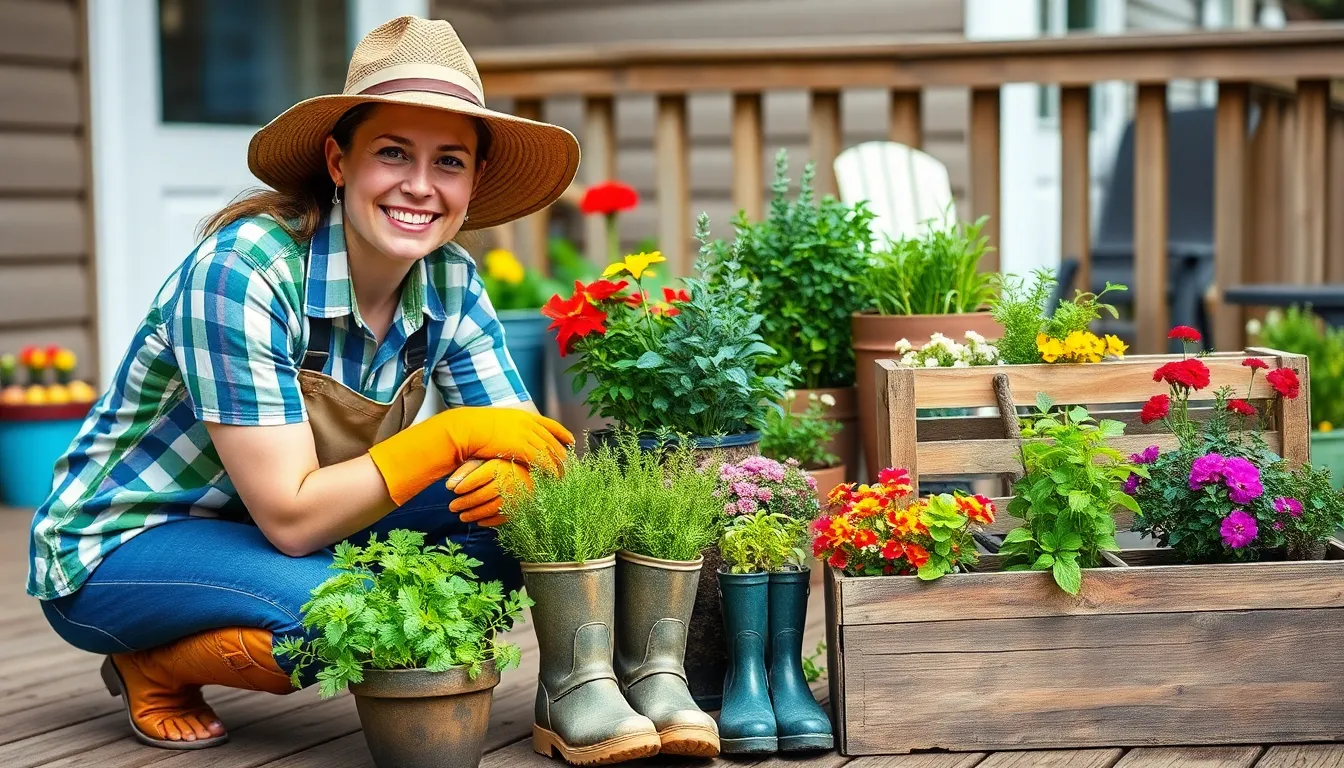
Creating a beautiful deck garden doesn’t require very costly. We’ll explore cost-effective approaches that maximize your gardening budget while maintaining the quality and appeal of your outdoor space.
DIY Planter Projects
Repurposed containers transform everyday items into unique planters that add character to our deck gardens. Old pallets can be converted into vertical garden walls by securing industry fabric and adding soil compartments. Wooden crates work perfectly as rustic planters when lined with plastic sheeting for moisture protection. Plastic bottles create excellent hanging planters when cut and decorated with paint or twine wrapping.
Hanging planters built from natural materials bring vertical growing opportunities to any deck space. Macramé plant holders crafted from cotton rope provide bohemian charm while supporting medium-sized containers. Twine and wooden hoop combinations create sturdy hanging systems that cost significantly less than store-bought alternatives. Basic rope splicing techniques allow us to customize hanging heights for optimal plant placement.
Vertical gardens constructed from readily available materials maximize our growing space without expensive infrastructure. Wooden boards mounted with brackets create simple trellises for climbing plants like beans and peas. PVC pipe systems with drilled holes accommodate multiple small plants in compact vertical arrangements. Wire mesh panels attached to deck railings support lightweight containers while maintaining deck safety standards.
Seed Starting Methods
Indoor seed starting provides complete control over germination conditions while reducing plant costs by 70-80% compared to purchasing seedlings. Seed trays filled with quality potting mix ensure consistent moisture and temperature for optimal sprouting rates. Small pots placed near sunny windows create ideal environments for herbs and vegetables before outdoor transplanting. Recycled yogurt containers with drainage holes serve as excellent individual seed starting vessels.
Outdoor seed starting simplifies the growing process by eliminating transplant shock and reducing maintenance requirements. Well-prepared soil beds with proper drainage support direct sowing of hardy vegetables like radishes and lettuce. Succession planting every 2-3 weeks ensures continuous harvests throughout the growing season. Row covers made from lightweight fabric protect young seedlings from unexpected weather changes while maintaining cost effectiveness.
Repurposed Container Ideas
Boot planters create whimsical focal points that showcase our creativity while providing functional growing space. Old rain boots work perfectly for small herbs like thyme and oregano that prefer well-draining conditions. Cowboy boots positioned at varying heights add rustic charm to country-themed deck gardens. Rubber boots painted with weather-resistant paint create colorful displays that last multiple seasons.
Bottle cap plant markers offer an eco-friendly labeling system that costs virtually nothing to carry out. Metal bottle caps hammered flat and engraved with plant names provide durable identification markers. Plastic caps painted with chalkboard paint allow for seasonal relabeling as we rotate crops. Wire stems attached to caps create elevated markers that remain visible among dense foliage.
Old wheelbarrow planters transform discarded equipment into stunning centerpiece containers that accommodate large plant arrangements. Full-sized wheelbarrows provide enough space for small fruit trees or extensive herb collections. The mobility aspect allows us to move plants for optimal sun exposure throughout the day. Drainage holes drilled in the bottom prevent waterlogging while maintaining the wheelbarrow’s structural integrity.
Conclusion
We’ve shown you that deck gardening offers endless possibilities for creating beautiful outdoor spaces regardless of size or budget constraints. From vertical growing answers to seasonal rotations these techniques help maximize every square inch of your deck area.
Whether you’re drawn to herb gardens for fresh cooking ingredients or prefer colorful flower displays that attract pollinators there’s a deck garden style that fits your lifestyle. Container gardening makes it all accessible while water features and privacy screens can transform your space into a true outdoor sanctuary.
The best part? You don’t need extensive gardening experience or expensive equipment to get started. With repurposed materials and smart planting strategies you can create a thriving deck garden that brings joy throughout the seasons. Your outdoor oasis awaits – it’s time to start planting!
Frequently Asked Questions
What is deck gardening and why is it beneficial?
Deck gardening transforms outdoor spaces into vibrant garden oases using containers, vertical systems, and creative planting techniques. It’s perfect for limited spaces, allowing you to grow herbs, flowers, and vegetables while bringing nature closer to your home. Deck gardens reduce stress, create inviting relaxation areas, and enhance outdoor living experiences through accessible gardening solutions.
How can I maximize space in my deck garden?
Maximize deck space through vertical gardening solutions like living wall planters, trellises, and hanging pocket gardens. Use tiered displays, climbing plant support systems, and multi-level container arrangements. Rolling garden carts provide mobility, while wire mesh panels and bamboo structures create productive growing areas on unused vertical surfaces.
What are the best container arrangements for deck gardens?
Effective container arrangements include large planters for bold focal points, multi-level displays using hanging planters and tiered stands, and rolling garden carts for flexibility. Combine perennial flowers, annual blooms, and small shrubs for year-round interest. Layer different heights and use mobile systems to optimize sunlight exposure and maintenance access.
How do I create an herb garden on my deck?
Create deck herb gardens using spiral designs that maximize space and visual interest, hanging systems that free up floor space, or compact planter boxes for mobility. Plant herbs at different elevations based on their needs, keep frequently used herbs easily accessible, and consider rotating containers for optimal growing conditions.
What flowers work best for deck gardens?
Choose flowers for seasonal bloom rotation including tulips for spring, zinnias for summer, and asters for fall. Use layered planting techniques and container swapping for continuous color. Select pollinator-friendly native plants, create clustered plantings for impact, and incorporate cascading displays using hanging baskets for dramatic visual effects.
Can I grow vegetables on my deck?
Yes, vegetables thrive in deck gardens using container gardening and vertical solutions. Raised bed garden boxes improve drainage and accessibility, while square foot gardening maximizes productivity in small spaces. Use succession planting strategies for continuous harvests and choose compact varieties suited for container growing conditions.
Are succulents good for deck gardens?
Succulents are excellent for deck gardens due to their low-maintenance, drought-resistant qualities. Create desert-themed containers, mixed succulent displays, or combine them with hardy perennials and ornamental grasses. They require minimal upkeep, tolerate various weather conditions, and add unique textures and colors to deck spaces.
How can I create privacy on my deck using plants?
Create natural privacy screens using bamboo and tall grasses for effective barriers, flowering vine privacy walls with trellis systems, or evergreen shrub arrangements for year-round coverage. Choose plants based on desired height and density, and use strategic container placement to maximize privacy while maintaining aesthetic appeal.
What water features work for deck gardens?
Deck-friendly water features include container water gardens as miniature ecosystems, small fountain installations as focal points, and aquatic plant displays for natural filtration. These features enhance ambiance, create tranquil retreats, and add the soothing sound of water while remaining manageable for deck spaces.
How do I maintain my deck garden year-round?
Maintain year-round appeal through seasonal rotation, spring planting schedules with cool-season annuals, and summer heat management using proper container placement and mulch. Plan fall and winter transitions with hardy plants, use root insulation techniques, and incorporate lighting to enhance the garden’s appeal during shorter winter days.
Can I create a deck garden on a budget?
Absolutely! Create budget-friendly deck gardens using DIY planter projects from repurposed materials like pallets, wooden crates, and plastic bottles. Start plants from seeds, use natural hanging planters made from macramé, and repurpose items like boots and wheelbarrows as unique planters while maintaining functionality.