
We’ve all seen those charming little garden gnomes peeking out from behind flower beds, and there’s something undeniably magical about these whimsical creatures that transforms ordinary gardens into enchanted spaces. Garden gnomes aren’t just decorative elements—they’re conversation starters, mood lifters, and the perfect way to inject personality into your outdoor sanctuary.
Whether you’re working with a sprawling backyard or a cozy balcony garden, gnome garden ideas can work wonders for any space. From traditional red-capped gnomes nestled among hostas to modern fairy-tale themed displays, these delightful additions create focal points that’ll make your neighbors stop and smile.
We’re about to explore creative ways to incorporate garden gnomes into your industry design that go far beyond the basic lawn placement. You’ll discover how to create themed vignettes, choose the right gnomes for your garden style, and position them for maximum charm and visual impact.
Whimsical Fairy Tale Gnome Gardens
Creating fairy tale gnome gardens transforms ordinary outdoor spaces into magical wonderlands that captivate both children and adults. We’ll explore how to create enchanting scenes that bring beloved stories to life through strategic gnome placement and complementary garden elements.
Creating Enchanted Forest Scenes
Transform your garden into a mystical woodland by positioning gnomes among dense plantings of ferns, hostas, and moss covered rocks. We recommend using at least three to five gnomes of varying sizes to create visual depth and establish a natural hierarchy within your forest scene.
Place taller gnomes near the back of planted areas while positioning smaller ones in front to create perspective and draw the eye through different levels. Small garden gnomes work perfectly nestled between fallen logs or beside miniature mushroom decorations to enhance the woodland atmosphere.
Select plants that thrive in shadier conditions like astilbe, coral bells, and wild ginger to create authentic forest floor coverage. These plants naturally complement the earthy tones of traditional gnomes while providing a lush backdrop for your fairy tale scene.
Incorporate natural materials such as pine cones, smooth river stones, and twisted branches to build authentic forest elements around your gnome displays. We’ve found that scattering these materials creates realistic pathways and gathering spots where gnomes appear to live and work.
Add solar powered fairy lights wound through tree branches or tucked behind plants to create magical evening illumination. This lighting transforms your enchanted forest into a glowing wonderland after sunset while highlighting your gnome collection’s finest details.
Adding Magical Storytelling Elements
Develop narrative scenes by grouping gnomes in activities that tell exact fairy tale stories like Snow White’s seven dwarfs working in a garden mine or little helpers tending magical vegetable patches. Each grouping should represent a clear story moment that visitors can immediately recognize and enjoy.
Position gnomes with complementary accessories such as tiny lanterns, miniature tools, or small treasure chests to reinforce their roles in your chosen fairy tale. We suggest using weatherproof miniature props that can withstand outdoor conditions while maintaining their storytelling impact.
Create winding pathways using small stepping stones or bark chips to guide visitors through different story scenes within your garden. These paths should connect various gnome groupings while maintaining the magical journey experience from one tale to the next.
Install small signs or plaques near each gnome scene with brief story excerpts or character names to help visitors understand the fairy tale connections. Hand painted wooden signs work particularly well and add rustic charm while serving as educational elements.
Design seasonal story rotations by moving gnomes into different arrangements that reflect various fairy tales throughout the year. Spring arrangements might feature gnomes planting magic beans while autumn displays could showcase harvest celebrations or preparation for winter adventures.
Miniature Village Gnome Displays
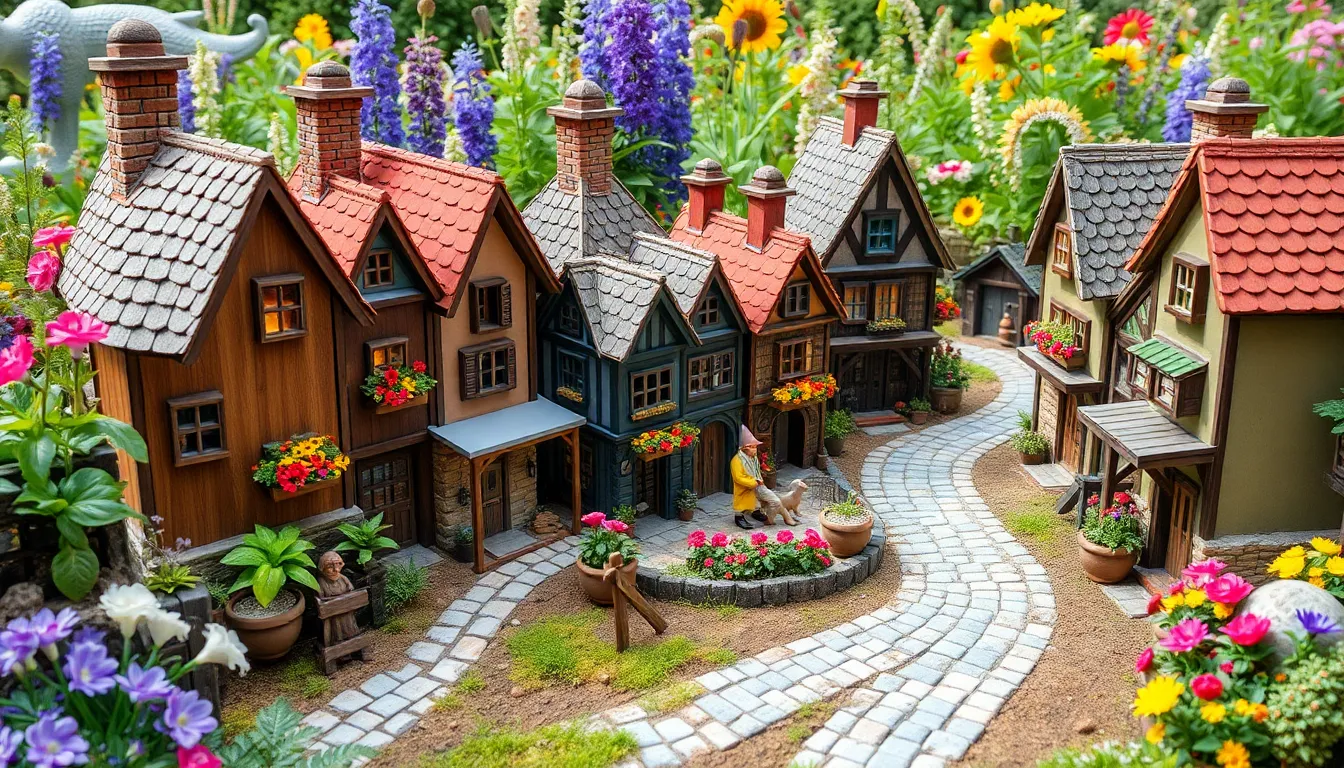
Creating an entire gnome village transforms your garden into a captivating miniature industry that delights visitors of all ages. These displays combine multiple elements to tell stories and create captivating scenes that invite exploration.
Building Tiny Gnome Houses and Shops
Constructing miniature buildings forms the foundation of any successful gnome village display. Natural materials like wood, stone, and clay provide authentic textures that blend seamlessly with outdoor environments. We recommend starting with basic structures and gradually adding complexity as your skills develop.
Essential details make these tiny buildings come alive through careful attention to architectural elements. Windows with miniature panes, doors that appear functional, and chimneys with realistic proportions create believable structures. Small touches like flower boxes, shutters, and weathered finishes add character to each building.
Variety in your building types creates a thriving miniature community that feels lived in and ever-changing. Consider constructing a gnome town hall as the centerpiece, surrounded by cozy homes with different architectural styles. Shops like bakeries, workshops, and markets provide purpose to your village while giving gnomes exact roles and activities.
Designing Cobblestone Pathways
Pathways connect your gnome village elements while creating natural flow through the display. Small stones or pebbles arranged in patterns create authentic cobblestone effects that weather beautifully over time. Resin or concrete alternatives offer durability for high traffic areas while maintaining the desired aesthetic.
Strategic pathway design guides visitors through your miniature industry in a deliberate sequence. Winding routes create mystery and encourage exploration as they curve past shops, homes, and gathering spaces. Multiple intersections allow for different journey options while preventing the display from feeling too linear.
Integration with existing village elements requires thoughtful planning to maximize visual impact. Pathways should naturally lead from building to building while incorporating garden features like flower beds and water elements. Well placed stepping stones, tiny bridges, and pathway lighting extend the magical atmosphere throughout your entire gnome garden display.
Seasonal Gnome Garden Themes

Seasonal themes bring our gnome gardens to life throughout the year. We can transform our outdoor spaces by adapting our gnome displays to match nature’s changing moods and colors.
Spring Flower Garden Gnomes
Spring flower garden gnomes celebrate renewal and fresh beginnings in our outdoor spaces. Early spring bloomers like creeping phlox and sedum create vibrant backdrops that complement our whimsical garden friends perfectly.
Positioning gnomes in yoga poses adds playful energy to spring garden displays. We love placing these peaceful figures among emerging perennials where morning sunlight catches their colorful details. Garden gnomes positioned in stretching or meditation stances create delightful surprises for visitors discovering hidden corners of our spring landscapes.
Flower selection becomes crucial for creating cohesive spring gnome scenes. Creeping phlox provides carpet like coverage in purple, pink, and white varieties that bloom from March through May. Sedum varieties offer textural contrast with their succulent leaves and star shaped flowers that emerge as spring progresses into early summer.
Colorful gnome clothing harmonizes beautifully with spring bulb displays. We coordinate gnome outfits with tulip and daffodil colors to create unified garden vignettes. Placing gnomes near fragrant hyacinths or grape hyacinths adds sensory appeal to our spring garden experiences.
Winter Wonderland Gnome Scenes
Winter wonderland gnome scenes transform cold season gardens into magical frost covered landscapes. Snow themed decorations like mini snowmen and icicles create authentic winter atmospheres that make our gnome displays feel like enchanted arctic villages.
Active winter gnomes bring movement to static seasonal displays. We position our garden friends in ice skating poses using small mirror tiles as frozen ponds beneath their feet. Sledding scenes work wonderfully when we create gentle slopes using rocks or landscaping features covered in white decorative stones.
Miniature winter accessories enhance the believability of our cold weather gnome stories. Tiny sleds, ice skates, and winter hats add authentic details that make visitors smile during dreary winter months. We create mini snowmen companions using white painted stones stacked beside our gnome figures.
Winter lighting creates dramatic effects in our seasonal gnome displays. Solar powered LED strings wrapped around evergreen branches illuminate our winter scenes after dark. Warm white lights reflect off metallic gnome accessories and create cozy glows that invite closer inspection of our winter wonderland details.
Evergreen plantings provide natural winter backdrops for our gnome scenes. We use dwarf conifers, winter berry bushes, and hardy perennials that maintain structure through cold months. These permanent plantings ensure our winter gnome displays remain visually interesting even when snow covers temporary decorative elements.
Container Gnome Gardens for Small Spaces

We’ve discovered that container gardening opens endless possibilities for creating charming gnome displays, even in the tiniest outdoor areas. Small spaces become magical worlds when we transform ordinary containers into enchanting gnome habitats.
Potted Gnome Garden Arrangements
Themed pots create cohesive displays when we choose containers with gnome-themed designs or colors that match our garden vision. Earthy terracotta pots complement traditional garden gnomes perfectly, while colorful ceramic containers enhance whimsical displays.
Mixed plantings add texture and visual depth when we combine different plant types like succulents and moss within single containers. Succulents provide year-round structure, while moss creates lush green carpets that make gnomes appear nestled in forest floors.
Repurposed containers from garage sales and thrift stores offer unique character that mass-produced pots can’t match. Old flower pots, wicker baskets, and vintage planters create quaint gnome spaces with authentic charm.
Gnome accessories transform simple potted arrangements into captivating miniature worlds when we add small bridges, tiny furniture, or miniature tools. Wooden benches invite gnomes to rest, while miniature watering cans suggest active garden tending.
Tabletop Gnome Landscapes
Portable gardens in shallow trays or planters give us flexibility to relocate our gnome displays based on weather or seasonal preferences. We can move these compact ecosystems from patios to covered porches during storms.
Multi-level gardens using stacked small pots create impressive depth and layered effects perfect for tabletop displays. Graduated container sizes allow us to position gnomes at different elevations for ever-changing visual storytelling.
Decorative elements like small stones, pebbles, or shells form pathways and add crucial visual interest to flat tabletop surfaces. River rocks create natural borders, while colored glass pebbles catch sunlight beautifully.
Miniature landscapes incorporating small plants, moss, and tiny accessories transport viewers into whimsical miniature worlds. Dwarf plants maintain proper scale, while miniature fencing and gates define gnome territories.
Gnome interactions placed in captivating scenarios near tiny furniture or fishing scenes create compelling interactive storytelling opportunities. We position gnomes reading miniature books or tending tiny vegetable patches to spark imagination and conversation.
Vegetable Garden Gnome Integration
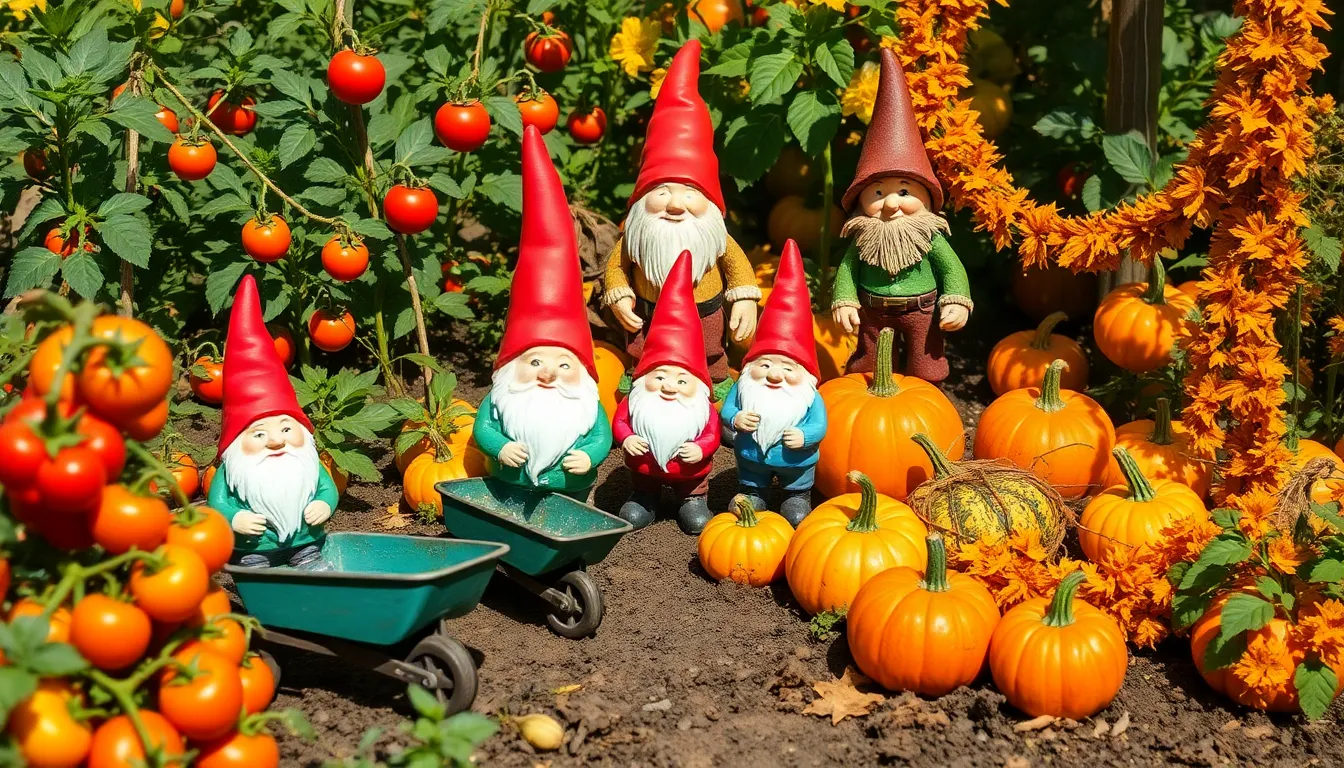
Transforming our vegetable gardens with charming gnome additions creates delightful spaces that blend functionality with whimsy. These miniature guardians bring personality to our practical growing areas while serving meaningful purposes beyond decoration.
Guardian Gnomes for Crop Protection
Positioning guardian gnomes strategically throughout our vegetable patches provides symbolic protection for our precious crops. We place these watchful figures near garden entrances where they can “oversee” the entire growing space. Standing sentinel among our tomato plants or pepper rows, these protector gnomes create a sense of security for our harvest.
Entrance placement offers maximum visual impact while establishing our gnomes as garden protectors. We position larger guardian figures at gateway points where visitors first encounter our vegetable beds. Corner placements work exceptionally well for smaller gardens, allowing our gnomes to survey multiple growing areas simultaneously.
Strategic positioning near vulnerable plants enhances both protection symbolism and practical garden layout. We cluster guardian gnomes around delicate seedlings or prize-winning specimens that need extra attention. Raised bed corners provide perfect perches for these protective figures, creating natural focal points throughout our vegetable garden design.
Harvest-Themed Gnome Displays
Creating seasonal harvest displays with our gnomes celebrates the bounty of our hard work throughout the growing season. We arrange these festive scenes using autumn vegetables like pumpkins, gourds, and colorful squash as natural backdrops. Miniature wheelbarrows filled with tiny vegetables make perfect props for our harvest gnome displays.
Pumpkin patch arrangements showcase our gnomes as active participants in the autumn harvest celebration. We nestle small gnomes between orange pumpkins of varying sizes, creating ever-changing scenes of garden activity. Corn stalks bundled behind our gnome displays add height and authentic farm atmosphere to these seasonal vignettes.
Scarecrow partnerships elevate our harvest themes by combining traditional garden protectors with whimsical gnome characters. We position gnomes at the base of scarecrows, suggesting collaborative crop protection efforts. Hay bales provide natural seating for our gnome figures while reinforcing the harvest festival atmosphere we’re creating.
Miniature harvest festival scenes transform corner spaces into celebration zones throughout our vegetable gardens. We arrange groups of gnomes around tiny picnic tables made from natural materials like flat stones or small wooden platforms. Autumn leaf garlands strung between garden stakes create festive backdrops for these charming harvest gatherings.
Rock Garden Gnome Installations
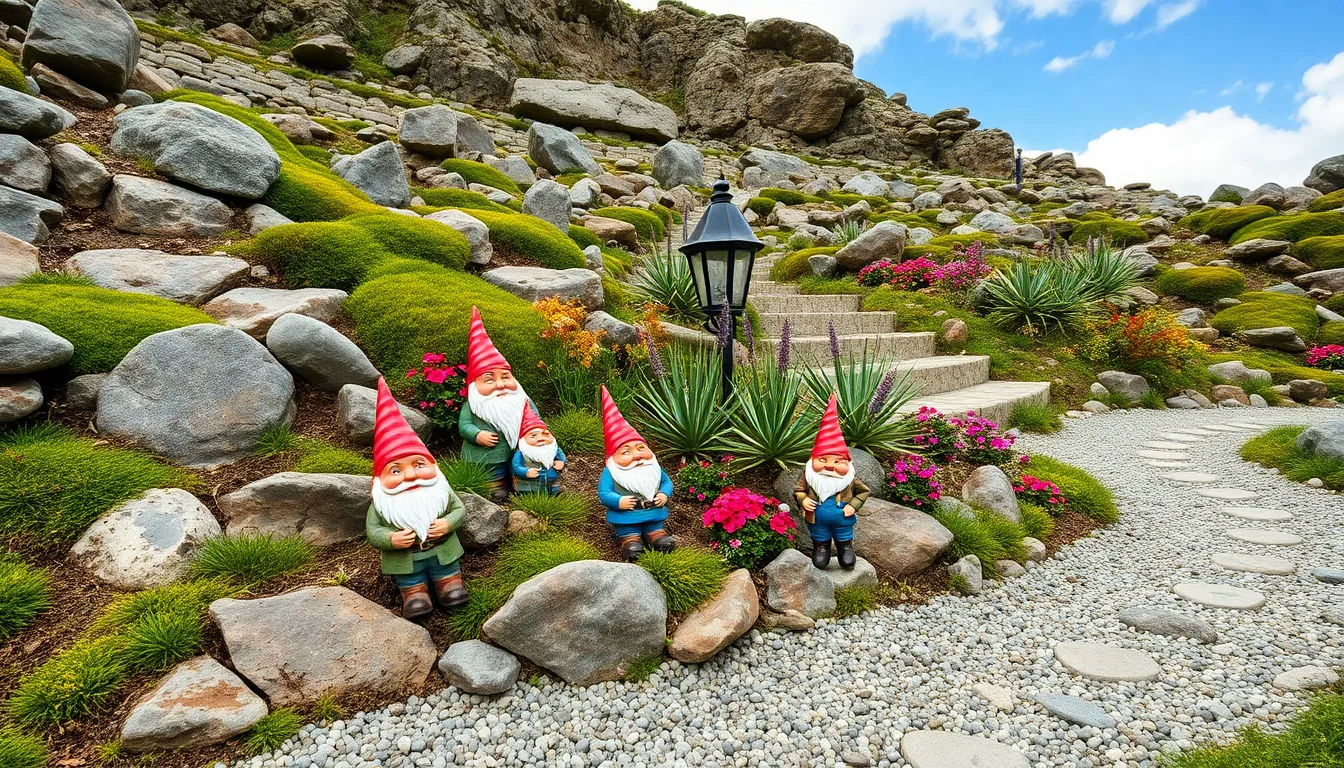
Rock gardens provide the perfect natural backdrop for creating stunning gnome displays that blend seamlessly with stone formations and hardy plantings.
Alpine Gnome Settings
Position gnomes among natural stone formations to create authentic mountain village scenes that capture the rustic charm of high-altitude environments. We recommend placing your garden gnomes on rocky outcroppings where they can overlook terraced plantings of low-growing grasses and alpine wildflowers.
Incorporate high-altitude plants like sedums, alpine asters, and creeping thyme that naturally thrive in well-drained rocky conditions. These hardy perennials create the perfect mountain meadow setting where gnomes appear as natural inhabitants of the industry.
Create winding gravel pathways using decomposed granite or crushed stone that mimics authentic alpine trails. Small pebbles scattered around gnome bases help establish proper drainage while adding visual texture that complements the mountain theme.
Build terraced stone walls using stacked fieldstone or flagstone to create different elevation levels for gnome placement. This technique allows you to showcase multiple gnomes at varying heights while providing excellent drainage for alpine plants.
Add moss covered boulders as natural backdrops that enhance the woodland mountain atmosphere. Moss thrives in the humid microclimates created by stone formations and gives your alpine gnome setting an aged, established appearance.
Desert Succulent Gnome Gardens
Select diverse succulent varieties with contrasting shapes, sizes, and colors to create visual interest around your desert-dwelling gnomes. We suggest combining barrel cacti, agave plants, and colorful echeveria rosettes for maximum textural appeal.
Use decomposed granite or pea gravel as ground cover to replicate authentic desert conditions while providing excellent drainage for succulent health. This rocky mulch prevents water retention that could damage both plants and gnome bases.
Position gnomes near architectural cacti like prickly pear or cholla to create dramatic southwestern scenes. These larger specimens serve as natural focal points while providing shelter and shade for smaller succulent plantings.
Incorporate desert themed accessories such as miniature pottery, weathered wood, or small boulder arrangements that complement the arid industry aesthetic. These elements help establish the desert environment where your gnomes appear perfectly at home.
Create elevation changes using stacked stones or raised planters filled with well-draining cactus soil mix. Different height levels allow you to showcase various succulent growth habits while giving gnomes interesting vantage points throughout the desert garden display.
Water Feature Gnome Gardens
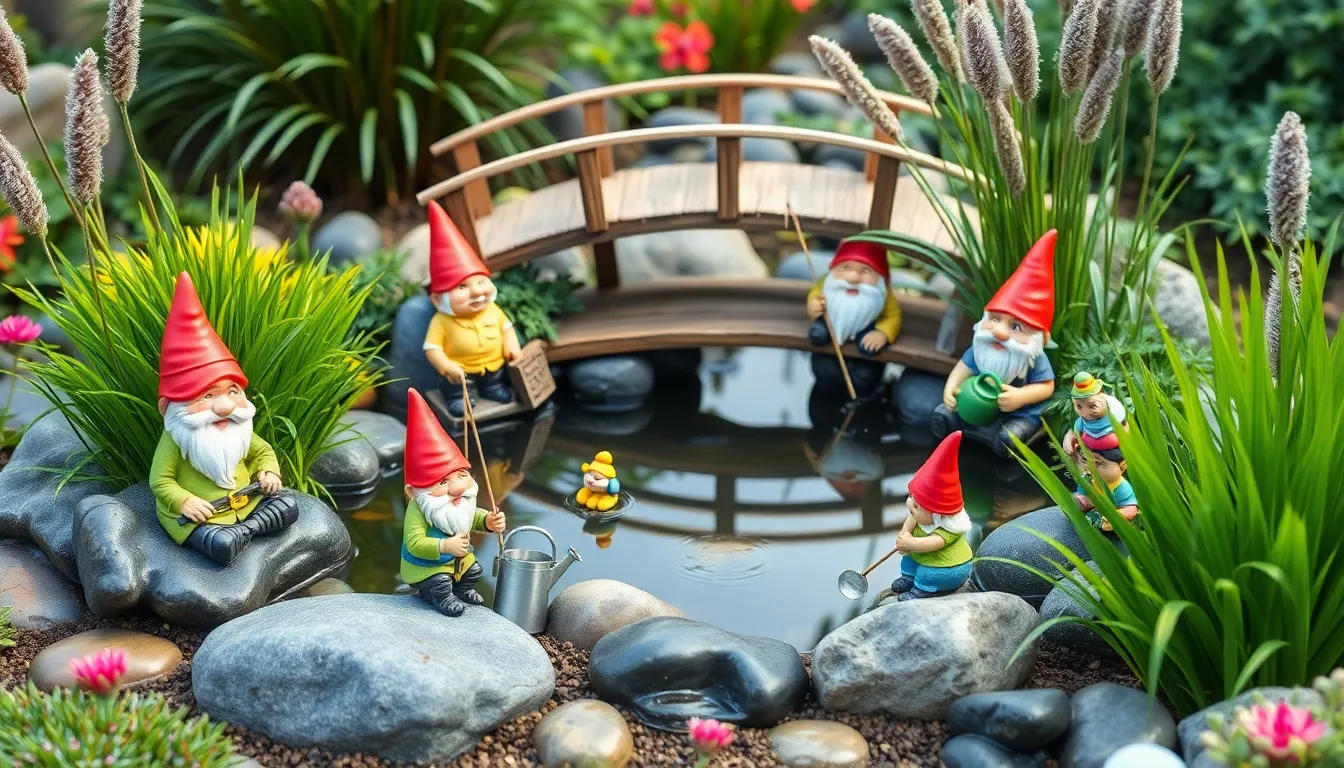
Water features transform ordinary gnome displays into mesmerizing focal points that capture both light and imagination. These aquatic elements create ever-changing backdrops where our garden gnomes appear to interact naturally with flowing or still water.
Pond-Side Gnome Communities
Pond side gnome communities bring life to water gardens through carefully positioned figurines that appear to engage with their aquatic environment. We recommend placing fishing gnomes along pond edges with tiny rods extending toward the water, creating scenes that suggest patient anglers waiting for their catch. Garden gnomes positioned on decorative rocks or wooden platforms appear to be contemplating the water’s surface while maintaining safe distances from actual submersion.
Clustering multiple gnomes around pond perimeters establishes thriving communities where each figure serves a unique purpose. Some gnomes can hold miniature watering cans as if tending nearby aquatic plants, while others sit cross-legged in meditation poses reflecting the peaceful water environment. Strategic placement behind ornamental grasses or hostas creates natural hiding spots where gnomes peek through vegetation, adding discovery elements to pond exploration.
Incorporating small bridges or stepping stones allows gnomes to appear as if they’re crossing water features or gathering at central meeting points. We suggest using weatherproof gnomes specifically designed for outdoor water exposure, ensuring colors remain vibrant even though moisture and humidity. Seasonal adjustments keep pond communities fresh, with winter gnomes wearing scarves positioned near ice formations and summer gnomes appearing to enjoy warm weather activities.
Fountain Gnome Decorations
Fountain gnome decorations create ever-changing displays where water movement enhances the magical atmosphere of garden scenes. We position gnomes on fountain bases or surrounding platforms where they appear to interact with cascading water without interfering with pump mechanisms. Gnomes holding tiny umbrellas or wearing rain gear add whimsical touches that suggest they’re enjoying the water spray.
Tiered fountains offer multiple levels for gnome placement, allowing us to create hierarchical communities where different gnomes occupy various fountain stages. Base level gnomes can appear to be collecting water in miniature buckets, while upper tier gnomes wave down to their companions below. Strategic lighting illuminates both water flow and gnome details during evening hours, extending display enjoyment throughout the day.
Maintenance access remains crucial when positioning fountain gnomes, so we ensure decorative elements don’t obstruct cleaning or repair procedures. Removable gnome platforms or magnetic bases allow for easy repositioning during fountain maintenance while preserving the overall display design. Water resistant sealants protect gnome surfaces from constant moisture exposure, preventing paint deterioration and extending figurine lifespan.
Seasonal fountain themes incorporate weather appropriate gnome accessories and positioning adjustments that reflect changing conditions. Spring displays feature gnomes with flower baskets positioned to catch fountain mist, while autumn arrangements include gnomes with tiny rakes appearing to manage falling leaves around water features.
DIY Gnome Garden Accessories

Creating handmade accessories for your gnome garden lets you customize every detail while saving money on store-bought decorations. We’ll explore how to create charming furniture pieces and personalized signs that bring your miniature industry to life.
Handmade Gnome Furniture
Polymer clay accessories transform your gnome village into a fully furnished community. We can create miniature ladders, chairs, and tables using this versatile material that withstands outdoor weather conditions year round. Detailed furniture pieces like benches require only basic sculpting skills and provide hours of creative enjoyment.
Popsicle stick constructions offer an affordable way to build gnome-sized seating areas. We recommend creating benches by gluing sticks together in traditional furniture patterns, then weatherproofing with clear sealant. Small tables and chairs follow similar construction methods and add authentic village charm to any display.
Upcycled bottle cap furniture brings environmental consciousness to your crafting projects. We’ve discovered that metal caps make excellent miniature stools when flipped upside down and painted in earthy tones. Plastic caps work wonderfully as tiny planters or decorative elements throughout the garden space.
Natural material seating connects your gnome furniture to the surrounding industry. We suggest collecting flat stones to create rustic benches or using small twigs bundled together for authentic woodland chairs. These organic pieces weather naturally and blend seamlessly with existing garden elements.
Custom Gnome Garden Signs
Personalized welcome signs greet visitors at your gnome village entrance with charming hospitality. We create these markers using weather-resistant wood pieces painted with outdoor acrylics and sealed for longevity. Hand-lettered messages like “Welcome to Gnome Sweet Home” add personality while establishing the magical atmosphere.
Stone garden markers provide durable labeling answers for different village areas. We recommend selecting smooth river rocks and painting them with garden-themed messages or directional arrows. These natural signs withstand all weather conditions while maintaining their decorative appeal throughout the seasons.
Wooden area labels help organize larger gnome displays into distinct neighborhoods or themed sections. We cut small planks from cedar or pine and engrave names like “Mushroom District” or “Fairy Lane” using simple woodburning tools. Miniature sign posts made from twigs complete the authentic village look.
Seashell pathway markers guide visitors through intricate gnome garden layouts. We position painted shells along walkways with directional symbols or decorative patterns that complement coastal or whimsical garden themes. These natural markers create continuity while adding texture to the overall design.
Lighting Ideas for Gnome Gardens

Strategic lighting transforms gnome gardens into magical wonderlands that captivate visitors day and night. These illumination techniques enhance your outdoor space while maintaining the whimsical charm that makes gnome displays so enchanting.
Solar-Powered Gnome Illumination
Solar powered lights offer an eco-friendly solution for highlighting gnome figures and pathways without requiring electricity cables. These sustainable lighting options automatically charge during daylight hours and illuminate your garden throughout the evening. We recommend positioning solar spotlights to directly highlight individual gnome poses, such as yoga positions or musical instrument displays, creating dramatic shadows that enhance their personality.
Pathway lighting using solar powered fixtures guides visitors through your gnome village while ensuring safety during nighttime exploration. Small solar stake lights work perfectly along cobblestone paths and between miniature buildings in your gnome community. The installation process requires no electrical expertise, making it accessible for gardeners of all skill levels.
Weather resistant solar fixtures withstand seasonal changes while maintaining consistent performance throughout the year. Consider upgrading to higher quality solar units with longer battery life to ensure your gnome garden remains illuminated during cloudy periods. Strategic placement near reflective surfaces like water features or light colored stones amplifies the lighting effect and creates stunning visual impact.
String Light Gnome Displays
String lights create a magical ambiance that transforms ordinary gnome gardens into festive wonderlands, especially during evening hours. These versatile lighting answers can be hung from tree branches, wrapped around garden structures, or positioned along pathways to establish a warm and inviting atmosphere. We suggest using warm white LED string lights to complement the natural colors in your gnome garden while providing sufficient illumination for safe navigation.
Creative positioning of string lights around gnome figures highlights their unique characteristics and creates captivating focal points throughout your display. Draping lights behind gnomes creates silhouette effects that add drama to fairy tale scenes and seasonal displays. Consider using different string light colors to match seasonal themes, such as orange lights for autumn harvest displays or blue lights for winter wonderland scenes.
Battery powered string lights offer flexibility in placement without the constraints of electrical outlets, allowing you to illuminate remote corners of your gnome garden. Timer controlled options automatically turn lights on and off at predetermined intervals, conserving battery life while ensuring consistent evening ambiance. Multiple string light zones create depth and visual interest, guiding visitors through different sections of your miniature gnome village while maintaining the magical atmosphere that makes these displays so captivating.
Budget-Friendly Gnome Garden Projects

Creating enchanting gnome displays doesn’t require very costly when we use creative approaches and resourceful materials.
Thrift Store Gnome Makeovers
Repurpose unique finds from thrift stores to create one-of-a-kind gnome garden elements. Old boots transform into charming gnome homes, while wooden crates become elevated platforms for miniature villages. Teapots serve as whimsical gnome cottages when we add small doors and windows.
Paint thrifted items in vibrant colors to breathe new life into forgotten treasures. We can apply polka dot patterns or floral designs to enhance the whimsical charm of our gnome garden displays. Fresh coats of weather-resistant paint protect these repurposed items while creating cohesive color schemes throughout the garden.
Search for unexpected materials like ceramic bowls, small planters, or decorative boxes that can house miniature gnome scenes. These finds often cost just a few dollars and provide the perfect foundation for creative gnome habitats.
Natural Material Gnome Habitats
Collect moss and pebbles to create authentic landscapes that complement our gnome figures perfectly. These natural materials help establish winding pathways through the village while creating the illusion of miniature lakes and gardens. We can gather these elements from our own yards or local nature areas at no cost.
Incorporate wood and stone features to build cozy gnome homes with rustic appeal. Fallen branches become roof beams, while small stone piles create charming garden walls around gnome properties. Wooden logs serve as natural seating areas where gnomes can gather for their tiny community meetings.
Layer different textures using bark chips, pinecones, and smooth river rocks to create depth in our gnome displays. These materials establish natural boundaries between different areas of the gnome village while providing realistic ground cover that changes with the seasons.
Conclusion
Creating magical gnome gardens offers endless possibilities for transforming any outdoor space into an enchanting wonderland. We’ve explored countless ways to bring these charming creatures into our landscapes from fairy tale villages to seasonal displays that celebrate nature’s changing moods.
Whether we’re working with sprawling backyards or tiny container gardens the key lies in letting our creativity guide us. Budget-friendly answers using natural materials and repurposed items prove that stunning gnome displays don’t require important investment.
Our gnome gardens become more than decorative features—they’re conversation starters storytelling venues and sources of year-round joy. With proper planning and a touch of whimsy we can create outdoor spaces that delight visitors and bring smiles to our daily routines.
Frequently Asked Questions
What are the best places to position garden gnomes for maximum visual impact?
Position gnomes near garden entrances, along pathways, and in conversation areas where they naturally draw attention. Group them among dense plantings for enchanted forest scenes, or place them strategically around water features like ponds and fountains. Consider eye-level placement on raised beds or containers for better visibility and interaction with visitors.
How can I create a fairy tale gnome garden theme?
Create enchanted scenes by grouping gnomes in narrative arrangements with weatherproof props and complementary garden elements. Use winding pathways to guide visitors through different story scenes, position gnomes among dense plantings for woodland atmosphere, and rotate seasonal displays to keep the garden dynamic throughout the year.
What materials work best for building miniature gnome villages?
Use natural materials like wood, stone, and clay to construct tiny gnome houses and shops for authentic textures. Create cobblestone pathways with small stones, add architectural details like miniature windows and doors, and incorporate variety in building types to foster a lively village atmosphere.
How do I adapt gnome displays for different seasons?
For spring, position gnomes among blooming perennials and coordinate their outfits with colorful bulbs. In winter, create magical scenes with snow-themed decorations, miniature winter accessories, and evergreen backdrops. Use seasonal lighting and adjust props to match nature’s changing moods throughout the year.
Can garden gnomes work in small spaces like balconies?
Absolutely! Container gnome gardens are perfect for small spaces. Use themed pots with mixed plantings, repurposed containers for unique displays, and create tabletop gnome landscapes for portable charm. These miniature setups offer flexibility and can tell complete stories in compact areas.
How do I incorporate gnomes into vegetable gardens?
Place guardian gnomes near garden entrances and vulnerable plants for symbolic protection. Create harvest-themed displays with autumn vegetables, collaborate gnomes with scarecrows, and design miniature harvest festival scenes in corner spaces to blend functionality with whimsical charm.
What’s the best way to maintain gnomes around water features?
Choose weather-resistant gnomes and position them strategically around ponds and fountains. Clean them regularly to prevent algae buildup, ensure stable placement to prevent toppling, and make seasonal adjustments to reflect changing weather conditions while maintaining their vibrant appearance.
How can I create DIY gnome garden accessories on a budget?
Craft miniature furniture from polymer clay, popsicle sticks, and upcycled materials. Create custom garden signs using wood and stone, repurpose thrift store finds like old boots and ceramic bowls, and use natural materials like moss, pebbles, and pinecones for authentic, budget-friendly landscapes.
What plants work best with rock garden gnome installations?
Alpine plants and succulents are ideal for rock garden gnome displays. Use diverse succulent varieties for desert themes, incorporate moss-covered boulders for rustic charm, and create terraced stone walls. These drought-tolerant plants complement the natural stone backdrop while requiring minimal maintenance.
How do I create cohesive themed gnome displays?
Select gnomes that match your garden style and color scheme. Group them in narrative scenes with consistent props and accessories, use coordinating planters and materials, and establish clear pathways that connect different themed areas to create a unified, engaging garden experience.