
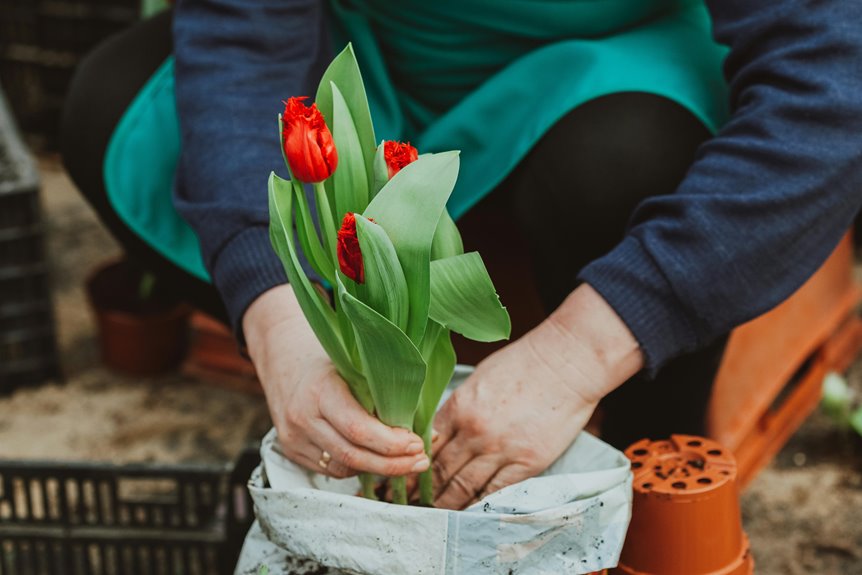
Water Consistently Through Spring
Your tulips need regular water during their growing season. Aim for about 17 mm of water per week. Use deep soaks rather than light, frequent watering. This approach helps water reach the bulbs where it matters most, instead of just wetting the soil surface.
Remove Seed Pods Right Away
Once your tulips finish blooming, cut off the seed pods as soon as the flowers fade. The plant naturally wants to make seeds, which takes energy away from the bulb. By removing these pods, you redirect that energy back into strengthening the bulb for next year’s growth.
Let Foliage Yellow Naturally
Keep the green leaves attached to the plant for two to three weeks after the flowers drop. After that waiting period, allow the foliage to turn yellow on its own before cutting it back. This yellowing process moves nutrients from the leaves down into the bulb, building reserves for the next growing season. Do not cut back the green leaves early—this step directly affects how strong your bulbs become.
Step 1: Water Your Tulips Consistently Through Spring
Tulips need about 17 mm of water per week, especially if you’re growing them in containers. This steady moisture level supports blooming and helps roots establish themselves properly.
Water deeply in late winter and early spring instead of using frequent light watering. A controlled soak works better than scattered sprinkles because it keeps soil moisture consistent without creating waterlogged conditions that lead to rot.
For container tulips, water lightly right after planting, then check your soil regularly. Keep it moist but never waterlogged. Good drainage is your main tool for preventing problems.
If spring stays unusually dry, increase watering moderately to help your bulbs develop. Once your foliage yellows and dries after flowering, stop watering completely. This protects your tulips from rot and prepares them for the next growing season.
Step 2: Remove Tulip Seed Pods to Strengthen Bulbs
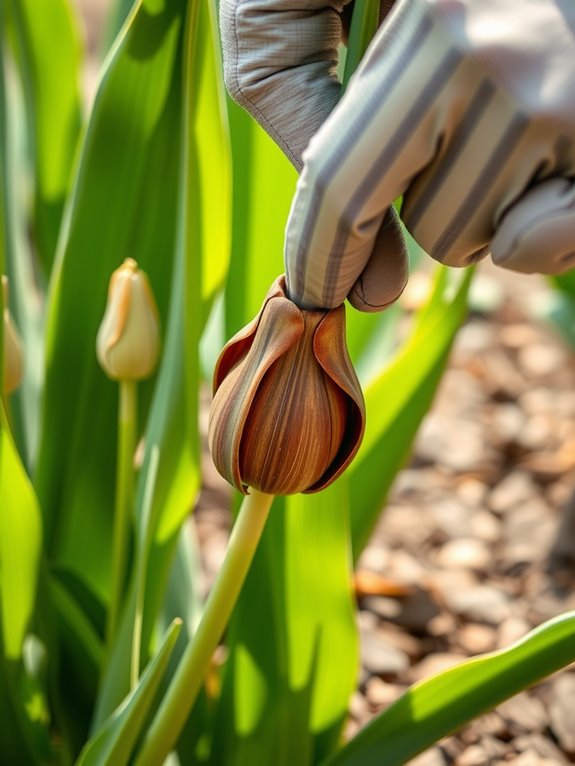
Once your tulips finish blooming, remove the seed pods that develop where the flowers were. This redirects energy back into your bulbs so they grow stronger for next season.
Remove seed pods after tulips bloom to redirect energy back into bulbs for stronger growth next season.
Seed production uses resources your bulb needs for storage underground. When you remove the developing seed pods right after the petals fall, you keep your bulb from wasting energy on reproduction. Leave the stalks and leaves in place. They continue to gather sunlight and send that energy down into the bulb for storage.
Timing and steps:
Remove seed pods immediately after petals drop. Cut or pinch off the green pod at the base of the flower head. Keep doing this check daily during the post-bloom phase to catch any new pods before they develop further.
Maintain the foliage for 2 to 3 weeks after blooming ends. Let the leaves stay green and attached to the stem. Once the leaves turn yellow and start to dry, you can cut them back.
This approach takes a small amount of effort now but pays off with larger, healthier bulbs that produce better blooms next spring.
Step 3: Let Tulip Foliage Die Back Naturally
Why does it matter what happens to your tulip leaves after the flowers drop? Your tulip foliage stores energy in the bulbs for next year’s growth. During this natural process, the leaves gradually yellow and fade. This post-bloom care phase strengthens your bulbs for stronger flowers later.
Let the leaves yellow and fade completely on their own. Resist the urge to remove or trim browning foliage prematurely. The longer the leaves stay on the plant, the more energy transfers back into the bulb underground.
Once the foliage has died back entirely, stop watering. Extra moisture at this stage risks bulb rot and throws off the soil’s moisture balance. If you’re replanting next year, leave the browning foliage in place until it’s fully faded before you dig up your bulbs. For landscape tulips you want to rebloom, don’t cut or harvest any leaves or stems during this period.