Sunlight Requirements
Place your geraniums where they receive at least six hours of direct sun each day. This amount of light keeps the plant healthy and promotes steady flowering. If your location gets less sun, the plant will still grow but produce fewer blooms.
Soil and Watering
Use well-draining soil for your geraniums. If your soil is heavy clay, mix in compost to improve drainage. Water deeply when the top inch of soil feels dry to the touch. Avoid watering from above, as wet foliage invites disease. Instead, water at the base of the plant.
Fertilizing
Feed your geraniums every four to six weeks during the growing season with a balanced fertilizer. Follow the package instructions for the correct amount. Stop fertilizing in fall as the plant prepares for dormancy.
Encouraging More Blooms
Remove spent flowers regularly by pinching them off at the base. This practice tells the plant to keep producing new blooms rather than focus energy on seed development.
Seasonal Pruning
In spring, cut back any long, leggy stems to make the plant bushier and more compact. Prune just above a leaf node, which is where new growth will emerge.
Pest Management
Watch for aphids and other common pests. If you spot them, spray the affected areas with insecticidal soap according to the product directions. Check your plants weekly during warm months when pest activity peaks.
Choose the Right Location for Geraniums: Light and Sun Requirements
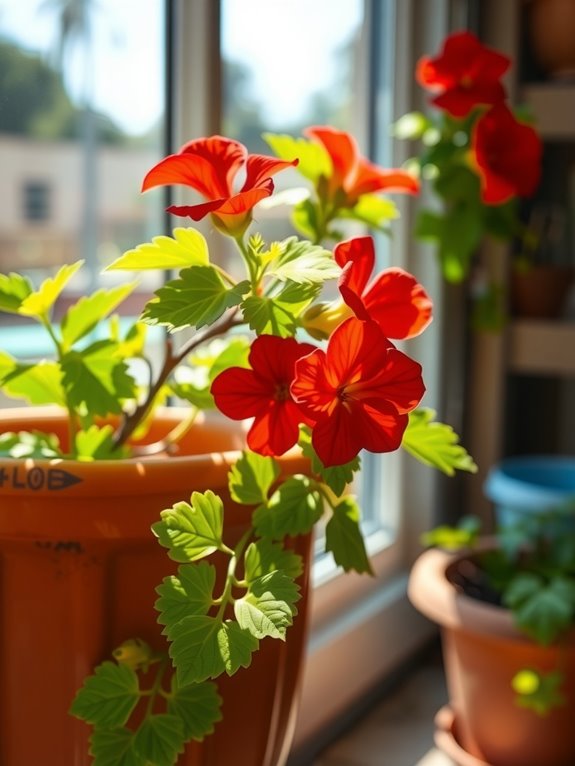
Since geraniums need sunlight to bloom well, pick your location carefully. Your plants need at least six hours of direct sun each day. Full sun is best, but they can handle partial shade if that’s all you have available.
In hot climates, provide afternoon shade to keep the leaves from burning. You still need to give them enough light during the morning and midday hours. Morning sun or dappled light works well in regions with intense heat. The balance you’re looking for is sufficient sunlight without the harsh afternoon rays.
For outdoor planting, choose a spot with well-draining soil and good air circulation. These conditions prevent disease and support strong plant growth. Container geraniums follow the same rule—they need that six-hour minimum of sunlight. Place containers near a bright south- or west-facing window indoors, or in sunny outdoor spots with well-draining soil.
Plant Geraniums in Well-Draining Soil for Healthy Roots
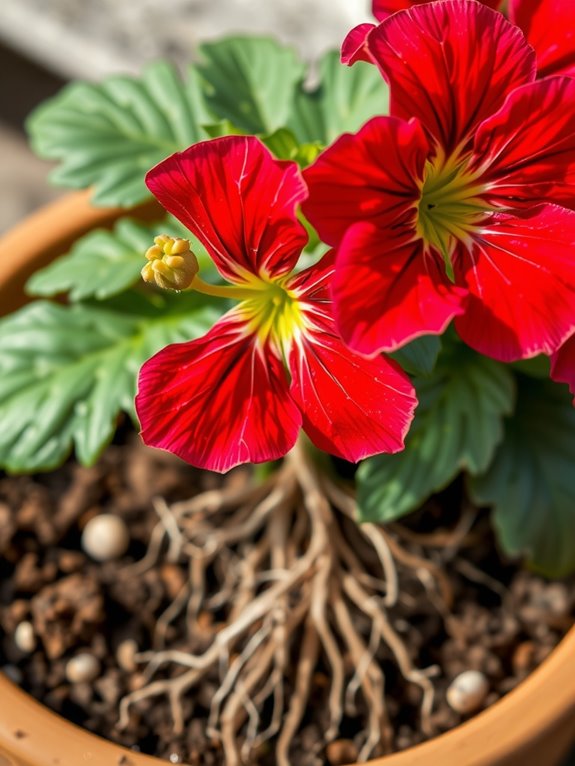
Soil drainage is your main concern when planting geraniums. These plants cannot handle waterlogged soil and will develop root rot in wet conditions.
For garden beds with heavy clay soil, work in compost or organic matter to improve drainage while maintaining some moisture retention. This prevents water from sitting around the roots. In containers, use a quality potting mix that’s specifically formulated for drainage and aeration.
Getting your soil right from the start prevents root problems later. You won’t have to troubleshoot issues that could have been avoided with proper preparation.
Soil Drainage Essentials
When you’re planting geraniums, proper soil drainage matters because it’s the difference between healthy plants and roots rotting in soggy soil.
| Planting Location | Best Soil Mix | Key Addition | Why It Works |
|---|---|---|---|
| Containers | Quality potting mix | Perlite | Enhances drainage and prevents waterlogging |
| Garden beds | Garden soil | Compost/organic matter | Improves soil structure and moisture balance |
| Raised beds | Potting soil blend | Coarse organic matter | Boosts drainage while retaining nutrients |
| Direct ground | Native topsoil | Compost amendment | Balances moisture without excess saturation |
To prevent root rot, make sure your soil drains freely. For containers, choose a potting mix with perlite or similar drainage-enhancing materials. When planting in garden beds, mix 2 to 3 inches of compost or organic matter into your planting holes. This creates the right balance—your geraniums get moisture without waterlogging.
Avoid heavy clay soils that hold too much water. If your native soil is clay-heavy, work in compost or coarse organic matter to break it up and improve drainage. The better your drainage, the better your geraniums will perform.
Amending Heavy Soil
Good drainage starts with the soil itself. If you’re working with heavy clay, you need to amend it before planting. Clay soil compacts around roots and traps moisture, which causes rot. Your goal is to create planting holes where water moves through freely instead of pooling.
To amend heavy soil, follow these steps:
- Mix organic matter like compost into your existing soil at a 1:1 ratio. This breaks up clay particles and improves soil structure so water drains better.
- Work the amended soil thoroughly into your planting holes. This helps roots transition smoothly from the garden bed into the surrounding earth without hitting a barrier of untreated clay.
- Top off beds with Calloway’s Premium Flowerbed Garden Soil. This refreshes both drainage and nutrient levels across your planting area.
When you invest time in better soil, the payoff is real. Your plants establish stronger root systems and perform better because they’re not sitting in wet, compacted earth.
Container Potting Mix Selection
What makes geraniums do well in containers? A good potting mix designed for both drainage and moisture retention. Look for a mix that blends organic materials with drainage components like expanded shale and coconut coir. These ingredients stop water from pooling around roots while still keeping soil from drying out too fast between waterings.
| Feature | Benefit | Why It Matters |
|---|---|---|
| Water-saving crystals | Reduces frequent watering | Maintains consistent moisture |
| Slow-release fertilizer | Feeds for up to 6 months | Supports sustained growth |
| Expanded shale | Improves air circulation | Prevents root rot |
| Coconut coir | Retains moisture naturally | Balances drainage needs |
Add drainage holes to your container and place pot feet underneath to lift it slightly off the ground. This setup keeps soil consistently moist without becoming waterlogged. Your geraniums need both air and water at the roots to perform well.
Water Geraniums Deeply When the Top Inch Feels Dry
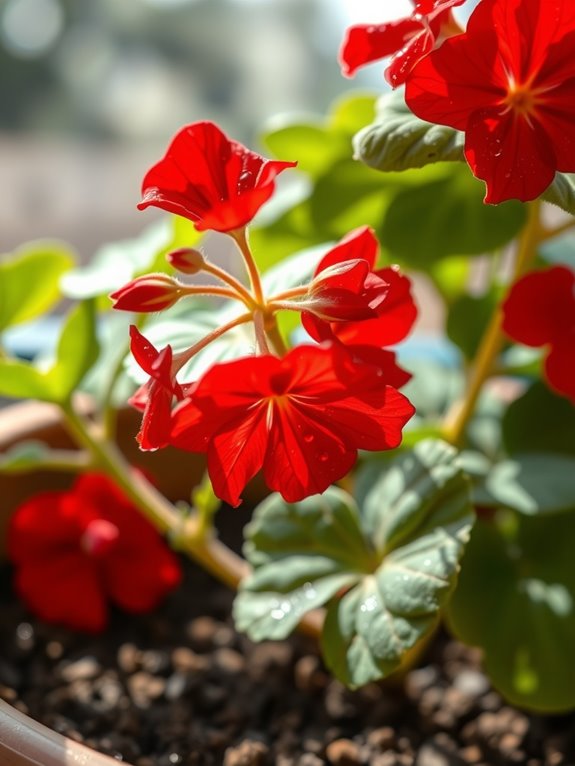
Because geraniums need consistent moisture, develop a simple watering routine that keeps the soil evenly moist without overdoing it. Check your soil moisture by inserting your finger 2–3 inches deep into the soil. Water deeply when the top inch feels dry, making sure moisture reaches the root zone.
Check soil moisture 2–3 inches deep. Water thoroughly when the top inch feels dry to reach the root zone.
Follow these steps:
- Water at the soil base, avoiding overhead watering that wets foliage and invites disease.
- For containers, ensure proper drainage holes and elevate pots on feet to prevent standing water.
- Adjust your watering schedule seasonally. Water more frequently during hot months and reduce watering during rainy periods to prevent root rot.
This approach keeps your geraniums healthy without guesswork.
Fertilize Geraniums Every 4 to 6 Weeks During Growing Season
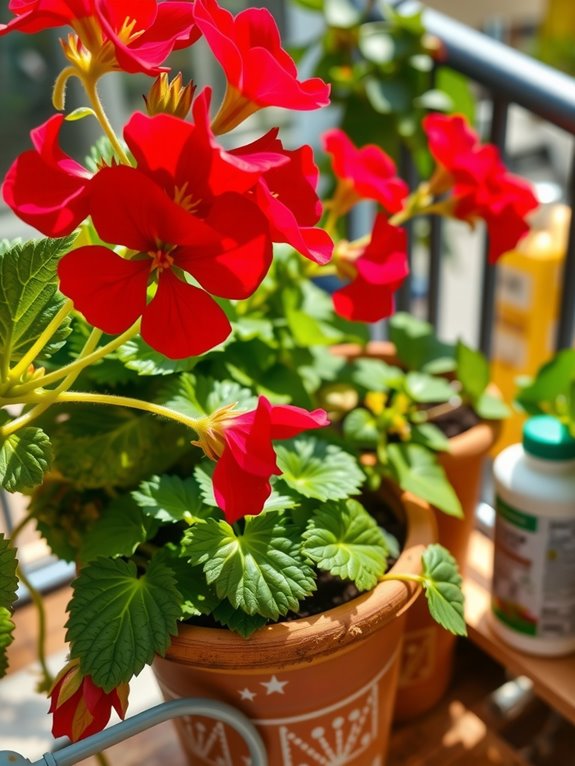
To keep your geraniums blooming well, feed them regularly throughout their active growth period. Apply a balanced fertilizer every 4 to 6 weeks during the growing season.
Skip high-nitrogen formulas, which push excessive leaf growth instead of flowers. Choose an all-purpose liquid plant food or slow-release fertilizer to balance nutrients effectively.
Time your feeding after watering, when the soil is moist. This prevents fertilizer burn and helps roots absorb nutrients more readily. Read the package directions carefully for dilution rates and application amounts. Overfertilizing can damage your plants, so stick to what the label recommends.
Apply this feeding schedule to both new and established geraniums. Regular fertilizing keeps your plants healthy and supports strong root development, which leads to the blooms you want.
Spot and Treat Geranium Pests Early Before They Spread
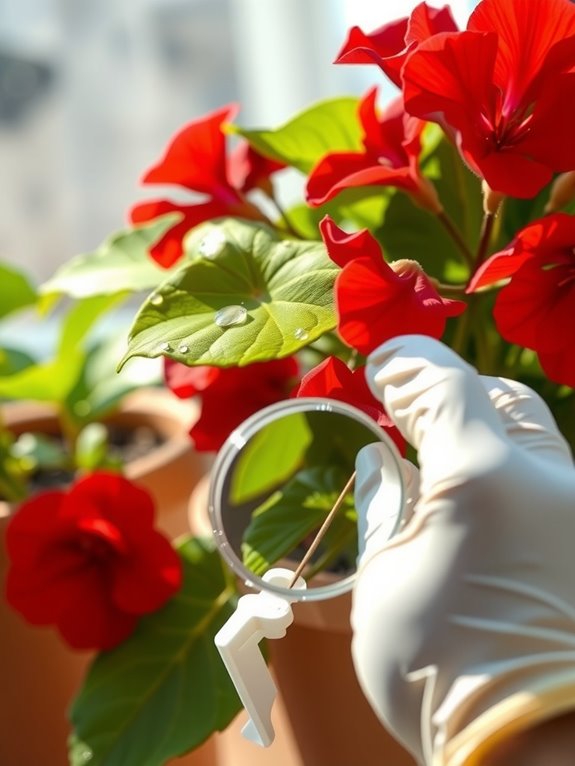
While geraniums are generally hardy plants, they’re still vulnerable to common pests like aphids, spider mites, and whiteflies. Catching infestations early stops them from spreading quickly.
Inspect regularly – Check new growth and the undersides of leaves every week, since pests hide and multiply in these spots. Look closely at stems and leaf joints where bugs cluster together.
Treat promptly – At the first sign of infestation, apply insecticidal soap or neem oil. Spray both the top and bottom surfaces of leaves thoroughly, making sure the liquid reaches all affected areas. Most products work best when applied every 7 to 10 days until the pests are gone.
Support plant health – Water at the base of your plant rather than from overhead, since wet leaves create conditions pests prefer. Make sure your geranium gets adequate light and prune dead or damaged branches regularly. A healthier plant defends itself better against pest damage.
Remove heavily infested leaves and branches right away. Throw them in the trash rather than composting them, so pests don’t spread to other plants. Staying alert and acting fast when you spot the first signs of trouble keeps problems small and manageable.
Deadhead Spent Blooms to Encourage Continuous Flowering
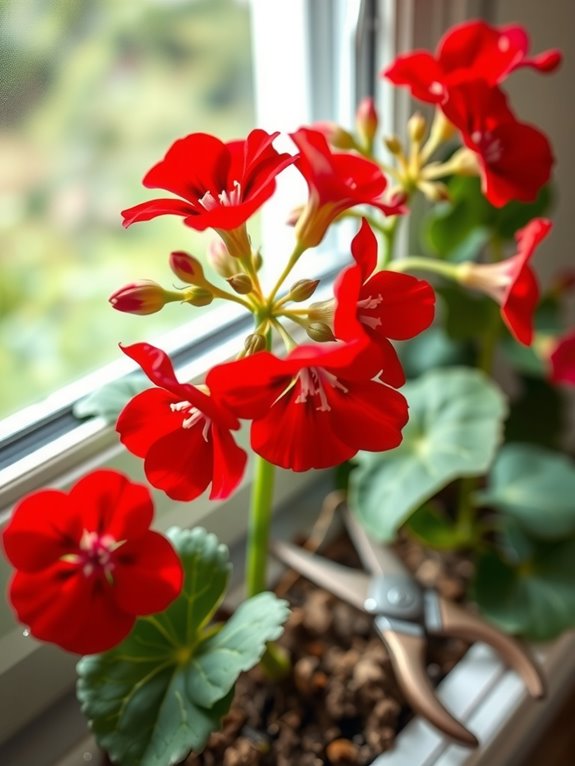
One of the simplest ways to keep your geraniums blooming all season long is deadheading—removing faded flowers before they form seeds.
To deadhead properly, pinch off spent blooms along the stems down to the next leaf node. This directs your plant’s energy toward producing new flower buds instead of seeds. When you do this regularly from early in the season, your geraniums will produce more initial blooms and continue flowering throughout summer.
While you’re removing flowers, also take off any yellowing leaves you notice. This keeps your plant looking better and reduces the chance of disease spreading. Regular deadheading is straightforward maintenance that improves both how your geraniums perform and how they look.
Trim Geraniums in Spring to Prevent Legginess and Maintain Shape
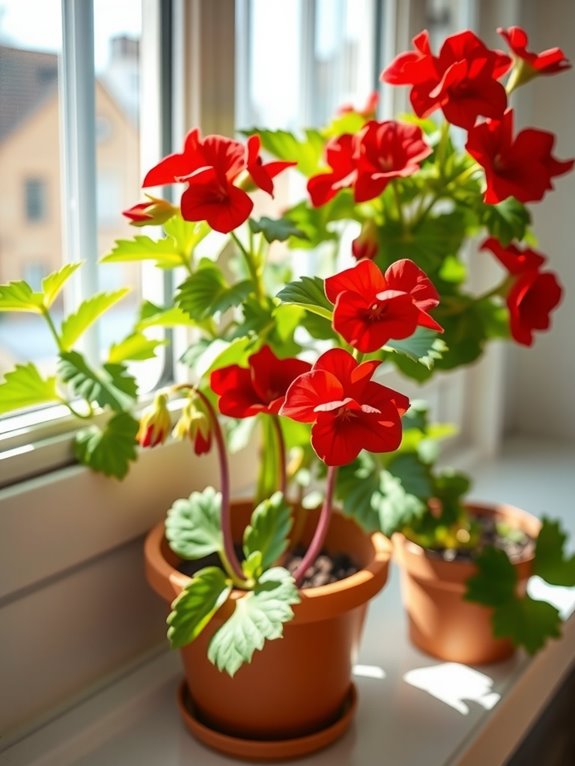
Spring pruning keeps your geraniums compact and full instead of tall and spindly. You’ll remove leggy growth and cut back stems to create a bushier shape that looks intentional and well-maintained.
Spring pruning transforms leggy geraniums into compact, full plants with intentional shape and better structure.
Make clean cuts above leaf nodes. Use sharp pruning shears or pruning knives to cut just above where leaves attach to the stem. This spot is where new shoots form. Clean cuts heal faster and reduce disease risk compared to ragged breaks.
Remove dead or damaged branches first. Look for any stems that are brown, broken, or show signs of disease. Take these out completely before you start shaping the plant. This prevents problems from spreading to healthy parts.
Pinch back new growth to encourage branching. Use your fingers or pruning shears to remove the tips of stems. This stops the plant from growing tall and pushes it to send out shoots from lower down the stem instead. You’ll get a denser outline as a result, and flowering will delay slightly while the plant focuses on branching.
Don’t hold back on how much you cut. Geraniums can handle aggressive pruning. Cut back harder than feels comfortable. Your plant will regrow fuller and stronger than before, with better overall structure and more flowers later in the season.