Start with acidic soil that measures between 5.5 and 6.5 pH. Good drainage matters—roots sitting in wet soil will rot. Water regularly to keep the soil consistently moist but not soggy.
Feed your camellias with an acid-loving fertilizer after blooming ends. In the Southeast, apply fertilizer in March, May, and early July. Check your soil pH every few years since it can shift over time.
Prune immediately after the flowers fade. Remove no more than one-third of the plant at once. This opens up the interior to light and encourages more blooms next season.
Watch for yellow leaves, which indicate iron deficiency. You can correct this with iron supplements applied to the soil or sprayed on the leaves, depending on the product you choose.
These steps form the foundation for steady blooming. Handle them correctly, and your camellias will produce flowers year after year.
Plant Your Camellia in Acidic, Well-Drained Soil
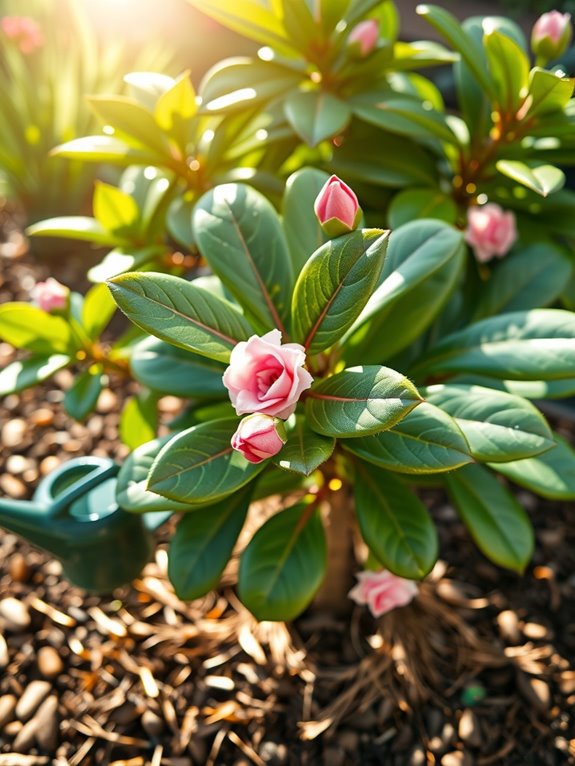
Why does soil matter so much for camellias? You’re investing in a plant that has specific needs, and getting the soil right from the start prevents problems down the road.
Camellias need acidic soil with a pH between 5.5 and 6.5. Test your soil first—this one step stops most issues before they start. If your pH reads above 6.5, mix organic matter or peat moss into the soil to increase acidity. Alkaline soils will weaken your camellia’s health, so avoid them.
Well-drained soil matters just as much. Plant your camellia so the root ball sits at or just above ground level, then slope the soil away from the plant. This setup sheds water effectively and keeps roots from sitting in moisture. You’re creating the exact conditions your camellia needs to do well.
Water and Fertilize Your Camellia Seasonally
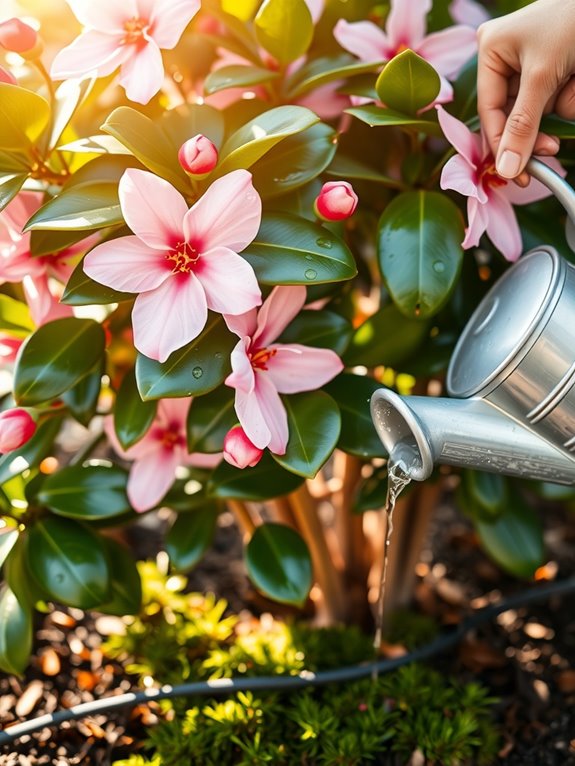
Now that your soil is ready, maintain your camellia with regular watering and feeding. Fertilize after blooming ends using an acid-loving plant fertilizer. In the Southeastern U.S., apply it in March, May, and early July. Water thoroughly right after each fertilization so nutrients soak down to the roots.
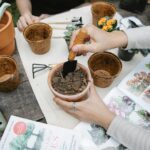
For camellias in containers, keep the soil consistently moist. Don’t let it dry out completely, and avoid waterlogging it. Check the soil with your finger before watering—if the top inch feels dry, water it. Adjust how often you water based on what’s happening with the weather. During hot, dry spells, you’ll water more. In cooler, wetter seasons, you’ll water less.
Use a combination of organic fertilizers and acid-friendly formulations to keep nutrients available in your acidic soil throughout the growing season. If you notice yellow leaves or a pH test shows your soil is above 6.5, apply iron supplements to fix the deficiency. Yellow leaves often signal that iron isn’t available to the plant even though it may be present in the soil.
Prune Your Camellia After Blooms Fade
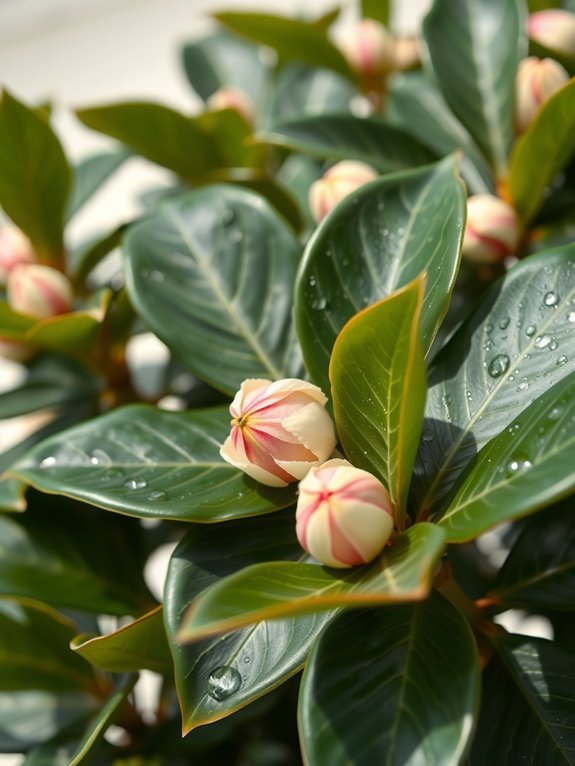
When should you reach for your pruning shears? Right after your camellia’s flowers fade and frost risk has passed. This timing protects next season’s buds and gives your plant the best chance to produce flowers again.
Don’t prune while the plant is blooming. Removing buds during this time reduces how many flowers you’ll get next year. Wait until the blooms drop on their own.
Remove no more than one-third of the plant at once. This approach keeps the plant looking natural while you gradually shape it over time. Thin out dense branches so light can reach the interior and flowers can open fully. Shorten the lower branches to encourage the plant to grow upright and develop a balanced shape.
These steps will keep your camellia in good condition and producing flowers year after year.
Spot and Prevent Common Camellia Problems
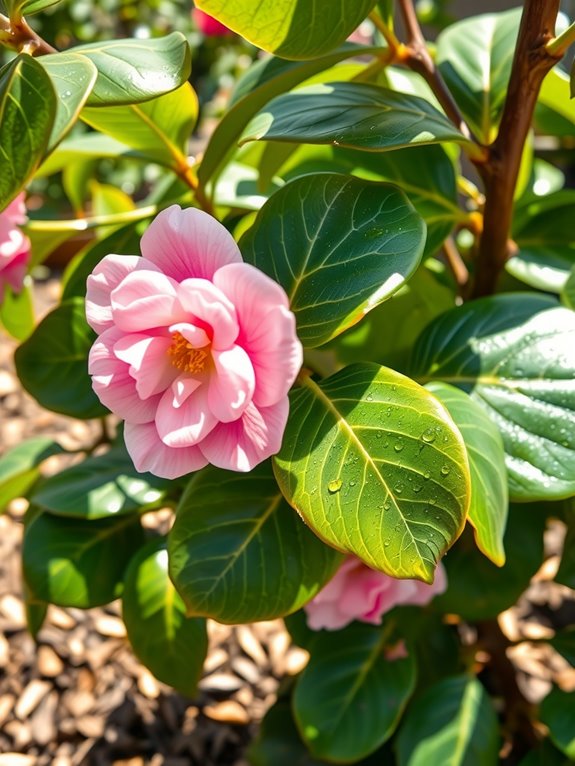
Spot and Prevent Common Camellia Problems
Even with proper care, camellias can develop problems. Catching issues early makes treatment easier, so watch your plants regularly.
Identify Nutrient Issues
Yellowing leaves usually mean your camellia isn’t getting enough iron. Test your soil’s pH first—camellias need a pH between 5.5 and 6.5. If your soil tests low in iron, apply iron supplements according to package directions. Acidic soil naturally holds iron better, so maintaining the right pH prevents this problem from starting.
Watch for Common Pests and Diseases
Scale insects, gall, and petal blight are the main problems you’ll encounter. Check the undersides of leaves and stem joints where scale insects hide. Remove infected flowers and fallen petals immediately to stop petal blight from spreading. Monitor your plants weekly so you catch infestations before they get out of hand.
Fix Bud and Flower Drop****
Inconsistent watering causes buds and flowers to drop before they open. Water deeply when the top inch of soil feels dry, then let it dry out slightly before watering again. Use well-drained soil—camellias hate sitting in soggy conditions. This steady moisture level keeps buds developing properly through the flowering season.
Maintain Soil Health After Blooming
Once flowers fade, apply 2 to 3 inches of mulch around the plant’s base, keeping it a few inches away from the stem. Feed with an acid-loving fertilizer made for plants like azaleas and rhododendrons. This combination keeps your soil pH balanced and provides nutrients that prevent yellowing and weak growth. Check soil pH every two to three years to catch changes early.
Adapt Care to Your Camellia’s Growing Zone and Light Needs
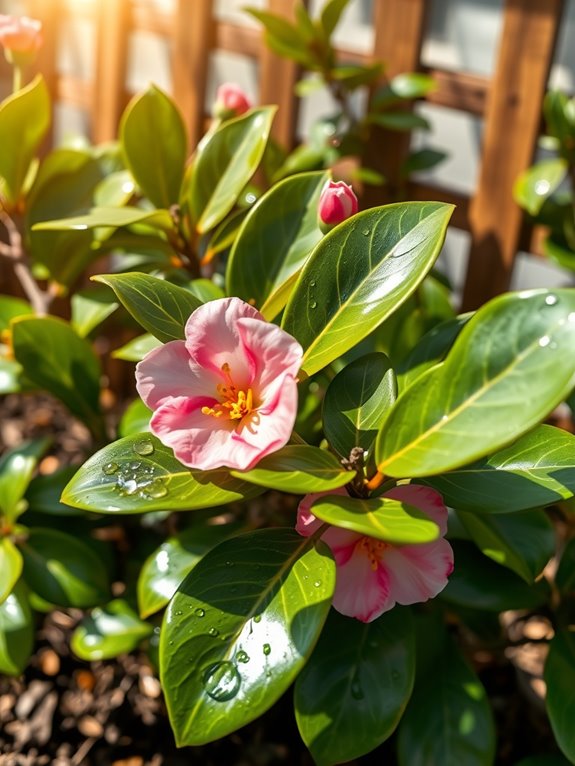
Know Your Growing Zone and Light Needs
Your location determines which camellias will grow well. Sasanqua camellias do best in zones 7–10 and handle heat and sun better than other types. Japonica camellias prefer zones 8–10 and need more shade. Check your USDA hardiness zone before choosing a variety.
Light requirements vary between the two types. Sasanqua performs well in full shade to partial sun. Japonica prefers morning sun with afternoon shade, though mature plants can tolerate more sunlight. Both types benefit from dappled or filtered shade that mimics woodland conditions. This shade protects buds from scorching afternoon heat.
When selecting a camellia, check the specific cultivar’s zone hardiness and bloom time. Sasanqua flowers in autumn and winter, while japonica blooms in late winter and early spring. Match these characteristics to your local climate so your plant flowers when conditions are right.