You’ll need a terracotta pot with drainage holes and well-draining soil to start. Give your lavender six to eight hours of direct sunlight each day, and rotate the pot regularly so it grows evenly on all sides.
Water deeply when the top inch of soil dries out, then let it dry again. Never keep the soil constantly wet, as lavender doesn’t like sitting in moisture.
During the growing season, fertilize lightly every four weeks using a half-strength balanced formula. This gives the plant what it needs without overdoing it.
Prune in early spring and after blooming ends. This encourages bushier growth and keeps the plant from getting too leggy.
Keep nighttime temperatures cool. This helps the plant stay healthy and perform better overall.
Watch for common pests like spider mites and whiteflies. Make sure air can move freely around the plant by spacing it away from walls and other objects. Good air circulation prevents many problems before they start.
Set Up Your Indoor Lavender Pot, Soil, and Drainage
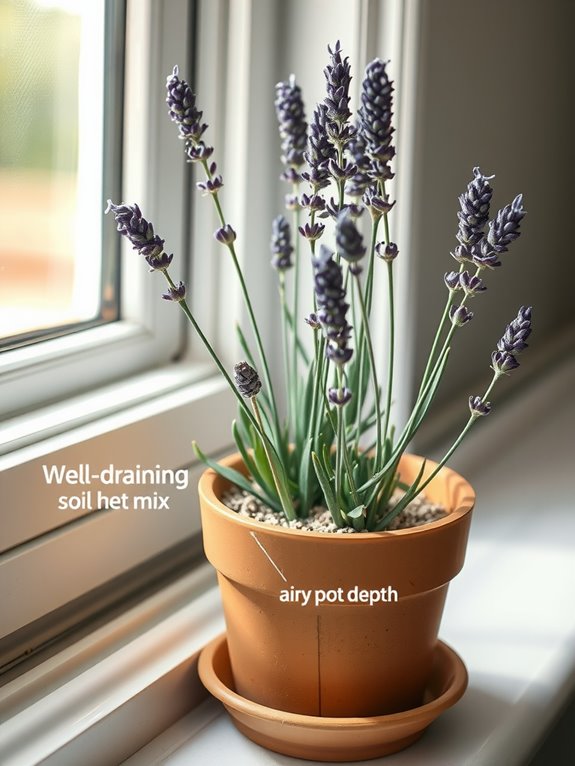
Drainage matters for lavender because the plant is prone to root rot when soil stays wet. Start with a terracotta pot that has at least a 12-inch diameter and bottom drainage holes. Terracotta is porous, which helps prevent water from sitting around the roots.
Fill the pot three-quarters full with a well-draining soil mix made for herbs or cacti. Remove your lavender from its nursery pot and gently loosen the roots before planting. Position the plant so the crown sits slightly above the soil line. Add a 1-inch layer of stones at the pot base, then mix in cactus soil or gritty material throughout to keep the soil from compacting.
Check your soil pH. Lavender prefers slightly alkaline conditions between 6.5 and 7.5. If your mix is too acidic, add lime according to the package directions. Leave about 1 inch of space between the soil surface and the pot rim so water doesn’t overflow when you water.
Give Your Indoor Lavender Bright Light
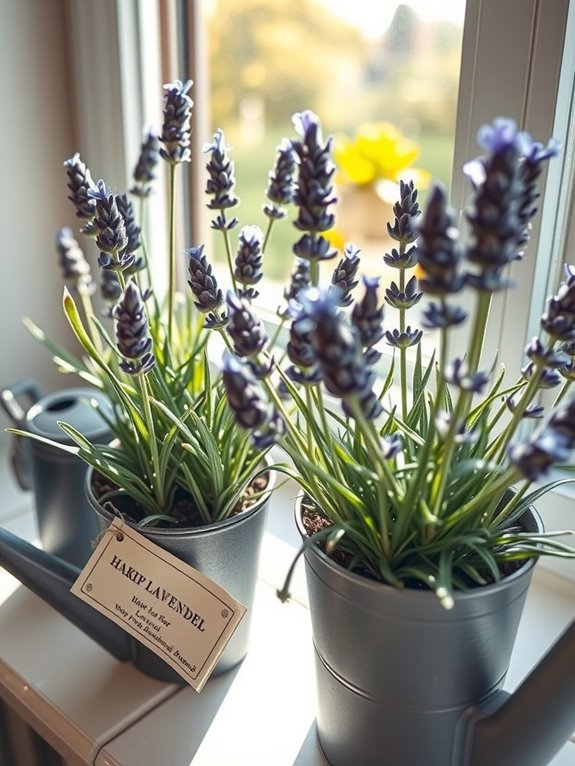
You’ll want to give your indoor lavender at least 6 to 8 hours of direct sunlight each day from a south- or west-facing window. Weak light causes the stems to stretch out and become thin, which also means fewer flowers.
If your home doesn’t get enough natural light, add full-spectrum LED grow lights. These lights help your lavender stay healthy year-round. Position the lights 6 to 12 inches above the plant and run them for 14 to 16 hours per day to mimic strong outdoor conditions.
Rotate your pot every few weeks so all sides receive equal light. This prevents the plant from leaning toward the light source and keeps growth even across the entire plant.
Direct Sunlight Requirements
Lavender needs 6–8 hours of direct sunlight daily to do well indoors. South-facing or west-facing windows work best because they get the strongest light during peak daylight hours. Place your pot right on the window sill itself, not behind other plants or furniture where shade blocks the light.
If your space doesn’t get enough natural light, use LED grow lights to fill the gap. These lights provide consistent, full-spectrum illumination year-round and help your lavender stay healthy during winter months when daylight is limited.
Rotate your pot every few weeks so all sides get equal light exposure. This prevents uneven growth that leads to leggy, weak stems with fewer flowers. Consistent direct sunlight also keeps your plant from becoming vulnerable to disease.
Supplemental Grow Lights
When your home doesn’t get enough natural sunlight—especially in winter or darker rooms—grow lights help keep lavender healthy indoors. Use full-spectrum LED fixtures positioned 8–12 inches above your plant. This distance gives lavender the direct light intensity it needs without burning the leaves.
Set a timer to give your plant 12–16 hours of light each day. This schedule matches natural light cycles and keeps your lavender on track. Position your lights facing the same direction as any windows in your room, ideally south or west-facing, to support balanced growth.
Rotate your pot every few weeks. Each side of the plant needs equal light exposure to prevent weak, uneven stems. This rotation mimics the complete light experience lavender would get outdoors, where the sun moves across the sky throughout the day.
Rotation For Even Growth
Rotate your indoor lavender every few weeks to prevent it from growing lopsided and leggy. When you turn the pot, all sides of the plant get equal light exposure, which stops growth from stretching toward one direction.
If your lavender sits near a south- or west-facing window, rotate it weekly. The sun’s angle changes throughout the day, and weekly rotation keeps the plant balanced and full instead of sparse and stretched.
What happens during rotation is straightforward: consistent turning supports even growth around all the stem tips. You’re actively promoting uniform development across the entire plant rather than letting one side dominate. Stick to a steady rotation schedule, and you’ll see your lavender develop compact, full growth with strong stems instead of weak ones reaching desperately for light.
Water Your Indoor Lavender Correctly
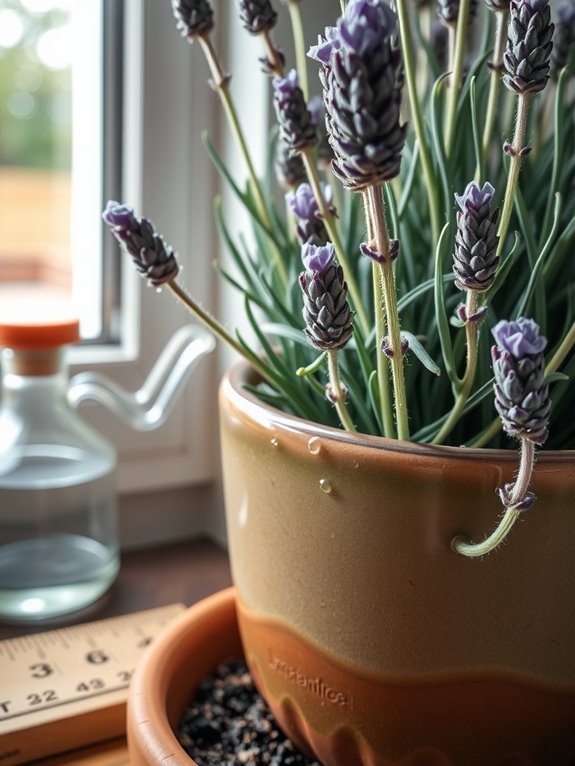
Because lavender plants prefer dry conditions, proper watering is one of the most important things you’ll do to keep yours healthy. Water deeply until drainage flows from the pot’s bottom, then let the top 1–2 inches of soil dry completely before watering again. Check soil moisture by feeling it with your finger; if it’s still damp, wait several days before testing again.
Never let your indoor lavender sit in constantly wet soil. This increases root rot risk and causes yellowing lower leaves. Always water at soil level rather than overhead to minimize leaf moisture and prevent fungal problems.
During spring and summer, your lavender may need more frequent watering since soil dries faster with brighter light exposure. The drying phase between waterings is what keeps your plant healthy, so don’t rush to water just because the plant looks dry on top.
Keep Indoor Lavender Cool (Adjust for Winter)
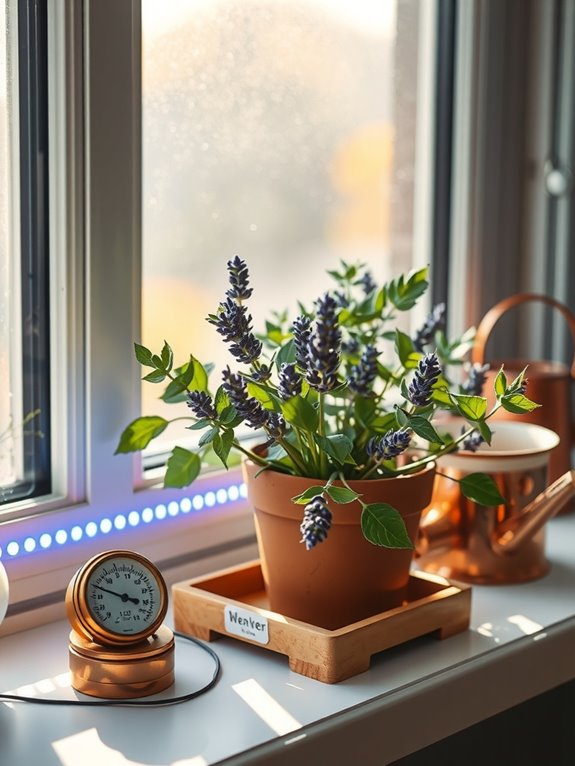
How does your lavender stay vigorous year-round? You need to create winter dormancy conditions that keep your indoor lavender healthy. Maintain cool temperatures between 40–50°F at night and 60–65°F during the day. This rest period is important for plant health.
Keep your lavender away from heaters and drafts. Temperature swings stress the roots and weaken the plant. Water sparingly in winter by letting the top inch of soil dry between waterings. This prevents root rot, which kills indoor lavender quickly.
Provide bright light for 6–8 hours daily. Use supplementary grow lights if your windows don’t give enough light. Good air circulation around your plant stops fungal problems from developing while the plant is dormant.
Skip heavy pruning during winter. Leave the dormant canes intact and wait until spring growth begins to do light pruning. This approach respects the plant’s natural cycle and keeps it in better shape when the growing season returns.
Fertilize Sparingly During Growing Seasons
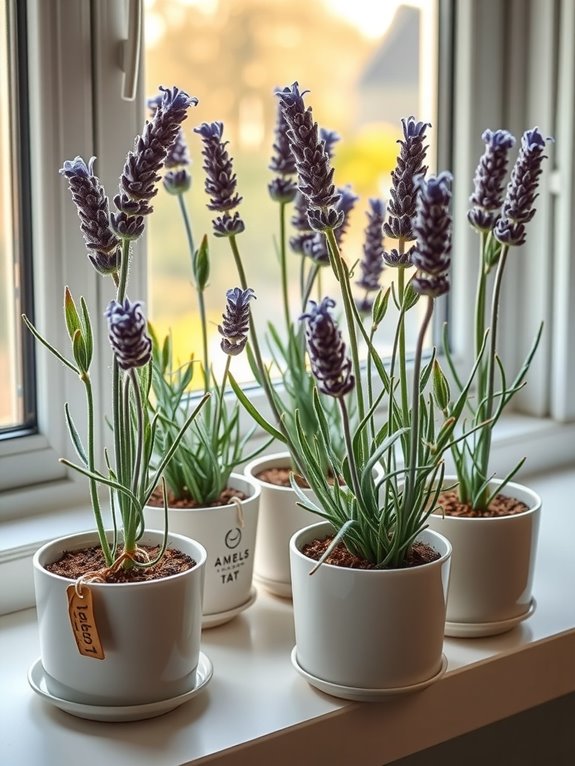
Feed your indoor lavender lightly during the growing season. Apply an all-purpose, water-soluble fertilizer at half strength once every four weeks during spring and summer. That’s all the feeding this plant needs.
Water your lavender before you fertilize. Moist soil protects the roots from fertilizer burn. Skip this step and you risk damaging them.
Stop fertilizing when winter arrives and whenever your plant stops actively growing. Overfeeding pushes leaf development instead of flower production, which works against what you want from lavender. The plant doesn’t need food when it’s not growing, so holding back on fertilizer actually helps you get better blooms.
Fertilizing Schedule And Timing
Since lavender grows best in lean soil, fertilize sparingly and stick to a consistent schedule during the growing season. Use an all-purpose fertilizer mixed at half strength and apply it every four weeks from spring through summer. Look for an herb-specific fertilizer that matches the lean soil conditions lavender prefers. This approach stops excess nitrogen from building up, which would reduce flowering and weaken your plant.
Stop fertilizing completely when winter arrives and growth slows down. Your lavender needs this dormant period to rest. If you’ve just repotted your plant, wait until spring before you start fertilizing again. Fertilizing right after repotting stresses the plant unnecessarily, so hold off on your regular schedule until active growth resumes.
Balanced Nutrient Application Methods
Now that you have your fertilizing schedule set, focus on the application method itself. Dilute your lavender fertilizer to half strength by mixing it thoroughly with water before you apply it. This step prevents nutrient shock and protects your plant’s roots from burning.
Choose a balanced nutrient formula made specifically for herbs. Look for one that is low in nitrogen but higher in potassium and phosphorus to support blooming. Always apply the diluted solution directly to moist soil, never to dry earth. Wet soil helps the roots absorb nutrients safely and reduces the risk of damage.
You have two main application approaches. The first is liquid fertilizer applied every two to three weeks during the growing season. The second is slow-release fertilizer, which delivers steady nutrition over several weeks or months without requiring frequent application. Slow-release options work well if you prefer a hands-off approach and want to avoid overfeeding.
Water your lavender normally after applying fertilizer, letting excess moisture drain completely through the pot’s drainage holes. This measured approach keeps your lavender healthy without the risk of overfeeding or root damage.
Prune for Bushier, Fuller Growth
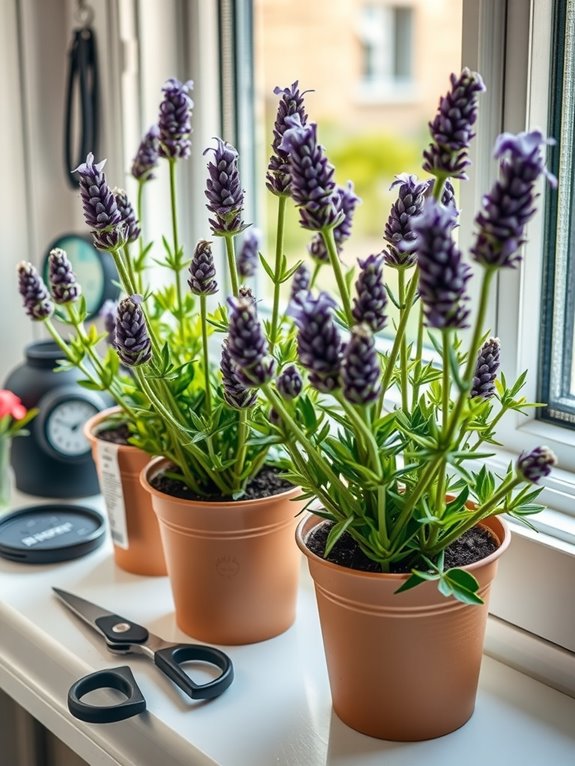
To develop a dense, rounded shape in your indoor lavender, you need to prune regularly. Do this in early spring before new growth starts, then again after blooming in late summer. This schedule keeps your plant fuller throughout the year.
Start by removing any dead or damaged stems. Cut just above a leaf node—the spot where leaves branch from the stem. Avoid cutting into woody sections that won’t produce new growth, as these parts won’t recover well.
When you harvest flowers for arrangements, you’re actually triggering the plant to grow bushier. The cutting stimulates new branches to develop, so use your blooms without worry.
Keep your pruning light and steady rather than aggressive. Heavy cutting can reduce flowering and damage the plant. Consistent, careful cuts help create a plant structure with denser leaves and better bloom distribution across the entire plant.
Troubleshoot Common Indoor Lavender Problems
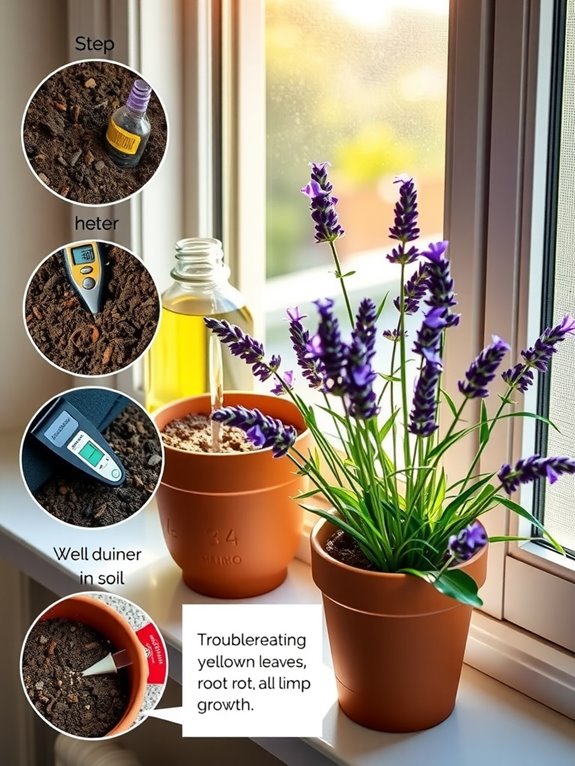
Even though lavender is fairly hardy, indoor conditions can create problems that affect its health and blooms. Start by checking your plant regularly for pests like aphids, whiteflies, and spider mites. Remove any pests you find right away to stop infestations from spreading.
Improve air circulation around your plant by placing it where air moves freely. Avoid watering from above, which encourages fungal diseases like powdery mildew. Instead, water at the base of the plant.
Check your drainage carefully. If roots are crowded or rotting, prune them back or repot the lavender into well-draining, sandy loamy soil. Poor drainage is one of the most common problems indoors.
Yellowing leaves usually mean you’re watering too much or the plant isn’t getting enough nutrients. Let the top 1 to 2 inches of soil dry out between waterings. During spring growth, feed your plant with balanced herb fertilizer at half the recommended strength. Skip nitrogen-heavy fertilizers because they reduce flowering.
Using lean soil and watering properly will prevent most indoor lavender problems. These two things work together to keep your plant healthy.