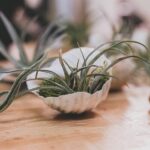
You’ll keep your air plants healthy by following a few straightforward practices. Place them near an east-facing window or under full-spectrum lights for twelve hours daily. This gives them the light they need to grow properly.
Water your plants by soaking them weekly for twenty to thirty minutes. After soaking, shake off the excess water and let them dry completely within a few hours. Rainwater works better than tap water when you can get it, since it lacks the chemicals found in treated water.
Set up your display in a spot with good airflow. Air plants need moving air to prevent rot and fungal problems. Keep the temperature between fifty and ninety degrees Fahrenheit. Avoid placing them near heating vents or air conditioning units that create sudden temperature changes.
Watch for brown tips on the leaves. This tells you something needs adjustment—usually light, watering frequency, or airflow. If most of the plant looks green and healthy, you’re on the right track.
Once your plants bloom and start producing pups (baby plants), you can detach them when they reach one-third the size of the mother plant. Let the pup dry for a few days before placing it in its own spot.
Pay attention to how your specific plant responds over time. Each air plant has slightly different preferences, and careful observation will show you what works best.
Position Your Air Plant Near a Window or Under Full-Spectrum Lights
How much light does your air plant actually need? You’re probably wondering if you’re giving it enough. Air plants need good light to photosynthesize and absorb moisture properly, so location matters.
Air plants need good light to photosynthesize and absorb moisture properly, so choosing the right location is essential for their health.
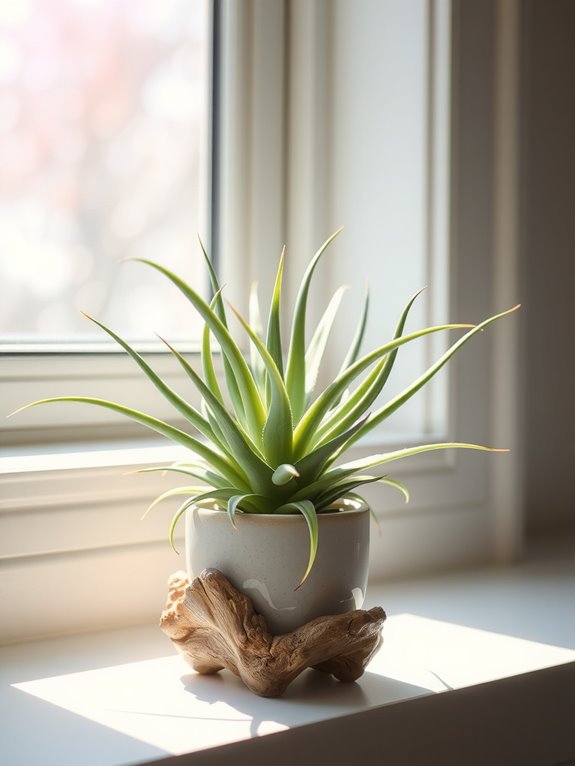
If you have an east-facing window, position your plant there. It will get direct sun for several hours in the morning and indirect light throughout the day. This is the ideal setup.
Don’t have consistent window access? Move your plant to a sunny spot on weekends. This prevents it from getting too little light.
For plants kept away from windows, install full-spectrum fluorescent tubes or a 48-inch four-tube fixture. Keep your air plants between 6 and 36 inches away from these lights, depending on how bright you want the illumination. Closer distance means stronger light.
Set your lights on a timer for 12 hours each day. This regular schedule keeps your plant’s photosynthesis on track and helps it absorb water properly.
Water Your Air Plant Weekly With a 20–30 Minute Soak
Now that your air plant has good light, focus on the second part of care: water. Soaking is the method you need, and it’s straightforward.
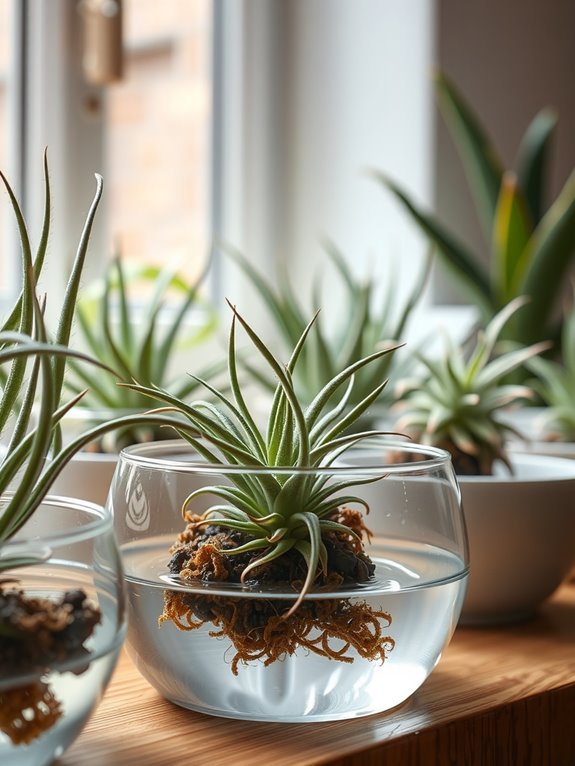
Once a week, submerge your air plant in room-temperature water for 20–30 minutes. This soak gives your plant the hydration it needs while keeping it from staying constantly wet. After soaking, shake off the extra water and let your plant air-dry completely within a few hours. This step stops rot from forming.
Use rainwater when you can, though any clean water works. Distilled water doesn’t work well for air plants, so skip it. Misting between soaks is optional and won’t hydrate your plant as evenly as soaking does.
Stick with the weekly soak as your main watering method. This routine keeps your air plants healthy.
Dry Your Air Plant Completely Between Waterings
Because moisture causes rot and mold in air plants, drying thoroughly after watering matters as much as the soak itself. Follow these steps to dry your Tillandsia properly.
Allow 1–3 hours of drying time** in a well-lit area. Position your plant where air moves freely around it. Good airflow** prevents dampness from sitting on the leaves and roots.
Provide bright light during drying. This helps your plant use stored moisture more efficiently. The combination of light and airflow speeds up the process.
If your plant stays damp longer than expected, your airflow needs adjustment. Move it to a location with better ventilation or give it additional drying time. Check that air can circulate on all sides of the plant.
Never return your air plant to sealed containers while it’s still wet. Trapped moisture inside closed spaces invites rot to develop. Wait until the plant is completely dry before putting it back in its normal location.
Choose a Display That Allows Easy Removal and Air Flow
Pick a display that lets you remove it easily for watering. Air plants need regular water baths to stay healthy, so you’ll want something that doesn’t require disassembly or complicated handling. Glass terrariums with open tops work well because air circulates freely around your plants. Cork bark mounts are another solid option for the same reason.
Avoid fully sealed containers or displays with tight crevices. These designs trap water and create damp, stagnant conditions where rot develops quickly. Moisture needs to escape after watering, and air needs to move around your plants constantly. Look for displays where water can drain away naturally and air can reach all sides of the plant.
When selecting materials, prioritize open designs over decorative containers that look nice but limit airflow. Your priority is keeping the plant healthy, not creating an enclosed environment.
Prioritize Air Circulation Design
Where you display your air plant matters just as much as how you water it. Your display design directly impacts your plant’s health by controlling how quickly it dries after watering. You need to prioritize air circulation in every choice you make.
Consider these three display options that work well:
Glass terrariums with open tops or ventilation holes. These allow steady airflow around the leaves. Make sure the opening is large enough that air can move freely inside. A terrarium with at least a 2-inch opening works better than one with tiny holes.
Mounted displays on driftwood using translucent fishing line. Tie the plant to the wood with the fishing line so the leaves stay exposed to air. This method won’t hold water against the plant, which is the main advantage. The fishing line is barely visible and won’t interfere with how the plant looks.
Locations with natural or fan-assisted airflow. Place your plant near a window where a breeze moves through, or position a small fan 3 to 4 feet away to keep air moving around it. Even gentle air movement speeds up drying time after watering.
Avoid sealed containers or globes. They trap moisture and create conditions where mold and rot develop quickly. Look for places in your home where you can see air moving around the plant. Good airflow prevents the common problems that challenge beginners.
Select Easy-Access Containers
Glass terrariums with open ventilation or detachable cork bark mounts work well for displaying air plants. These options let you access your plant quickly when it’s time to water. Avoid fully sealed containers, which trap moisture and lead to mold or rot.
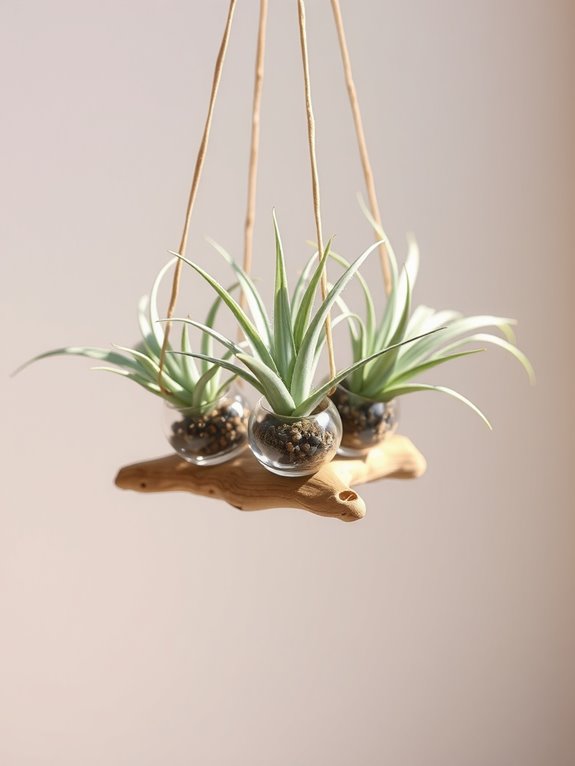
Driftwood secured with fishing line and macrame hangers are practical alternatives. Both setups keep your plant’s roots visible and allow air to circulate between waterings.
Position your display in bright, indirect light, ideally within 6–36 inches of fluorescent lighting. This placement supports the drying cycle your air plant needs after watering.
Design your display so you can remove it easily for 15–30 minute soaks or longer water immersions. Once you finish watering, return the plant to its spot where it gets good airflow and light. This routine keeps your plant in good condition.
Avoid Water-Trapping Displays
Now that you’ve picked a container, check that it won’t trap water and damage your plant. Look for open-air displays that support proper air circulation and moisture management. Stay away from glass globes or enclosed terrariums. These create humid pockets where mold grows.
Consider these options instead:
- Cork bark or driftwood mounts that let air flow freely around your plant
- Macrame hangers that keep leaves exposed and allow quick drying
- Open-sided displays rather than fully enclosed setups
Make sure your display is easily removable so you can soak and dry your air plant without difficulty. Air exchange matters. When water moves through quickly and air keeps circulating, your plant stays healthy. Think of your setup as a breathing home for your plant, not a sealed box.
Keep Your Room Temperature Between 50–90°F
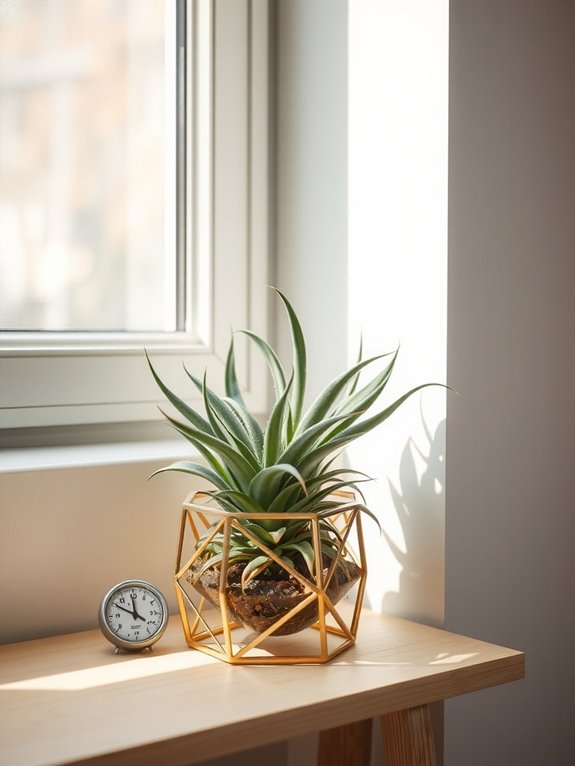
Why does temperature matter so much for air plants? Your room conditions directly impact Tillandsia health. Air plants do best when you keep temperatures between 50–90°F. This range lets them grow steadily without stress. When temperatures drop below 50°F or climb above 90°F, your plants slow down. They may also develop damage that weakens them over time.
Keep your air plants away from heating and cooling vents. These vents create rapid temperature swings that stress your plants. Also avoid placing them near windows where frost enters during winter or where heat builds up in summer.
Monitor your home’s conditions regularly to catch temperature problems early. Indoor air tends to be dry, so you’ll need to mist and soak your plants more often when temperatures swing toward extremes. Consistent, moderate temperatures give your air plants the stable environment they need to grow properly.
Adjust Watering and Water Quality for Your Climate
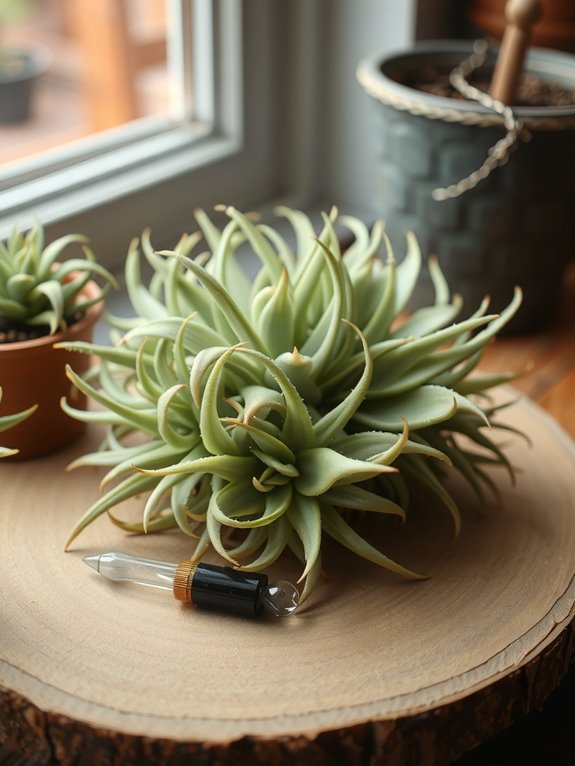
Your climate directly affects how often you need to water your air plants. In dry environments, you may need to soak them more frequently, while humid climates require less frequent watering since moisture stays in the air longer.
Use rainwater or tap water that has sat out for 24 hours when soaking your plants. Skip distilled water—it lacks the minerals your air plants need to stay healthy. Avoid chlorinated water if possible, as chlorine can damage the delicate leaves.
After soaking, your plants must dry completely within 1 to 3 hours. This step matters most in humid climates where water naturally lingers on the leaves and can cause rot. Increase air circulation by placing your plants near a fan or in a spot with good airflow. Bright, indirect light also speeds up drying time. Position your plants where they receive morning or afternoon light without direct midday sun beating down on them.
Climate-Specific Soaking Frequency
Your climate directly affects how long you should soak your air plants, so adjust your routine based on where you live.
Dry climates require longer soaking periods. Soak your plants for 1–2 hours or leave them in water overnight to allow thorough hydration. Water evaporates quickly in dry air, so extended soaking helps your plants absorb enough moisture to stay healthy between soaks.
Typical conditions call for a standard 15–30 minute soak once a week. This works well for most air plant species and balances moisture intake with proper drying time.
Cool, humid environments need shorter soaks because moisture stays in the air longer. Your plants absorb water more efficiently when humidity is high, so 10–15 minutes may be enough.
Use rainwater when possible since it lacks chemicals. Filtered tap water works as a second choice. Skip distilled or softened water because these lack nutrients your plants need.
After soaking, let your plants dry completely within a few hours. Place them in a spot with good air movement and bright light. Proper drying prevents rot and keeps your plants in good condition.
Match your soak frequency and duration to your specific climate, and your air plants will get the right balance of water and dryness they need to stay healthy.
Water Type Selection Guide
The water you choose matters as much as how often you water. Different water sources contain varying mineral levels and chemicals that affect your air plants’ health. Stick with filtered tap water, settled tap water, bottled water, pond water, or aquarium water. These options keep your plants healthy because they contain minerals your plants need. Avoid distilled and softened water—both lack the beneficial minerals your plants require.
When you soak your air plants, use one of these approved water types to ensure proper nutrient absorption. After soaking for however long suits your climate, drying becomes the next important step. Place your plants in open air for one to three hours after soaking to prevent rot and guarantee complete moisture loss. This attention to water quality and proper drying keeps your collection healthy.
Humidity and Drying Adjustments
Where you live matters just as much as how you water. Your climate directly impacts how quickly your air plants dry and how often you’ll need to water them.
Dry climates – Plants dry in 15–20 minutes after soaking. Water more frequently without worrying about rot since moisture won’t linger on the leaves.
Humid indoor spaces – Drying takes several hours. Reduce how often you water and extend the time between waterings to prevent water from sitting on the plant.
Mixed conditions – Combine soaking with light misting between dunks, targeting 1–3 hour drying windows. This approach balances hydration with adequate drying time.
After soaking, shake off excess water immediately. Good air circulation is your best tool for preventing rot. Hotter, drier environments benefit from longer or more frequent soaks. Cooler, humid conditions work better with shorter soaks and longer drying periods. Pay attention to how your specific plants respond over a few weeks, and you’ll find the watering schedule that fits your home.
Diagnose Brown Leaf Tips: Check Light, Watering Frequency, and Air Circulation
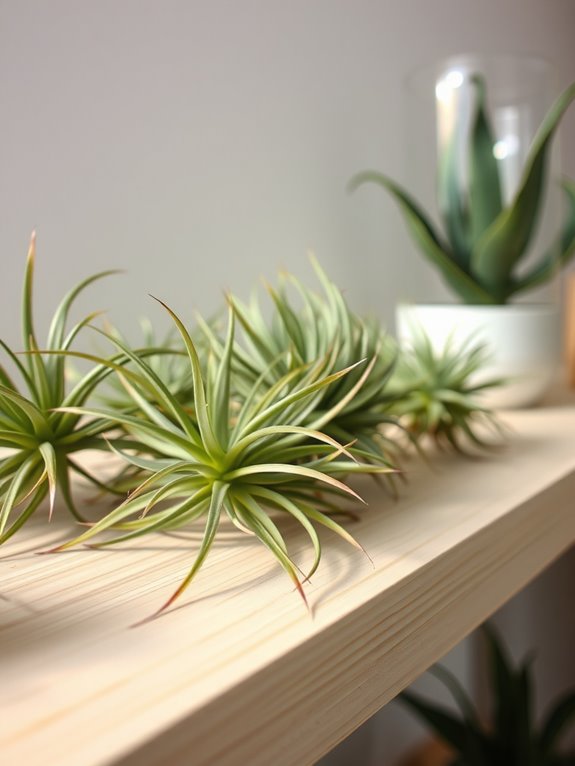
When you spot browning on your air plant’s leaf tips, one of three issues is usually responsible: light exposure, watering habits, or air circulation. Work through each systematically to identify and fix the problem.
| Problem | Cause | Solution |
|---|---|---|
| Brown tips | Direct harsh sunlight | Move to bright indirect light |
| Brown tips | Underwatering | Increase soaking to 1–2 hours |
| Brown tips | Poor air circulation | Improve airflow around plant |
| Brown tips | Lingering moisture | Ensure thorough drying after watering |
| Brown tips | Poor water quality | Avoid distilled or softened water |
Adjust Light Exposure
Start by moving your plant away from direct sunlight. Air plants need bright light, but intense rays damage the leaf tips. Place your plant near a window where it receives indirect light throughout the day. If you’re currently keeping it in a dark corner, moving it closer to a light source should help stop new browning.
Check Your Watering Method
Underwatering causes brown tips on air plants. Soak your plant in room-temperature water for 1 to 2 hours once a week. After soaking, shake off excess water and let it dry completely within 4 hours. The key is thorough drying between waterings. Also check your water source. Distilled or softened water can contribute to browning, so use filtered or tap water instead.
Improve Air Movement
Stagnant air traps moisture around the leaves and accelerates damage. Position your plant where air naturally circulates, such as near a window or in a room with moderate airflow. Avoid placing it in enclosed spaces like closed terrariums without ventilation.
Recognize Healthy vs. Stressed Air Plants: What to Watch For
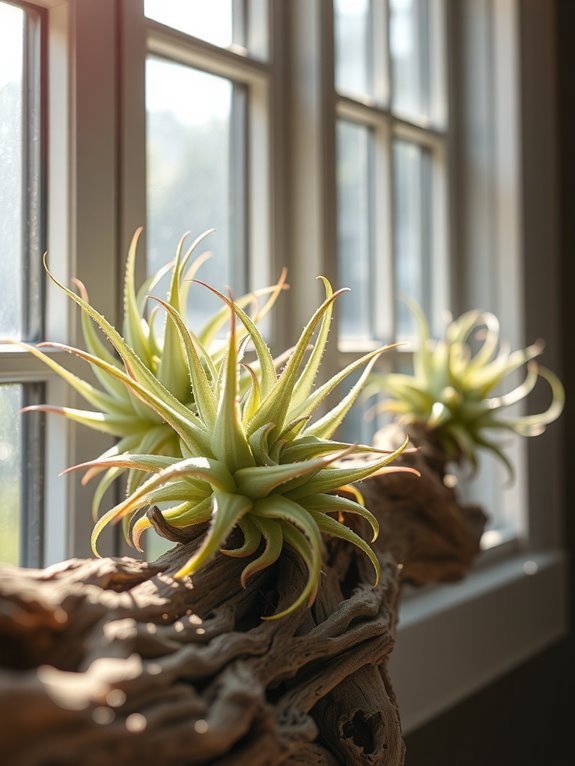
Spotting the difference between a healthy air plant and a struggling one comes down to knowing what healthy looks like. Pay attention to these key indicators of air plant health.
Leaf appearance: Healthy plants have evenly colored leaves with no brown tips. Stressed plants show persistent browning or soft, mushy leaves that indicate rot. Check your plant’s leaves weekly. If you see these signs, your plant needs different care conditions.
Hydration and curling: Minimal leaf curling means your plant is getting enough water and light. Significant curling tells you the plant is underwatered or not getting enough light. Adjust your watering schedule or move the plant to a brighter location based on what you observe.
Drying time after watering: Your plant should dry completely within a few hours after watering. If it stays damp or sits in sealed containers, mold and rot develop quickly. Remove your plant from any enclosed spaces right after watering, and make sure air can circulate around it.
Yellowing leaves: This indicates overwatering or too much direct sun. Scale back your watering frequency or move the plant away from intense light. Both conditions can damage the plant if left unchecked.
Watch these four signs regularly and adjust your care based on what you see. Your observations are the best tool you have for keeping your air plant healthy.
Separate and Care for Baby Plants (Pups) Once They Mature
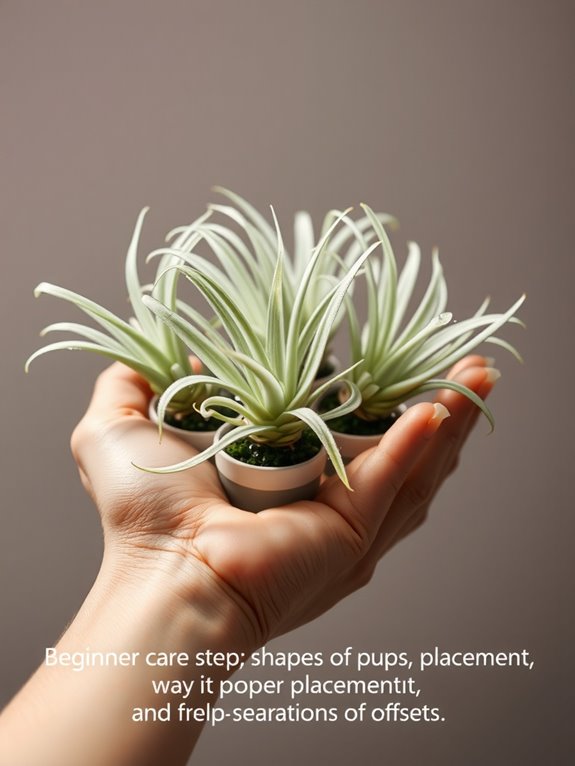
How do you know when your air plant’s babies are ready to separate? Your pups should reach one-third to one-half the mother plant’s size before detachment. This size range tells you they have enough developed structure to survive on their own.
To remove a pup, gently twist it at the base in a downward motion. If twisting doesn’t work, carefully cut near the connection point with a clean knife. The mother plant will continue producing new pups for years, so don’t hesitate to take action.
After you separate the pups, place them on a flat surface with good light exposure and steady air circulation. This setup supports healthy growth without putting stress on the young plants. The combination of light and airflow matters more than any other factor at this stage.
Once a pup grows to half the mother plant’s size, you can detach it and repeat the process with other developing pups. Each separation grows your collection while giving young plants the right conditions during their early development.
Plan for One Lifetime Bloom and Pup Production
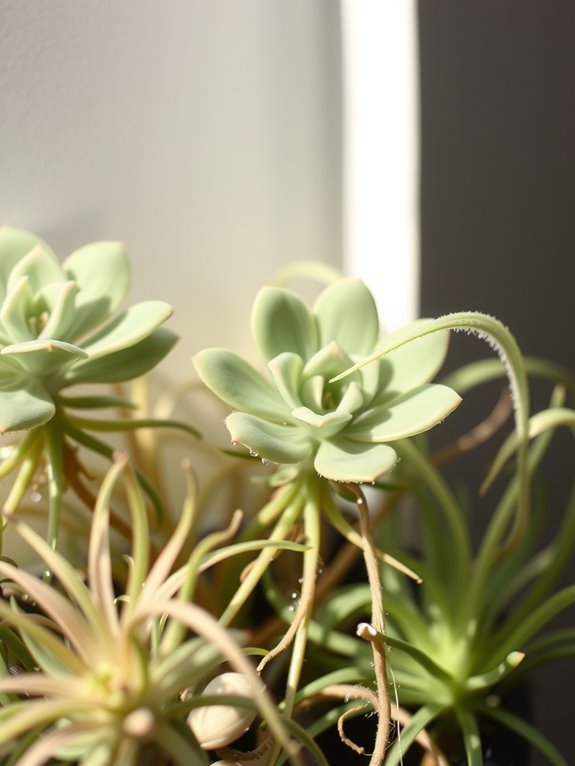
Understanding your air plant’s life cycle helps you build a collection that continues to grow. Your plant will bloom once during its lifetime, then produce 2–5 pups. Here’s how to work with this natural process.
Expect one bloom
Your air plant flowers once, and this bloom signals maturity. The flowering event marks when pup production begins. After the bloom fades, the plant will focus energy on creating offspring rather than growing larger.
Air plants bloom once in their lifetime, signaling maturity and triggering the start of pup production instead of further growth.
Remove pups at the right time
Wait until baby plants reach 1/3 to 1/2 the size of the mother plant before separating them. At this point, they have enough developed roots to survive on their own. Gently twist each pup away from the base, or use a clean knife to cut it free. Plant the pup in well-draining soil or attach it to a mount if you prefer the mounted style.
Continue caring for the mother plant
The parent plant doesn’t die after flowering. Keep watering and caring for her as you normally would. She’ll produce new pups over several years following the bloom, giving you multiple opportunities to expand your collection without having to start from seeds.