Light Requirements
Place your Dieffenbachia where it gets bright, indirect light. Direct sun will fade the leaf patterns, while too little light causes the stems to stretch out and look sparse. A spot near an east or west-facing window works well. If you notice the plant getting leggy or losing its variegation, move it closer to a light source.
Watering and Soil
Water when the top inch of soil feels dry to the touch. Stick your finger into the soil to check. Use a pot with drainage holes and fill it with a mix of peat moss and perlite to keep water from sitting around the roots. Overwatering causes root rot faster than almost any other mistake, so err on the side of dry rather than wet.
Temperature and Humidity
Keep the plant between 65 and 75 degrees Fahrenheit. Avoid placing it near cold drafts or heating vents. Mist the leaves 2 to 3 times per week with a spray bottle to raise humidity, or group it with other plants to create a more humid microclimate.
Feeding
Fertilize every 4 to 6 weeks during spring and summer with a diluted 20-20-20 formula. Follow the package directions for dilution rates. Stop fertilizing in fall and winter when the plant grows more slowly.
Pruning and Propagation
Cut stems just above a leaf node to encourage the plant to branch out and fill in. Use clean scissors or pruning shears for each cut. Place the cuttings in moist sphagnum moss to develop roots, then pot them up once roots are about half an inch long.
Dieffenbachia Light Requirements: Bright Indirect Light for Vibrant Variegation
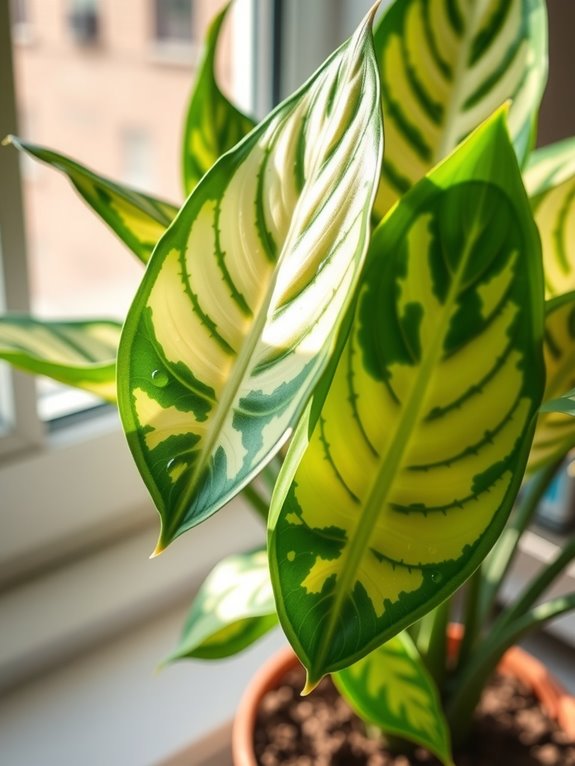
Place your Dieffenbachia near a window that gets bright, indirect light. This type of lighting keeps the plant healthy and maintains the leaf patterns you want to see.
Avoid direct sunlight. Strong rays can burn the leaves and ruin how your plant looks. Use sheer curtains to filter intense light, or position the plant away from south-facing windows where sunlight gets too strong.
Bright indirect light helps your Dieffenbachia grow faster and keeps its color patterns sharp. If your plant sits in a dimmer spot, it will still survive, but growth will slow down. The goal is finding the right balance between brightness and avoiding harsh rays.
Watering Schedule: When and How to Water Your Dieffenbachia
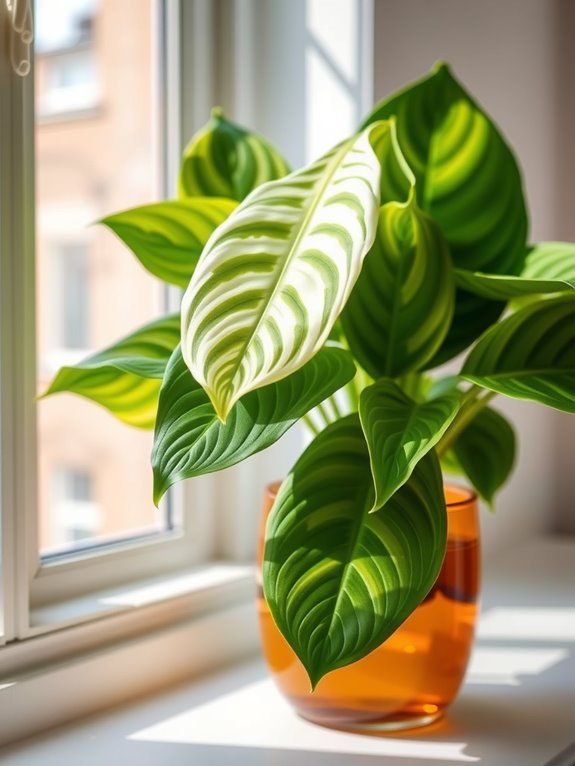
Proper watering is one of the most important things you can do for your Dieffenbachia. Skip the fixed schedule and check your soil first instead. Stick your finger about an inch into the soil. When it feels dry at that depth, it’s time to water.
Skip fixed watering schedules. Instead, check your soil first—when it feels dry an inch down, it’s time to water.
Water thoroughly until water drains from the bottom of the pot. This matters because it flushes out salts and ensures the roots get moisture all the way down. Never let your plant sit in standing water, as this causes root rot.
Use pots with drainage holes. This single feature prevents water from pooling at the bottom and damaging your roots.
For larger plants, you’ll typically water about twice per week during the growing season. Reduce watering frequency in winter when your Dieffenbachia grows more slowly. Pay attention to the conditions in your space—bright light, warm temperatures, and low humidity all dry out soil faster. Adjust how often you water based on what you observe.
Rainwater is better than tap water when you can get it. Tap water leaves mineral deposits on leaves over time, which looks dull and can clog pores. Collect rainwater in a bucket or use it straight from a barrel if you have one.
Dieffenbachia Temperature and Humidity: The Ideal Growing Range
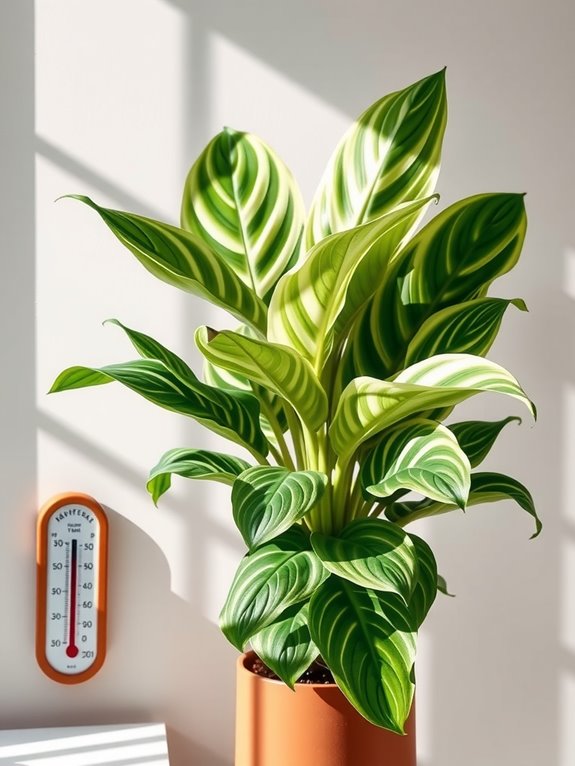
Beyond getting your watering routine right, you’ll want to nail down the temperature and humidity in your space, since these conditions directly affect how well your plant grows and looks.
Keep your Dieffenbachia between 65°F and 75°F for the best growth. This steady range is what works. Avoid placing it near drafts, doorways, vents, or air conditioning units. Don’t let temperatures drop below 50°F—cold stress damages the plant and slows growth. Temperature swings are the real problem here. Inconsistent conditions weaken the plant and stop it from growing properly, so pick a stable spot and leave it there.
For humidity, aim higher rather than lower, especially during warm months. Higher humidity supports full, healthy foliage and keeps your plant in good condition. If your home is dry, you can mist the leaves a few times a week or place the pot on a tray with pebbles and water (keep the pot above the waterline so roots don’t sit in moisture). You could also group plants together, since they release moisture as they transpire.
Stable temperature and adequate humidity work together to create the right indoor conditions your Dieffenbachia needs to grow well.
Soil and Potting: Best Growing Medium for Dieffenbachia
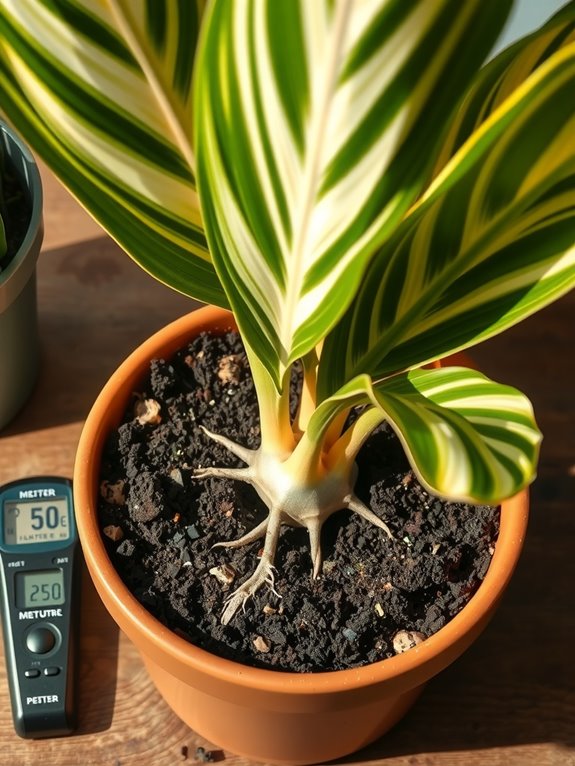
You need a potting mix that balances drainage with moisture retention. This means avoiding mixes that stay too wet or dry out too quickly.
Your best options are:
- Pure peat moss
- Peat moss mixed with perlite
- Soil combined with peat moss
- Equal parts of soil, peat moss, and either perlite or vermiculite
Each of these combinations works because peat moss holds water while perlite and vermiculite create air pockets that prevent root rot. Getting the soil right from the start reduces the need to repot your plant later, which can stress it unnecessarily.
When choosing between these options, consider what you have available and your watering habits. If you tend to water frequently, add more perlite or vermiculite to improve drainage. If you often forget to water, use more peat moss to hold moisture longer. Start with an equal-parts mix if you’re unsure about your watering patterns.
Optimal Soil Composition
What makes the difference between a healthy Dieffenbachia and one that struggles? It comes down to your soil mix. You need a loose, fertile soil that drains water quickly while holding enough moisture so roots don’t dry out between waterings. This balance is what keeps your plant healthy.
Several soil recipes work well. Pure peat moss is a solid choice on its own. You can also mix peat with perlite in equal parts—use 1 part peat to 1 part perlite. Another option is to combine soil and peat at a 1:1 ratio. A three-way blend of soil, peat, and either perlite or vermiculite also produces good results.
The specific recipe matters less than getting the balance right. An airy medium lets roots access oxygen while absorbing water. At the same time, the soil drains fast enough that water doesn’t pool around the roots. Pick the mix that fits your watering style and the materials you have on hand.
Repotting Guidelines and Timing
Once your soil mix is ready, you need to know when and how to repot your Dieffenbachia. Repot every 1–2 years or whenever roots start poking through the drainage holes. This is your signal that the plant needs more space. Pick a pot that’s one size larger than the current one and make sure it has drainage holes to keep water from sitting at the bottom.
How to Repot
Start by preparing your new pot. Use a transparent container so you can monitor root health. Make sure it has drainage holes.
Next, remove your Dieffenbachia from its current pot and loosen the root ball with your fingers. Gently separate the roots and trim away any that look dark, mushy, or dead. Use clean scissors or pruning shears for this step.
Place the plant into the new pot with fresh growing medium at the same depth it was growing before. Don’t bury the stem deeper than it was originally. Pack soil around the sides to fill empty spaces, but don’t compress it too hard.
Water the plant lightly after repotting to settle the soil. This approach keeps your plant healthy and shows you understand what your Dieffenbachia actually needs to grow properly.
Fertilizing Your Dieffenbachia: Feeding Schedule and Best Practices
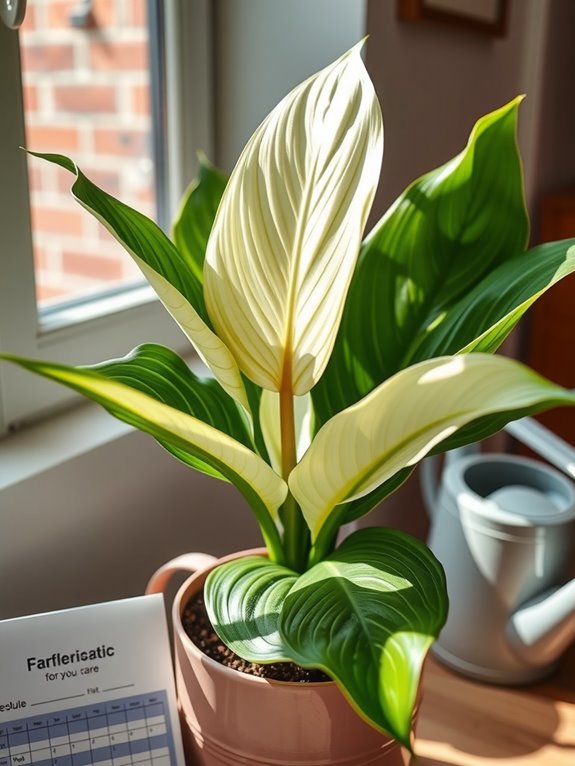
How often should you feed your Dieffenbachia? During spring and summer, use a complete 20-20-20 fertilizer mixed at half strength every 4–6 weeks. If your plant gets limited light, reduce feeding to every 8–10 weeks to prevent nutrient burn.
Feed your Dieffenbachia every 4–6 weeks in spring and summer using diluted 20-20-20 fertilizer, or every 8–10 weeks in low light.
Follow these steps:
- Water your soil with plain water first, making sure it’s damp but not soggy
- Dilute the fertilizer in water according to package directions, then cut that mixture in half
- Pour the diluted fertilizer onto the damp soil around the base of the plant
- Never apply fertilizer to dry soil, as this can damage the roots
Monitor your plant regularly for yellow leaves, which can signal either overfeeding or poor light conditions. Use filtered water or rainwater when possible to avoid mineral buildup that leaves brown spots on the leaves.
Dieffenbachias need consistent feeding during their growing season. A regular schedule keeps the plant healthy without pushing it to grow too fast. Skip fertilizing entirely during fall and winter when the plant’s growth naturally slows.
Troubleshooting: Yellowing Leaves, Leggy Growth, and Pests
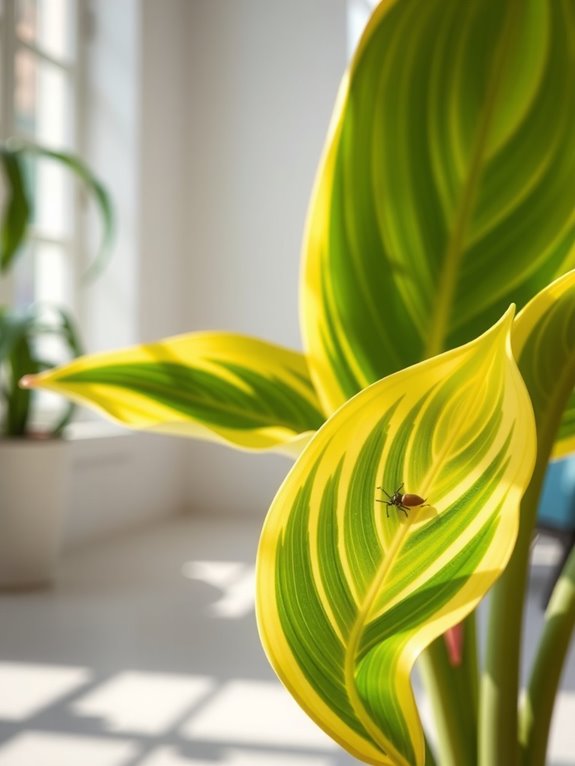
Even with solid feeding practices, your Dieffenbachia can still run into trouble. Yellowing leaves typically point to one of two problems: overwatering or nutrient deficiencies. Check the soil moisture first—stick your finger about an inch into the soil. If it feels soggy, let it dry out more between waterings. If the soil is dry but leaves are still yellow, your plant probably needs more nutrients. Use a balanced, water-soluble fertilizer mixed at half strength and apply it every two weeks during the growing season.
Leggy growth—where stems get long and spaced out with few leaves—means your plant isn’t getting enough light. Move it closer to a bright window or consider placing it within 3 feet of a grow light set to run 12 to 14 hours daily. As new growth appears, it should fill in more densely.
Check the undersides of leaves regularly for spider mites, mealybugs, and scale insects. These pests hide in tight spaces and reproduce quickly, so catching them early matters. Look for sticky residue, tiny webbing, or small bumps on stems and leaf joints. If you spot pests, spray the affected areas with insecticidal soap or neem oil, coating both the top and bottom of each leaf. Repeat the treatment every 5 to 7 days for three weeks to break the pest lifecycle.
Most of these issues respond well once you identify what’s actually happening. The key is regular inspection and quick action when something changes with your plant.
Yellowing Leaves Causes
Because Dieffenbachia’s leaves turn yellow for several different reasons, you’ll need to figure out what’s wrong with your plant by checking each possible cause.
The most common culprits include:
- Overwatering or poor drainage – This causes root rot and tissue damage, making leaves yellow and mushy
- Low humidity and hard tap water – Brown tips appear along with yellowing when moisture levels drop or minerals build up from tap water
- Nutrient deficiencies – Infrequent fertilization starves your plant, especially older leaves in low-light areas
- Underwatering – If your topsoil dries out completely, leaves will yellow
- Pest damage – Scale insects or spider mites create chlorosis and visible leaf spotting
Start by checking your watering schedule and drainage holes. Feel the soil with your finger. It should stay slightly moist, not soggy. If the top inch feels dry, water it. If it feels wet, wait a few more days.
Switch to filtered water instead of tap water to avoid mineral buildup. You can use a basic water filter pitcher or let tap water sit overnight before using it.
Increase humidity around your plant by misting the leaves with filtered water two or three times per week, or place the pot on a tray filled with pebbles and a small amount of water. The water should not touch the bottom of the pot.
Fertilize your plant every two weeks during spring and summer with a balanced houseplant fertilizer mixed at half strength. Stop fertilizing in fall and winter when growth slows.
If you see webbing, spots, or sticky residue on leaves, spray the plant with insecticidal soap following the label directions. Repeat every seven to ten days until the pests are gone.
Addressing Leggy Growth
Insufficient light is the primary cause of leggy growth in Dieffenbachia. Your first step should be relocating your plant to a spot with bright, indirect light. This encourages compact, fuller stems instead of stretched, sparse growth.
Once you’ve improved the lighting, prune the leggy stems just above a leaf node. This action triggers branching and helps maintain a fuller plant shape. Make the cut about one-quarter inch above the node where leaves attach to the stem.
Increase humidity around your plant to reduce stress during this recovery period. Group multiple plants together or place your Dieffenbachia on a pebble tray filled with water. As the water evaporates, it creates moisture in the air around the leaves.
Keep your plant away from cold drafts and temperature swings. Cold air weakens the plant and can cause variegation loss in the leaves. Maintain temperatures between 65 and 75 degrees Fahrenheit.
Check your watering schedule while addressing leggy growth. Allow the top inch of soil to dry out between waterings. Overwatering leads to root problems, which makes the plant more vulnerable to stress.
| Strategy | Action | Benefit |
|---|---|---|
| Increase Light | Move to brighter location | Promotes dense foliage |
| Prune Stems | Cut above leaf nodes | Triggers branching |
| Boost Humidity | Use pebble trays | Reduces stress |
| Monitor Temperature | Avoid cold drafts | Prevents variegation loss |
| Check Watering | Let top inch dry | Prevents root issues |
Common Pest Infestations
Spider mites, aphids, and mealybugs are the most common pests on Dieffenbachia. They cause yellowing leaves and sticky residues on foliage. Without early intervention, they can damage your plant quickly.
Regular Inspection
Check the undersides of leaves and stems at least once a week for tiny pests or webbing. This is where infestations often start, so don’t skip this step.
Treatment Options
Use insecticidal soap or horticultural oil when you spot pests. Follow the product directions exactly, including mixing ratios and application frequency. Most treatments require reapplication every 7 to 10 days for 2 to 3 weeks to fully eliminate an infestation.
Preventing Spread
Prune any affected foliage immediately and sanitize your pruning tools with rubbing alcohol or a 10 percent bleach solution between cuts. Mealybugs are particularly persistent and hard to eliminate completely, so always quarantine new plants for 2 to 3 weeks before placing them near your other houseplants. If a plant is already infested, move it away from your healthy plants right away.
Keep up with weekly inspections and treatment cycles. Catching pests early makes a real difference in how quickly you can get control of the problem.
Pruning and Deadheading: Controlling Shape and Encouraging New Growth
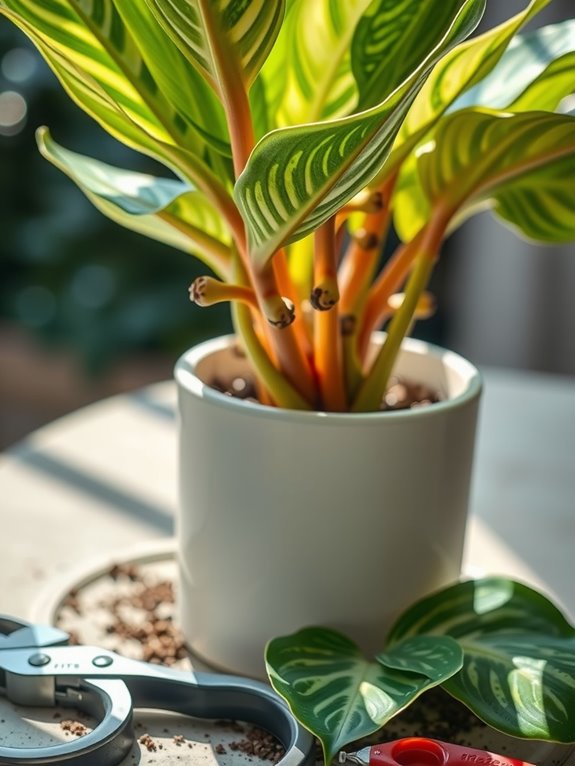
Pruning your Dieffenbachia removes dead or yellowing leaves and controls how the plant grows. When you prune, make cuts just above a leaf node—this is where new leaves will sprout. Clean cuts prevent damage to the plant tissue.
To prune effectively, use sharp pruning shears and cut at a 45-degree angle about one-quarter inch above the leaf node. Remove any yellow, brown, or damaged leaves first. These damaged areas drain energy from healthy growth. Trim leggy stems to encourage the plant to grow fuller and bushier instead of tall and sparse.
Keep the cuttings you remove. These pieces can become new plants through propagation if you place them in water or moist soil until roots develop.
After pruning, continue providing bright, indirect light. Check the plant regularly over the next two to three weeks to watch for new growth at the cut sites. New leaves typically appear within one to two weeks if conditions are right.
Propagating Dieffenbachia: Growing New Plants From Cuttings and Division
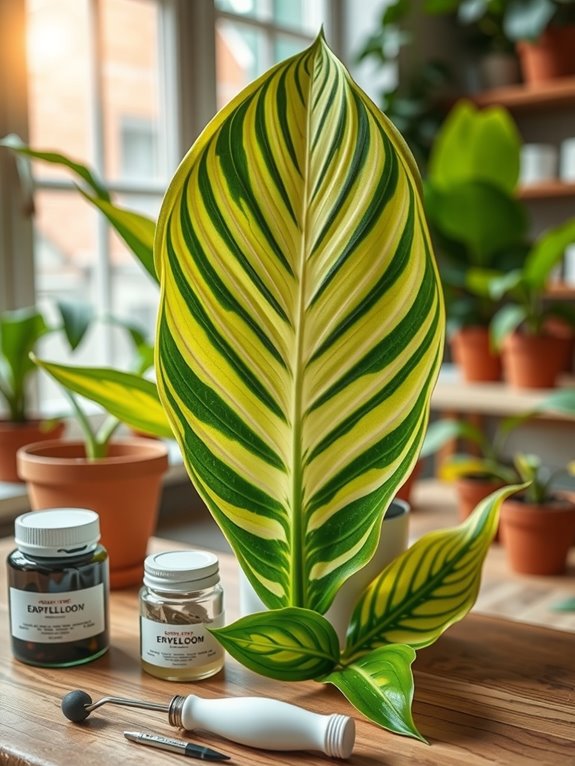
You have three practical methods for multiplying your Dieffenbachia: stem cuttings, root division, and proper use of rooting media. Each approach works well when you follow the basics.
For stem cuttings or division, use live sphagnum moss in transparent pots. The clear sides let you see root development without constantly disturbing the plant. Check the soil moisture every few days and water only when it starts to dry out slightly at the surface.
Every new section needs two things to succeed: healthy roots and at least one growing point where new leaves will emerge. Place your propagated sections in bright indirect light and maintain humidity around 50-60 percent. You can achieve this by misting the leaves every two to three days or placing the pot on a tray with pebbles and water underneath. Keep the water level below the pot so roots don’t sit in standing water.
The propagation process typically takes four to eight weeks depending on temperature and light conditions. Warmer temperatures between 70-75°F speed up root development. Once roots are established and new growth appears, you can gradually introduce the plant to your regular care routine.
Stem Cutting Propagation Method
Why buy new plants when your Dieffenbachia can create them for you? Stem cuttings offer the most straightforward approach to propagation.
What You’ll Need
Gather clean scissors, a healthy stem section with at least one node, moist well-draining rooting medium or water, live sphagnum moss, and a transparent pot. Bright, indirect light and high humidity will support root development.
The Steps
Cut a healthy stem section that contains at least one node using clean scissors. Place your cutting immediately into moist rooting medium or water. Position it in bright, indirect light and maintain consistently high humidity during the rooting phase.
Monitoring Progress
Use live sphagnum moss in a transparent pot. This setup lets you watch roots develop without guessing about moisture levels. Keep conditions humid throughout the rooting period, which typically takes a few weeks depending on temperature and light conditions.
Moving Forward
Once roots establish, transplant your cutting into an Araceae potting mix and begin normal care practices. At this point, you can treat it like a mature plant.
Division Through Root Separation
When your Dieffenbachia gets large enough, root division offers a faster multiplication method than stem cuttings. Gently remove the plant from its pot and carefully split the root ball into sections. Each division needs healthy roots and at least one leafy shoot to survive.
Use clean, sharp tools to cut through the roots in one motion rather than sawing back and forth. Ragged cuts take longer to heal and invite rot. Plant each division into its own pot filled with fresh, well-draining potting mix.
Position the newly divided plants in bright, indirect light. Water them thoroughly after planting. Keep the soil consistently moist during the establishment period, but avoid waterlogging, which suffocates roots.
The best time to divide is during spring when you’re already repotting and roots are actively growing. This timing reduces transplant shock and gives your divisions the strongest start.
Rooting Media and Monitoring
The right rooting medium makes a real difference in successful propagation. Use live sphagnum moss in transparent containers so you can watch your cuttings develop roots without disturbing them. Transparent containers let you monitor moisture and root development closely.
Keep these three conditions in mind:
- Moisture control – Keep your rooting medium moist, but not waterlogged. Waterlogged conditions cause rot and kill your cuttings.
- Higher humidity – Humidity supports faster rooting and stronger growth around your cuttings.
- Bright, indirect light – Position your cuttings where they receive bright light without direct sun exposure. This encourages stronger root and stem development.
Check your cuttings regularly by looking through the transparent container. You’re looking for white root tips emerging from the stem. Don’t remove the cuttings from the rooting medium during inspection. Watch for changes in moisture levels and adjust watering as needed. When you see healthy white roots developing, your cuttings are ready to transplant into soil. Healthy root systems at this stage will adapt well to potting soil and establish themselves quickly in their new containers.
Seasonal Care: How to Adjust Your Routine for Winter, Spring, Summer, and Fall
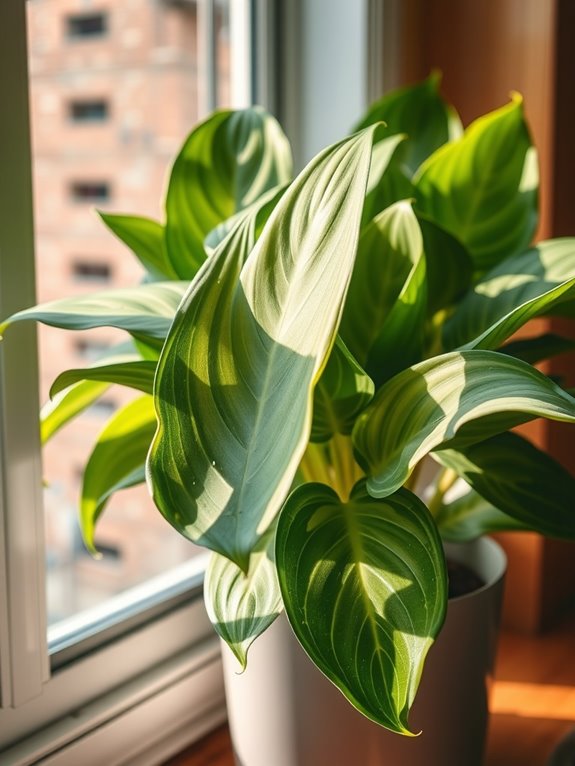
Your Dieffenbachia‘s needs change with the seasons, so your care routine should too.
Winter is the slow season for growth. Cut back on watering and let the soil dry out more between waterings. Keep the plant away from cold windows and heating vents that create drafts. Your goal is to give the plant just enough moisture to prevent the soil from completely drying out.
Spring signals the start of active growth. Resume feeding with a diluted 20-20-20 fertilizer once a month. Position your plant where it gets bright indirect light throughout the day. This combination of food and light will support new leaf development.
Summer requires your closest attention. Water larger plants twice a week since heat speeds up evaporation. Mist the leaves occasionally to add humidity to the air around the plant. The extra moisture helps prevent brown leaf tips.
Fall is a transition period. Gradually reduce how often you feed the plant as growth slows. Watch for browning at the leaf tips, which signals that humidity or watering needs adjustment.
Year-round, keep your Dieffenbachia in temperatures between 65–75°F. The plant needs consistent indirect light and soil with good drainage to prevent root rot. Pay attention to what your plant shows you—yellowing leaves, brown tips, or slow growth are signs that something needs to change. Adjust your watering, feeding, or light based on these signals, and your plant will stay healthy through all four seasons.
Toxicity Alert: Keeping Your Plant Safe Around Pets and Children
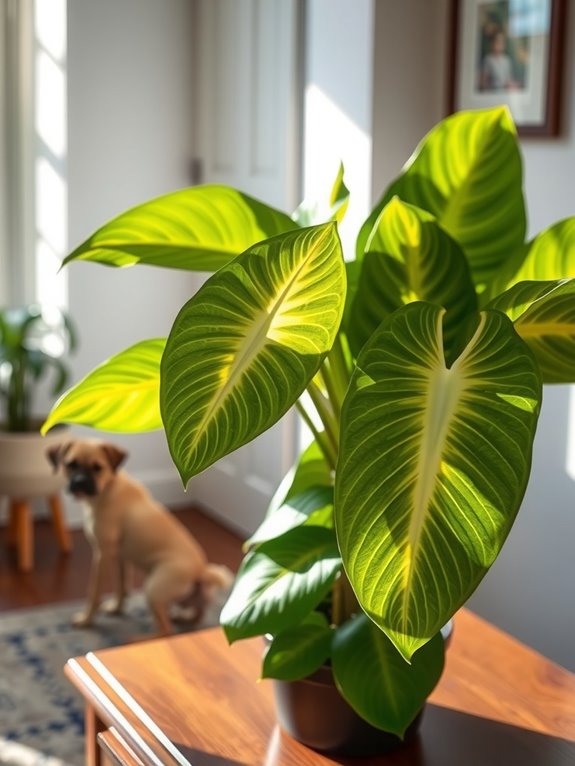
Toxicity Alert: Keeping Your Plant Safe Around Pets and Children
Your Dieffenbachia contains calcium oxalate crystals in every part—leaves, stems, and roots. These crystals cause real problems if your pet or child chews on the plant. Take this seriously.
Dieffenbachia contains calcium oxalate crystals throughout all parts. These crystals pose serious risks if pets or children chew the plant.
What Happens When Someone Ingests Part of a Dieffenbachia
If ingestion occurs, watch for drooling, vomiting, or swelling in the mouth and throat. The crystals irritate the tissue they touch, creating pain and discomfort. Symptoms typically appear within minutes to hours.
How to Prevent Accidental Ingestion
Place your Dieffenbachia on a shelf that’s at least 5 to 6 feet high, or in a room you can keep closed off from pets and children. Keep it away from spaces where kids play on the floor or where pets spend time chewing. Wash your hands thoroughly after handling the plant, especially before eating or touching your face.
What to Do If Ingestion Happens
Contact your veterinarian right away if your pet swallows any part of the plant. For children, call Poison Control at 1-800-222-1222. Don’t wait to see if symptoms get worse. Getting help quickly keeps the situation from becoming more serious.