Start by observing your yard’s sunlight, soil quality, and water access at different times of day. This gives you the actual conditions you’re working with.
Define what you want from your garden. Are you growing fresh bouquets, dried flowers, or creating a habitat for pollinators like bees and butterflies. Your answer determines which plants to choose.
Sketch your garden layout on paper. Decide whether you want curved borders or straight ones. A curved design feels more relaxed, while straight borders look formal and organized.
Build a limited plant palette suited to your conditions. Too many different plants becomes hard to manage. Start with 5 to 7 types that match your sunlight and soil.
Install beds with improved soil. If your native soil is poor, add 3 to 4 inches of compost or quality topsoil mixed into the existing ground. This helps plants get established faster.
Arrange plants in odd-numbered groups—three or five of the same plant. Odd numbers create better visual balance than even groups.
Plan your blooms across seasons. Include spring bulbs, summer bloomers, and fall-flowering plants so something is always blooming from April through October.
Water consistently during the first year. Newly planted flowers need regular watering—usually 1 to 2 inches per week depending on rainfall and heat. Let the soil dry slightly between waterings, but don’t let it become bone-dry.
Observe your garden throughout the first year. Note which plants thrive in certain spots and which ones struggle. Pay attention to how much sun different areas actually receive as seasons change.
As your garden matures, make edits based on what you’ve learned. Remove plants that aren’t performing well and add new ones where you see opportunities.
Assess Site Conditions for Your Flower Garden
Sunlight Exposure
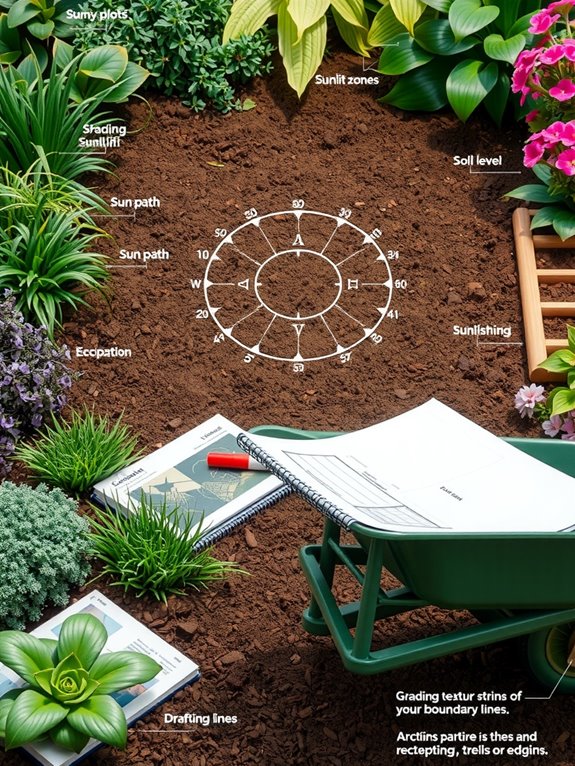
Most flowers need 6 to 8 hours of direct sunlight each day. Observe your space at different times—morning, midday, and late afternoon—to see where light reaches. Track this over several days if possible, since the sun’s angle changes throughout the week. If you notice dappled shade under trees, that spot works for shade-loving plants like hostas or astilbe. Full sun areas with at least 6 hours of direct light work best for most common flowers like roses, zinnias, and marigolds.
Drainage and Water Management
Avoid planting in low spots where water collects after rain. Standing water causes root rot and kills most plants within weeks. Look for areas with a slight slope or elevated ground where water drains naturally. If you’re not sure about your soil’s drainage, dig a hole about 12 inches deep, fill it with water, and check how long it takes to drain. If the water disappears in 1 to 2 hours, your drainage is good. If it sits for more than 4 hours, you’ll need to amend the soil with compost or sand to improve drainage.
Wind Protection
Strong winds damage delicate petals and stress plants, shortening their lifespan. Check if your spot gets hit by wind from one direction, especially in late afternoon or early evening. Structures like fences, hedges, or building walls can block harsh wind. A location on the east or south side of your house often provides better protection than an open yard.
Water Source Access
You’ll water your flowers regularly during dry spells, so locate your garden within easy reach of a hose bib or outdoor spigot. A 50-foot hose is standard and works for most home gardens. Avoid placing your garden more than this distance from your water source, or you’ll spend extra time dragging a longer hose and wasting water.
Wildlife Pressure
Rabbits and deer eat many common flowers, so identify which animals visit your area. If you have deer problems, plan to use plants they avoid, like lavender or coneflowers, or install fencing at least 6 feet tall. Rabbits prefer tender young plants, so netting or fencing at 2 feet high can protect seedlings during their first few weeks of growth.
Define Your Garden Goals and Purpose
Before you buy any plants, decide what you want to grow flowers for. Are you cutting fresh bouquets for your kitchen table? Drying them for arrangements? Creating a space that attracts pollinators like bees and butterflies? Your answer matters because it shapes which plants you’ll pick and how you’ll arrange them.
Start by listing your preferences. Write down the colors you want, the textures that appeal to you, and when you’d like flowers to bloom. Spring bloomers, summer flowers, and fall varieties all have different timing. When you know what you want, you can space plants so you have color and interest from spring through fall.
Sketch out your garden on paper using this list. Mark where each plant will go based on its bloom time and height. This simple planning step prevents you from planting everything to flower at once, leaving you with bare patches later.
Purpose Drives Plant Selection
Why you’re planting matters just as much as what you’re planting. Your garden’s primary purpose—whether you want fresh bouquets, dried flowers, or pollinator support—directly shapes which flowers you’ll choose.
Start by identifying your main goal. If fresh bouquets are your target, pick plants with vibrant colors and varied textures that hold up in water. Roses, dahlias, and zinnias work well for this purpose. For dried flowers, select blooms that keep their color and shape after drying, such as statice, celosia, and strawflowers. If you’re building a pollinator garden, focus on native flowers that attract bees and butterflies across the growing season.
Write down your specific goals on a planning worksheet before you buy anything. Note your preferred colors, textures, and any growing constraints in your space—like shade, poor soil, or limited water. This simple step prevents impulse purchases and keeps every flower aligned with what you actually need.
When plant selection matches your real purpose, your garden becomes easier to maintain and more rewarding to use.
Seasonal Blooms and Succession
Once you know what you want from your garden, plan for blooms across the entire growing season. A garden that flowers only in June leaves you with nothing to look at by August. Layer early bulbs like tulips with midsummer perennials such as dahlias, then add late-season bloomers like echinacea for fall interest.
Succession planting keeps flowers coming all season long. Instead of sowing all your zinnias at once, plant new seeds every three to four weeks. This staggered approach means you’ll have fresh flowers appearing as earlier plantings fade away.
Organize your plant selections by when they bloom. Use spring bulbs for early color, mid-season perennials to give your beds structure, and hardy bloomers to carry your garden through fall. This deliberate timing means your garden will have color when you actually need it to.
Garden Goals Planning Worksheet
Start by asking yourself what you actually want from your garden. Do you need fresh bouquets for your table? Are you growing flowers to dry and preserve? Maybe you’re focused on attracting pollinators like bees and butterflies. Write down your main purpose. This matters because it shapes every decision you’ll make going forward.
Next, get specific about what your garden needs to do throughout the year. Note when each plant blooms, how tall it grows, and what care it requires. Set measurable targets you can actually track. Instead of saying “lots of color,” write down “continuous blooms from May through September” or “three separate peak bloom periods.” These details become your reference point when you’re planning plant placement and timing.
Create a budget for your project and a realistic timeline for making changes. Gardens aren’t static. You’ll need money set aside for plant divisions, replacements, and edits as you learn what works. Having a budget upfront prevents frustration later when something needs adjusting.
Use your completed worksheet as your design roadmap. It keeps you focused on what your garden actually needs to accomplish rather than just what looks nice in a photo. At the end of each season, review how well your garden met those original goals. Note what worked and what needs adjustment for next year. This approach gives you concrete results you can see and measure.
Sketch Your Garden Layout and Choose a Shape
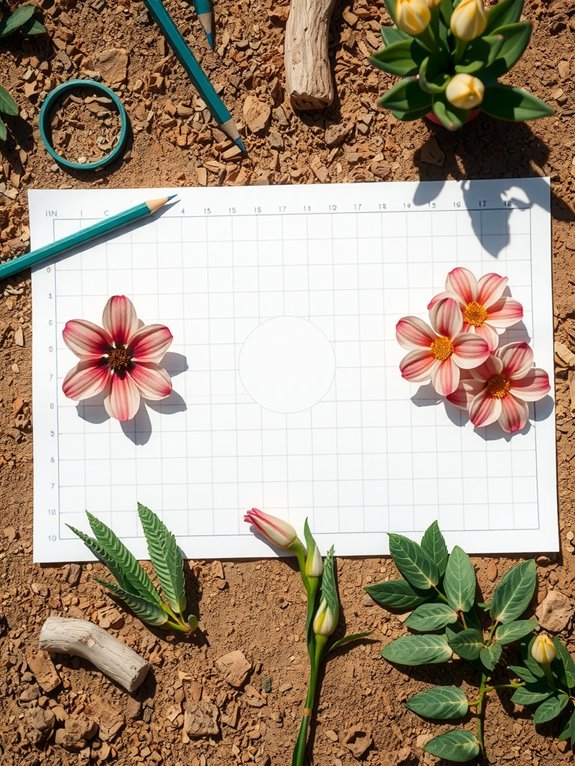
Before you dig, map out your garden on paper. This lets you see how your design will actually look before you commit to the layout.
Decide between curved or straight borders. Curved borders give a natural appearance and make mowing easier because you won’t have tight corners to navigate. Straight lines work better for formal gardens and create clean, defined edges.
Mark your chosen design on the ground using twine, wooden stakes, spray paint, or a garden hose. This step is important because it shows you how your shape actually fits in the real space, not just in your sketch. Walk around the marked area. Check if paths are wide enough to use a wheelbarrow or mower. Look for spots where you’ll struggle to reach plants or trim edges.
| Design Choice | Best For |
|---|---|
| Curved borders | Natural look, easier mowing |
| Straight lines | Formal gardens, clean edges |
| Mixed shapes | Transitional styles |
Pick one shape and repeat it throughout your garden beds and pathways. This creates visual consistency. Avoid narrow curves or corners that are difficult to access during maintenance. When you repeat the same shape across your space, the overall design feels intentional and organized.
Your ground layout becomes your working blueprint. Everything you do next—digging beds, placing plants, building paths—follows this marked design.
Build a Plant Palette That Works for Your Space
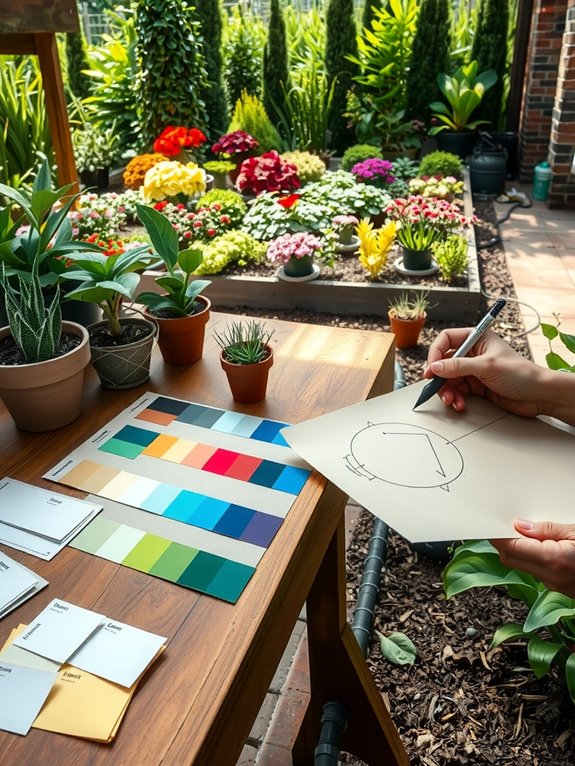
You’ll build a plant palette that actually works by first understanding your site’s light, moisture, and soil conditions. These factors determine which plants will succeed and which ones will struggle. Walk your garden at different times of day to note which spots get full sun, partial shade, or deep shade. Match plants to those specific conditions rather than forcing plants into unsuitable spots.
This foundational assessment prevents wasted money and effort. It sets you up to select reliable, high-performing plants that form the backbone of your design.
Assess Your Growing Conditions
What does your garden space actually offer? You’ll need to honestly evaluate your growing conditions before selecting plants. Walk your space at different times of day and note what you find:
- Sunlight exposure: Most flowers need 6–8 hours of direct sun daily. Map out which areas get full sun, which get partial shade, and which stay shaded all day.
- Soil quality: Dig a small hole about 12 inches deep and feel the texture with your hands. Compacted clay soil won’t work for most plants, but loose, well-drained soil with organic matter will support healthy growth.
- Water access: Locate your nearest hose or water source. Think about how far you’ll need to carry water during dry periods.
These conditions determine which plants will actually work in your garden. You’re not fighting against what you have—you’re working with it. Understanding what your space offers lets you pick plants that’ll genuinely succeed there, which saves you time, frustration, and money down the road.
Select High-Performing Plants
Now that you’ve mapped your light and soil conditions, pick plants that will actually do well in your space. Build your design around reliable plants suited to your specific environment. Choose sun-lovers like zinnias and coneflowers for bright areas, or shade-tolerant options for dimmer spots.
Start with a limited core palette. This keeps your garden looking organized instead of cluttered. When you buy new plants, purchase at least three of each variety. Grouping plants in odd-number drifts—3, 5, 7, or 9—creates a stronger visual impact than scattering single plants throughout your beds.
As your perennials mature, divide them to create new plants rather than buying replacements. Mix focal flowers, fillers, and evergreen structure plants to balance seasonal color and texture. This gives you year-round interest while keeping your design consistent.
Install Beds and Prepare the Soil
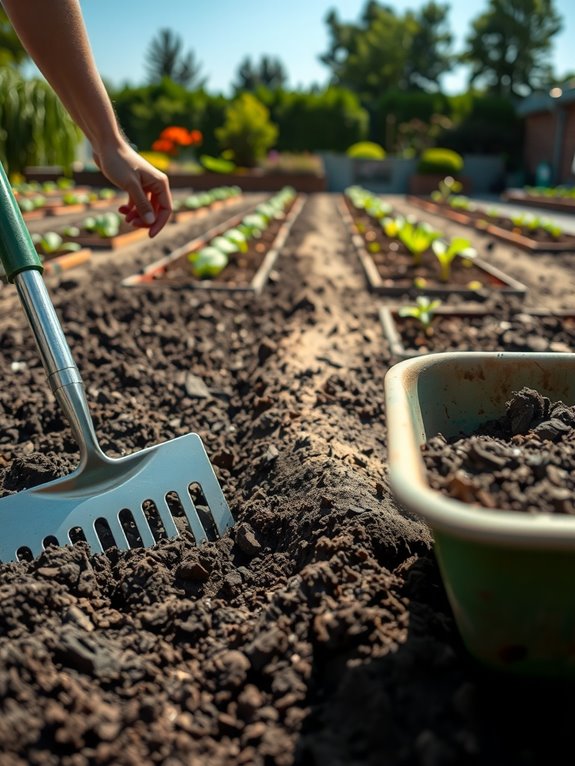
Before you break ground, clear out the plants that aren’t working for you. Remove low-appeal specimens or overcrowded plants taking up valuable space. Relocate them elsewhere to reduce congestion in your beds.
Next, prepare your soil properly. Till and loosen the soil 8 to 12 inches deep to improve how deep roots can penetrate. Mix in compost, manure, or peat moss to improve drainage and add nutrients to the soil.
Mark your bed outlines with curved borders using twine, stakes, or a garden hose. Curved lines are easier to mow around than straight edges. Dig a trench just inside your border and remove the sod in chunks. Trim any remaining roots and level the area flat.
After planting, spread 2 to 3 inches of mulch over the soil. Mulch keeps moisture in the ground, stops weeds from growing, and protects soil from temperature changes. This foundation gives your flowers the conditions they need to grow well.
Plant and Space for Mature Size
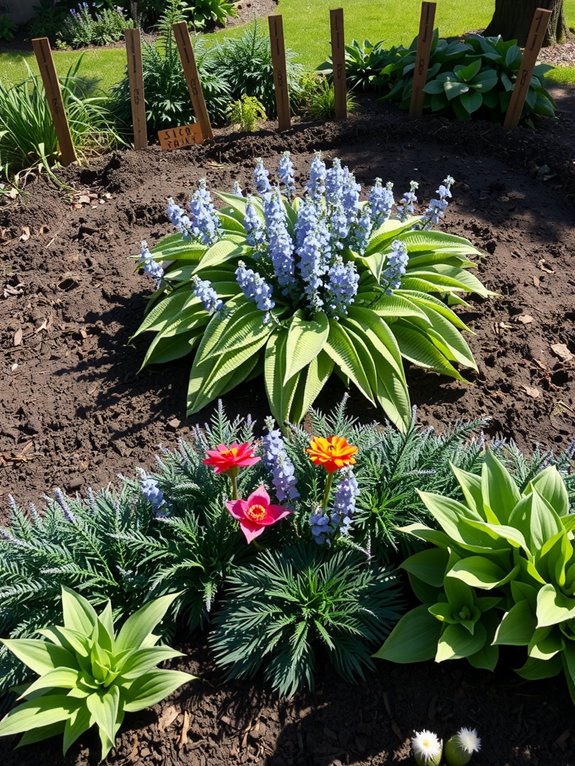
When you’re planting your perennials, think about their full-grown size, not how they look in the nursery pot. A plant that seems small now will spread significantly once established.
Space each plant at least 1.5 to 2 times its mature width away from its neighbors. This means daisies should go 2–3 feet apart, while large coneflowers need 3–4 feet between them. Check the plant tag or ask at the nursery for the expected mature width if you’re unsure.
Getting the spacing right from the start saves you from rearranging plants constantly as they grow. It also keeps your garden looking balanced and prevents overcrowding, which can lead to disease and pest problems.
Understanding Mature Plant Dimensions
One of the biggest mistakes new gardeners make is planting too close together. You get excited, crowd in those transplants, and six months later you’re dealing with tangled stems and disease.
Before you dig, look up your plants’ mature dimensions—the actual width and height they’ll reach at full growth. This matters far more than how big they are in their nursery containers.
Know what you’re working with. Tall perennials like echinacea reach 3–5 feet high, so layer shorter plants in front of them. Spreading plants such as coneflowers extend several feet outward over time and need extra room. Deep-rooted varieties like yarrow require loosened soil to avoid crowding shallow-rooted neighbors.
Use this spacing rule: plant 1.5–2 times the mature width apart. So if a plant spreads to 2 feet wide, space it 3–4 feet from its neighbors. This approach maintains airflow, allows light to reach all parts of the plants, and gives you room to move around for weeding and maintenance. Your garden will fill in naturally as plants grow into their space.
Strategic Spacing and Layout
Now that you understand how big your plants will actually get, it’s time to translate that knowledge into a practical layout plan.
Space perennials according to their mature width and height. Large zinnias need several feet between plants, while mid-height fillers should be placed 18–24 inches apart. This prevents overcrowding and gives each plant room to reach its full size.
Group plants in odd-numbered drifts—3, 5, 7, or 9—to create visually striking blocks. This arrangement makes future editing simpler when you divide or refresh your garden.
Maintain at least 3 feet between beds and rows. You’ll need this space for cultivation, deadheading, and harvesting without damaging nearby plants.
| Plant Type | Spacing | Purpose |
|---|---|---|
| Large zinnias | Several feet | Full mature spread |
| Mid-height fillers | 18–24 inches | Balanced coverage |
| Access paths | 3+ feet | Maintenance access |
| Drift groupings | Odd numbers (3, 5, 7, 9) | Visual impact |
| Focal plantings | Strategic placement | Viewing points |
Face your focal plants toward walkways to maximize their visual impact and keep sightlines clear.
Preventing Overcrowding and Competition
Your spacing plan prevents problems before they start, but you need to think about how you’ll actually fill that space. As your garden grows, it’s easy to end up with plants crowded together and competing for resources.
The answer is restraint. Build your garden with intention.
Plant in odd-numbered groups of the same species—use 3, 5, 7, or 9 plants together. These clusters create visual blocks that reduce competition between plants.
Plan for mature sizes now rather than waiting until plants get too big. Give mid-height perennials 2–3 feet of clearance and tall varieties 3–4 feet. This spacing prevents root competition and allows air to move through the bed.
Divide larger perennials to expand existing groups instead of buying new single plants. This keeps your design cohesive and uses what you already have.
Don’t buy showy specimens that will overcrowd your beds. Instead, pick high-performing species and repeat them. Edit ruthlessly. This approach creates a unified look and prevents the jumbled appearance that happens when plants fight for space. Over time, your garden will grow stronger rather than just denser.
Arrange Plants in Drifts, Not Scattered Singles
Plant groupings of the same flower or shrub together in odd numbers—3, 5, 7, or 9 plants—rather than scattering singles throughout your bed. Groups create a stronger visual effect and give your garden a polished, organized appearance. You’ll also make maintenance simpler because all the same plants are in one spot.
Buy multiple plants at once to form solid blocks. This cuts down on visual clutter and strengthens your overall garden design. Instead of purchasing one or two plants per visit, plan ahead and get what you need to fill your space properly.
How Many Plants to Use
| Drift Size | Visual Impact | Best For |
|---|---|---|
| 3-5 plants | Moderate | Small spaces |
| 7-9 plants | Strong | Medium beds |
| 11+ plants | Dramatic | Large areas |
Start with high-performing plants that do well in your conditions. Once perennials mature, divide them to create more plants. This method stretches your budget while giving you the unified look that separates a intentional garden from a random collection of plants.
Plan Bloom Timing for Year-Round Garden Color
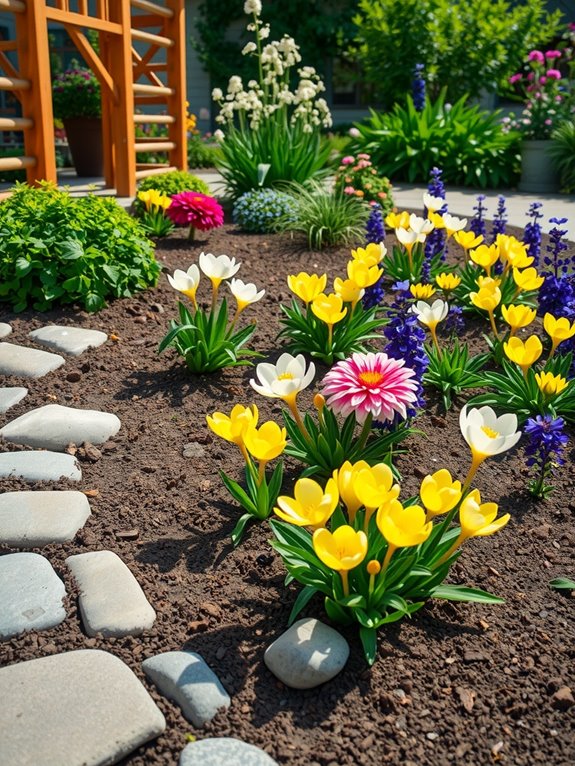
How do you keep your garden looking vibrant from spring through winter instead of watching it fade after one season peaks? You need to plan your bloom timing strategically by selecting plants that flower at different times throughout the year, creating continuous color rather than one spectacular show.
Map out your seasonal bloomers****
Start by listing what blooms when. Spring bloomers include tulips and daffodils. Summer brings zinnias and cosmos. Fall features asters and echinacea. Check your hardiness zone’s specific peak bloom times—zone 5 typically peaks around July—and use this to align your plantings.
Use succession planting for continuous flowers
Fast-growing plants like zinnias fill gaps between peak bloom periods. Plant them every 3 to 4 weeks so you always have flowers coming in as others fade. This method works better than planting everything at once and watching a long stretch of empty garden.
Add foliage for non-blooming months****
Ornamental grasses and evergreens keep your garden from looking bare during dormant months. These plants provide structure and visual interest when flowers aren’t actively blooming. They also serve as a backdrop that makes spring and summer blooms stand out more.
The result is a garden that looks intentional and alive throughout the year. You move beyond waiting for peak season and instead create a steady supply of color from early spring through late fall.
Water, Establish, and Observe the First Season
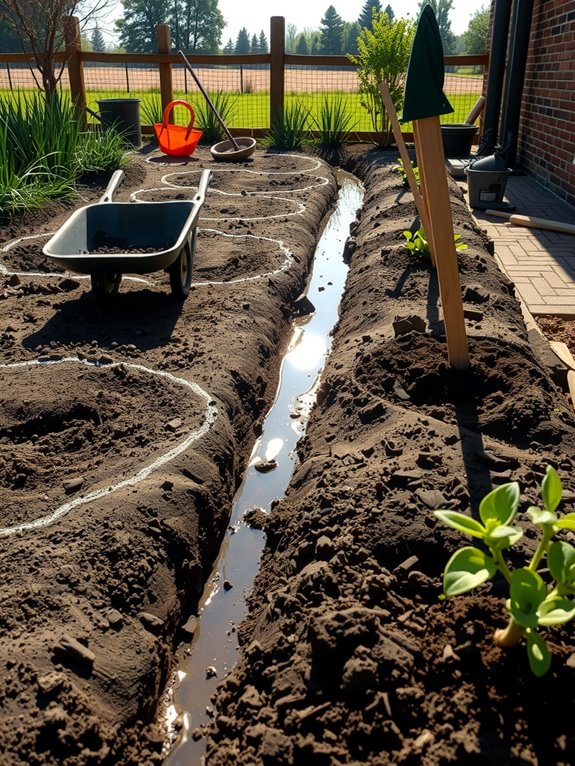
Once you’ve planted your flower garden, the work shifts to establishment. Your plants need consistent care to adapt to their new location.
Set up a reliable watering system right away. Use a hose with a sprayer attachment or a soaker system to deliver water evenly. Aim for soil that stays moist but not soggy. Waterlogged soil causes root rot and kills plants.
Apply 2 to 3 inches of mulch after planting. Spread it around the base of each plant, keeping it a few inches away from the stem. Mulch reduces water loss from the soil, blocks weeds from growing, and keeps soil temperature stable through temperature swings.
Watch your beds closely during the first two weeks. Check them daily for signs of problems. After that, switch to weekly checks. Note which plants germinated, which ones survived, and whether you see yellowing leaves, wilting, or spots on foliage. Early detection stops small problems from becoming large ones.
Space your perennials and annuals properly when you plant them. Read the spacing requirements on plant labels—typically 12 to 24 inches apart depending on the variety. Proper spacing lets air flow between plants and reduces disease. Plant in blocks of the same type rather than scattering single plants. Blocks create visual impact and make maintenance easier.
These first-season actions give your garden the base it needs to grow well in years ahead.
Refine and Expand Your Garden Strategically
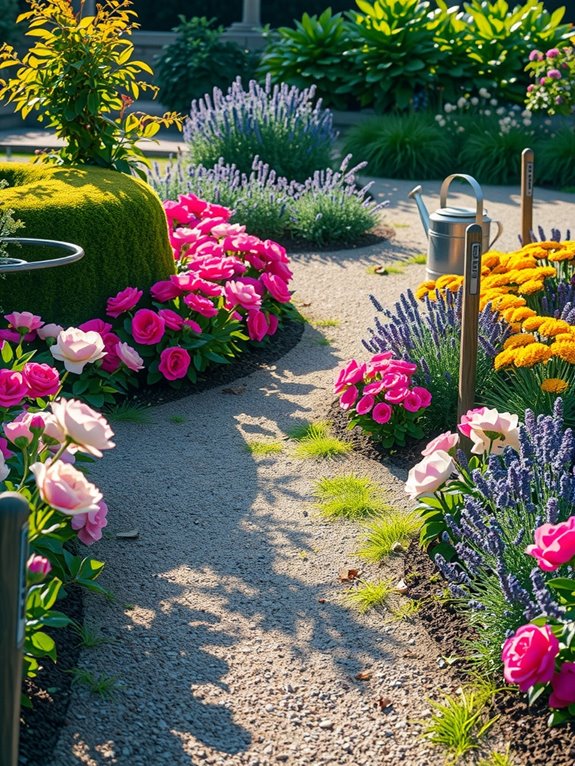
After your first season, you’ll have a clear picture of what works and what doesn’t. That’s when real design work begins. Now you can edit ruthlessly and build momentum in your garden.
Start by removing underperformers. Look at plants that demand too much time and energy—the ones that need constant maintenance or just aren’t giving you anything back. Remove them. Don’t feel obligated to keep a plant just because you planted it.
Next, divide your established perennials into odd-numbered groupings of 3, 5, or 7. Odd numbers create stronger visual impact than even groupings. Dig up the plant carefully, separate the root sections with a shovel or garden fork, and replant each section. You’ll end up with multiple plants from one original plant.
Relocate or share plants that aren’t earning their space. A plant might be healthy but planted in the wrong spot—too much shade when it needs sun, or competing with aggressive neighbors. Move it. If you have extras after dividing, give them to friends or neighbors.
Wait to buy new plants until after you’ve divided what you already have. When you do purchase, buy at least three of the same plant. This creates larger blocks that reinforce your color scheme and look intentional rather than scattered. Fill any remaining gaps with your divided plants, arranging them to keep visual harmony across the garden.
This approach stretches your budget while building cohesion. You’re working with what you have, multiplying it, and buying strategically instead of buying one plant here and there.