Your elephant ear plant needs bright indirect light, consistent but not soggy soil, and warm humid conditions between 64–84°F. Position it near a south- or east-facing window to get the light it needs without direct sun exposure that can scorch the leaves.
Water when the top 2–6 cm of soil dries out. Check your soil moisture regularly rather than following a fixed schedule, since watering needs change based on season and humidity. Always use a pot with drainage holes to prevent water from sitting around the roots.
Mist the leaves weekly to keep humidity levels up, since these plants come from tropical environments. If you notice yellow leaves or soft spots near the base, you likely have a root rot problem from overwatering. Cut back on watering immediately and let the soil dry out more between waterings. If the problem is severe, repot the plant into fresh, dry soil and remove any mushy roots with a clean knife.
Identify Your Species: Alocasia vs. Colocasia Water Needs
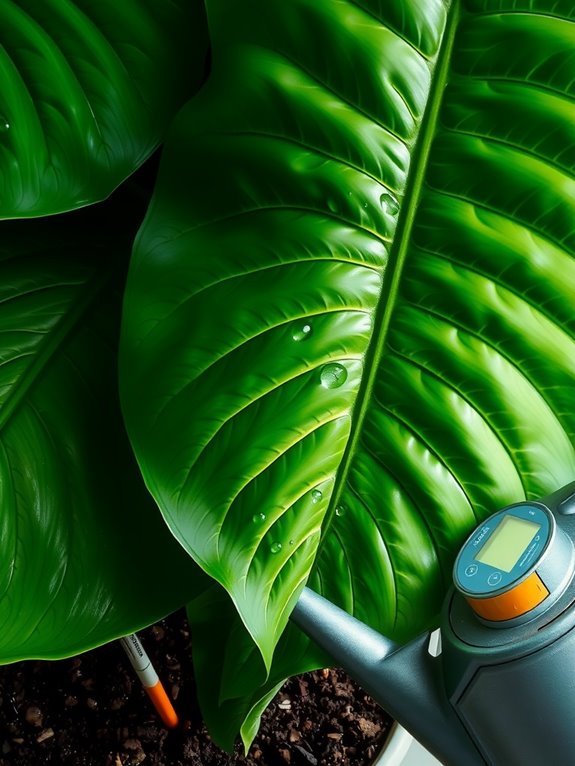
Why does your elephant ear plant seem to struggle no matter how often you water it? You’re likely mixing up your species. Alocasia and Colocasia have completely different water needs, and getting this right matters.
Alocasia prefers slightly drier soil with good drainage. Let the top 2–6 cm dry between waterings to avoid root rot. Its upward-pointing leaves signal its preference for evenly moist but never soggy conditions.
Colocasia works differently. This species tolerates consistently wet soil and even standing water. Its downward-bending leaves show its love for moisture. Keep it near water features or in consistently moist pots.
Start by identifying which plant you’re growing. Look at the leaf direction—up or down. Then adjust your watering schedule to match. Both types need good drainage and moderate humidity indoors. This simple step prevents root rot and stops the cycle of struggling plants.
How Much Light Your Elephant Ear Plant Needs?
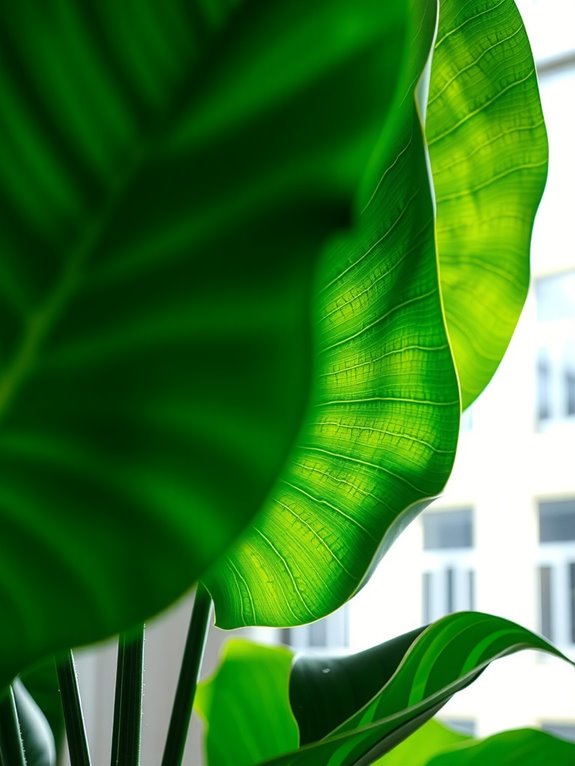
Now that you’ve got your watering routine down, it’s time to focus on light. This is the other major factor that will affect how well your elephant ear plant grows.
Position your plant near a south- or east-facing window where it gets bright indirect light. This is the best setup for growth. Direct sunlight will damage the leaves, so keep your plant back from the window if the sun hits it directly during peak hours.
Watch your plant’s leaves for signs it needs more light. If they turn pale and limp, increase the light immediately by moving it closer to a window or into a brighter room. Some darker varieties can handle medium to low light, but all elephant ear plants perform better with strong indirect light.
The amount of light your plant receives directly affects leaf size and color. Better light means bigger, more vibrant leaves. Don’t reduce light levels to save space or convenience—your plant will show the difference right away.
Watering Frequency Based on Soil Moisture
Your elephant ear plant needs water based on what the soil actually tells you, not a calendar. Check the top 2–6 cm of soil with your finger. When that layer feels dry, water thoroughly until water drains from the bottom. Then wait for that same depth to dry out again before the next watering.
This method works because every home is different. Your humidity level, pot size, and light conditions all affect how fast soil dries. A finger test beats any fixed schedule.
Watch your plant for signs. Drooping leaves mean the soil is too dry. Soggy, wet soil invites root rot and kills roots. Use a pot with drainage holes and soil that drains well to prevent water from sitting around the roots.
Colocasia varieties (the most common elephant ear type) like soil that stays moist but not waterlogged. Some varieties can handle standing water naturally, but most do better with the moist-not-wet approach.
New indoor plants need more frequent checks at first while their roots settle into the pot. After a few weeks, you’ll get a feel for the rhythm. Stick with what your plant needs rather than following arbitrary watering days.
Keep Your Plant Warm and Humid
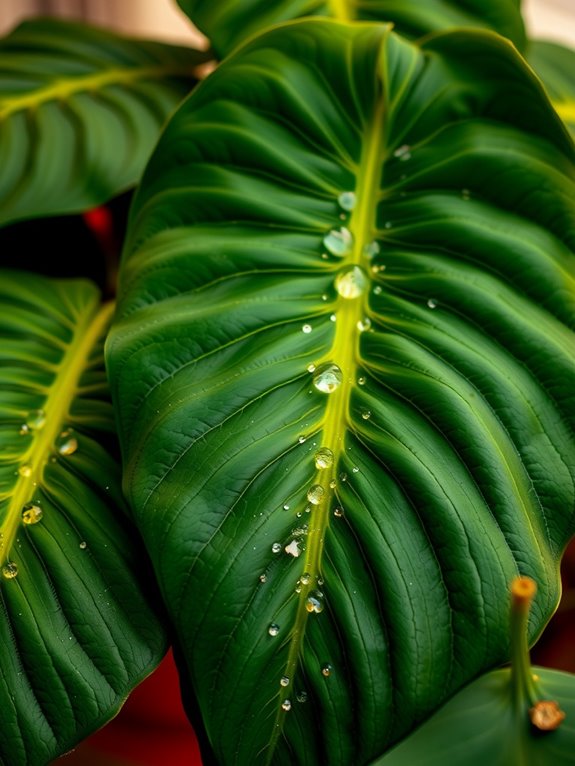
Getting the watering right sets up your plant for success, but temperature and humidity are just as important. Your elephant ear grows best between 64–84°F, so keep it away from cold drafts and air conditioning vents that slow growth.
Humidity matters equally. Mist your plant once or twice weekly to add moisture around the leaves. You can also place it on a humidity tray filled with pebbles—not standing water—to raise the moisture level naturally. Grouping plants together helps trap moisture and improve air circulation around your elephant ear.
Bright kitchens and bathrooms already provide ideal humidity levels without extra work. As seasons change, adjust where you place your plant to maintain the right temperature and humidity balance.
Fix Yellow Leaves, Root Rot, and Pest Problems
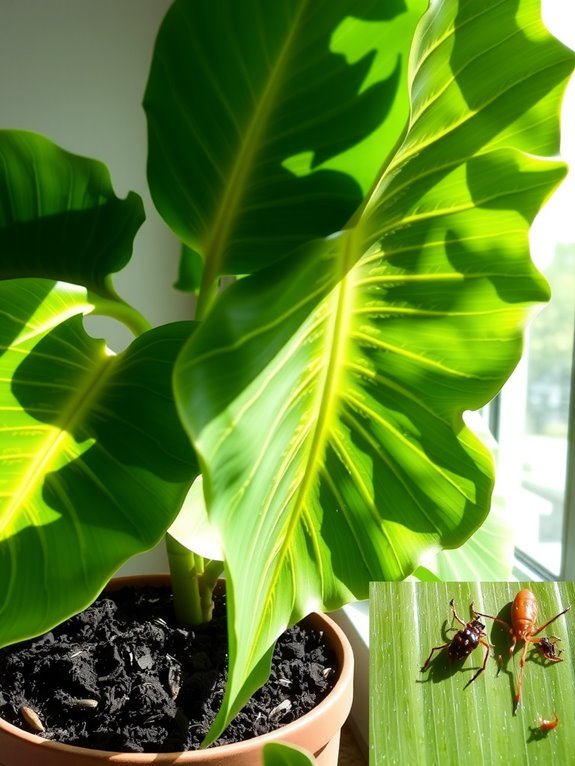
What’s causing your elephant ear’s leaves to turn yellow? Start by checking your watering habits—both overwatering and underwatering create problems. Next, examine your soil drainage and light conditions, then trim any yellowed foliage.
Yellow leaves develop from moisture stress or poor lighting. This happens when soil stays too wet or too dry for extended periods.
Root rot appears in soggy soil and requires immediate action. If you notice soft, dark roots, remove the affected sections with a clean knife and repot your plant in fresh soil with better drainage.
Overwatering causes fungal infections and decay. The most common culprit is watering too frequently. Let the top 2 to 6 centimeters of soil dry out between waterings before adding more water.
Pests like mealybugs and spider mites** thrive in humid conditions. Spray affected areas with insecticidal soap or Neem oil according to the product instructions. Repeat treatments every 7 to 10 days until pests** disappear.
Crown and leaf spots signal fungal problems from wet conditions. Improve airflow around your plant by moving it to a location with better air circulation or using a small fan nearby. Remove spotted leaves at the base of the stem.
To prevent these issues, water only when the soil surface feels dry. Use a pot with drainage holes. Provide bright, indirect light for at least 6 hours daily. Check your plant weekly for early signs of problems so you can address them quickly.