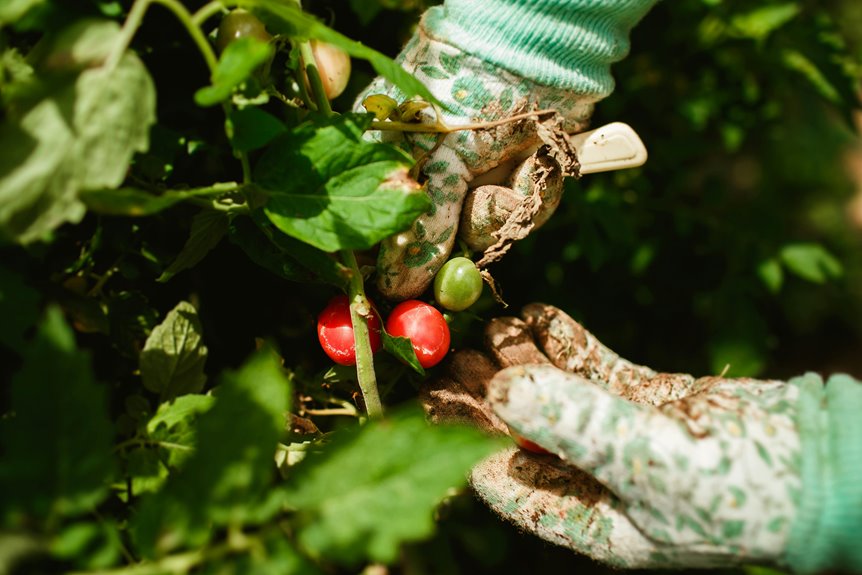
To care for your tomato plant, start with healthy seedlings or seeds planted when nighttime temperatures exceed 50°F.
Plant deeply so the roots can establish themselves well in the soil.
Water consistently to keep the soil evenly moist, checking it regularly with your finger about an inch down.
Feed your plants every 2 to 3 weeks with a balanced fertilizer that has more phosphorus and potassium than nitrogen. This mix supports fruit development better than nitrogen-heavy options.
Prune regularly by removing lower leaves and any dead growth. This improves air circulation around the plant and reduces disease problems. Good airflow keeps moisture from sitting on leaves where fungal issues start.
Harvest tomatoes when they yield to gentle pressure. They don’t need to be rock hard—a slight give in the fruit means it’s ready to pick. These steps keep your plants producing well throughout the season.
Start From Seeds or Seedlings: Which Path Is Right for You?
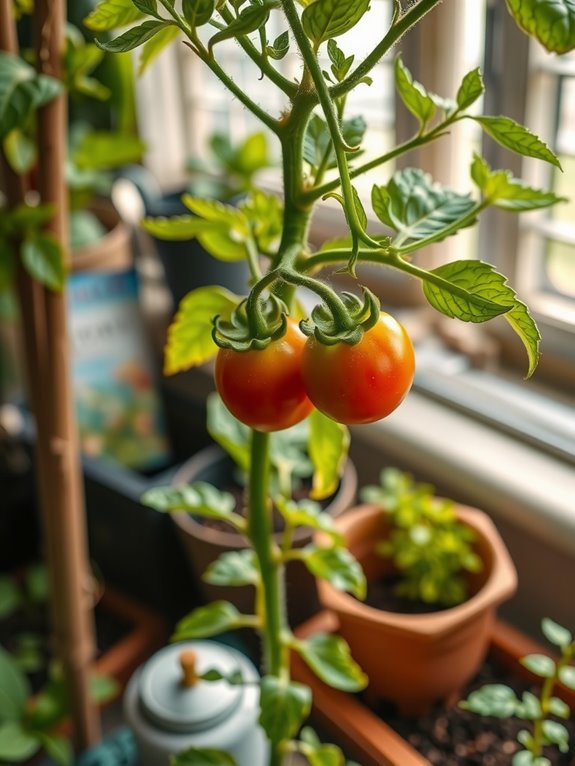
When you’re ready to grow tomatoes, you’ll face a choice between starting from seeds or buying seedlings. Each path has real trade-offs worth understanding.
Seedlings: The Faster Route****
Buying seedlings saves you time and indoor growing space. Someone else already did the seed-starting work—those initial weeks of watering, monitoring, and adjusting light conditions. You skip directly to transplanting seedlings into your garden and managing them as they grow. This approach works well if you’re new to gardening and want to avoid early mistakes. You’ll also find more variety at local farms and farmers markets than at most big-box stores.
Buying seedlings saves time and space—skip the seed-starting work and transplant directly into your garden.
Seeds: The Hands-On Approach
Starting from seed takes more effort and resources upfront. You’ll need seed-starting mix, containers, grow lights or a sunny window, and consistent watering for 6 to 8 weeks before transplanting. The payoff is complete control over varieties. You can choose heirloom tomatoes, unusual colors, or specific disease-resistant types that seedling sellers don’t typically stock. You’ll also learn how seeds germinate, how seedlings develop, and what conditions they need. If you want to save seeds from your best plants at season’s end, starting from seed builds that knowledge.
Which Path Fits Your Situation
Choose seedlings if this is your first year growing tomatoes or if you have limited space indoors. Pick seeds if you have the space and time, want specific varieties, or plan to save seeds from your harvest. Both approaches get tomatoes into the ground successfully.
Choose the Right Planting Time and Location
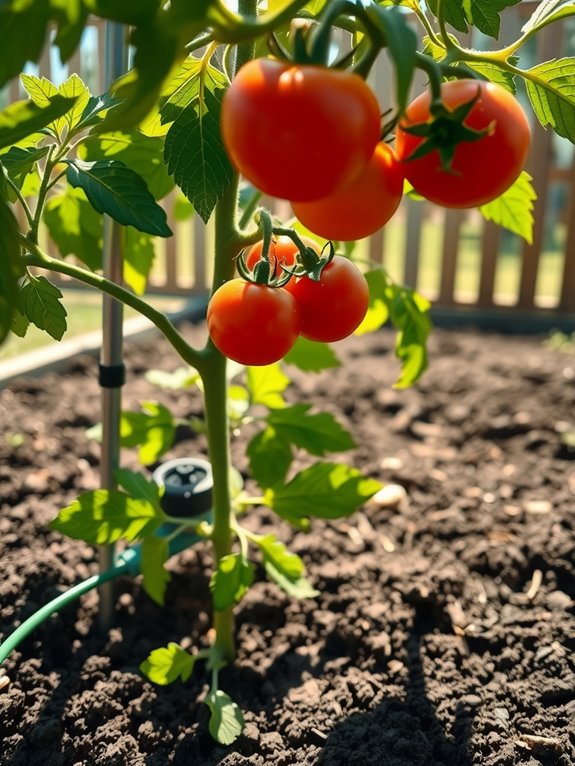
Time your planting for when nighttime temperatures stay above 50°F and frost risk has passed. In some regions, you can plant as late as mid-June and still get good growth. Check your local frost dates to know when it’s safe to put seedlings in the ground.
Find a spot that gets at least six hours of direct sunlight each day. Tomatoes need this much light to produce well. Before planting, amend your soil with compost or aged manure to improve drainage and add nutrients for strong root development.
Count the days from your planting date to your first expected fall frost. Match this number against your tomato variety’s days to maturity. If you have 70 days before frost and your variety needs 75 days, choose a faster-maturing type instead. This simple calculation prevents you from planting varieties that won’t finish before cold weather arrives.
Timing Your Tomato Planting
Because tomatoes are heat-loving plants, timing matters more than you might think. You’ll want to wait until after your last frost date passes and nighttime temperatures consistently stay above 10°C (50°F)—ideally 15°C (59°F).
Wait until soil and air warm up. Planting too early won’t help your seedlings grow any faster. Check your seed packet for the number of days to maturity, then count backward from your first expected frost date. This calculation tells you when to plant so your tomatoes have enough time to set fruit before cold weather arrives.
In some regions, mid-June planting actually produces better growth than early spring planting. This happens because the soil is warmer and seedlings develop faster under better conditions. Delaying planting slightly often results in stronger plants with better fruit production than rushing to get seeds in the ground early.
Calculate your specific planting time by combining two pieces of information: your local frost dates and your tomato variety’s maturity timeline. Look up your area’s first and last frost dates, find your variety’s days to maturity on the seed packet, and work backward to find your ideal planting window. This method takes the guesswork out of deciding when to plant.
Sunlight and Soil Requirements
Where should you plant your tomatoes? Find a spot that gets at least 6 to 8 hours of direct sun daily. Direct sun fuels growth and fruit production. If you live in an extremely hot climate, some afternoon shade can help protect your plants from scorching.
Next, focus on your soil. Tomatoes need rich, well-drained soil that lets water pass through without pooling. If you have heavy clay soil, amend it with compost or other organic matter to improve drainage. Poor drainage causes root rot, which will kill your plants.
Plant your tomatoes deeply and bury the roots along the stem. This promotes a stronger root system, which means better water and nutrient uptake. Your tomato plants will grow more healthily and produce better yields.
Site Preparation and Amendments
Timing matters just as much as location when it comes to planting tomatoes. Wait until nighttime temperatures reliably stay above 10°C (50°F), with 15°C (59°F) being the better target. In some regions, mid-June planting works best if you want a longer growing season.
Once you’ve picked your planting time, prepare your site with these steps:
- Select a location that gets at least 6 hours of direct sun daily
- Choose rich, well-drained soil to support healthy root development
- Mix compost and slow-release fertilizer into your planting holes before transplanting
- Add bone meal to boost nutrient availability during the transplanting process
After you’ve transplanted your seedlings, water thoroughly at the roots and apply mulch around the base to retain soil moisture. Install supports early to encourage sturdy growth and prevent root damage as plants develop.
Select Healthy Seedlings to Prevent Early Problems
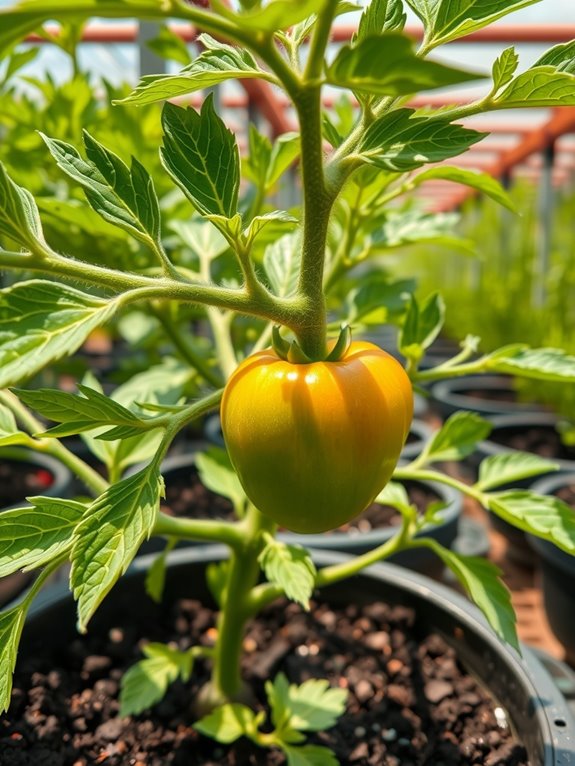
How to Pick Healthy Tomato Seedlings
Before you move seedlings to the garden, examine them carefully. A ready seedling has short, stocky stems with dark green leaves and no spots or discoloration. The roots should grow straight and healthy without spiraling around the pot. Avoid any seedling with yellowing or wilting leaves, as these signal disease problems.
| Feature | What to Look For | What to Avoid |
|---|---|---|
| Stem | Thick, compact | Tall, spindly |
| Leaves | Dark green | Yellow or spotted |
| Roots | Straight, healthy | Spiraling, circled |
| Growth | Sturdy, proportional | Weak, leggy |
| Overall | Disease-free | Diseased or stressed |
Prepare Seedlings for the Garden
Hardening off takes about 7 to 10 days. Start by placing seedlings outside in a sheltered spot for 1 to 2 hours on the first day. Each day, gradually increase the time they spend outdoors and expose them to more direct sun and wind. By day 7 or 8, leave them outside overnight if temperatures stay above 50°F. This slow adjustment helps seedlings adapt to outdoor conditions without shock and sets up a strong root system for planting.
Plant Deeply: It’s the Foundation of Root Strength
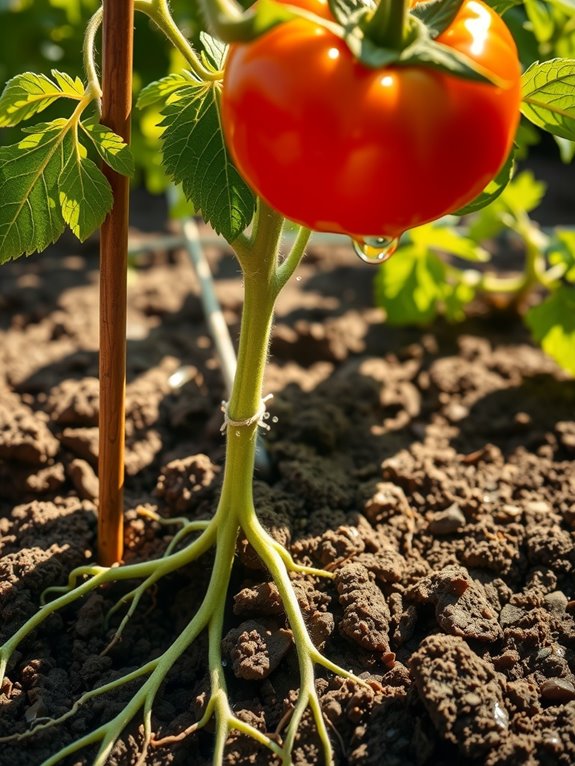
Once your seedlings are hardened off and ready for the garden, how you plant them matters significantly. Deep planting builds tomatoes with strong root systems that can handle dry conditions and support heavy fruit.
When you bury most of the stem underground, several things happen. Roots develop along the entire buried portion of the stem, not just at the base. This creates a larger root network that can reach deeper soil layers for water access. A deeper, more extensive root system also anchors the plant better against wind and prevents it from toppling under the weight of fruit.
During transplanting, bury about two-thirds of your seedling’s stem below the soil line. Remove the lower leaves first so they don’t sit in the dirt. The buried stem will develop roots along its length, giving you a plant with a solid foundation. This approach works well alongside your regular feeding and pruning schedule, but it starts with getting the roots right from the beginning.
Water Your Tomatoes Deeply and Consistently
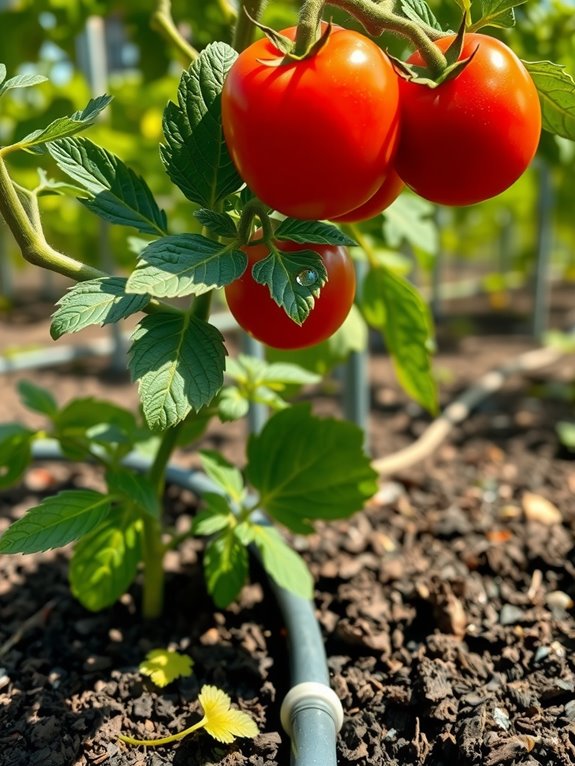
Why does watering matter so much for tomatoes? Consistent watering delivers nutrients directly to your plant’s root zone, fueling growth and fruit production. You need to water deeply and consistently, keeping your soil evenly moist without letting it dry out or become waterlogged.
Water thoroughly so moisture reaches the entire root zone, then monitor your soil regularly. Start with an early morning watering to allow leaves to dry and reduce disease risk. In hot weather or windy conditions, add a second watering late in the day to minimize evaporation.
Use rich, well-drained soil that holds moisture effectively. Watch for warning signs like pale foliage or yellowing leaves, which tell you something needs adjustment. Change your watering frequency based on what you observe. This consistency keeps your tomatoes healthy and productive.
Support Plants With Stakes, Cages, or Trellises
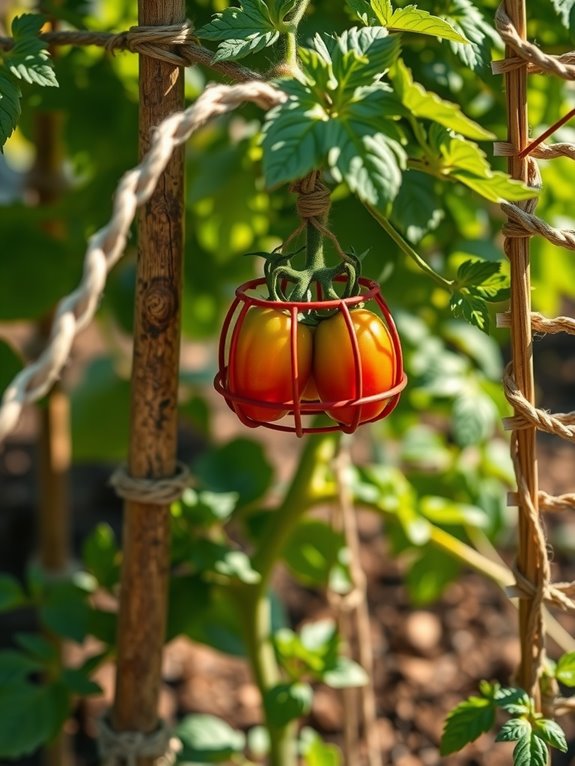
As your tomato plants grow taller and heavier with fruit, they need sturdy support to stay upright and healthy. Install stakes, cages, or trellises early in the growing season to prevent damaging developing roots and stems.
For most varieties, use 5- to 6-foot supports installed at planting time. Reinforcement wire cages or tall cages work well for this purpose. Secure stems with garden clips or twine as the plants grow, and check regularly for spots where the ties rub or bind the stems.
Train stems along your supports to keep air flowing through the plant and protect fruit from disease. For tall varieties, try a trellis system made from horizontal bamboo canes attached across vertical uprights, using twine tied at the joints to hold everything in place.
Match your support height to how tall your tomato variety gets when fully grown. Keeping vines off the ground improves both your yield and the plant’s ability to resist disease.
Feed Based on Plant Signals, Roughly Every 2–3 Weeks
Watch your tomato plants for signs they need feeding. Pale yellow-green leaves or slowed growth tells you it’s time to fertilize. Feed your plants every 2–3 weeks using a water-soluble fertilizer.
Pick a fertilizer with higher phosphorus and potassium levels than nitrogen. This matters because the right ratio pushes your plants to develop fruit instead of just growing more leaves. Nitrogen-heavy formulas work against you—they encourage leafy growth at the expense of the tomatoes you actually want to harvest.
Signs Of Nutrient Deficiency
How’s your tomato plant looking these days? Watch for these signs that your plant needs feeding:
- Pale yellow-green foliage across lower leaves signals nitrogen depletion. You have 2–3 weeks to act before the problem spreads up the plant.
- Growth slowdown or stunted development means nutrients aren’t reaching where they’re needed most.
- Purple-tinged leaves with poor fruit development indicate phosphorus deficiency. Switch to a fertilizer with a higher phosphorus ratio.
- Yellowing leaf edges while centers stay green point to potassium deficiency, which reduces overall plant strength.
Check your plant’s leaf color weekly. Pale or discolored foliage tells you it’s time to feed. Catching these signs early prevents bigger problems later on.
Apply a balanced fertilizer with higher phosphorus and potassium content to support fruit production rather than excessive leaf growth. A 5-10-10 NPK ratio works well for tomatoes at the flowering and fruiting stage. Water the fertilizer in thoroughly after application so the roots can absorb it.
Fertilizer Schedule And Ratios
When should you fertilize your tomato plant? Feed your tomatoes every 2–3 weeks with a water-soluble fertilizer. Start your season by mixing compost and slow-release fertilizer into your planting holes. Watch for pale yellow-green foliage or slowed growth—these signals tell you it’s feeding time. Adjust your fertilizer schedule based on what you observe in your plants.
| Nutrient | Role | Ratio Focus |
|---|---|---|
| Nitrogen (N) | Foliage growth | Lower percentage |
| Phosphorus (P) | Fruit development | Higher percentage |
| Potassium (K) | Overall plant strength | Higher percentage |
| Calcium | Fruit quality | Maintain throughout |
Your fertilizer mix should have phosphorus and potassium percentages higher than nitrogen. This ratio supports fruit development without pushing excessive leafy growth. Once your plants mature and start setting fruit, use balanced fertilizers that contain calcium. Adjust how often you fertilize based on plant signals and what stage of growth your tomatoes are in.
Prune Tomato Plants Regularly for Bigger Yields
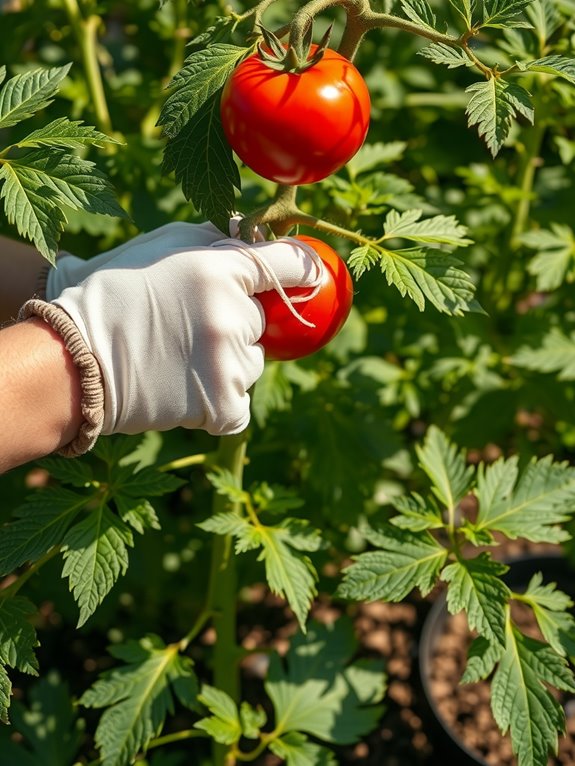
Why does pruning matter so much? When you prune regularly, you grow bigger tomatoes and healthier plants. Pruning redirects energy toward fruit production instead of excessive vine growth.
Understand what to prune. Indeterminate tomatoes need pruning to prevent tangled, diseased growth. Skip pruning determinate varieties entirely. Remove most suckers, keeping just 1-3 main stems depending on your staking method and spacing. This decision depends on how you plan to support your plants and how much room you have between them.
Trim the bottom leaves and any dead growth. This improves air circulation around your plant, which reduces disease problems. Check your plants weekly. Prune on a 14-day schedule as needed, removing yellowing leaves and extra growth that aren’t contributing to tomato yields. Tie your plants to supports as you prune to maintain control over vine size and keep stems in place.
Protect Tomatoes From Diseases and Pests
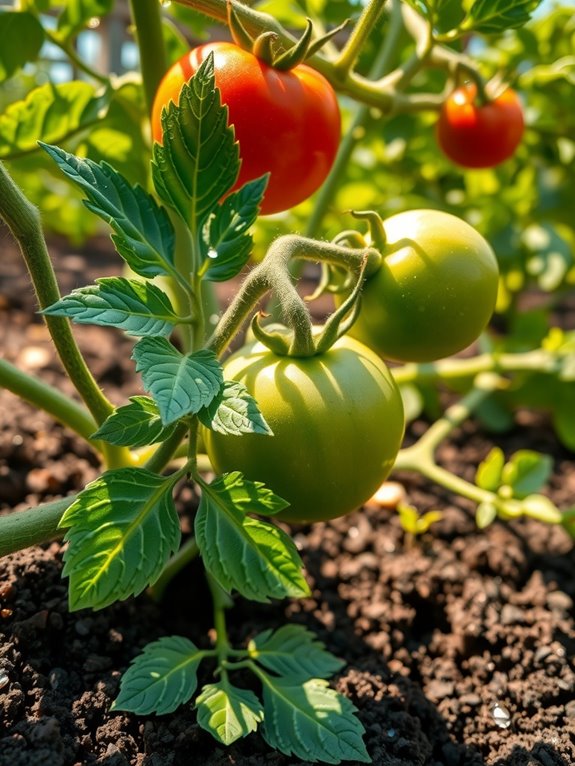
Visit your garden at least twice a week to catch problems early. When you spot insects, pick them off by hand right away. Remove any leaves that show signs of disease before the problem spreads.
Plant basil, marigolds, and nasturtium near your tomatoes. These companion plants draw in beneficial insects that eat common tomato pests. This method works best when combined with other prevention steps.
Keep your garden clean by removing dead leaves and plant debris from the soil. Prune your tomato plants to open up the canopy and improve air flow between branches. Better air circulation helps prevent fungal diseases from taking hold.
Early Detection and Removal
How often are you checking your tomato plants? Regular visits to your garden let you spot problems while they’re small and manageable. Staying on top of plant health means catching issues before they spread.
What to do for early detection:
Hand-pick insects and crush any eggs you find on the undersides of leaves. Remove diseased leaves right away and throw them in the trash or a separate compost pile away from your healthy plants. Check your plants at least twice each week for unusual spots, holes, or other damage. The moment you see signs of disease, remove that leaf or branch immediately.
Garden hygiene:
Prune your plants regularly to open up space between leaves and stems. Better air flow reduces moisture buildup, which is where diseases and pests thrive. This simple step makes a real difference. When you stay consistent with checking and removing problem areas, you’ll notice that pest management becomes less of a struggle. Your regular attention protects the rest of your garden from spreading problems.
Companion Plants and Hygiene
While chemical sprays have their place, building a healthier garden ecosystem from the start protects your tomatoes more effectively. When you plant the right companions nearby, beneficial insects move in and pests find it harder to establish themselves.
Companion Plants to Use
Plant basil near the base of your tomatoes to repel aphids and flies. Set marigolds in border rows to deter nematodes from the soil. Place mint in a container close by—it brings in pollinators without taking over your beds. Nasturtium planted around your tomatoes acts as a trap crop, drawing aphids away from your main plants.
Garden Hygiene Practices
Combine companion planting with regular maintenance. Remove dead leaves and plant debris weekly to cut down on disease. Prune the lower branches on your tomato plants to improve air circulation around the stem and base. When you spot diseased or yellowing leaves, remove them immediately and dispose of them in the trash, not your compost pile.
These steps work together. You’re not just controlling pests—you’re creating conditions where your tomatoes grow without constant pressure from disease and insects.
Know When Tomatoes Are Ready to Harvest
Determining the right time to pick your tomatoes matters for flavor and texture. Watch for these ripeness indicators:
Color matching: Tomatoes ripen on the vine to match the image on your seed packet. Different varieties ripen to different colors, so check what you’re growing.
Gentle squeeze test: Press lightly on the tomato. A ripe one yields slightly to pressure without feeling mushy or hard.
When to harvest: Pick fully ripe tomatoes if you plan to eat them right away. If you want them to last longer, pick them slightly underripe instead.
Ripening indoors: Underripe tomatoes will continue ripening at room temperature inside your home. This gives you flexibility with your harvest schedule. Fully green tomatoes, however, won’t ripen off the vine, so don’t bother picking those.
Your personal preference for firmness matters. Some growers prefer harvesting just before peak ripeness, while others wait for maximum ripeness. You’ll develop a feel for the right moment as you harvest more tomatoes.
Extend Your Harvest With Succession Planting
Once you’re harvesting ripe tomatoes regularly, keep that production going longer by planting tomatoes at different times throughout the season. Succession planting staggeres your plantings so fresh tomatoes keep coming from midsummer deep into fall.
How Succession Planting Works
Plant early varieties in spring for a midsummer harvest. Then plant mid-season varieties 2-3 weeks later to get late summer production. Finally, plant late-season varieties in early summer for a fall harvest. Each variety has different days to maturity, so you get continuous picking instead of one big harvest all at once.
Spacing and Support
Indeterminate tomatoes (the vining types that grow all season) need 3 feet between plants to allow room for staggered fruiting. Determinate tomatoes (the bush types) need only 2 feet apart since they stay more compact. Install staking supports at planting time to prevent damage to developing vines and fruit. Use sturdy stakes or cages that can handle the weight of mature plants.
Watering and Harvesting
Keep soil moisture consistent throughout the growing season. Use drip irrigation or soaker hoses to deliver water directly to the root zone without wetting the leaves. Harvest ripe fruit promptly and store at room temperature. Regular picking encourages the plant to produce more fruit.
Grow Tomatoes in Containers: Space-Saving Method
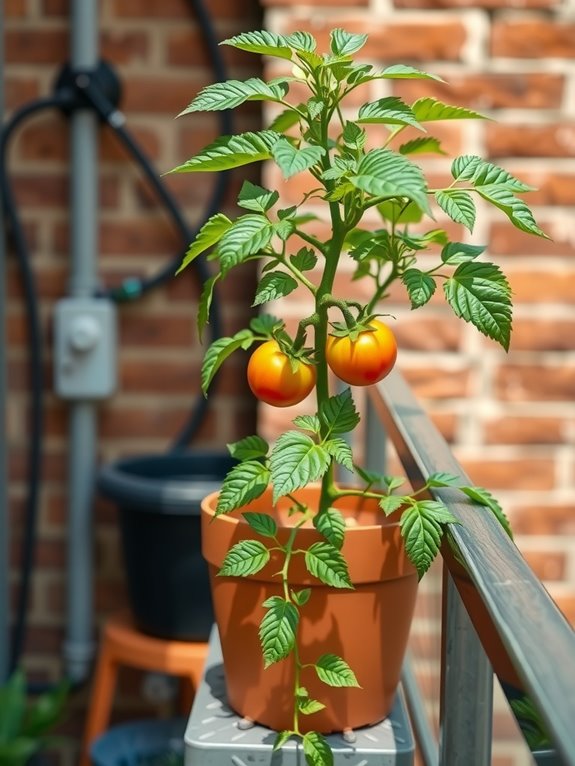
Don’t have garden space. Growing tomato plants in containers is a practical solution that works on patios, balconies, or small yards.
Container size: Use a 5-gallon bucket or pot at least 14 inches in diameter. Make sure it has drainage holes so water doesn’t collect at the bottom and rot the roots.
Watering routine: Water daily during the growing season, preferably in the early morning. Check the soil by sticking your finger about an inch down. If it feels dry, water until moisture reaches the bottom and drains out the holes.
Sun exposure: Position your containers where they receive 6 to 8 hours of direct sun each day. Tomatoes need this much light to produce fruit properly.
Support system: Install sturdy cages, trellises, or stakes right at planting time. This prevents root damage later and helps the plant grow upward rather than sprawling across your space. Good air circulation between branches also reduces disease.
Plant one seedling per container. This keeps roots from competing for water and nutrients. With these basics in place, you can grow tomatoes in tight spaces and manage watering and maintenance easily while getting solid yields.