Your Bird of Paradise needs at least four hours of direct sunlight each day. Position it near a south, west, or east-facing window where light reaches it consistently.
Water the plant when the top two to three centimeters of soil feel dry. Water thoroughly, then let it drain completely. This prevents water from sitting in the pot and causing root rot. Use a potting mix that drains well and add pebbles to the bottom of your container for better airflow.
Keep the humidity between 50-60% by placing a pebble tray filled with water under the pot or misting the leaves regularly. Maintain temperatures between 65-80°F and keep the plant away from cold drafts.
Feed your Bird of Paradise once a month during spring and summer with a mild fertilizer. Stop feeding in fall and winter when the plant grows more slowly.
Check the undersides of leaves once a month for pests like spider mites or scale insects. Remove any dead or yellowing foliage using clean pruners to prevent disease and keep the plant looking neat.
Light Requirements: Why Brightness Matters Most
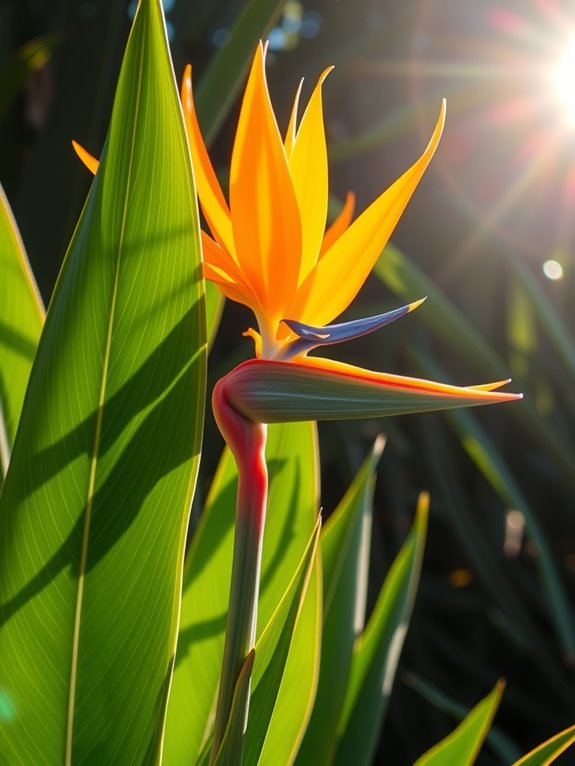
Light is essential for your Bird of Paradise because it powers photosynthesis, the process that fuels growth and overall plant health. Medium light won’t cut it—your plant needs brightness to really perform.
Give your Bird of Paradise at least four hours of direct sun or bright indirect light each day. Position it near a southern, western, or eastern window for the best results. The amount of light you provide directly affects how tall your plant grows. With ideal conditions, it can reach six feet. Without enough light, your plant will stay small and weak, and it likely won’t flower at all.
If your space doesn’t get enough natural light, add a grow light. Place it above or beside your plant to supplement what your windows provide. Position your plant where light reaches it consistently throughout the day. This setup also helps prevent overwatering by promoting healthy, steady growth patterns. A plant that gets proper light grows at a normal rate, so it needs water on a predictable schedule.
Where to Place Your Bird of Paradise
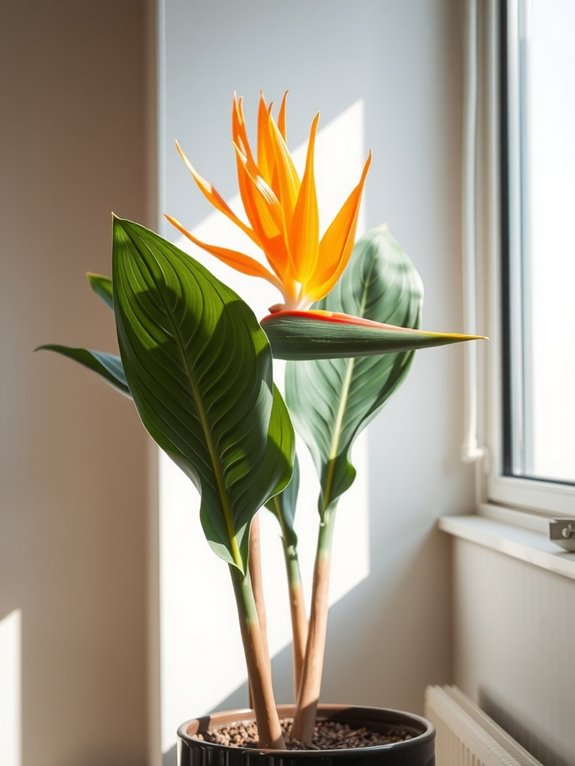
Position your plant where it gets bright light for at least four hours each day. South-facing, west-facing, and east-facing windows work well. The one exception: avoid placing your Bird of Paradise directly against hot west-facing glass. The intense heat can scorch the leaves.
Position your Bird of Paradise in bright light for at least four hours daily, avoiding direct hot west-facing glass to prevent leaf scorching.
Keep the plant away from air vents and cold drafts. These conditions stress the plant and slow its growth.
Your placement choice affects how tall your Bird of Paradise will grow. With plenty of bright light and good humidity, the plant develops more fully and reaches its potential height of 6 to 8 feet. Without enough sunlight, it will stay smaller, around 3 feet tall.
Pick a spot where your plant can stay in one place. Consistent light exposure and stable conditions let the plant grow steadily without interruption. Moving it around frequently or placing it in a dim location will limit its development.
The Right Potting Mix and Drainage Setup
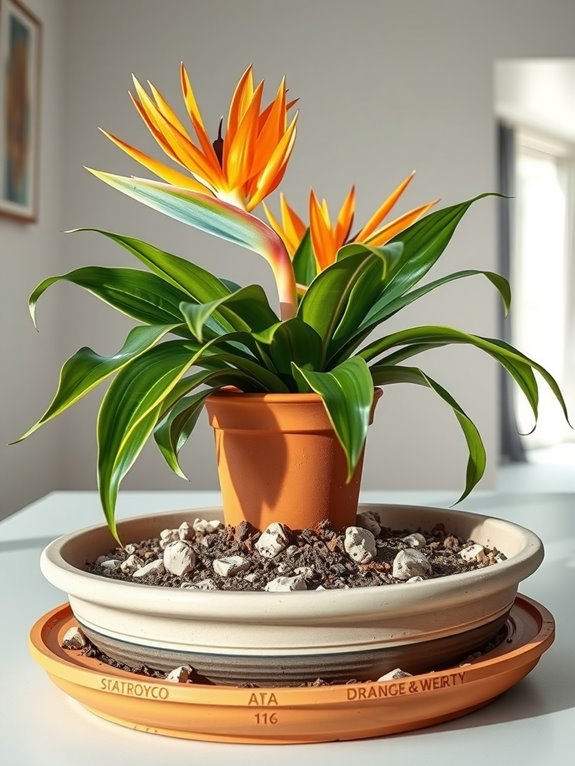
You’ll want to use a well-draining potting mix amended with pumice or perlite. This keeps your Bird of Paradise’s roots healthy and stops water from sitting in the soil.
Add a drainage layer at the bottom of your container. Use aeration stones or broken pottery pieces. Your pot needs at least one drainage hole so water can escape freely.
Empty any water that collects in a saucer right away. Letting your plant sit in standing water leads to root rot quickly. Check the saucer after watering and remove excess water before it gets reabsorbed into the soil.
Well-Draining Soil Essentials
Bird of Paradise plants are susceptible to root rot, so your soil setup matters. Use a quality potting mix and add pumice or perlite to it. These materials create air pockets that let roots breathe and prevent water from sitting around them.
Pick containers with drainage holes. This isn’t optional. At the bottom of the pot, place a layer of aeration stones or gravel to stop water from pooling directly under the root ball.
Between waterings, let the top 2 to 3 centimeters of soil dry out completely. This step prevents waterlogging and the fungal problems that come with it.
Well-draining soil protects your plant from root rot and sets up the conditions for healthy flowering and long-term growth.
Drainage Layers And Setup
Start by preventing root rot through proper pot setup. Place aeration stones at the bottom of your container—these create air pockets that your roots need. Make sure your pot has a drainage hole so water can exit. Put a saucer underneath to catch water that drains out, and empty it regularly so roots don’t sit in moisture.
Pick a container with a slightly larger interior diameter to give thick, tuberous roots room to spread.
Layer your pot this way: aeration stones first, then your potting mix. Blend your potting soil with pumice for drainage and compost for nutrients. This mixture holds enough moisture to keep roots hydrated without becoming soggy. Water when the top 2 to 3 centimeters of soil feels dry to the touch.
This drainage layer setup is not optional if you want healthy roots. Without it, your Bird of Paradise will struggle.
Understanding Your Watering Schedule
Getting your Bird of Paradise’s watering schedule right keeps it healthy. Water when the soil reaches 50% dryness, continuing until liquid drains from the pot’s bottom. Remove any standing water from the saucer right away to stop root rot from developing.
Water when soil reaches 50% dryness, drain thoroughly, and immediately remove standing water to prevent root rot.
Between waterings, let the top 2–3 cm of soil dry out completely. This method supports healthy roots and prevents the soggy conditions that damage your plant.
Check soil moisture with a soil probe or your finger, especially during winter when your Bird of Paradise needs less water. Adjust your watering based on what you find. Watch for signs of thirst like crispy leaf tips and drooping foliage. Yellowing leaves and root problems point to overwatering instead.
Self-watering containers can help, but check them regularly. The goal is to keep the soil moist but not wet. You’ll need to pay attention and make small adjustments as seasons change and your plant’s needs shift.
Checking Soil Moisture Before Watering?
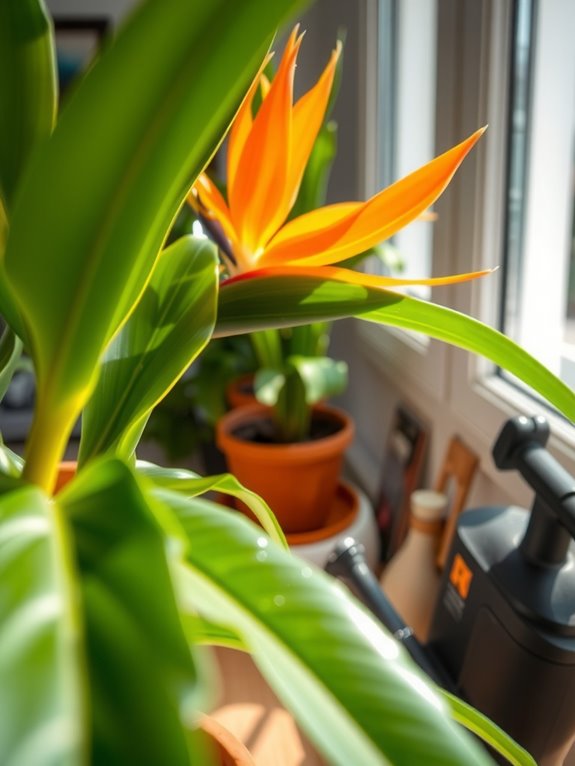
Before watering your Bird of Paradise, check the soil to see if it actually needs water. Stick your finger about 2-3 cm into the topsoil. If the soil feels dry, water it. If it still feels moist, wait and check again later. For more accuracy, use a soil moisture probe instead of relying on the finger test.
This simple habit prevents overwatering, which is the most common reason Bird of Paradise plants develop root rot. Keep the soil moist but not soggy. Watch for crispy leaf tips and browning edges—these signals mean your plant needs water.
Humidity Levels and How to Increase Them
Your Bird of Paradise grows fine in regular room humidity, but increasing it will give you noticeably better results. The plant prefers moisture in the air, and you can raise humidity levels using three practical methods: a humidifier, a pebble tray, or regular misting.
Watch your plant’s leaves closely for signs of low humidity. Crispy leaf edges and leaf splitting tell you the air is too dry. When you notice these problems, adjust your setup by choosing one or more of these options.
A humidifier is the most straightforward approach. Place one near your plant and set it to maintain humidity between 50 and 60 percent. This method requires less hands-on work once you set it up.
A pebble tray works well if you prefer a simpler setup. Fill a shallow tray with pebbles, add water until it reaches just below the top of the pebbles, and place your plant pot on top. As the water evaporates, it creates moisture around the plant. Refill the tray every few days.
Misting involves spraying your plant’s leaves with water a few times per week using a spray bottle. This method adds moisture directly to the leaves and the surrounding air. Mist in the morning so excess water can dry during the day.
Using all three methods together will give your Bird of Paradise the humid conditions it prefers, supporting fuller foliage and stronger growth overall.
Normal Room Humidity Works
Most indoor spaces work fine for your Bird of Paradise. The plant tolerates normal room humidity, but it grows better with higher humidity levels.
You’ll see real improvements when you prioritize humidity. Here are methods to create the right environment:
Use a humidifier nearby. A standard room humidifier maintains consistent moisture in the air around your plant. Run it during dry seasons or in naturally arid climates.
Set up a pebble tray. Fill a shallow tray with pebbles and water, then place your pot on top. The water evaporates around the plant as it sits. Refill the tray every few days to keep it working.
Mist your plant regularly. Spray the leaves with water when indoor humidity drops below 40 percent. This prevents leaf splitting and keeps edges from turning crispy.
Combine multiple methods. Using a humidifier plus misting plus a pebble tray works better than any single approach, especially in dry climates. Each method adds to the overall moisture level around your plant.
When you apply these strategies together, you reduce crispy leaf edges and support better foliage health. Your Bird of Paradise will grow faster and produce more flowers.
Increase Humidity With Tools
Your Bird of Paradise will grow better when you actively increase humidity indoors. While normal room moisture won’t damage the plant, boosting humidity levels makes a real difference in leaf quality and overall growth.
| Tool | Benefit |
|---|---|
| Humidifier | Raises humidity consistently in dry indoor air |
| Pebble Tray | Creates localized moisture around your plant |
| Regular Misting | Increases ambient humidity throughout the day |
| Combination Approach | Prevents leaf splitting and crispy edges |
Using a Humidifier
A humidifier works best in consistently dry environments and produces steadier results than other methods. Place it in the same room as your plant and run it daily during dry months. This keeps humidity at healthy levels and promotes flatter, healthier leaf edges.
Setting Up a Pebble Tray
Position a shallow tray with pebbles directly under your pot. Fill the tray with water until it reaches just below the top of the pebbles. As water evaporates from the pebbles, moisture rises around your plant. Refill the tray every few days so it never runs completely dry.
Misting Your Plant
Spray your Bird of Paradise with water 2-3 times per week using a spray bottle. This raises humidity throughout the day. However, misting alone won’t match the consistent results of a humidifier or pebble tray. Avoid spraying so much that water sits on the leaves for hours, as this creates conditions for fungal growth.
Combining Your Approach
Using multiple methods together works better than relying on just one. A humidifier plus a pebble tray gives you steady moisture control, while occasional misting provides extra humidity boosts on particularly dry days. This combination prevents the crispy leaf edges and splitting that happen in very dry air.
Monitor Leaf Health Closely
How can you tell if your Bird of Paradise is struggling with humidity? Watch for dry, crispy leaf edges and leaf splitting. These signs tell you the air around your plant is too dry.
Look for these specific problems:
- Brown, papery leaf edges that spread across the leaf surface
- Split or torn leaves on new growth
- Dull foliage even when you’re watering correctly
- Damage appearing mainly on one side of the plant, showing uneven moisture exposure
To fix low humidity, try misting your plant 2 to 3 times per week with a spray bottle filled with distilled water. Another option is to set your pot on a pebble tray. Fill the tray with pebbles, add water until it reaches just below the pot bottom, and let the water evaporate around the plant.
Check your plant’s leaves every week. Rotate the pot a quarter turn each time you check so all sides get equal air exposure. When humidity improves, your Bird of Paradise will grow healthier leaves with better color and texture. The crispy edges will stop spreading, and new leaves will develop without splitting.
Temperature Needs for Your Bird of Paradise
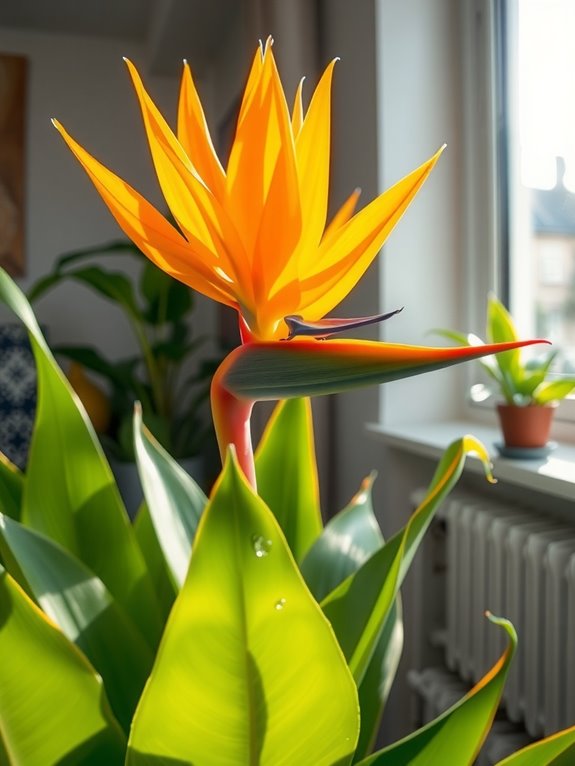
Keep your Bird of Paradise in temperatures between 65-80°F indoors. This range supports healthy growth and keeps your leaves in good condition. Avoid sudden temperature swings, as they stress your plant and can cause leaf damage or slow growth.
When outdoor temperatures warm up, move your plant outside to a suitable location where it gets natural light and fresh air. Bring it back indoors before temperatures begin dropping in fall.
Protect your plant from freezing temperatures. Frost and cold below 32°F will damage it severely. If you live in a cold climate, move your Bird of Paradise indoors as soon as winter approaches to prevent harm.
Keeping steady temperatures is the most straightforward way to maintain a healthy plant over time.
Fertilizing: Growing Season vs. Winter Rest
Your Bird of Paradise plant needs different feeding schedules depending on the season. During spring through fall, when your plant is actively growing, fertilize once a month with a mild, water-soluble fertilizer like fish emulsion or a balanced houseplant formula. Come winter, stop fertilizing altogether. Your plant naturally slows its growth during this time and doesn’t need the extra nutrients.
The key is matching your fertilizer application to what the plant actually needs. Active growth requires regular feeding. Dormancy requires none.
Spring Through Fall Feeding
When your Bird of Paradise enters spring and summer, it needs more food because growth accelerates during these months. Feed your plant every two weeks using a mild water-soluble fertilizer like fish emulsion or a basic houseplant formula.
You have several feeding options to choose from:
- Apply organic compost or worm castings as a top dressing in spring for steady nutrient release
- Use liquid fertilizer throughout the growing season for faster nutrient availability
- Switch to monthly feeding by late summer if growth slows
- Choose organic products if you prefer them over synthetic options
Follow the dilution instructions on your fertilizer package. Using the correct amount prevents salt buildup in the soil while giving your plant the nutrients it needs. Overfeeding does more harm than underfeeding, so measure carefully and stick to your schedule.
Winter Rest And Dormancy
When fall arrives and your Bird of Paradise stops growing actively, you need to change how you care for it. The plant enters a rest period, and your watering and feeding should reflect that shift.
During dormancy, cut back on both water and fertilizer. Your plant needs less of everything because growth slows down significantly. Skip fertilizer completely until spring—the plant won’t use it during winter months.
From October through February, check your soil moisture by hand instead of watering on a set schedule. Water only when the soil feels dry. Overwatering during dormancy causes root damage, so err on the side of drier soil. If your home stays warm between 65–80°F with lower light levels, monitor the soil regularly but space out your watering even more than usual.
When spring arrives and new growth appears, start feeding your plant again. Use a balanced, general-purpose fertilizer once a month while the plant actively grows through the warm season.
When and How to Repot Your Plant
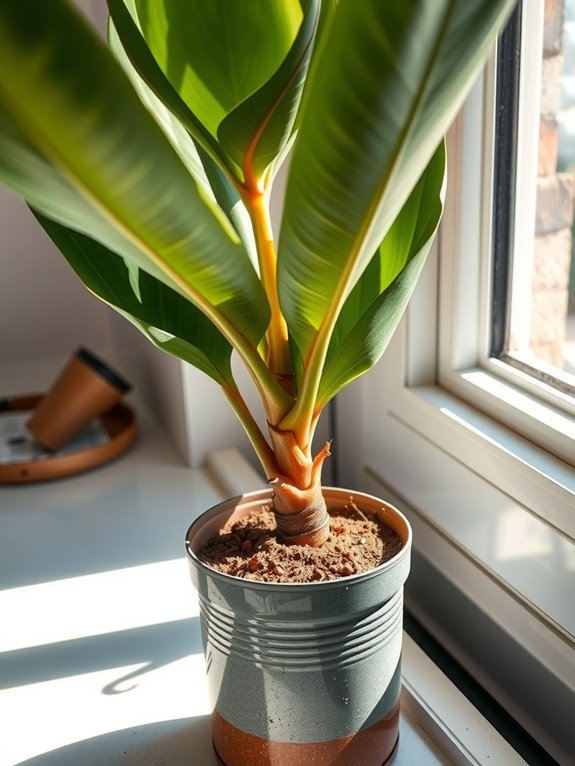
How often does your Bird of Paradise really need a new pot? For larger floor plants, repot every 18–24 months when you see a dense, vigorous root ball. You can actually wait up to 28 months if your plant is doing well and stays slightly pot-bound.
Repot larger Bird of Paradise plants every 18–24 months when roots are dense and vigorous, or wait up to 28 months if slightly pot-bound.
Repotting best practices:
Plan your repotting for spring or summer when your plant grows fastest. This timing gives it the energy to recover from the disturbance.
Select a pot that is 2–4 inches larger in diameter than the current one. Add a drainage layer of aeration stones at the base before adding soil.
If you’re dividing your plant, use clean, sharp knives to make clean cuts. Make sure each section has at least 3 leaves and roots attached to it.
After repotting, lightly trim any crowded roots and excess foliage. Then water consistently over the following weeks to help the plant settle in.
This approach keeps your Bird of Paradise healthy and stops root-bound stress while supporting new growth.
Pruning Dead Leaves and Damaged Stems
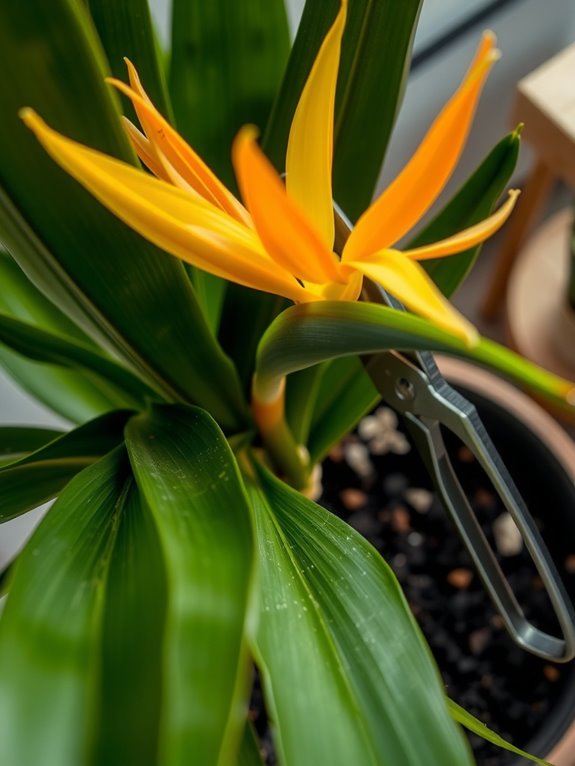
Your Bird of Paradise needs regular pruning to remove dead leaves and damaged stems that build up over time. This keeps the plant healthy and directs energy toward new growth.
Tools and technique. Use sharp, clean pruners or a knife for all cuts. Dull tools tear plant tissue and create openings for disease. Make cuts as close to the base as possible or right at the point of damage.
What to remove and when. Check your plant monthly for problems. Remove brown leaf edges and discolored foliage as soon as you spot them. Cut damaged or split leaves entirely off the plant. Take out dead stems at the base during your regular inspections. In early spring, trim away old flowering stalks after they finish blooming.
How to prune without harming the plant. Avoid cutting aggressively into the center of the plant. Your Bird of Paradise grows in natural clumps, and excessive pruning disrupts this shape. Instead, focus on removing only what’s dead or damaged. After you prune, watch the new growth that appears over the next few weeks to make sure the plant responds well.
Regular inspection catches problems early and stops damage from spreading through the plant. Set aside time each month to look over the foliage and stems so you catch issues before they become bigger problems.
How to Propagate by Division?
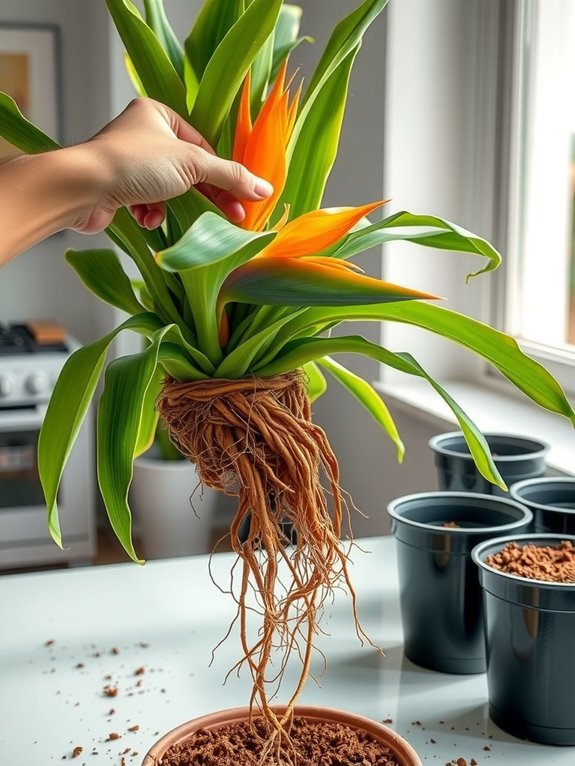
Division is the fastest way to propagate your Bird of Paradise. You’ll separate mature clumps into smaller sections, with each division containing at least 3 leaves and attached roots. Use a sharp, clean knife to cut through the rhizome, taking care to preserve the root system in every piece.
Time it right. Spring or summer offers the best conditions for new plants to establish themselves. The warmth and longer daylight hours support strong initial growth.
Choose mature clumps. Wait until your plant becomes crowded before dividing. Young plants need more time to develop before they can handle separation.
Prepare your containers. Fill small pots with well-draining potting medium. The soil should be loose enough for new roots to penetrate easily, not compacted.
Plant each division immediately. Place the separated sections into their containers right after cutting. This prevents the roots from drying out and reduces stress on the new plants.
Water and monitor. Give each division a thorough watering after potting. Keep the soil consistently moist but not waterlogged while roots establish over the next few weeks.
This method works because you start with an established root system already in place. Your divisions have an immediate advantage compared to propagating from seeds or leaf cuttings.
Diagnose Crispy Leaves, Splitting, and Drooping
When you spot crispy leaf edges or tips on your Bird of Paradise, low humidity or inconsistent watering is usually the culprit. These plants need moisture in both the air and soil—the soil shouldn’t dry out completely between waterings.
If your foliage is drooping, check the soil first. Underwatered plants will perk up after watering. If the soil stays soggy and the droop continues, you’re dealing with overwatering or a root problem.
To address both issues, follow these steps:
Adjust your watering schedule. Keep the top 2–3 cm of soil dry between waterings. Water when the soil feels slightly moist below the surface, not when it’s bone dry or waterlogged.
Increase humidity. Mist the leaves a few times a week, or place the pot on a pebble tray. Fill the tray with pebbles and water so the pot sits above the waterline—as the water evaporates, it raises the humidity around the plant.
Monitor soil drainage. If you suspect root rot, check whether your pot has drainage holes. If it doesn’t, repot the plant into one that does using fresh, well-draining potting soil.
Your plant should show improvement within a few weeks once humidity and watering are balanced.
Crispy Leaves and Humidity
Your Bird of Paradise’s brown, papery leaf edges point to low humidity or dry air. This is one of the most common issues plant owners face, and it happens because this tropical plant needs moisture levels higher than what typical indoor spaces provide.
Use a humidifier****
A humidifier maintains steady moisture in the air around your plant. Set it to run during the day when your plant is actively growing. Position it within 3 to 6 feet of your plant for the best effect.
Create a pebble tray****
Place your pot on a shallow tray filled with pebbles and water. The water sits below the pebbles, not touching the pot directly. As the water evaporates, it raises humidity around just that plant. Refill the water every few days to keep the effect going.
Mist the leaves****
Spray the leaves with a fine mist of water two to three times per week. This mimics the moisture your plant gets in its natural tropical habitat. Mist in the morning so leaves dry before nightfall, which prevents fungal issues.
Clean leaves regularly
Dust buildup blocks the pores plants use to absorb and release moisture. Wipe leaves gently with a soft, damp cloth every two weeks. This removes dust and helps you spot early signs of problems.
Bird of Paradise does fine in normal room humidity, but it performs better with humidity levels between 50 and 70 percent. Eliminating cold drafts while you increase moisture in the air prevents the natural leaf splitting this plant is known for and keeps the foliage looking its best.
Drooping Foliage and Watering
While humidity fixes those crispy leaf edges, watering practices address a separate problem: drooping foliage that signals your plant needs water. Drooping leaves commonly mean underwatering, even when the top soil feels slightly moist. Don’t go by appearance alone—use a soil moisture probe or your finger to check moisture levels before watering.
Your goal is consistency between waterings. The soil should feel moist but never soggy. If you see brown, shriveled basal leaves, your Bird of Paradise is definitely thirsty and needs more water.
Here’s what to do: increase your watering frequency and give the plant a thorough soak each time until water drains freely from the bottom. This establishes the steady moisture level your plant needs. During growing seasons, check your plant closely and adjust your watering schedule as conditions change. Proper watering prevents drooping foliage and works alongside humidity management to keep your plant healthy.
Prevent Problems: Seasonal Care Adjustments
Your Bird of Paradise needs different care as seasons change. When you adjust your watering, humidity, and feeding schedule to match what your plant needs each month, you avoid the problems that kill these plants.
Winter watering happens less often. From October through February, your plant grows slowly and needs less water. Check the soil before you water—it should dry out more between waterings during this rest period. This prevents root rot, which happens when soil stays soggy.
Humidity matters more in dry months. Low humidity causes crispy leaf edges and leaf splitting. Use a humidifier, set your pot on a pebble tray filled with water, or mist the leaves a few times a week. Any of these methods will help.
Move your plant indoors when frost comes. Freezing temperatures damage the roots. Once temperatures stay above 50°F during the day and night, you can move it back outside.
Stop fertilizing in winter and start again in spring. Feed your plant once a month from March through September when it’s actively growing. Skip fertilizer from October through February.
Identify and Treat Common Pests
Identify and Treat Common Pests
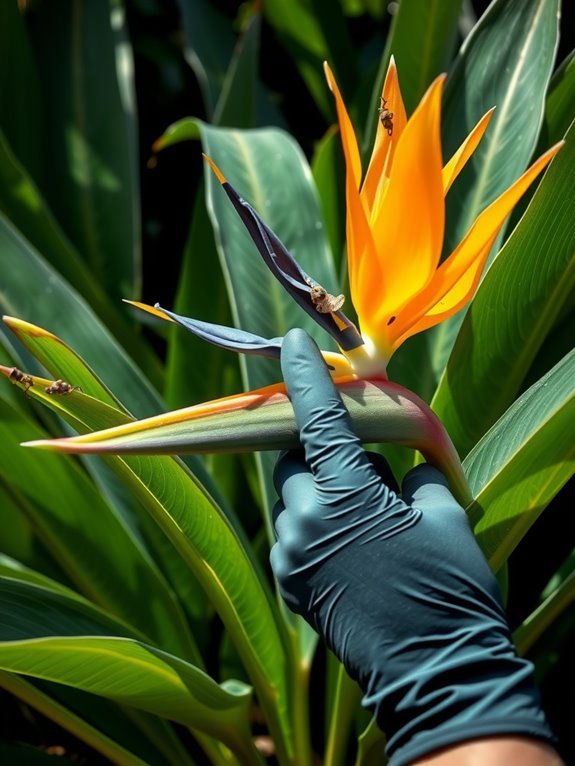
Tiny bugs on your Bird of Paradise need immediate attention. Mealybugs, spider mites, and scale insects prefer dry conditions, so check the undersides of leaves and stems every month. Look for yellowing leaves, tiny dots or stippling on the leaf surface, sticky residue, or visible insects clustered at leaf joints.
Start treatment as soon as you spot these signs. Your first step is simple: use a strong spray of water from your hose or sink to blast the affected areas. This removes many insects and interrupts their feeding.
Follow the water spray with either a mild dish soap solution or neem oil spray. Mix one tablespoon of plain dish soap into one quart of water, or use neem oil according to the label directions. Spray all leaf surfaces, including the undersides, and repeat every 7 to 10 days until the pests are gone.
Between treatments, increase humidity around your plant. Mist the leaves with water or place a humidifier nearby. Wipe the leaves with a damp cloth once a week to remove dust and any remaining insects. These steps reduce pest problems significantly.
Indoor plants need consistent monitoring since they don’t get the natural humidity that helps prevent infestations. Outdoor plants in coastal or humid climates typically have fewer pest issues. Check your plant regularly and treat problems as soon as you notice them.
Troubleshooting: Getting Your Plant Back on Track
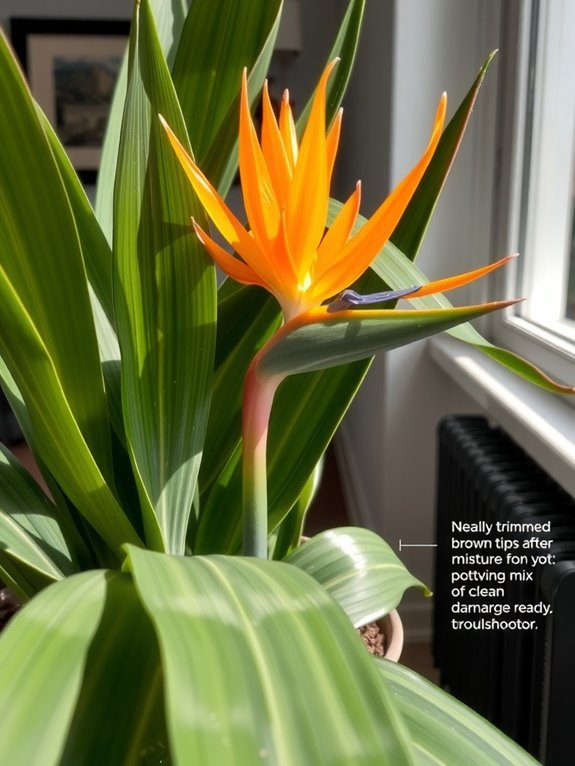
Even with careful attention, your Bird of Paradise might show signs of stress. The good news is that most problems can be fixed once you identify what’s happening.
Dry, crispy leaf edges point to low humidity or drafts in your space. Use a mister or humidifier to add moisture to the air around your plant.
Drooping leaves mean your soil moisture needs adjustment. Check the soil by inserting your finger 2–3 cm deep. Water thoroughly once it feels dry at that depth.
Slow growth or delayed blooming usually happens when the plant becomes potbound. Repot your Bird of Paradise into a container one size larger to support recovery and future flower production.
Leaf splitting results from poor light and low humidity working together. Rotate your plant weekly to expose all sides to light, and reduce drafts in the area.
Root problems develop when drainage fails. Use a potting mix that drains well and add a drainage layer—about 1–2 inches of pebbles or broken pottery shards—at the bottom of your pot. Avoid overwatering, particularly from fall through early spring when the plant grows more slowly. Water only when the top 2–3 cm of soil is dry to the touch.