Check your bamboo’s moisture by pressing your finger into the soil beneath the rocks. Water every 5–7 days when the top inch feels dry. Use distilled or rainwater instead of tap water to prevent leaf browning.
Place your plant in indirect light and fertilize every 3–4 weeks during the growing season. Refresh the water weekly to stop algae buildup.
Watch for yellowing leaves or brown edges, which signal that your plant is stressed and may need adjustments.
When roots circle the soil surface or growth slows, it’s time to move your bamboo to a well-draining soil mix. This change gives the roots more room and better access to nutrients and oxygen. Each step builds on the last, so staying consistent with watering and light will keep your plant healthy.
Check Your Bamboo’s Moisture in Rocks
To check if your Lucky Bamboo needs water, you’ll need to access the soil underneath the rocks. Start by soaking the rocks with water to loosen them. This makes them easier to move without damaging the plant. Carefully remove the rocks to expose the soil beneath.
Once you can see the soil, press your finger into the top inch. If the soil feels dry to the touch, your bamboo needs water. If it still feels moist, wait several more days before watering. This simple check prevents overwatering, which is the most common problem that leads to root rot.
When you water, always use distilled water or rainwater. Tap water contains minerals that build up in the soil over time and damage the roots. By checking soil moisture regularly this way, you’re giving your bamboo exactly what it needs to stay healthy in its rock setup.
Water on the Right Schedule (Every 5–7 Days)
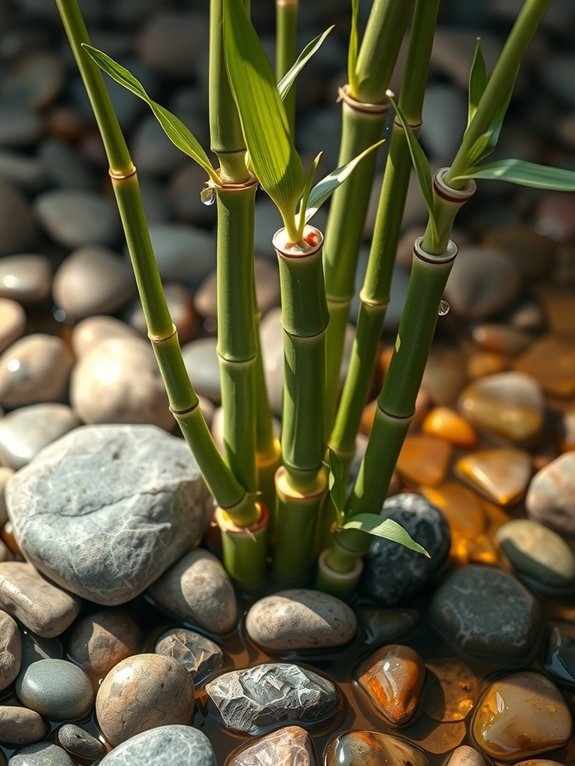
Water your bamboo every 5–7 days during warm months. This schedule isn’t fixed though. Cooler seasons require less frequent watering because soil dries more slowly, so you’ll need to adjust based on what’s actually happening in your space.
Check the top inch of soil regularly. This is more reliable than following a calendar. Feel the soil with your finger to see if it’s dry before you water again.
Watch for signs that your watering frequency is off. Yellowing leaves or soft stems mean either too much water or too little. When you see these signs, adjust how often you water. Keep making small changes until you find the right balance for your conditions.
Water Frequency For Soil
Since bamboo plants in soil need consistent moisture without becoming waterlogged, checking the top inch of soil with your finger is your best guide for watering.
Test before you water – Stick your finger into the soil about one inch deep. If the soil feels dry at that depth, it’s time to water. If it still feels moist, wait another day or two before checking again.
Adjust to your drying rate – Different soils drain at different speeds. Some potting mixes are lighter and dry out quickly, while others hold moisture longer. Pay attention to how fast your specific soil dries between waterings. You might need to water every 5–7 days during active growth, but this timeline depends on your soil type and environment.
Water thoroughly and watch for drainage – Pour water until it flows out of the drainage holes at the bottom of the pot. This ensures the water reaches all parts of the root system. Then stop. Don’t let the soil sit in standing water or stay soggy for days on end.
Water less in cooler months – When temperatures drop and the plant grows more slowly, evaporation slows too. You’ll need to water less frequently during fall and winter. Keep checking the soil with your finger rather than sticking to a fixed schedule year-round.
Your finger test always beats any preset watering schedule. Pay attention to what your plant needs, and you’ll quickly develop a reliable routine.
Adjusting Schedule By Season
The finger test works great for soil, but bamboo in rocks operates differently and needs a more consistent watering schedule. Your rocks setup benefits from seasonal adjustments that match your plant’s changing needs throughout the year.
During spring and summer, water every 5–7 days. Warmer temperatures increase evaporation and boost your bamboo’s water demands. Use distilled water to protect the roots from fluoride damage. When fall and winter arrive, growth slows down, so you’ll water less frequently. Check the moisture level in your rocks before adding water each time.
Watch your rocks setup closely during seasonal transitions. If algae appears or the water turns green, replace the water right away and scrub the rocks clean. This keeps conditions healthy and prevents problems. By adjusting your watering schedule to match the seasons, you prevent both drought stress and root rot while supporting steady plant growth.
Signs Of Improper Watering
Even when you’re watering every 5–7 days, your bamboo plant can still show stress if the water quality isn’t right or if you’re not paying close attention to what’s happening.
Watch for these warning signs:
Brown leaf tips – Fluoride and other minerals in tap water cause this damage over time. Switch to distilled or filtered water to stop it from getting worse.
Soggy soil or rocks – If the top inch of soil stays wet all the time, you’re watering too much. Let water drain out naturally and always check how wet the soil is before you water again.
Green or cloudy water with algae growth**** – This happens when you don’t refresh the water often enough. Change the water every 7–10 days, scrub any submerged rocks with a soft brush, and move the plant to a shadier spot for a while to slow algae growth.
Use Filtered Water to Prevent Leaf Tip Browning
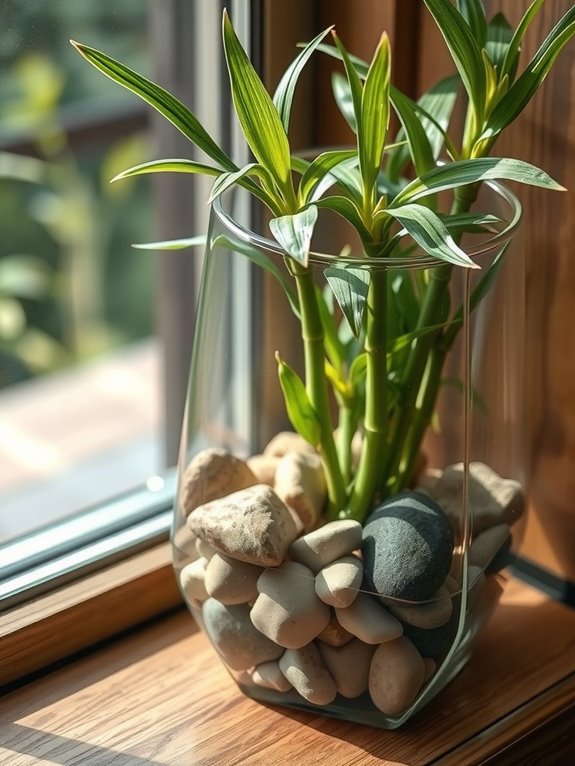
One of the quickest ways to damage your bamboo plant’s appearance is using regular tap water. Tap water contains fluoride that builds up in the soil over time and causes those brown tips on the leaves. Switch to filtered water for your lucky bamboo grown in rocks.
Regular tap water damages bamboo plants through fluoride buildup, causing brown leaf tips. Use filtered water instead.
Your best options for fluoride-free water are distilled water and rainwater. Both remove fluoride completely. Boiled tap water does not remove fluoride, so boiling won’t help. Carbon filters also fail to eliminate fluoride from your water supply.
If you have to use tap water, let it sit in an open container for 24 hours. This reduces chlorine levels, though it won’t address the fluoride problem. The longer you wait between water changes, the more fluoride accumulates in your soil.
Check your water quality regularly. Look for green coloring or algae developing in the water container or on the soil surface. Replace the water when you notice these signs. Consistent water quality keeps your plant healthy and prevents leaf damage from developing.
Switch to Soil if Rocks Aren’t Supporting Growth
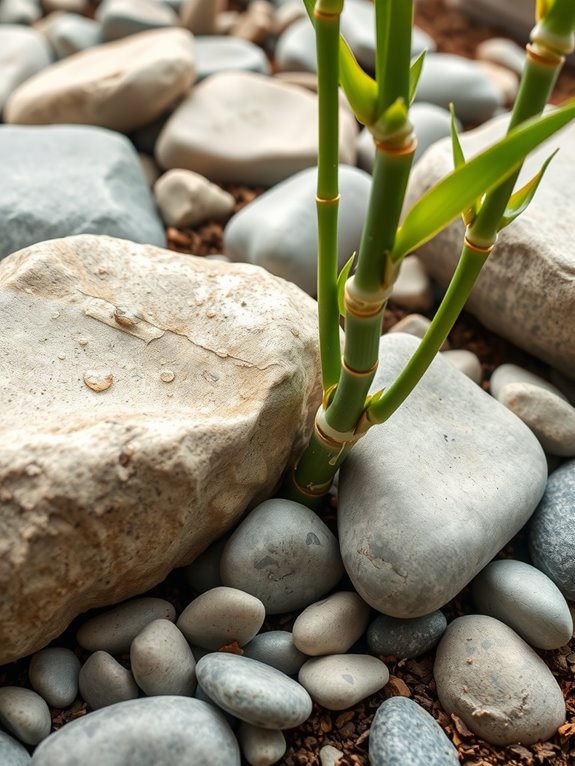
If your Lucky Bamboo isn’t doing well in rocks, check the roots first. Carefully remove the rocks and look for rot or any soft, damaged areas. Use clean scissors to trim away the unhealthy parts.
After you’ve cleaned up the roots, move your plant to a well-draining soil mix. This switch gives your Lucky Bamboo the nutrients and physical support it needs to grow properly. Choose a potting soil designed for houseplants or make your own mix with equal parts peat moss, perlite, and orchid bark. Fill a pot with drainage holes about one-third full with this mixture, then gently position your plant so the roots sit at the same depth they were before. Add more soil around the sides and pat it down lightly so the plant stands upright without air pockets. Water the soil until it’s moist but not waterlogged, then place the pot in a location with bright, indirect light.
Assessing Root Health First
Your roots tell you everything about your plant’s health and readiness for the switch to soil. Before you repot, assess what you’re working with.
Check for root rot. Brown, mushy, or foul-smelling roots signal damage. Trim these damaged sections with clean scissors and discard them. Use fresh, well-draining soil for the repotting.
Look for healthy growth. White, firm roots mean your bamboo is doing well. These roots need proper drainage to stay healthy and prevent rot from developing.
Monitor moisture signals. Feel the top inch of soil with your finger. If it’s dry, water lightly. The key is avoiding waterlogged soil, which causes the rot problems you’re trying to prevent.
When moving from rocks to soil, use a chunky, well-draining mix. You can make this yourself by combining regular potting soil with perlite or orchid bark in a 2:1 ratio. Watch the roots over 2–3 weeks as they adjust to the new medium. Once you see new white root growth, you can gradually increase how often you water. This slower approach prevents shock and gives the plant time to adapt.
Transitioning To Soil Medium
When your bamboo plant isn’t doing well in rocks alone, switching to soil is a practical next step. Start by watering your plant three to five days before repotting. This gives the roots moisture before the move.
Carefully remove your plant from its current container. While you have it out, inspect the roots closely. Trim any damaged or rotted roots with clean scissors. Use clean tools to avoid spreading problems to healthy roots.
Select a pot that’s at least two inches wider and deeper than the old one. Make sure it has drainage holes in the bottom. This prevents water from sitting around the roots.
Create a soil mix that drains well. Combine half potting soil with half succulent or cactus mix. Add a compost top dressing to the surface. This blend lets water move through without staying too wet.
Place your bamboo in the new pot and fill the sides with your soil mixture. Water thoroughly right after repotting to settle the soil and hydrate the roots.
After the transition, water your bamboo every five to seven days during summer months. Adjust this schedule if your home is particularly dry or humid. Check the soil by pressing your finger an inch down—if it feels dry, it’s time to water.
Place Your Bamboo in Indirect Light
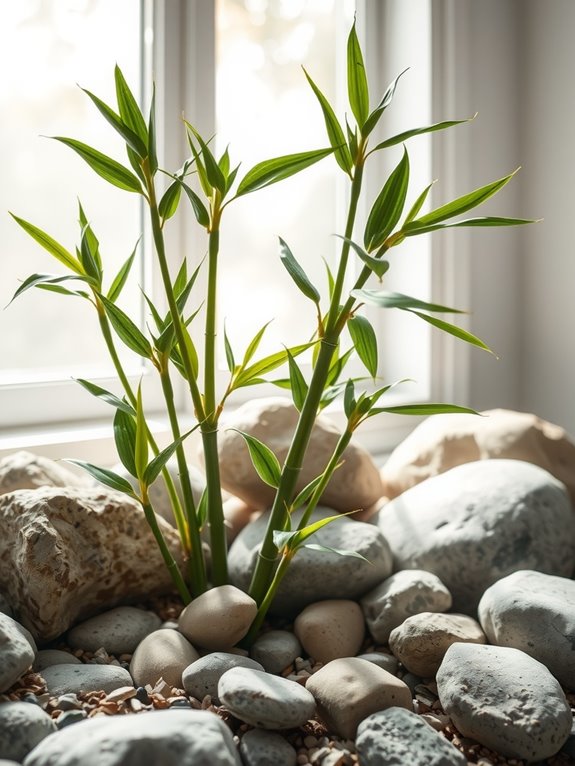
Getting the lighting right matters for keeping your bamboo healthy. Your lucky bamboo does well in indirect or moderate sunlight, so position it carefully in your space.
Place your bamboo plant near a window that gets bright, filtered light throughout the day. Keep it away from direct sun, which causes leaf burn and damage to the leaves. Monitor how your plant responds. If you see brown edges or fading leaves, move it to a different spot with less direct light.
When you transition your bamboo to soil or rocks, proper lighting becomes more important for photosynthesis and growth. Position it where it gets consistent indirect light while keeping your preferred temperature and humidity levels. This balance between your watering schedule and proper lighting keeps your bamboo healthy and green.
Remove Yellow or Dead Leaves Promptly
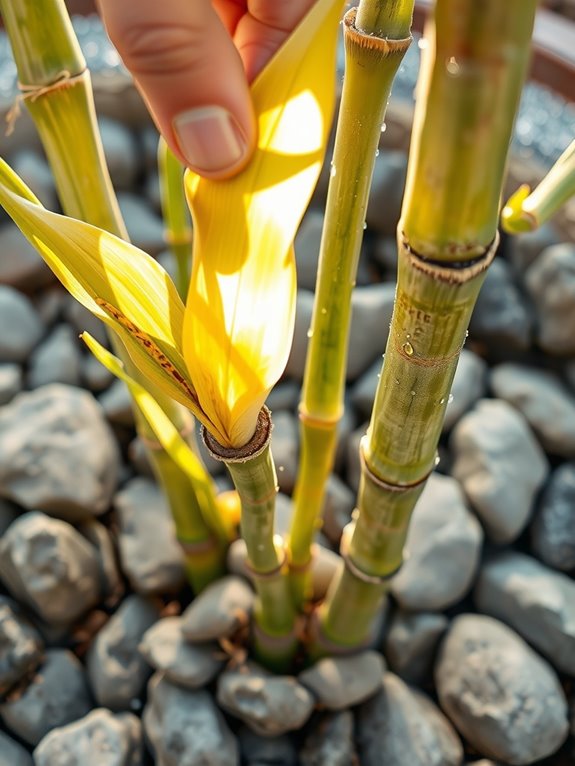
Spot yellow or dead leaves early, since they’re often the first sign that something’s wrong with your plant’s health or environment. When you notice them, pinch them off right at the base where they connect to the stem. This removes the problem before disease or pests can spread to the rest of your plant.
Dispose of the removed leaves right away instead of leaving them in or around the pot. Fungal spores and insects can settle into dead leaves and cause problems later.
Identify Yellow Leaf Signs
Why do bamboo plant leaves turn yellow? Several factors can stress your plant and cause discoloration. You’ll want to identify the cause quickly so you can take action.
Water Quality Issues
Minerals and fluoride in tap water damage leaf cells and cause yellowing. Switch to distilled water or collected rainwater instead. This is one of the easiest fixes to implement right away.
Poor Drainage Problems
Waterlogged roots develop when soil and drainage materials don’t allow water to move through properly. Check that your pot has drainage holes and that you’re using a soil mix designed for bamboo. The soil should feel moist but not soggy when you squeeze it. If water sits on top of the soil after watering, your drainage setup needs adjustment.
Pest and Fungal Infections****
Yellow leaves may signal spider mites, scale insects, or fungal growth. Inspect both sides of the leaves and the stems carefully. If you spot webbing, sticky residue, or soft spots on stems, remove the affected leaves with clean scissors. Wipe down remaining leaves with a damp cloth to remove any pests or spores.
Light Stress
Excessive direct sunlight can bleach or scorch leaves, turning them yellow or brown. Move your plant to a location with bright, indirect light. A spot near a window with a sheer curtain works well.
Maintaining Plant Health
Remove yellow leaves promptly to stop problems from spreading to healthy foliage. Check your soil moisture every few days by inserting your finger about one inch deep. The soil should feel slightly damp, not dry or wet.
Prevent Disease Spread
Once you’ve identified yellow leaves and figured out what’s causing them, remove them right away. Use sterile scissors to carefully cut away the yellowing leaves. Discard them far from your healthy plant sections to stop disease from spreading. This redirects your bamboo’s energy toward new growth.
Next, inspect the affected areas for mineral buildup or fluoride damage. If you spot these issues, switch to distilled water for watering. This reduces the problem from happening again.
Clean and rinse your mulch rocks and the substrate around the base of your plant. Removing debris stops fungal and mold growth that builds up in damp conditions. After you’ve cleaned, monitor your plant closely and watch for fresh healthy leaves emerging.
Proper Removal Techniques
Proper Removal Techniques
Acting quickly when you notice yellowing leaves on your bamboo prevents disease from spreading to healthy parts of the plant.
- Use sterile scissors – Clean your cutting tools with rubbing alcohol or a 10% bleach solution before and between cuts. Sharp blades minimize tissue damage and reduce the risk of spreading infection from one cut to the next.
- Gently detach affected parts – Remove yellowing stalks and leaves by working slowly and carefully. Sudden, rough removal can shock your plant and cause additional stress.
- Inspect and clean roots – Once you’ve removed the dead material above soil, rinse the roots under running water. Use your sterile scissors to cut away any sections that feel soft or smell musty, which indicates rot.
After removing problem areas, place your bamboo in well-draining soil or potting medium. Check the plant regularly over the next few weeks. Adjust your watering schedule—let the soil dry slightly between waterings—and move the plant to a spot with bright, indirect light. These conditions support new growth.
Fertilize Every 3–4 Weeks During Growing Season
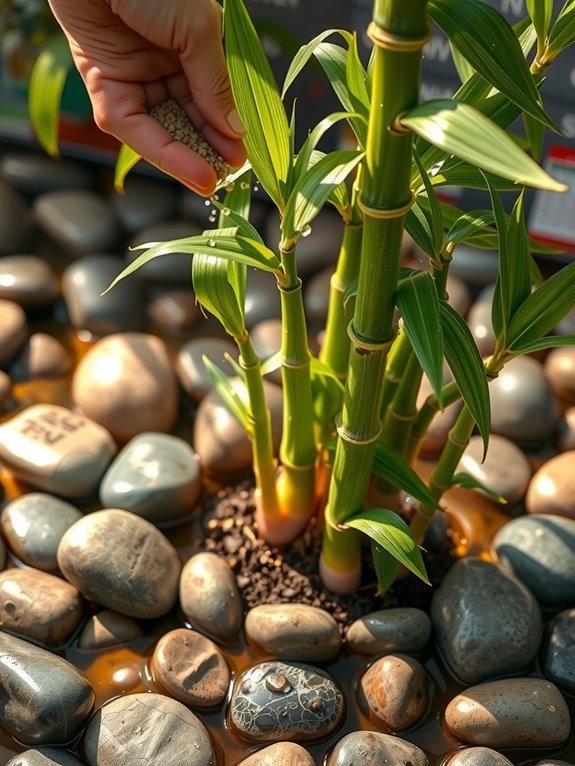
Feeding your bamboo plant during its active growth period is straightforward. Dilute all-purpose houseplant fertilizer to 1/10 strength and apply it every three to four weeks while your Lucky Bamboo grows in rocks or soil. After you apply fertilizer, water the plant thoroughly. This watering step helps nutrients reach the root zone and prevents salt buildup that can damage your plant.
Watch your plant for signs of stress. Yellowing leaves or browning tips mean you’re fertilizing too much. If you see these signs, skip fertilizing and let the plant recover. During winter dormancy, stop feeding altogether since growth slows significantly and your plant needs less nutrition.
Keep Rocks Clean: Refresh Water Weekly
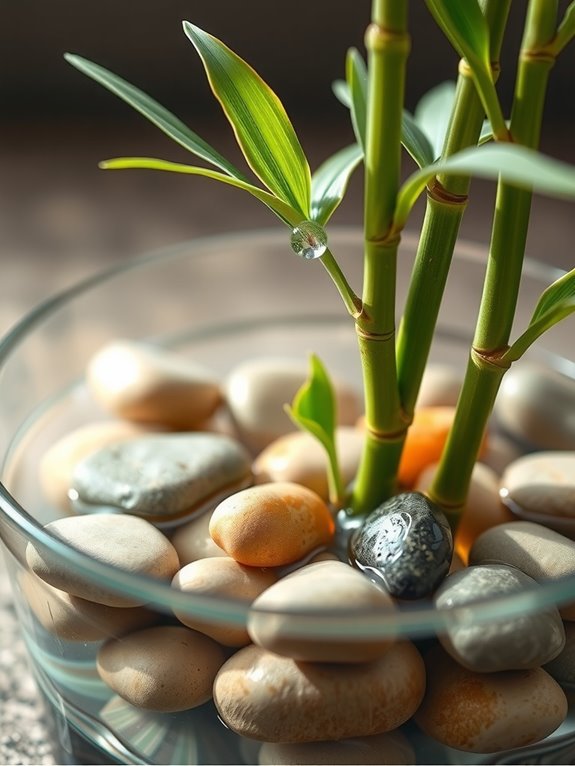
Why does water quality matter for your bamboo plant in rocks? Clean water supports your lucky bamboo’s health and growth. Water that contains fluoride or chlorine can damage the leaves, while algae buildup in the rocks creates an unhealthy environment.
What to do each week:
Change your water every seven days. Use distilled, filtered, rain, or bottled water instead of tap water. Tap water contains fluoride, which causes brown spots on the leaves. If tap water is your only option, let it sit for 24 hours before using it—this reduces chlorine but won’t remove fluoride.
When you change the water, scrub any rocks that have algae growing on them. A soft brush works well for this. After cleaning the rocks, move your container to a spot with less direct sunlight before you refill it with fresh water.
Keep the roots completely submerged at all times during your weekly refresh. Check that the water level covers all the roots. Exposed roots will dry out and damage your plant.
Doing this simple weekly task prevents leaf spotting and keeps your lucky bamboo healthy. The effort takes about 10 minutes and makes a real difference in how well your plant grows.
Diagnose and Fix Common Problems in Rocks
Spot stress signals early. Look for yellowing leaves or brown edges on your lucky bamboo. These signs point to poor water quality or too much direct light. Move your plant away from direct sunlight right away. Switch to distilled or rainwater instead of tap water, which often contains minerals that build up in rocks.
Check your roots closely. Glued rocks create a real problem—they block water from moving freely and hide moisture issues that develop underneath. During repotting, carefully remove the glued rocks by soaking them in water first. This softens the adhesive and makes separation easier without damaging the roots.
Assess root condition and decide next steps. Healthy roots are firm and white or light tan. If your roots look good, transfer the bamboo to well-draining soil with a chunky texture. A mix of potting soil, perlite, and orchid bark works well. Soil growing beats water growing because it offers better drainage and lets you monitor moisture levels more accurately by checking the soil itself.
Trim damaged foliage. Remove any dead or yellowed leaves. This redirects the plant’s energy toward new growth instead of trying to save leaves that won’t recover.
Water properly after repotting. Water thoroughly so water runs from the drainage holes. Then water every 5 to 7 days during summer, adjusting based on how the soil feels. Stick your finger 1 inch into the soil—if it feels dry, water. If it’s still moist, wait a couple more days.
Know When to Repot Into a Larger Container
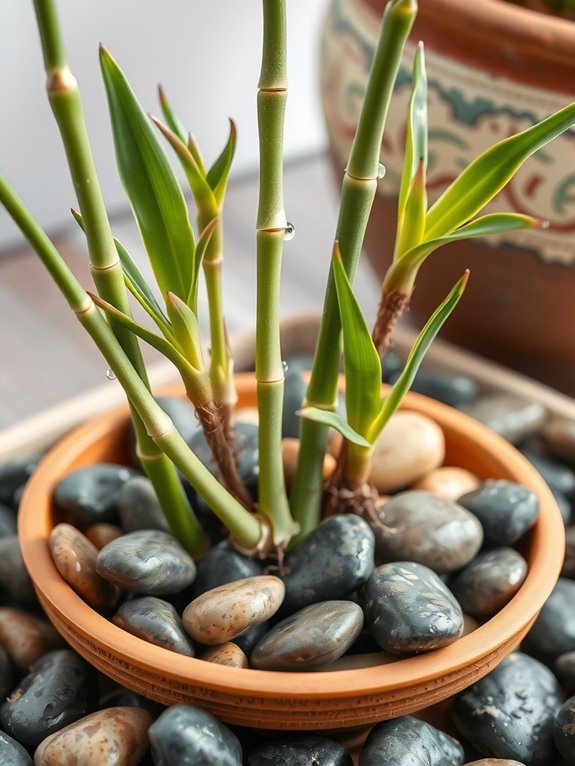
Your bamboo plant will let you know when it needs a bigger pot. Watch for these three signs that repotting time has arrived.
Signs Your Plant Needs More Space
Roots circling the soil surface or poking through drainage holes mean the plant has outgrown its container. Water draining too quickly through the drainage holes also indicates the soil volume is too small to hold moisture. If your plant’s growth has slowed despite consistent watering and proper care, it’s likely rootbound.
How to Repot
Select a container that is at least 2 inches wider and 2 inches deeper than the current pot. Mix your potting soil with succulent mix to create a well-draining blend.
Water your plant 3 to 5 days before you repot. This hydration helps the plant handle the stress of being moved. Gently remove the plant from its old pot and examine the roots. Trim away any dark, mushy, or obviously damaged roots with clean scissors.
Place the plant in the new pot and fill around it with fresh soil mix. Press the soil down lightly so the plant sits at the same depth it was before. Water thoroughly until water drains from the bottom holes. Resume your regular watering schedule of every 5 to 7 days during the growing season.