

To grow rosemary indoors, follow five connected steps that work together to keep your plant healthy.
Light Requirements
Place your rosemary near a south or west-facing window where it gets 6–8 hours of bright light each day. This amount of direct sunlight is what rosemary needs to grow properly indoors. If your windows don’t provide enough light, consider using a grow light positioned 6–12 inches above the plant.
Soil and Container
Use a pot that’s 10–12 inches wide with drainage holes in the bottom. Fill it with well-draining soil—a mixture of potting soil and perlite or sand works well. Rosemary doesn’t like wet roots, so drainage is non-negotiable.
Watering
Check the soil before watering by sticking your finger about an inch into it. Water only when the soil feels dry at that depth. Pour water until it drains from the bottom, then remove any water that collects in a tray beneath the pot. Overwatering kills rosemary faster than anything else.
Humidity
Rosemary prefers humidity levels above 40 percent. Group your rosemary pot with other plants to create a more humid microclimate, or place the pot on a tray filled with pebbles and a small amount of water. The water should not touch the bottom of the pot.
Pruning and Feeding
Pinch back new growth regularly to encourage a bushier plant shape. Feed your rosemary lightly with a balanced fertilizer during the growing season—once a month is sufficient. Light feeding preserves the plant’s natural aromatic oils, which is what makes rosemary valuable.
How to Light Indoor Rosemary Plants (and Why It Matters Most)
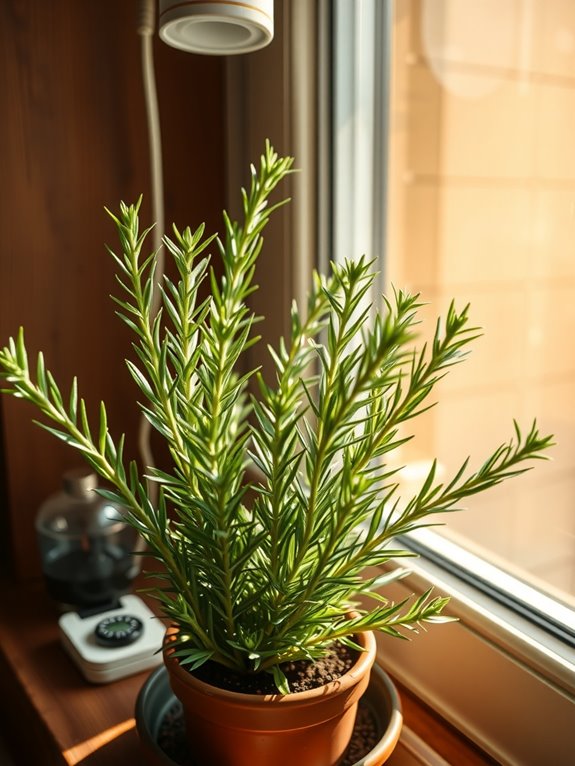
Why does lighting matter so much for indoor rosemary? Strong light directly impacts your plant’s essential oils, aroma, and flavor—basically everything that makes rosemary valuable. Without adequate bright light, you’ll get weak stems and reduced potency.
Position your rosemary indoors near a south-facing window or west-facing window for 6–8 hours daily. If natural light falls short, use full-spectrum lamps positioned close to mimic outdoor sunny conditions. Extend your light duration as needed with grow lights, matching the intensity your plant craves.
Rotate containers weekly for even growth and consistent light exposure all around. This simple habit prevents lopsided development. High-quality lighting is the foundation for healthy, aromatic rosemary.
Choosing Pots and Soil for Indoor Rosemary
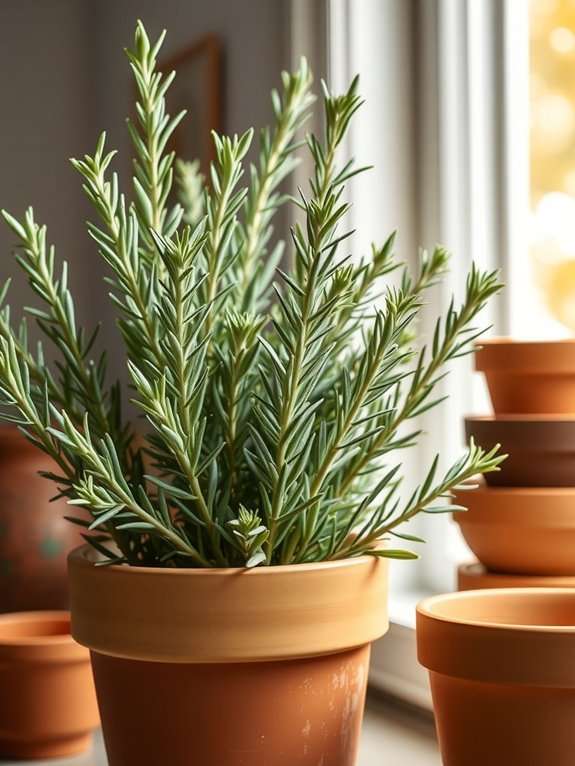
Now that your lighting is set up, you need to choose the right pot and soil for your rosemary’s roots. Pick pots with drainage holes that measure 10–12 inches in diameter. This size gives your indoor rosemary enough room to develop a healthy root system.
Fill the pot with a well-draining soil mix. Combine equal parts cactus mix, perlite, and aged compost. This blend copies the rocky, dry soils that rosemary grows in naturally.
Combine equal parts cactus mix, perlite, and aged compost to create a well-draining soil that mimics rosemary’s natural rocky, dry habitat.
Your soil should have a pH between 6.0 and 7.0. Add one tablespoon of horticultural charcoal per 3 quarts of soil to reduce root diseases and improve the plant’s scent indoors.
For the pot itself, terracotta works well because it allows air and water to move through it easily. If you want the soil to hold more moisture, use a glazed ceramic pot instead. The key is to let the soil dry slightly between waterings. Wet soil causes root rot in rosemary, which is the main problem with growing it indoors.
Watering Indoor Rosemary Without Killing It
Because rosemary likes dry conditions, water it sparingly and only when the soil is actually dry. Use the finger test—poke your finger about an inch into the soil—or a moisture meter to check before watering. This simple step stops overwatering, which is the main reason rosemary fails indoors.
Use pots with drainage holes and well-draining potting soil. These let excess water escape instead of pooling around the roots. When you do water, moisten the soil evenly but don’t make it soggy. Right after watering, empty any standing water from the drainage tray.
During winter, water less often. Indoor growth slows down and the air dries out naturally, so your plant needs less moisture. Low humidity indoors already stresses the roots and weakens your rosemary’s essential oils, so avoid letting water sit around the plant for extended periods.
Stick with this watering approach, and you’ll prevent root rot—the most common problem with indoor rosemary.
Spot Brown Tips and Fix Humidity Problems
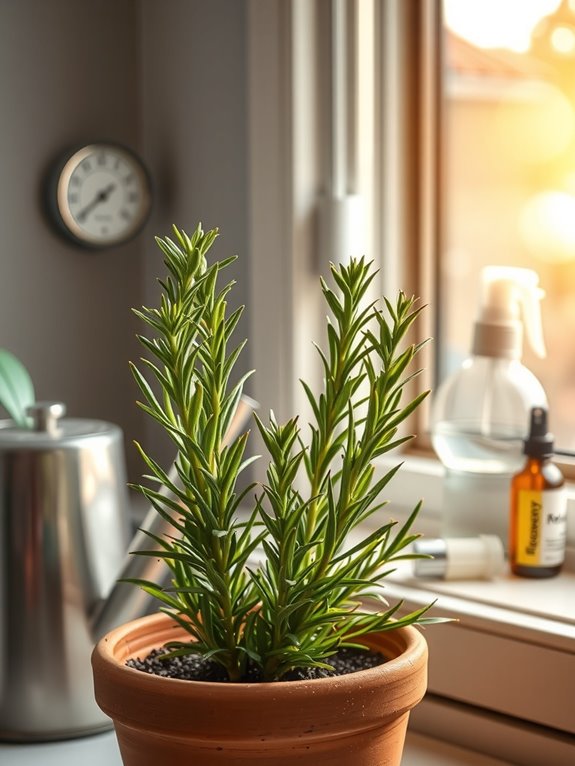
Even with perfect watering habits, your rosemary can still develop brown tips. This usually means humidity levels are too low. When indoor humidity drops below 40%, leaves brown and tips burn no matter how much water you give the plant.
Create a Microclimate****
Group your rosemary with other plants to naturally raise humidity around them. Plants release moisture through their leaves, and clustering them together keeps that moisture nearby instead of letting it disperse into the room.
Set Up Water Trays****
Place a tray filled with pebbles beneath your pot. Pour water into the tray so it sits on top of the pebbles, not touching the soil directly. As the water evaporates, it creates humidity around your plant without making the soil soggy.
Mist or Use a Humidifier****
Mist your rosemary regularly with a spray bottle to boost humidity between watering days. If you want more consistent results, a small humidifier works well and takes the guesswork out of maintaining steady moisture levels in the air.
Move Away from Heat Sources
Keep your rosemary away from heating vents, air conditioning units, and drafty windows. These locations dry out the air and stress the plant. Check your plant regularly for spider mites, which multiply quickly in dry conditions and damage leaves by feeding on them.
With proper humidity and good light, your rosemary will recover and those brown tips will stop appearing.
Prune Smart and Feed Lightly for Year-Round Growth
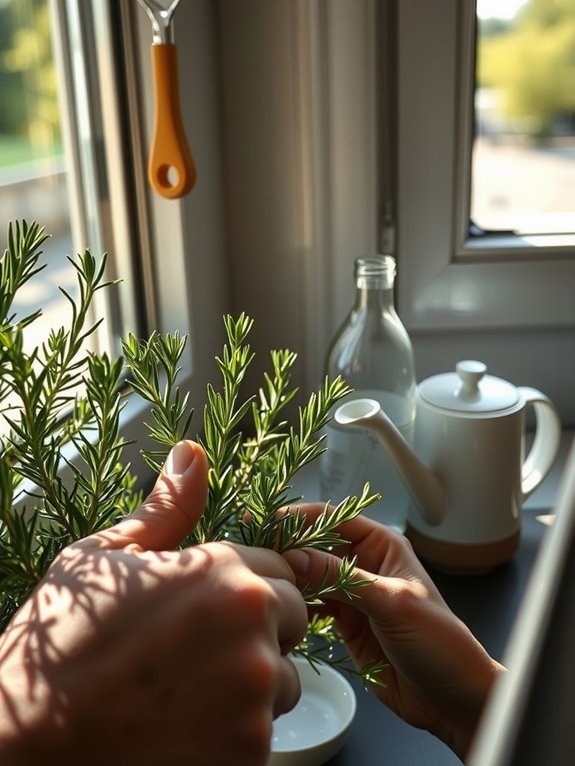
Pruning your indoor rosemary regularly prevents it from becoming leggy and sparse. Instead, it encourages full, bushy growth. Pinch back new stems when they reach about 6 inches by pressing the tips to promote side branching. Follow a pruning schedule twice yearly—early spring and mid-autumn—removing up to one-third of the plant’s height each time. This approach maintains the plant’s shape while protecting the older wood underneath.
Keep at least two-thirds of your plant after each pruning session. This gives you enough foliage to work with while removing the growth you need to remove.
For indoor herb care, use a light feeding approach. Over-fertilizing causes floppy growth and dilutes the essential oils that make rosemary smell and taste good. Use a mild nutrient plan with natural or light fertilizer only when the plant actually needs it. This restrained approach supports healthy foliage and aroma without pushing the plant too hard.
Smart pruning and minimal feeding work together to create a healthy rosemary plant that grows well indoors.