7 Steps to Care for Hibiscus Plants Like a Pro
Choose the Right Container and Soil
Pick a pot that’s one size larger than the nursery container your hibiscus came in. Make sure it has drainage holes in the bottom. Fill it with well-draining soil—this prevents water from sitting around the roots and causing rot. Good drainage is the foundation for everything else you’ll do with this plant.
Provide Adequate Light****
Hibiscus needs six or more hours of direct sunlight each day. Place your pot in a south-facing window if possible. Rotate the container every few days so all sides of the plant get even exposure and the plant grows evenly instead of leaning toward the light.
Water Correctly
Check the soil by sticking your finger into the top inch. When it feels dry at that depth, water the plant thoroughly until water drains from the bottom. Empty any water that collects in the drainage saucer within an hour to prevent root problems. Let the soil dry out slightly between waterings rather than keeping it constantly wet.
Feed During Growing Season
Use a balanced fertilizer every two weeks while your hibiscus is actively growing in spring and summer. Switch to monthly feeding or stop entirely in fall and winter when growth slows. Follow the package instructions for the amount to use based on your pot size.
Prune for Better Shape
Prune in late fall after flowering or in early summer before the plant enters its peak growing period. Cut back branches to encourage the plant to develop more side shoots and become fuller. Remove any dead or diseased branches whenever you notice them.
Watch for Pests
Check the undersides of leaves regularly for spider mites, mealybugs, or scale insects. If you find pests, treat them with an insecticidal soap or neem oil spray following the product instructions.
Move Indoors Before Cold Weather
Bring your hibiscus inside before temperatures drop below 40 degrees Fahrenheit. Place it near a bright window indoors and adjust your watering since the plant will need less water in cooler months.
Choose a Well-Draining Pot One Size Larger Than the Nursery Container
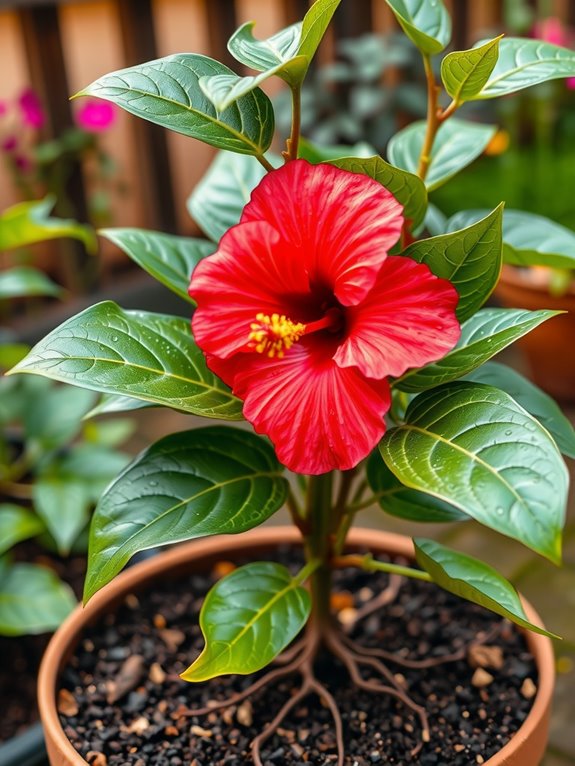
Bigger pots might seem like a good idea, but they actually cause problems for hibiscus. When you transplant, pick a pot that’s just one size larger than the nursery container. This keeps soil from staying wet around the tender roots, which can damage them quickly.
Your pot needs drainage holes. This is not optional. Hibiscus roots are soft and break down easily when sitting in water. Proper drainage protects them from rotting.
Use soil that drains well and don’t pack it down tightly. Your hibiscus needs fresh soil with air pockets so roots can spread without getting stuck. The combination of a right-sized pot, well-draining soil, and good drainage holes creates the conditions your plant needs to grow healthy and strong.
Give Your Hibiscus 6+ Hours of Direct Sunlight Daily
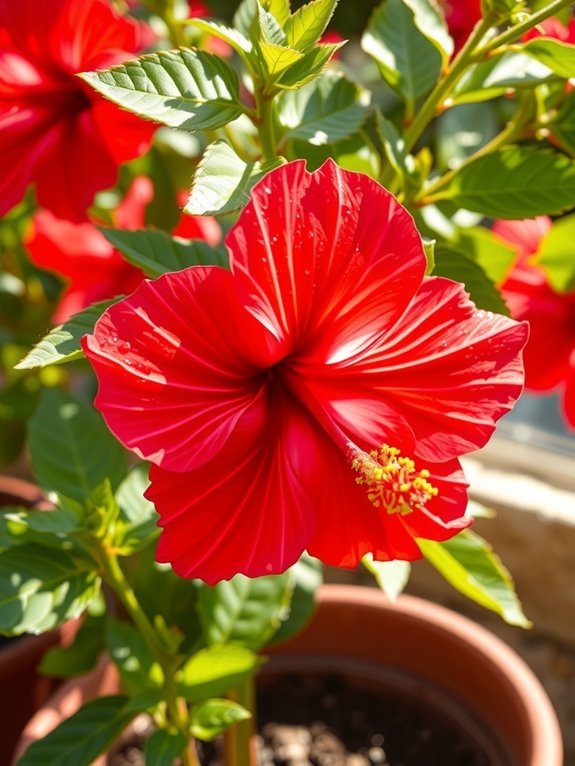
Now that your hibiscus is in the right pot with proper drainage, you need to focus on sunlight. This is where most people make mistakes. Your hibiscus needs at least 6 hours of direct sunlight every day to bloom well. Place it where it gets consistent morning and afternoon sun.
If you’re moving a newly transplanted hibiscus outside, do it slowly. Start by putting it in bright shade for a few days. Then gradually move it into more direct sun over several weeks. This prevents leaf damage from the shock of sudden bright light. During very hot summers, afternoon shade can help protect the plant while still giving you that 6-hour minimum. If you’re growing hibiscus in containers, rotate them regularly so all sides get equal sun exposure.
Water When the Top Inch of Soil Dries, Then Empty Drainage Saucers
Once you’ve sorted out the sunlight, watering becomes your next priority—and this is where many hibiscus owners make mistakes. Water when the top inch of soil feels dry to the touch. This keeps your soil moisture balanced and prevents roots from sitting in water.
Check the soil daily if your hibiscus is in full sun, since more light increases how much water the plant needs. When you water, pour until water drains from the holes at the bottom of the pot. This tells you the soil is thoroughly wet all the way through.
Empty the drainage saucer within an hour of watering. Standing water causes root rot and fungal infections. Remove the saucer or drain it completely—don’t leave it sitting under the pot.
Your goal is moist soil, not waterlogged soil. The difference matters. Soggy conditions stress your plant and invite disease. A consistent approach to moisture keeps your hibiscus healthy and prevents the problems that come with overwatering.
Fertilize Your Hibiscus Every Two Weeks During Growing Season
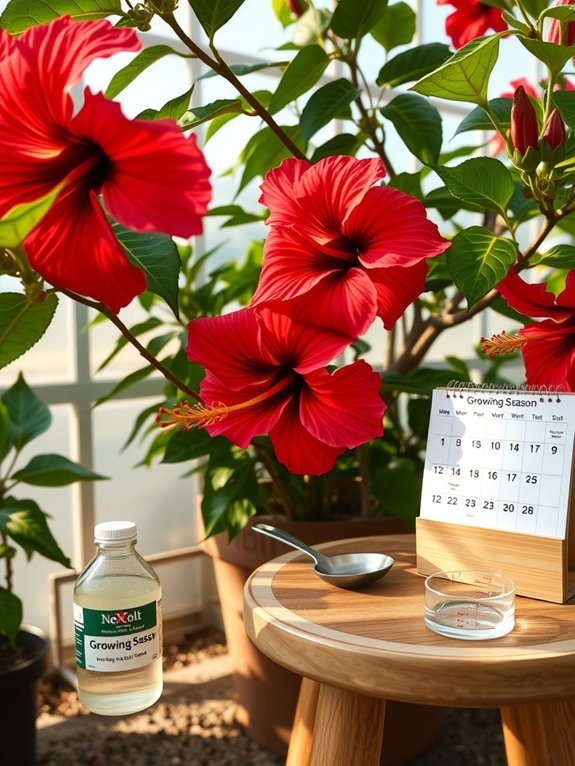
How often should you feed your hibiscus? Every two weeks during the growing season will keep your plant producing plenty of blooms. Pick a balanced fertilizer with a ratio like 10-4-12, 9-3-13, or 10-10-10. These ratios give your plant nitrogen, phosphorus, and potassium without too much phosphorus.
If you use liquid fertilizer, alternate between applying the fertilizer and watering with plain water. This method stops nutrients from building up in the soil while still giving your plant what it needs to absorb regularly. Skip over-fertilizing because it damages roots and causes growth problems.
Pair your fertilizer schedule with steady watering. Keep the soil moist but not waterlogged so your plant can take up nutrients well. You can also use time-release fertilizers if you want a simpler approach. These work throughout the growing season without needing regular applications. Either method works well as long as you stick with it.
Prune in Late Fall or Early Summer to Encourage Branching
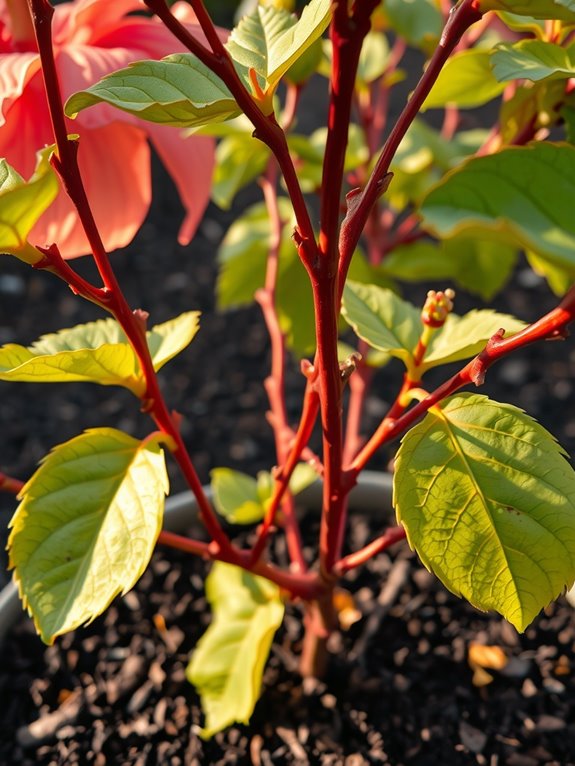
To get your hibiscus growing full and bushy instead of tall and leggy, you need to prune at the right time. Spring pruning works best for encouraging new growth and branching development. You can also make tipping cuts anytime to shape your plant and promote bushier growth patterns.
What to do when you prune:
Remove dead or weak wood while your plant is actively growing. This redirects energy toward healthy branches instead of wasting it on parts that won’t contribute to fullness. Target branching angles that encourage wider development rather than upward growth.
When to prune:
Prune in late fall or early summer. Spring pruning is your best option for getting the bushier shape you want. Late fall or early winter pruning can manage height, though it may temporarily reduce flowering.
Avoid pruning in fall if you want to protect your plant’s branching structure and future flower production. Wait until late fall or early summer arrives before making major cuts.
Identify and Treat Pests With the Correct Product to Avoid Damage
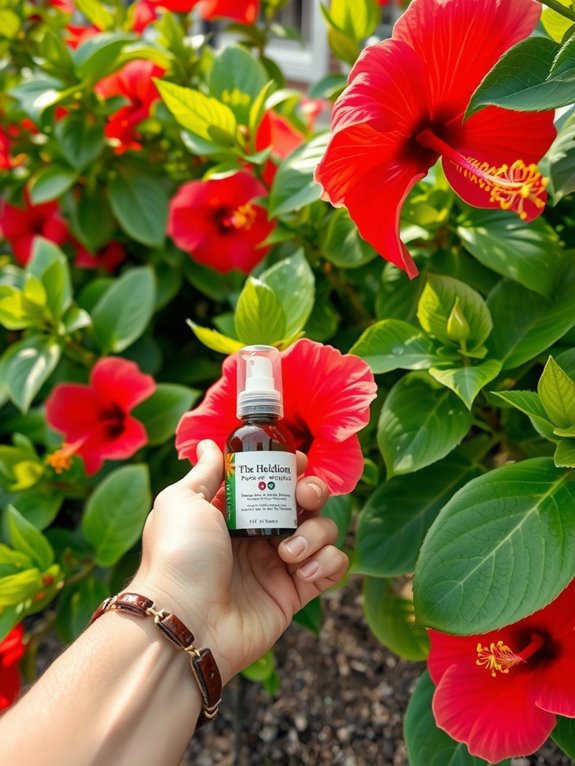
With hibiscus plants, the biggest pest management mistake you can make is reaching for multiple treatments at once or repeating applications too quickly. Start with accurate pest identification instead. Look closely at the leaves and stems to determine exactly what pest you’re dealing with.
Once you’ve identified the problem, select the correct targeted treatment for that specific pest. Follow the product’s directions exactly, applying only what’s recommended. Don’t mix soaps, neem oil, limonene, and pesticides together.
When you combine multiple products or apply treatments too often, you stress your hibiscus plant. The leaves turn yellow, the plant wilts, and pest problems actually get worse. Repeated applications strip away the protective wax coating on leaves and stems, which makes the plant more vulnerable to damage. You also risk harming the roots and the plant’s overall health.
The key is balancing pest control with preserving your hibiscus’s natural defenses. One correct treatment applied properly will do the job better than multiple products used together.
Move Your Hibiscus Indoors Before Temperatures Drop Below 40°F
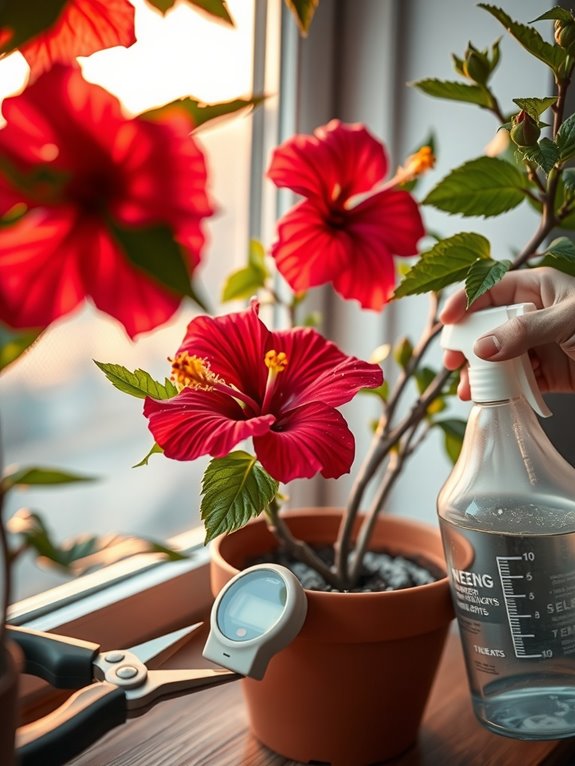
Start moving your hibiscus inside when nighttime temperatures approach 40°F. Timing matters because cold exposure can damage the plant.
Before bringing it indoors, spray the entire plant with water to remove pests and debris. Then apply horticultural oil to the leaves and stems. This oil creates a protective layer against insects that might survive the move. The preparation takes 15 to 20 minutes and prevents pest infestations from spreading through your home once the plant is inside.
Timing Your Indoor Transition
As temperatures drop in fall, you need to plan your hibiscus’s move indoors before cold weather damages it. Getting the timing right means your plant will keep growing through winter.
Watch your local weather forecast carefully. Bring your hibiscus inside when nighttime temperatures consistently reach around 40°F (4°C). Moving it after the first frost arrives is too late.
Plan ahead using these steps:
- Find your region’s first frost date before cold weather arrives so you can act with purpose instead of rushing
- Check evening temperatures daily to know exactly when to move your plant
- Set up your indoor space ahead of time so everything is ready when you need to move your hibiscus
Moving your plant before hard freezes hit keeps it healthy and producing blooms indoors.
Pest Management Before Moving
Why wait until pests become a problem indoors? Before moving your hibiscus inside, do thorough pest management now.
Start by spraying down your hibiscus with plain water. Use enough pressure to remove visible insects and debris clinging to the leaves and stems. This simple step removes many pests before they come into your home.
Next, apply horticultural oil as a preventive measure. This protective coating stops pests from establishing themselves indoors. Mix the oil according to the product label instructions and spray it evenly over all plant surfaces, including the undersides of leaves where pests hide.
Here’s what matters most: treat only when you’ve actually spotted pests on your plant. Overtreatment stresses your hibiscus and can create conditions that attract more problems. You’re protecting your indoor environment by being selective about what you apply.
After spraying, wait one to two days before bringing your hibiscus inside. This gives any treatment time to settle and ensures you’re introducing a cleaner plant to your space. This timing step makes a real difference in how well your plant adjusts to indoor living.