
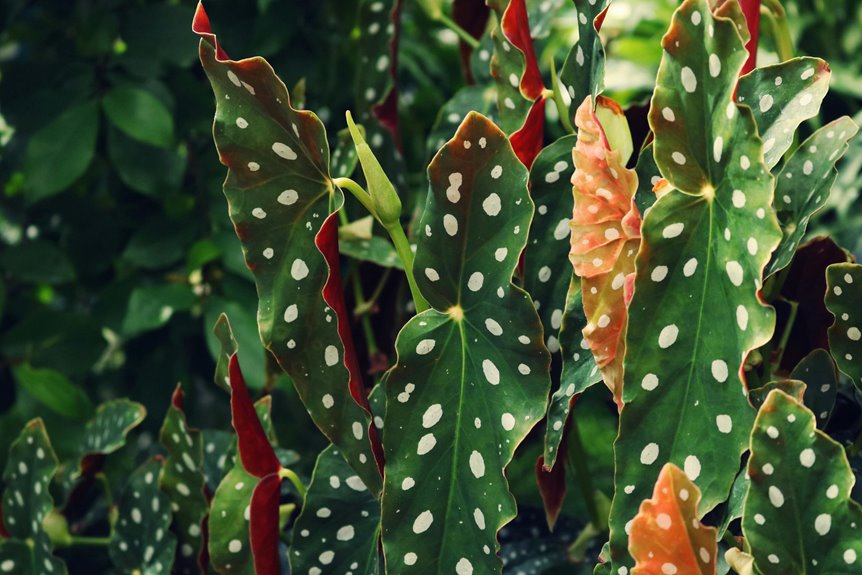
Keep your polka dot plant vibrant by placing it in bright indirect light near an east or west-facing window. Direct sun will fade its distinctive spots, so avoid positioning it in full sunlight.
Water when the top inch of soil feels dry to the touch. The goal is consistent moisture, not soggy soil. Overwatering causes root rot, so let the soil dry slightly between waterings.
Feed your plant every two weeks with diluted all-purpose fertilizer mixed at half strength. Indoor plants need less nutrition than outdoor plants, so diluting prevents fertilizer burn.
Pinch new growth every few weeks to encourage bushier, fuller foliage. Use your fingers to remove the tip of each stem just above a leaf node. This simple step redirects the plant’s energy into side branches instead of one tall main stem.
Prune regularly to maintain the shape you want. Save the cuttings you remove—they root easily in water or moist soil. Place cuttings in a jar of room-temperature water and change the water every few days. Roots should develop within two to three weeks, then transfer them to potting soil once roots are half an inch long.
Lighting Your Polka Dot Plant for Vibrant Colors
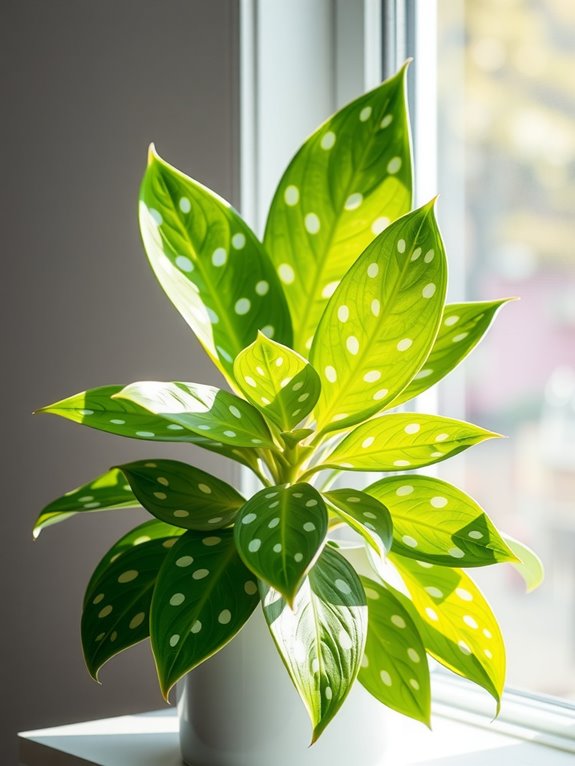
What’s the secret to keeping your polka dot plant’s colors bold and striking? Bright indirect light is your answer. Position your plant near an east or west-facing window where it’ll receive balanced light without harsh exposure. Direct sunlight fades those signature pink spots and scorches leaves, so avoid placing it in intense rays.
Low light levels work against you too—they’ll dim your plant’s vibrant pattern and cause leggy growth. You’re aiming for consistent light exposure that maintains color intensity throughout the year.
In very bright rooms, filter sunlight with sheer curtains or move your polka dot plant a few feet from the window. This approach prevents color washout while keeping your plant healthy.
Watering, Soil, and Feeding Basics
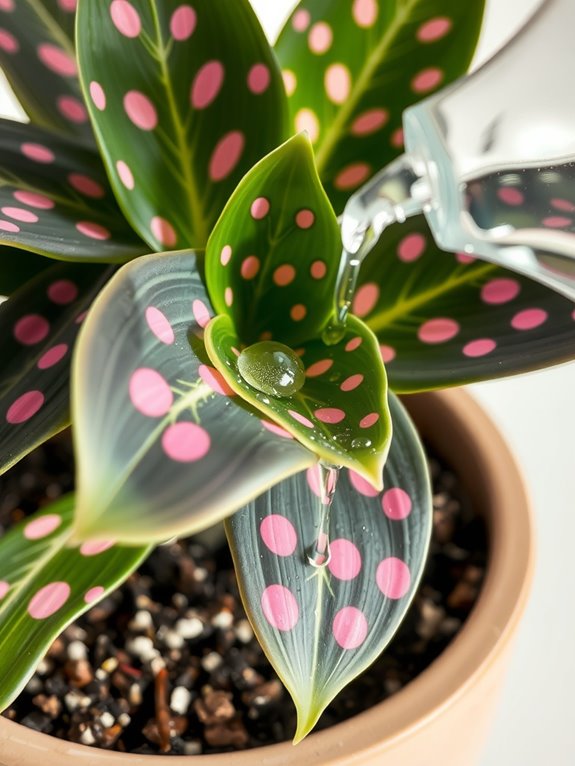
Now that your polka dot plant has the right light, focus on what happens below the soil surface. Use a rich, well-draining potting mix with perlite or vermiculite added in. These materials prevent root rot and help roots develop properly.
Water when the top inch of soil feels dry to your touch. Keep the soil consistently moist but never soggy. During hot weather, water more often to maintain this balance. Indoors, fertilize every two weeks using all-purpose water-soluble fertilizer at half strength. Outdoors, follow the label instructions for feeding schedules, and reduce applications once winter arrives.
Repot your plant annually or when roots start circling the pot’s edges, ideally during spring. Aim for slightly acidic to neutral soil pH. Never allow the soil to dry out completely between waterings, as consistent moisture keeps the leaf spots looking their best.
Pruning for a Fuller, Bushier Plant
Why do some polka dot plants look sparse and leggy while others stay full and compact? The difference lies in regular pruning. You’ll want to pinch off stem tips consistently to encourage branching and prevent that stretched-out appearance. Light pruning removes leggy growth and spent flowers, promoting denser foliage and more vibrant leaf coloring.
Pinch Stem Tips Regularly
During the growing season, pinch off the top quarter-inch of new stem growth with your fingers or clean pruning shears. This simple action stops the plant from growing straight up and instead triggers it to branch out sideways. Do this every 2 to 3 weeks as new growth appears. The more you pinch, the bushier your plant becomes.
Remove Spent Flowers and Leggy Growth
Cut off flowers once they fade and wither. Also remove any long, thin stems that look stretched out. Make your cuts just above a leaf node, which is the small bump on the stem where leaves attach. This directs the plant’s energy into producing compact new growth rather than maintaining old parts.
Propagate Cuttings
After pruning, you’ll have plenty of stem pieces to work with. Take 3 to 4-inch cuttings from healthy stems. Place them in a glass of water or moist potting soil. Roots typically form within 2 to 3 weeks. Once roots appear, plant the cuttings in soil to grow additional plants with the branched structure you want.
Support New Growth
After pruning, apply balanced liquid fertilizer every 4 to 6 weeks. Spring is the best time to prune before repotting into a container that’s 1 to 2 inches larger in diameter than the current one.
How to Propagate Polka Dot Plants From Cuttings
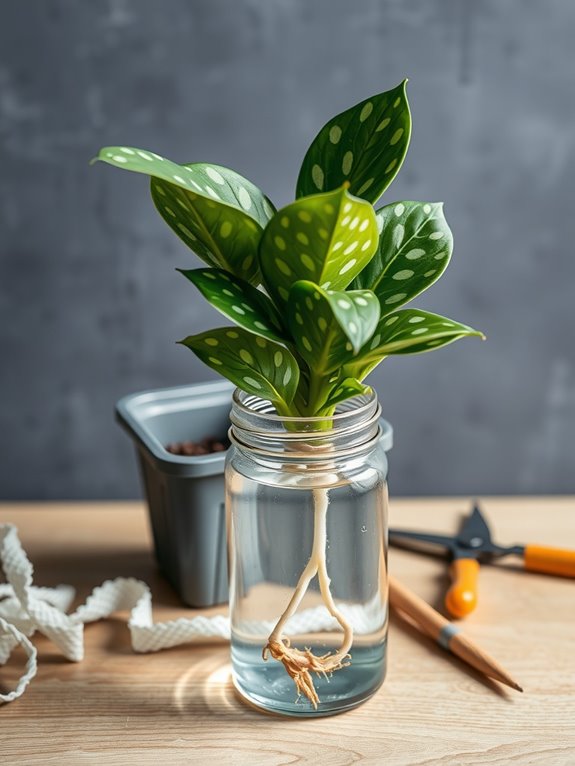
Propagating polka dot plants from cuttings is a straightforward process that gives you new plants while you prune. Start by taking 4–6 inch stem tip cuttings from healthy growth on your plant.
Propagating polka dot plants from cuttings is straightforward and gives you new plants while pruning your existing growth.
Remove the lower leaves to expose 2–3 nodes. These nodes are where roots will develop, so this step matters. You now have two options for rooting your cuttings.
Water Rooting
Place your cuttings in filtered water and change the water every few days. This method lets you watch root development happen. Keep the water clean to prevent rot.
Soil Rooting
Use a well-draining potting mix and keep it consistently moist but not waterlogged. Soil rooting often produces stronger initial root systems than water rooting.
Creating the Right Conditions
Whether you choose water or soil, provide bright, indirect light and warm temperatures around 70–75°F. These conditions speed up root development. You should see established roots within 2–4 weeks.
Moving to a Permanent Home
Once roots develop, transplant your cuttings into a peat-based potting mix. Keep the soil evenly moist as your new plants settle in. Water and light needs remain the same as for mature polka dot plants.
Why Your Polka Dot Plant Is Losing Color (and How to Fix It)
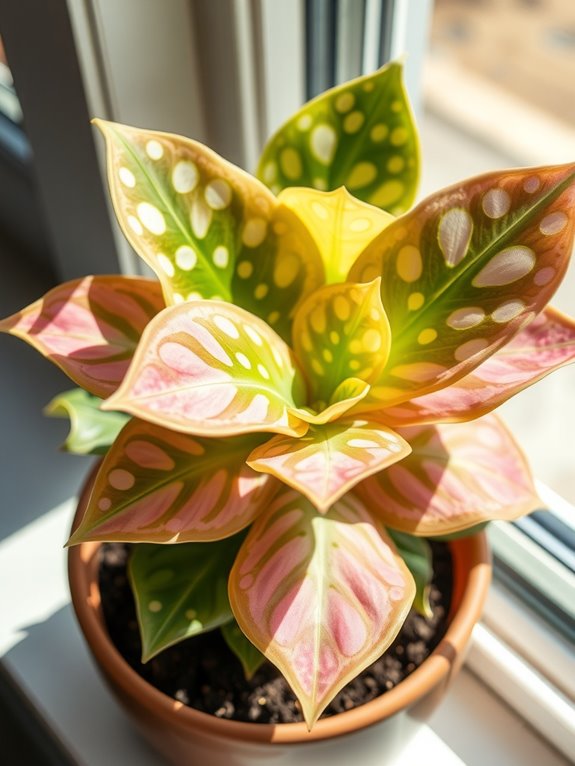
Have you noticed your polka dot plant’s vibrant pink, white, or rose spots fading into dull, pale marks? Color loss happens more often than you’d think, but the fix is straightforward. Your plant needs the right conditions to keep its signature look.
Lighting issues
Too little light drains color from the leaves. Direct sun, on the other hand, fades the spots. The solution is to place your plant in a bright spot with indirect light. An east or west-facing window works well. Rotate the plant every week or two so all sides get balanced lighting.
Watering problems
Both overwatering and drought stress fade coloration. Keep the soil evenly moist but not soggy. Use a pot with drainage holes and water when the top inch of soil feels dry. This prevents both extremes and supports the plant’s color.
Fertilizer neglect
Feed your plant every two weeks with diluted balanced fertilizer during spring and summer. Cut back to once a month in fall and winter. Regular feeding during the growing season helps maintain vibrant hues. Weak or inconsistent feeding leads to pale coloration.