You’ll grow basil successfully by following three straightforward steps.
First, place your basil in a location that gets six to eight hours of direct sunlight each day. Use well-draining soil mixed with compost to give your plant the nutrients it needs. Basil won’t tolerate poor drainage, so add perlite or sand to heavy soil if necessary.
Second, water at the base of the plant to keep the soil consistently moist. Avoid wetting the leaves, as this creates conditions for fungal disease and leaf spots. Check the soil with your finger—it should feel damp but not soggy.
Third, pinch back the stems once two sets of true leaves develop. This encourages the plant to grow fuller with more branches instead of getting tall and thin. Harvest leaves regularly by pinching off the top growth. The more you harvest, the bushier your plant becomes.
Beyond these basics, you’ll also want to consider spacing, container size, and preventing bolting. Space plants six to twelve inches apart to allow airflow between them. Choose a container at least six inches deep with drainage holes at the bottom. Bolting happens when basil flowers and stops producing usable leaves—pinch off flower buds as soon as you spot them to extend your harvest season.
Step 1: Choose a Sunny Spot and Prepare Well-Drained Soil
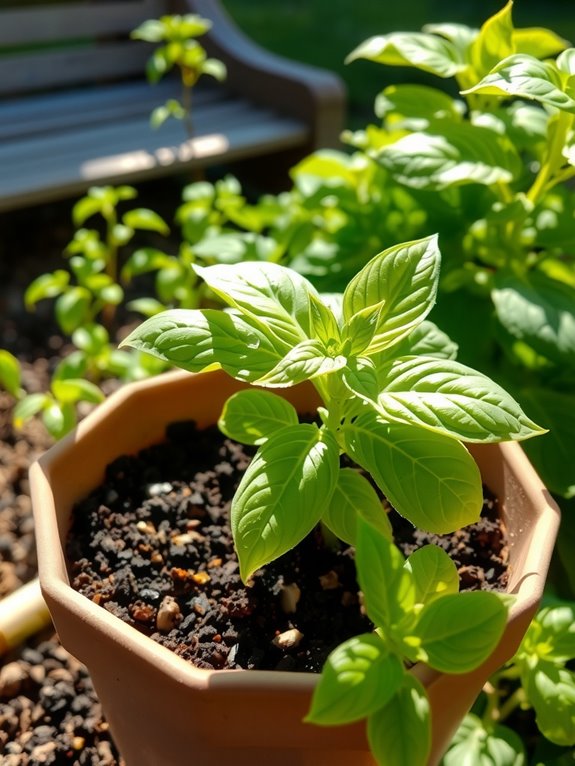
Basil needs 6–8 hours of direct sun daily to grow well. Find a location that gets consistent sunlight throughout the day.
Basil thrives with 6–8 hours of direct sun daily. Choose a location with consistent sunlight throughout the day for optimal growth.
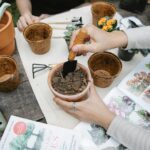
Prepare your soil by mixing in organic matter like compost or aged manure. This creates a nutrient-rich base that basil needs. Use well-draining potting soil if you’re growing in containers, and choose terracotta pots with drainage holes at the bottom. Waterlogged soil causes root rot and kills plants, so drainage matters more than you might think.
Basil is sensitive to cold. Wait until nighttime temperatures stay above 50°F before planting outdoors. If you plant too early in spring, the cold will stunt growth or kill seedlings.
Space plants 12–16 inches apart when you put them in the ground or containers. This distance lets air flow around each plant and prevents crowding as they grow larger. Proper spacing also makes harvesting easier and reduces disease problems.
Step 2: Water Your Basil at the Base to Keep Soil Consistently Moist
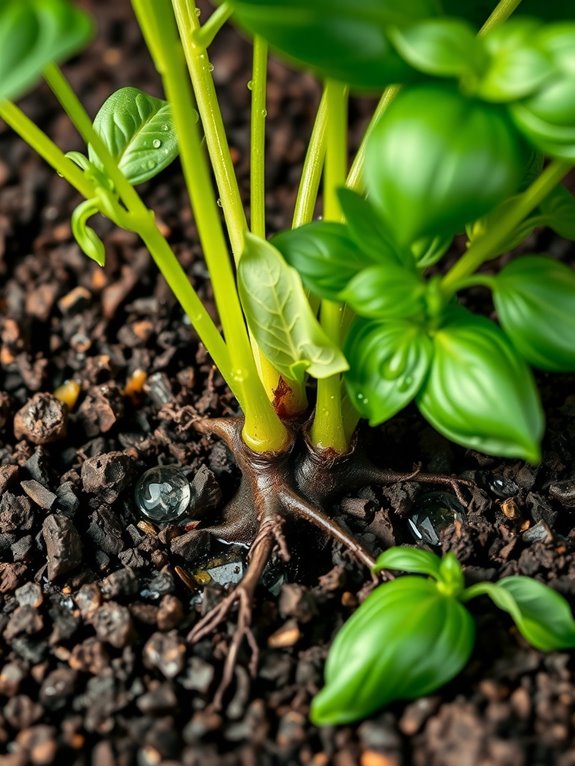
Once your basil is planted in good soil and a suitable location, watering becomes your main focus. Water at the base of the plant rather than on the leaves. Wet foliage invites fungal diseases and other problems you want to avoid.
For basil planted directly in the ground, aim for about one inch of water per week. Container plants dry out faster, so they need watering more often. Check the soil regularly and water when the top inch feels dry to the touch. Don’t let the soil dry out completely, as this stresses the plant.
Try bottom watering if you’re growing basil in a pot. Fill a saucer beneath the container and let the soil absorb water from below. This method prevents the leaves from getting wet while keeping roots hydrated. During hot weather, check your containers daily since they dry quickly. Refill the saucer as needed to keep the soil consistently moist but not waterlogged.
Step 3: Pinch Back Stems Regularly and Harvest Leaves to Encourage Bushy Growth
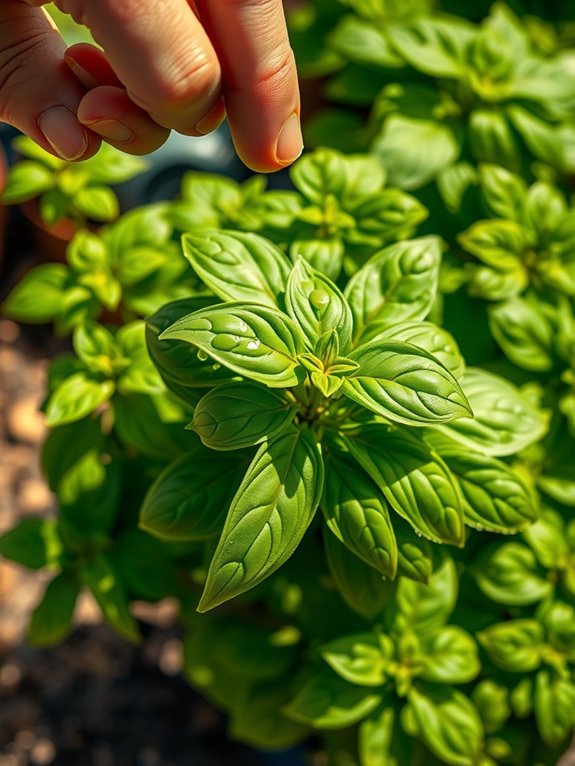
How do you turn a spindly basil plant into a full, productive one? Start by pinching back stems when two sets of true leaves appear. This simple technique encourages bushier growth and stops your plant from becoming leggy.
When harvesting, use clean scissors or pruning shears to cut above lower bud pairs. This promotes new growth from those points. Don’t pluck leaves by hand—this damages the stems. Remove no more than two-thirds of the plant at once so you keep steady leaf production going.
Pinch off flowering stems early to prevent bolting. This keeps your basil focused on making leaves instead of flowers. Regular harvesting and pinching work together to build a fuller plant with more usable leaves.