3 Simple Steps to Take Care of a Gardenia Plant
Give your gardenia four to six hours of sunlight each day. In hot climates, provide afternoon shade to prevent leaf burn. The plant needs bright conditions but not intense midday heat.
Keep the soil moist at all times, but make sure water drains away quickly. Gardenias don’t tolerate soggy roots. Test your soil pH with a meter and aim for a range between 5.0 and 6.5. If your soil is too alkaline, add sulfur or use acidifying fertilizers to lower the pH.
Feed your plant every three to four weeks while it’s actively growing, typically spring through early fall. Use a slow-release fertilizer made for acid-loving plants.
After the flowers drop, trim back branches lightly to shape the plant and encourage bushier growth next season.
Check the undersides of leaves and new growth regularly for aphids and whiteflies. These insects cluster on the plant and weaken it over time. Spray affected areas with insecticidal soap or neem oil, following the product instructions for application rates and timing. Repeat treatments every seven to ten days if the problem persists.
These three steps—light, soil moisture and pH, feeding and pruning, and pest management—handle the main care needs. Once you understand these basics, you’ll be able to address any specific problems that show up.
Step 1: Get the Light, Soil pH, and Water Right for Your Gardenia
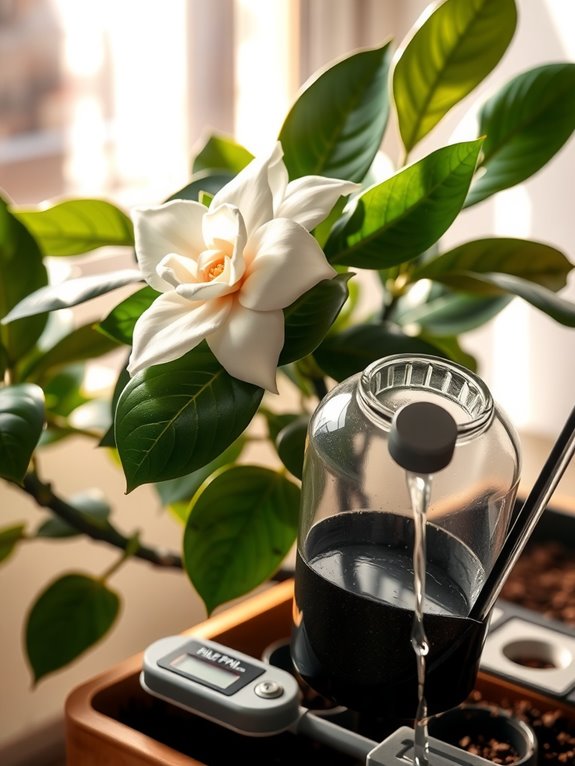
Why do some gardenias thrive while others struggle? You’re likely missing one or more of the basics: light, soil pH, and water balance.
Your gardenia needs bright light with 4–6 hours of sun daily. In hot climates, give it morning sun and afternoon shade. This approach encourages blooming without putting stress on the plant.
Gardenias need 4–6 hours of daily sun. In hot climates, provide morning sun and afternoon shade to encourage blooming without stress.
Next, focus on soil pH. Keep it acidic between 5.0–6.5. Container gardening makes this easier to control. Acidic soil helps your plant absorb nutrients properly and prevents iron deficiency, which causes yellowing leaves while the veins stay green.
Water deeply once a week during mild weather. Your soil should stay consistently moist but never waterlogged. Use well-draining, acid-loving potting mixes and make sure water can drain freely at your planting site. Poor drainage leads to root rot.
If yellowing appears, adjust your soil pH and add iron supplements to bring the plant back to health.
Step 2: Feed Your Gardenia Every Month and Prune After It Blooms
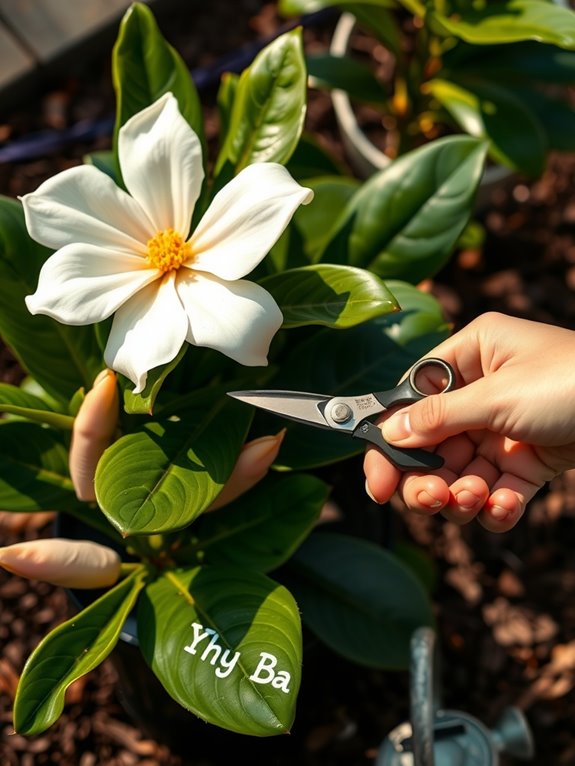
Once you’ve handled the basics of light, soil, and water, move on to feeding and pruning. During the growing season, feed your gardenia every three to four weeks with a slow-release fertilizer made for acidic soil. This regular feeding supports continuous blooms and keeps your plant healthy.
Watch for yellowing between the leaf veins, which signals iron deficiency. When you see this, switch to a nitrogen-rich fertilizer that includes added iron, or apply an iron supplement separately.
After your gardenia finishes blooming, prune lightly to shape the plant and remove all faded flowers. Water thoroughly right after pruning to encourage new growth.
If you’re growing your gardenia in a container, maintain regular feeding but avoid excess nitrogen. Too much nitrogen pushes leaf growth at the cost of blooms.
When fall arrives, reduce or stop fertilizing altogether. Let your plant rest during the winter months without feeding.
Step 3: Prevent Pests Like Aphids and Whiteflies Before They Take Hold
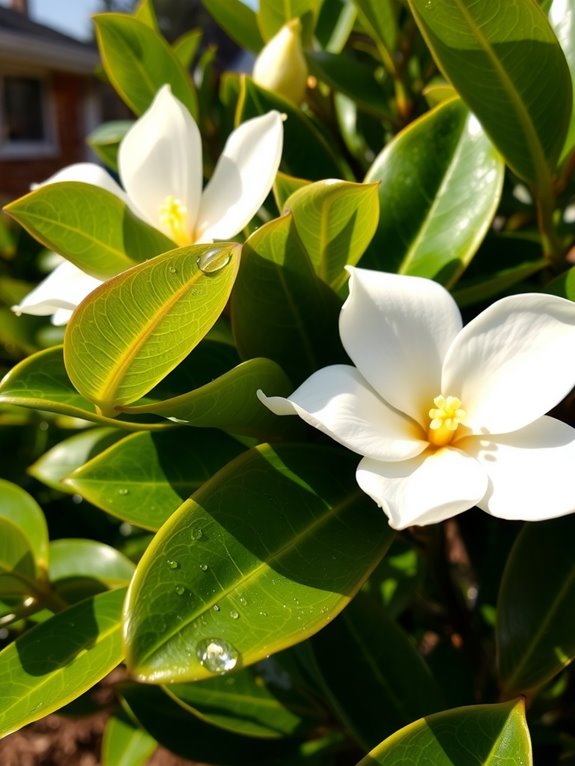
Aphids and whiteflies can damage your gardenia quickly, so catching them early matters. Start by inspecting new growth and the undersides of leaves regularly. Look for small clusters of insects before populations spread.
When you spot an infestation, treat your plant immediately with insecticidal soap, neem oil, or horticultural oil. Avoid spraying while your gardenia is flowering to protect the blooms.
Reduce pest problems by improving airflow around your plant and switching to drip irrigation or watering at soil level instead of overhead watering. These changes make your gardenia less attractive to pests.
If the infestation continues, apply treatments every 7 to 10 days for 2 to 3 cycles. Rotate between different product types to prevent pests from building resistance to any single product. Monitor your plant regularly throughout the treatment period to track progress.