
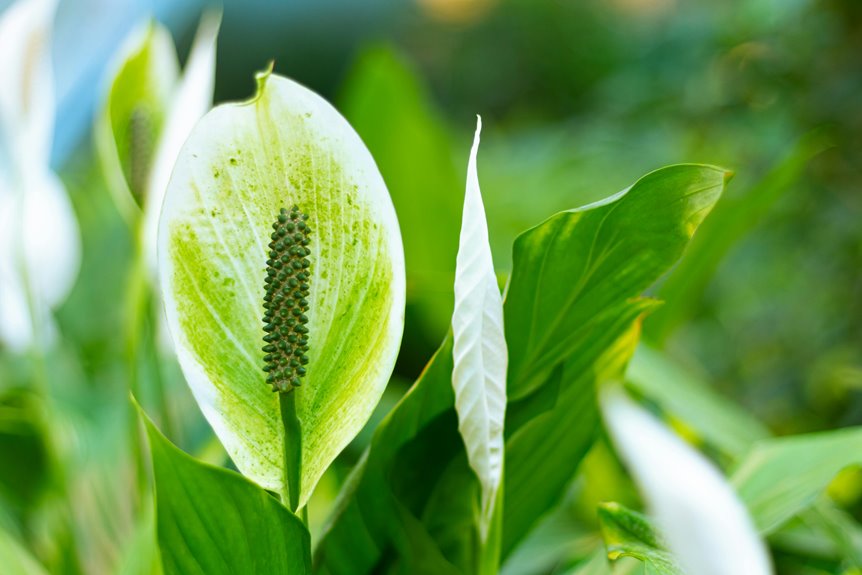
Your peace lily does best with bright, indirect light and regular attention. Water when the top inch of soil feels dry to the touch, and use filtered or rainwater when possible since tap water chemicals can build up over time.
Keep the temperature steady between 65–80°F. Humidity should stay around 50–60%. You can mist the leaves with water a few times a week or group multiple plants together so they create humidity for each other.
Use a potting mix that drains well. Repot the plant every two years, or sooner if you see roots coming out of the drainage holes. A container that’s one to two inches larger in diameter than the current pot works well.
Wipe the leaves every week or two with a soft, damp cloth. This removes dust, helps the plant absorb light better, and lets you spot spider mites, mealybugs, or scale insects before they become a real problem.
Keep this plant away from children and pets. All parts are toxic if swallowed and can cause mouth irritation and digestive upset.
Brown leaf tips happen when humidity drops too low or when minerals from tap water build up in the soil. Increase misting, use filtered water, or repot with fresh soil. Brown leaves that start at the base usually mean the soil stays too wet, so let it dry out slightly more between waterings. Yellow leaves typically indicate overwatering or poor drainage. Cut back on watering and check that water moves freely through the pot’s drainage holes.
Provide Bright, Indirect Light for Healthy Growth
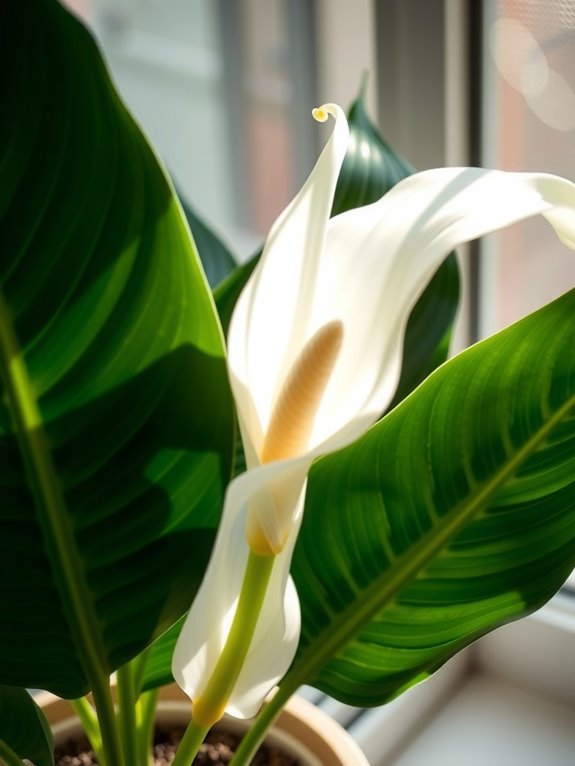
Your peace lily needs bright, indirect light to stay healthy and produce flowers. Position it near an east-facing or north-facing window where it gets consistent, filtered light without direct sun hitting the leaves. Direct sunlight will scorch the foliage and cause brown tips, particularly on larger plants.
When light levels are too low, you’ll see slower leaf growth and fewer blooms. This is your signal to adjust the plant’s location. Rotate your peace lily every few weeks so all sides receive equal light exposure. This prevents uneven growth and keeps the plant balanced.
If you have limited natural light in your space, group your peace lily with other plants. The surrounding foliage creates a protective microclimate that helps maintain stable light conditions while still giving each plant the filtered light it needs.
Keep Your Peace Lily Between 65–80°F
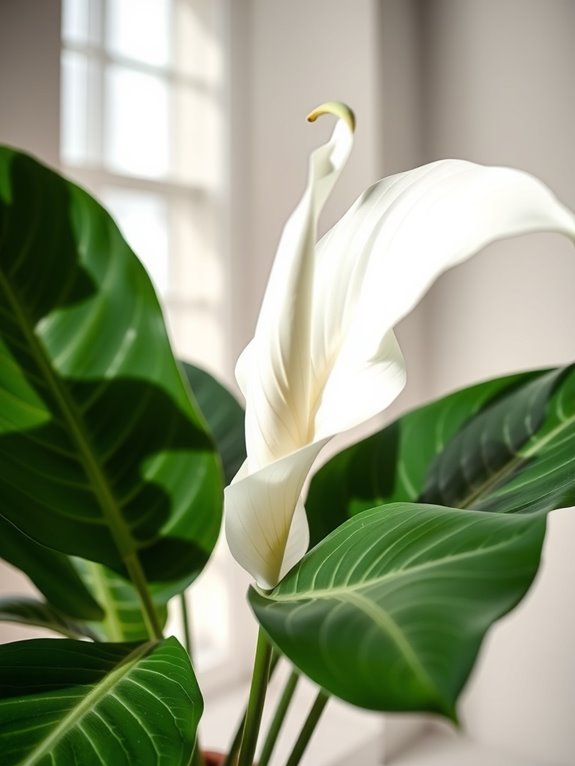
Keep your peace lily in a warm spot between 65–80°F. This temperature range supports the best growth and flowering for your plant.
Cold stress begins when temperatures drop below 55°F for extended periods. At this point, your plant may suffer damage and stop producing blooms.
Location matters for maintaining steady warmth. Place your peace lily away from drafts, air conditioning vents, and windows with direct cold air flow. Avoid rooms where temperature swings between day and night, since these fluctuations disrupt the stable conditions your plant needs.
Ideal Temperature Range
Keep your peace lily in temperatures between 65–80°F. This range supports steady growth and regular flowering. Your plant will perform reliably within these bounds.
Avoid placing your peace lily near cold windows, heating vents, or air conditioning units. These spots create temperature swings that stress the plant and reduce blooms. Drafts from doors and windows cause similar problems, so position your plant in a stable location away from these sources.
Temperatures below 55°F will slow growth and decrease flowering. While your peace lily can tolerate cooler winter conditions for short periods, don’t let it stay cold for extended stretches. The plant works best when conditions stay consistent throughout the year.
Cold Sensitivity And Flowering
Why does your peace lily suddenly stop producing those elegant white blooms? Cold sensitivity is likely the culprit. Your plant thrives in warmth between 65–80°F, and when temperature drops below this range, flowering slows dramatically or stops entirely.
What you need to do:
Maintain consistent warmth to keep your peace lily blooming reliably. Your plant can’t direct energy toward blooms when it’s struggling to stay comfortable, so positioning matters. Move your plant away from cold windows, air vents, and exterior doors where temperature fluctuates.
Keep temperatures above 60°F minimum to prevent flowering suppression. When your home dips toward 60–65°F, expect reduced flower production. Avoid drafts and sudden temperature shifts that stress your plant, as these trigger stress responses that shut down blooming.
Water Your Peace Lily When the Top Inch of Soil Feels Dry
Proper watering is one of the most important things you can do for your peace lily’s health. Check the top inch of soil with your finger—when it feels dry, you’re ready to water. Use purified or rainwater instead of tap water, which can damage your plant over time.
Make sure your pot has drainage holes. This prevents water from pooling and causing root rot. You’ll want a well-draining, organic-rich soil mix that maintains consistent moisture without becoming soggy.
Water roughly once or twice weekly, though this varies with your home’s light and humidity levels. Between waterings, let the soil surface dry slightly. This balance keeps your peace lily healthy while protecting it from the brown tips that overwatering causes. Trust what the soil tells you, not what a calendar says.
Use Well-Draining Potting Mix to Prevent Root Rot
The right potting mix directly affects whether your peace lily’s roots stay healthy or develop rot. Use a well-draining potting mix that allows water to move through quickly instead of pooling around the roots. Your pot must have drainage holes at the bottom so excess water can escape.
Build your mix using these three components:
- Organic matter like peat moss or coco coir to provide nutrients
- Perlite or orchid bark to create air pockets and improve drainage
- A balanced combination that holds enough moisture for the plant without becoming waterlogged
The goal is a mix that feels slightly moist but never soggy when you squeeze it.
Check your soil every few weeks by sticking your finger about an inch into the top. The soil should feel crumbly and airy, not dense or wet. If water sits on the surface after watering or drains slower than usual, your mix has compacted. Replace it with fresh potting mix and repot your peace lily. This typically needs to happen once a year or whenever drainage problems appear.
Light Fertilizing in Spring and Summer

Your Spathiphyllum needs bright indirect light to grow well. East or north-facing windows work best for this plant. This type of light supports blooming and keeps the leaves healthy without scorching them.
During spring and summer, feed your plant every two to four weeks. Use a balanced, water-soluble fertilizer mixed at half strength. This regular feeding schedule supports leaf growth and white flower production. When fall and winter arrive, reduce feeding since the plant slows its growth naturally.
Bright Indirect Light Requirements
How does your spathiphyllum plant respond to light? Bright indirect light is what your plant needs most. You’ll notice increased blooms and faster leaf growth when you provide the right conditions. Direct sun burns leaves, so avoid placing your plant in harsh afternoon rays.
East-facing or north-facing windows deliver ideal bright indirect light. Rotate your plant every few weeks for even exposure across all sides. Bright light increases water loss, so you’ll need to maintain consistent moisture levels. Let soil dry out slightly between watering, but check it regularly so you don’t accidentally neglect it.
In low to medium light, your plant will flower less often. Consistent bright indirect light keeps spathiphyllums healthy and productive. Water carefully and pay attention to how your plant responds to its location.
Spring Summer Fertilizing Schedule
During spring and summer, your spathiphyllum grows actively and needs regular feeding. Fertilise every 4 to 6 weeks with a balanced organic fertiliser. The goal is light feeding—your plant doesn’t need heavy amounts of nutrients.
Use a small amount of soil amendment like Soil Booster at the start of the season. Mix it into the top layer of soil. This steady approach gives your plant what it needs without creating nutrient buildup or increasing the risk of chemical sensitivity.
When winter arrives, cut back on fertilising or stop entirely. Your plant’s growth slows down during the cold months, so it requires less nutrient input.
Raise Humidity to 40–60% With Misting or a Pebble Tray
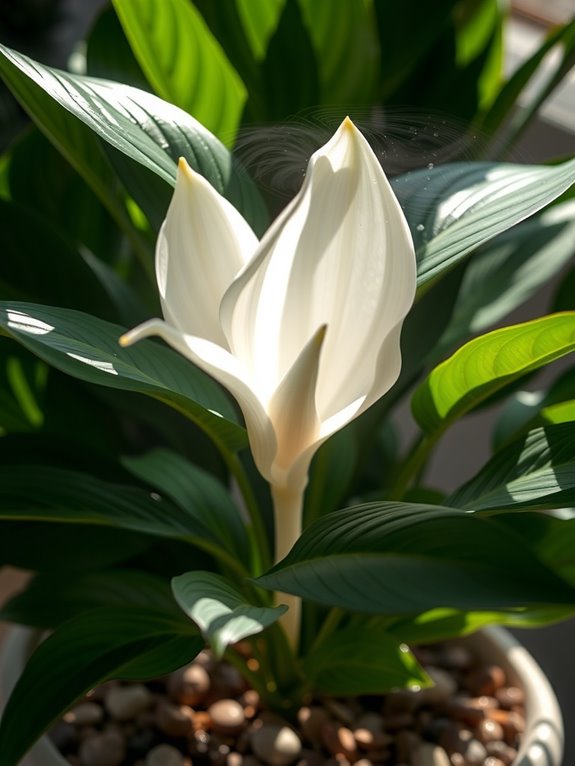
Peace lilies need humidity between 40–60% to stay healthy. Without it, their leaf tips turn brown and crispy. When you hit this humidity range, you’ll see better leaf color and more consistent blooming.
Maintain 40–60% humidity for peace lilies to prevent brown leaf tips and encourage consistent blooming.
Misting Your Plant
Use a spray bottle to mist your peace lily every few days. Fill the bottle with room-temperature water and spray the leaves until they’re lightly wet. This method works best if you’re already checking on your plant regularly, since it only takes a minute or two.
Using a Pebble Tray****
Place a shallow tray under your pot and fill it with water. Add pebbles or small stones to the tray so the pot sits on top of them, not directly in the water. As the water evaporates, it raises the humidity around your plant. Refill the tray when the water level drops.
Grouping Plants Together
When you place multiple plants near each other, they create a small pocket of higher humidity. This works because each plant releases moisture into the air around it. You don’t need many plants—even three or four close together will help.
Lighting Considerations
Keep your peace lily out of direct sunlight. Strong light increases how much water the plant loses through its leaves, which means you’ll need to work harder to maintain adequate humidity. Bright, indirect light works best.
Pick one or two of these methods and stick with them. Consistency matters more than complexity.
Repot When Roots Emerge From Drainage Holes
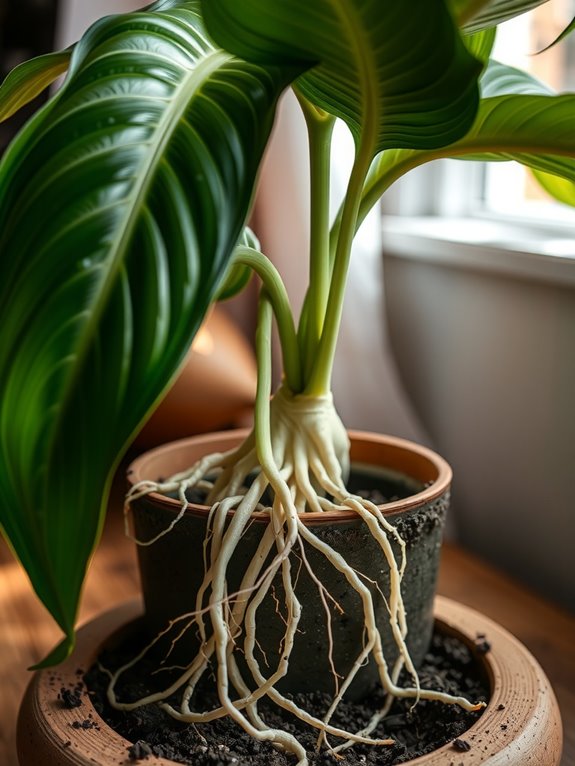
Watch for roots poking out of the drainage holes. That’s your signal that your peace lily has outgrown its pot and is rootbound. When you see this, repot right away.
Select a pot that’s 2 to 4 inches larger in diameter than the current one. This size jump gives roots room to expand without drowning them in excess soil. Use fresh, well-draining potting mix made for indoor plants.
Before moving your plant, remove it gently from its current pot. Trim any dead roots or roots that are circling around the root ball. These circling roots, called root-bound patterns, won’t grow properly if left alone. Cutting them encourages new, healthy growth in the right direction.
Place the plant in its new pot and water thoroughly until water drains from the bottom. The plant will likely pause its flowering while it adjusts to the new container. Keep humidity higher during this settling period to support the transition.
Propagate by Division in Spring
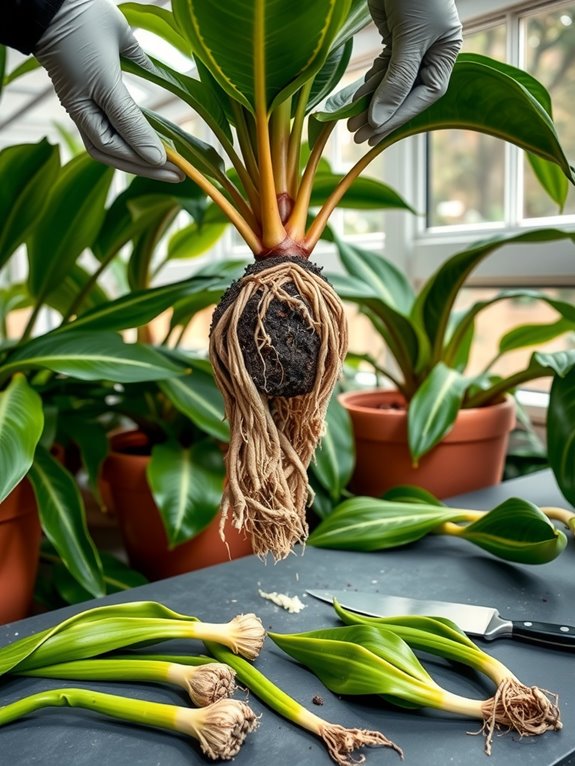
Once your spathiphyllum has settled into its new pot, you can multiply your plant collection through division. Spring or early summer works best since your plant is actively growing and ready for the change.
Multiply your spathiphyllum collection through division in spring or early summer when active growth makes the plant ready for change.
Start by carefully separating the clump into sections. Each division needs at least one leaf and a healthy root system attached. Damaged roots create problems down the line, so handle them with care.
Plant each section in moist, well-draining potting mix. Choose a pot size that fits your new root system without extra space around it—crowding the roots in oversized pots traps water and causes rot. Make sure drainage holes are clear and working properly.
Keep humidity high around your divisions while new roots develop. This helps them adjust without drying out. Avoid waterlogging the soil during this period, even though you want moisture present.
Your plant might stop flowering temporarily as it recovers from division. This is normal. Once the divisions establish themselves, you’ll have multiple spathiphyllums growing in your space.
Why Your Peace Lily Has Brown Tips or Pests
Brown tips on your peace lily usually mean the air is too dry, you’re using too much fertilizer, or the plant gets too much direct sunlight. Start by increasing humidity around your plant and look at how often you water. You might be giving it too much or too little.
Check your plant carefully for common pests like scales, mealybugs, and fungal gnats. These insects hide on leaves and stems, so inspect both the tops and undersides. Once you spot them, you’ll need to treat the plant with an appropriate pest control method.
Keep your peace lily in steady conditions to prevent these problems from starting. Maintain temperatures between 65–80°F and humidity levels at 50–60%. Wipe down the leaves every couple of weeks to remove dust and catch pest problems early. Use a balanced organic fertilizer diluted to half strength, and apply it only once a month during the growing season instead of more frequently.
Brown Tips: Causes And Solutions
Why Do Peace Lily Leaf Tips Turn Brown?
Brown leaf tips on your peace lily happen for a few specific reasons. Once you figure out which one applies to your plant, you can fix the problem.
Common causes include:
- Low humidity and dry air from heating systems
- Direct sunlight scorching delicate leaf edges
- Inconsistent watering that stresses your plant
- Fertilizer burn from over-concentrated solutions
How to Fix the Problem
Start by raising the humidity around your plant. Mist the leaves with water two or three times a week, or set the pot on a pebble tray filled with water. The water should sit below the pebbles, not touching the pot directly.
Move your peace lily away from any windows where it gets direct sun. Place it in a spot that gets bright, indirect light instead. A few feet back from an east or west-facing window works well.
Water your plant on a regular schedule. The soil should feel slightly moist when you touch it, but never soggy or waterlogged. Check the soil every few days and water when the top inch feels dry.
When you fertilize, use half-strength solutions. Mix your fertilizer at half the concentration the bottle recommends. This prevents salt buildup that damages roots and causes brown tips. Apply fertilizer only during the growing season, roughly from spring through early fall.
Common Pests And Treatment
Pests like scales, mealybugs, and fungal gnats regularly infest peace lilies and make brown tips worse if you don’t address them. The damage compounds quickly once pests settle in, so catching them early matters.
Start by checking the undersides of leaves and the soil surface once a week. Look for sticky residue, cotton-like clusters, tiny insects, or yellowing leaves with brown edges. These signs tell you an infestation is progressing.
When you spot pests, wipe affected leaves with a soft, damp cloth to remove visible insects. Then apply neem oil or insecticidal soap according to the label directions. Peace lilies react poorly to strong chemical sprays, so stick with gentler options and reapply every 7-10 days until the problem stops.
Better yet, prevent pest problems by adjusting your plant’s conditions. Keep humidity between 50-60% by misting leaves every other day or placing the pot on a pebble tray filled with water. Water when the top inch of soil feels dry, and position the plant where it gets bright, indirect light for 6-8 hours daily. A healthy plant resists pest damage far better than a stressed one.
Prevention And Leaf Care
Most problems with your peace lily—brown leaf tips, yellowing leaves, or pest infestations—come from care issues you can prevent. Keeping your plant healthy means maintaining steady conditions and paying attention to what it needs.
Humidity and Watering
Mist your plant regularly to keep humidity between 40–60%. This stops brown tips from forming and keeps the leaves looking healthy. Water when the top inch of soil feels dry to the touch. Both underwatering and overwatering cause problems, so check the soil before you water.
Light and Temperature
Place your peace lily where it gets bright, indirect light. Keep the room temperature steady between 18–24°C (64–75°F). Sudden temperature changes stress the plant and make it more vulnerable to problems.
Leaf Maintenance
Dust the leaves every week or two with a soft, damp cloth. Dust blocks the stomata—the tiny pores leaves use to breathe—so keeping them clean matters. This simple step helps your plant absorb light and water more effectively.
Preventing Pest Problems
Quarantine any new plants for at least two weeks before placing them near your peace lily. Check new plants carefully for insects or signs of disease. This keeps pests from spreading to your existing collection.
These straightforward practices create the stable environment your peace lily needs to stay healthy and pest-free.
Protect Children and Pets From Toxicity
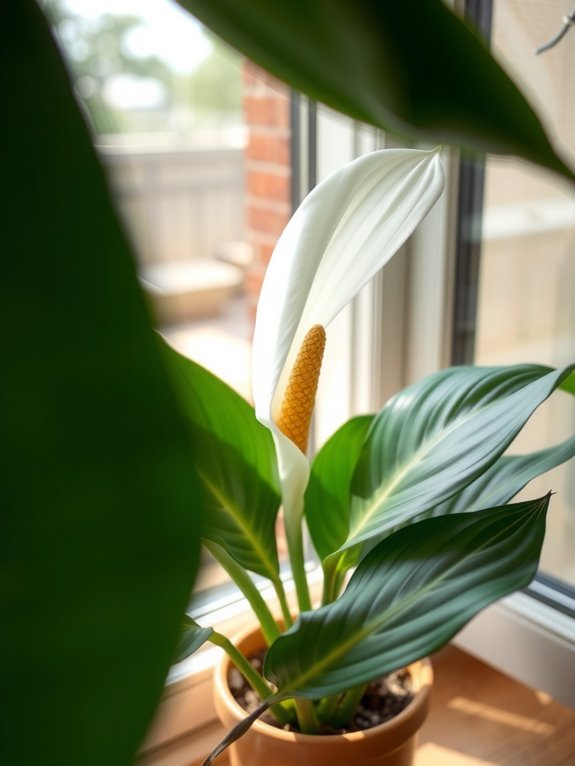
Peace lilies contain calcium oxalate crystals that cause mouth, throat, and digestive irritation if your child or pet chews on or swallows any part of the plant. Touching the leaves won’t hurt you, but swallowing plant material creates a real risk.
Keep the plant out of reach by placing it on a shelf at least 5-6 feet high, where young children and pets cannot climb or jump to it. You can also use a plant stand with a protective barrier or place the peace lily behind a baby gate in a room children and pets don’t enter unsupervised.
Watch play areas closely. Tell children not to touch the leaves or spathes, and redirect them when they approach the plant. Train pets to stay away using consistent commands and physical barriers if needed.
If someone swallows any part of the plant, call poison control at 1-800-222-1222 or your local emergency number right away. Tell them what was swallowed and when. A medical professional will give you specific next steps based on the amount ingested.