
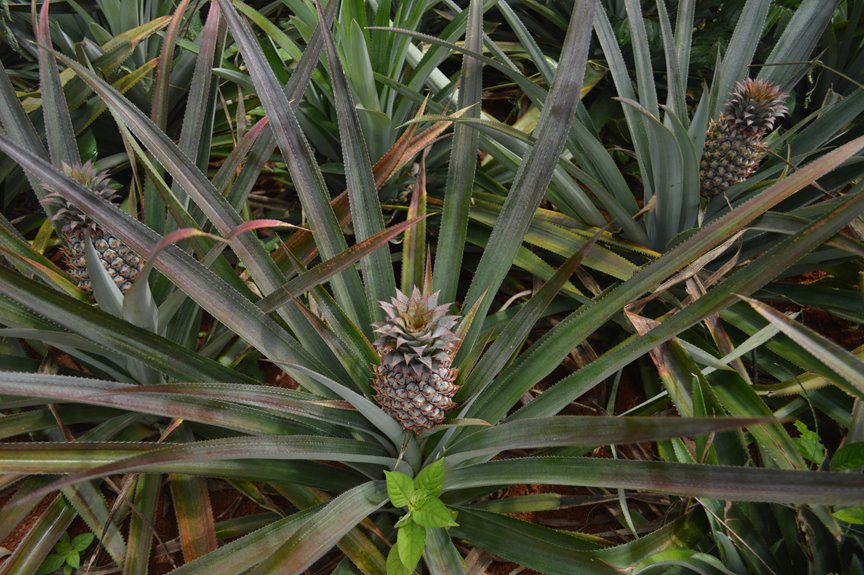
Your pineapple plant needs bright, indirect light for at least six hours each day. Keep the temperature steady between 65 and 80 degrees Fahrenheit. These conditions mimic the plant’s natural tropical environment and support healthy growth.
Water once a week, allowing the top inch of soil to dry between waterings. Overwatering causes yellowing leaves, so check the soil before adding more water. Use well-draining soil made from a mix of peat moss, compost, and perlite to prevent water from sitting around the roots.
During spring and summer, apply balanced fertilizer weekly. This feeding schedule supports the plant’s growth during its active season. Once fall and winter arrive, reduce fertilizing or stop altogether.
Pineapples typically take two to three years before producing fruit. This timeline requires patience, but the wait is reasonable for a tropical plant grown indoors. Prune away dead leaves regularly to keep the plant looking neat and to direct energy toward new growth.
Watch the plant for signs of stress. Yellowing leaves point to overwatering, while brown leaf tips may indicate low humidity or inconsistent watering. Adjust your care based on what you observe.
What Is a Pineapple Plant and How Long Does It Take to Fruit?
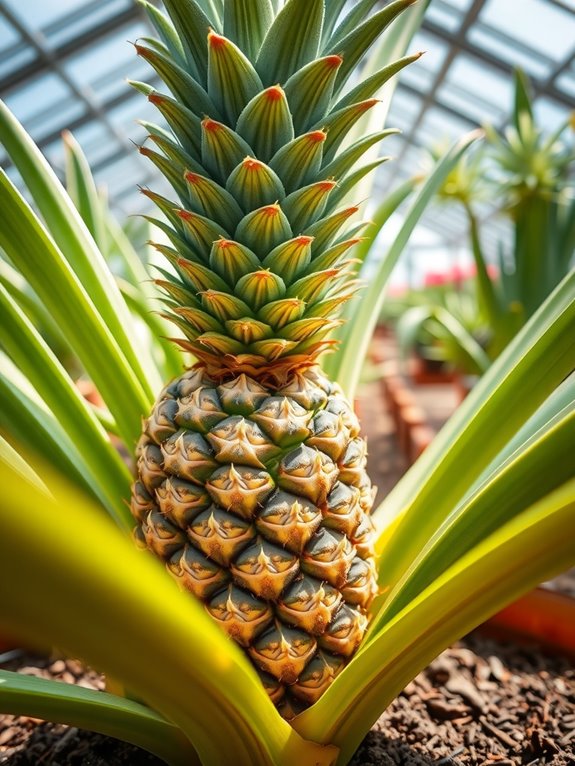
A pineapple plant is a tropical bromeliad with distinctive sword-like leaves arranged in a rosette pattern and a central fruit that develops from the plant’s core. The plant is evergreen and originally comes from the tropical Americas, though it grows well in many climates now.
Growing pineapples requires patience. Most varieties need two to three years before producing fruit, and some take even longer. The timeline depends on which variety you choose and how well your growing conditions match what the plant needs. Ornamental varieties tend to stay smaller and produce less sweet fruit, making them good choices if you want a decorative plant alongside food production.
As you set up your care routine, understand that pineapple plants teach you practical skills about growing tropical species. The extended wait before fruiting rewards your effort when the harvest finally arrives.
Pineapple Plant Light Requirements
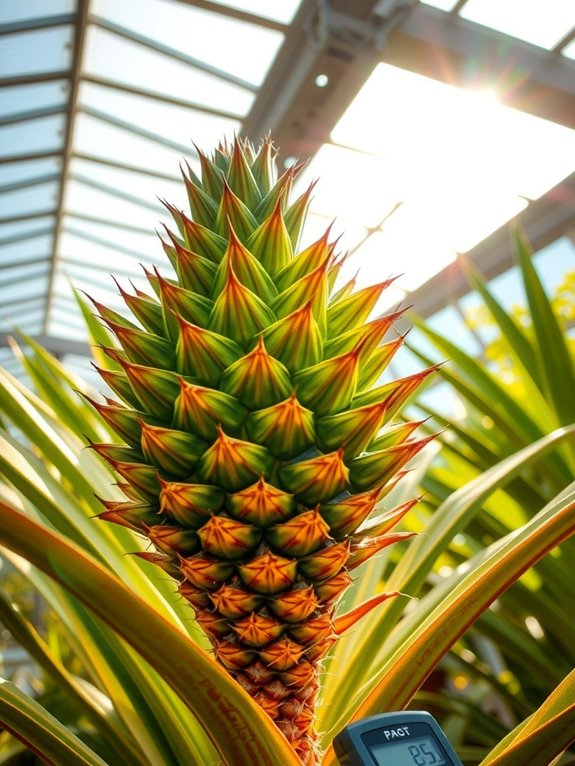
How much sunlight does your pineapple plant really need? Your pineapple needs at least 6 hours of bright, indirect sunlight each day to grow well and produce fruit. Position your plant near a bright window and rotate it regularly so all sides get even light exposure.
| Light Condition | Result | Your Action |
|---|---|---|
| 6+ hours bright, indirect light | Healthy growth, flowering | Place near bright window |
| Insufficient light | Pale leaves, no fruit | Relocate to brighter spot |
| Direct, intense sunlight | Leaf burn damage | Use filtered or indirect light |
| Consistent bright light | Strong energy, fruit production | Maintain steady placement |
Without enough light, your pineapple’s leaves will turn pale and it likely won’t flower or produce fruit. Bright light should stay indirect to prevent leaf burn, especially indoors where warmth from windows can intensify the sun’s rays. Keep your plant in a spot with steady, bright light to support healthy growth and fruit development.
How Often to Water Your Pineapple Plant
Water your pineapple plant once a week as a general rule. The real skill is letting the soil dry out between waterings so roots don’t sit in water and rot.
Check your soil moisture by pressing your finger about an inch into the soil. It should feel moist but never soggy. Adjust how often you water based on the season. Water more frequently during warm months when soil dries faster, and cut back during cooler months when plants need less water.
If you’re growing your pineapple in a pot, pay close attention to moisture levels. Container soil dries out faster than ground soil, which makes it easier to accidentally overwater. Check potted plants more often than plants in the ground.
Weekly Watering Schedule
Finding the right watering rhythm keeps your pineapple plant healthy. Water weekly during summer months, allowing the soil to dry out between waterings. This prevents root rot and soggy conditions that stress your plant.
Indoor plants need adjusted watering based on your container size, soil mix, and humidity levels. Before you water, check the soil with your finger. It should feel moist but never waterlogged.
| Condition | Watering Action | Result |
|---|---|---|
| Dry soil | Water thoroughly | Healthy roots |
| Moist soil | Wait 2-3 days | Prevents rot |
| Waterlogged | Reduce watering | Recovery begins |
| Summer heat | Water weekly | Optimal growth |
| Rainy season | Skip watering | Avoids overwatering |
Consistency matters most. Too little water stresses your plant and stunts growth. Too much water invites root disease. Pay attention to your soil’s condition and adjust your watering schedule accordingly.
Soil Drying Between Waterings
When should you water again? Let the soil dry out between waterings. Check the top 1–2 inches of soil and water only when they’re dry to the touch. This prevents overwatering, which causes root rot and damages your plant.
During hot conditions, check your pots daily to stay on track. You want moist soil, not soggy soil. After watering, make sure excess moisture drains completely away. This drainage step protects your pineapple’s roots from waterlogging.
Letting soil dry between waterings supports healthy root development. Your plant needs this rhythm to grow well. When temperatures rise and your pineapple grows actively, you might water more often, but always wait until the soil dries first. This balance keeps your plant healthy year-round.
Avoiding Overwatering Problems
How often should you actually water your pineapple plant? The key is finding that sweet spot between moist and soggy. Water regularly, but let the soil dry out between waterings. This prevents root rot from destroying your plant.
During warm periods, you’ll need to water more frequently since heat increases evaporation. When it’s cooler or cloudy, scale back your watering schedule. For in-ground plants, rainfall often provides enough moisture, so extra watering isn’t always necessary.
If you’re keeping your plant indoors during cold weather, water only as needed to prevent the soil from drying completely. Your target is moist soil, never waterlogged. Soggy soil causes root rot and plant stress, so avoid overwatering at all costs.
Best Soil for Pineapple Plants
You need soil that drains well while keeping some moisture available to the roots. This balance matters because pineapples are sensitive to both waterlogging and drying out.
Mix these three materials in equal parts: peat moss, compost, and perlite or vermiculite. Peat moss holds moisture. Compost adds nutrients. Perlite or vermiculite creates air pockets that let water drain through instead of pooling around the roots.
Dense, soggy soil damages pineapple roots and stops the plant from growing. When you prepare your soil mixture at the start, you avoid this problem entirely. Test your mix by filling a pot, watering it thoroughly, and checking it the next day. The top should feel dry while the lower section stays slightly moist.
Drainage And Composition
Pineapple plants don’t tolerate waterlogging. When soil stays too wet, roots rot and your plant dies. The solution is building the right potting mix before you plant.
Combine these three components in equal parts:
- Peat moss holds moisture in the soil
- Compost adds nutrients and gives the mix structure
- Perlite or vermiculite creates air spaces for water drainage
The perlite or vermiculite does the heavy lifting for drainage. These materials create small pockets throughout the soil that let water pass through quickly instead of pooling around the roots. Your pineapple needs soil that holds some water for growth but never stays saturated. This balance keeps roots healthy and supports both leaf and fruit development.
Moisture Retention Balance
The right soil composition prevents waterlogging while holding the moisture your pineapple plant needs. You want soil that keeps roots hydrated without staying wet. This balance matters for healthy pineapple growth.
| Soil Component | Purpose | Benefit |
|---|---|---|
| Peat moss | Retains moisture | Keeps roots hydrated |
| Perlite | Improves drainage | Prevents waterlogging |
| Compost | Adds nutrients | Supports growth |
Water your pineapple when the top inch of soil feels dry to the touch. Let the water drain completely after watering. The goal is moist soil, not soggy soil. Allowing the soil to dry between waterings does two things: it strengthens the root system and reduces the risk of rot. Follow this watering pattern consistently to maintain the stable, healthy conditions your pineapple needs.
Temperature and Climate for Pineapple Plants
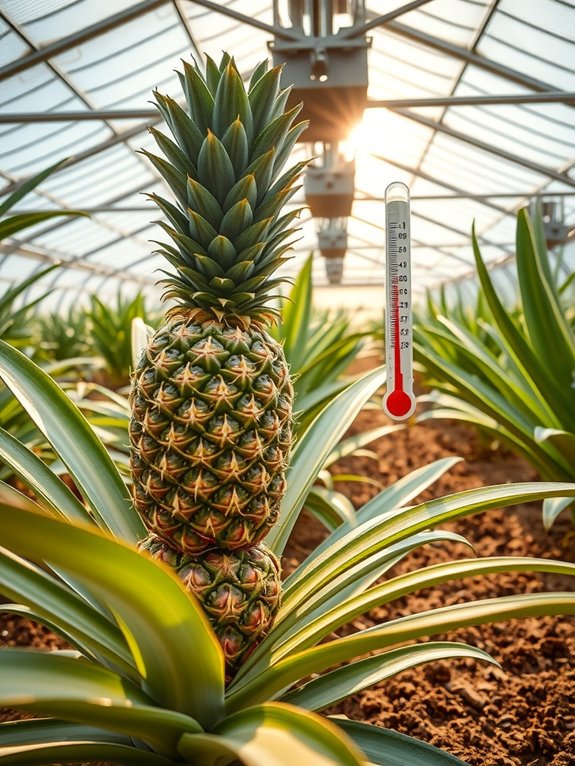
Keep your pineapple plant between 16°C (60.8°F) and 24°C (75°F). These tropical plants can’t handle frost or freezing temperatures, so cold is your main concern.
In warm regions like Southwest Florida, you can leave your plant outside year-round. In cooler areas, move it indoors when temperatures drop or during wet weather.
Here’s what you need to do:
- Keep temperatures steady. Don’t let your plant experience sudden cold snaps. Pineapples do best when conditions stay consistently warm.
- Protect from frost. Bring plants indoors before the first freeze arrives in fall. Even a light frost can damage the leaves and slow growth.
- Watch the seasons. In summer, place your plant outdoors to boost growth and fruit production. Just keep it away from intense afternoon sun, which burns the leaves and creates brown patches.
Temperature management directly affects whether your plant produces fruit. Consistent warmth combined with proper light exposure gives you the best results.
Fertilizing for Flowers and Fruit Production
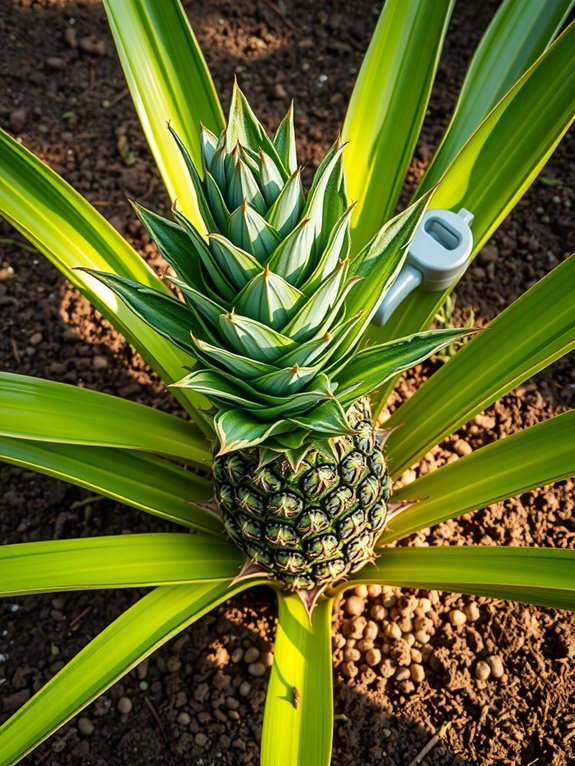
Feed your pineapple plant regularly if you want flowers and fruit to develop. During spring and summer, apply a balanced N-P-K fertilizer once a week. This formula supports all three areas you care about: flowers, fruit, and healthy leaves. You can use either foliar spray or soil application, but apply the fertilizer evenly. Do not overfeed—too much fertilizer burns leaf tips and causes salt to build up in the soil.
Choose balanced formulas instead of high-nitrogen options. High-nitrogen fertilizers push the plant to grow more leaves at the expense of fruit production. This works against what you’re trying to achieve.
| Season | Frequency | Fertilizer Type |
|---|---|---|
| Spring | Weekly | Balanced N-P-K |
| Summer | Weekly | Balanced N-P-K |
| Fall | Every 2-3 weeks | Balanced N-P-K |
| Winter | Once monthly | Balanced N-P-K |
When fall arrives, reduce how often you fertilize. Growth naturally slows as daylight decreases and temperatures drop. Cut back to feeding every 2-3 weeks. In winter, feed only once a month or stop entirely if your plant goes dormant.
Watch your plant for signs that you’re feeding correctly. Pale or yellowish leaves mean the plant needs more fertilizer. Leaf tips that turn brown or orange mean you are applying too much. Adjust your feeding schedule based on what you see. The plant will tell you what it needs.
Pruning Your Pineapple Plant
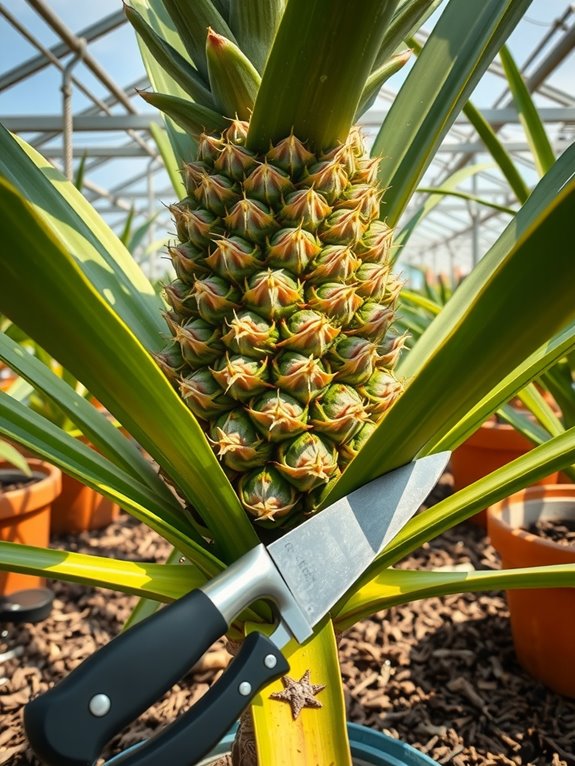
Remove dead or damaged leaves on a regular schedule to keep your pineapple plant healthy. As you prune away these worn leaves, you encourage new growth. The plant can then direct its energy to the areas that matter most.
When you manage your plant’s structure this way, you maintain a compact form that’s easier to care for. A well-pruned plant also has a better chance of producing fruit. Check your pineapple plant weekly for leaves that show browning, yellowing, or soft spots. Use clean pruning shears to cut these leaves as close to the base as possible. Dispose of removed leaves rather than leaving them near the plant, as decaying plant material can attract pests.
Removing Dead Leaves
Clearing away dead or damaged leaves keeps your pineapple plant healthy and strong. You prevent disease buildup and give your plant better conditions to grow.
Focus on these specific tasks:
- Remove any leaves that are brown, yellowing, or visibly damaged
- Clear old outer leaves while keeping the central rosette intact for continued growth
- Inspect your cuts right after pruning to spot pests or rot, then treat any problems immediately
After pruning, position your plant where it gets good light and plant it in soil that drains well. These conditions support new leaf growth and keep your plant vigorous.
Make this a regular habit. Check your pineapple every week or two and remove dead leaves as they appear. This keeps your plant looking healthy and prevents problems from building up over time.
Promoting Healthy Growth
Beyond removing dead leaves, pruning helps your pineapple plant grow stronger. Strategic trimming prevents rot and encourages new leaf development. After you prune, focus on these specific actions:
Light: Place your plant where it gets bright, indirect Light for at least 6 hours daily. This supports new growth from the cuts you’ve made.
Soil: Use Soil that drains well—a mix of peat moss, perlite, and sand works effectively. Poor drainage causes water to sit around the plant’s base, which leads to rot near your pruning wounds.
Inspection: Check your plant every 2-3 days for the first two weeks after pruning. Look for soft spots on the stems, yellowing leaves that spread upward, or small insects near the cuts. These signs indicate overwatering or pest damage that can prevent healing.
Your plant’s open cuts need time to seal and callus over. Keep the area around your pineapple clean and remove any fallen leaves or debris that lands near the base. Water only when the top inch of soil feels dry to the touch. This combination of proper light, well-draining soil, and regular monitoring creates the conditions your plant needs to recover and develop strong new growth.
Managing Plant Structure
How often should you prune your pineapple plant? Remove dead or damaged leaves on a regular basis to keep your plant healthy. This practice stops disease from spreading and maintains your plant’s appearance.
Focus on these specific areas when you prune:
- Remove yellowed or brown leaves at the base of the plant
- Trim any foliage showing signs of disease or pest damage
- Clear away dead growth to improve air circulation around the plant
You’re doing light cleanup work here, not heavy cutting. Your goal is to remove what no longer helps the plant function. Regular maintenance prevents problems and keeps your pineapple looking good.
Starting a Pineapple From Fruit Crown
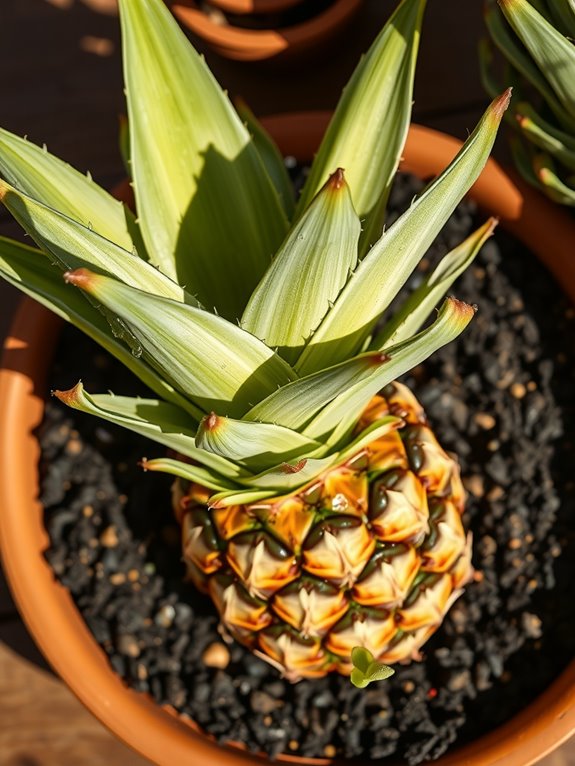
Cut off the leafy top from a fresh pineapple, removing as much fruit flesh as possible from the base. Trim the outer leaves until you expose the tallest upright growth in the center. Let the crown sit out for one to two days so it dries slightly. This drying step reduces the chance of rot when you plant it.
Fill a pot with well-draining soil or prepare a spot in the ground. Plant the crown so the base sits in soil while all the leaves stay above the surface. Place it somewhere with full sun and some afternoon shade to prevent scorching.
Water right after planting and keep the soil moist throughout the growing period, but avoid waterlogging it. Roots typically develop over several weeks. Check for rooting by gently tugging the inner leaves. If they resist your pull, the crown has started rooting successfully. Once you feel solid resistance, the plant is ready to move to a permanent location if needed.
Propagating Pups From the Mother Plant
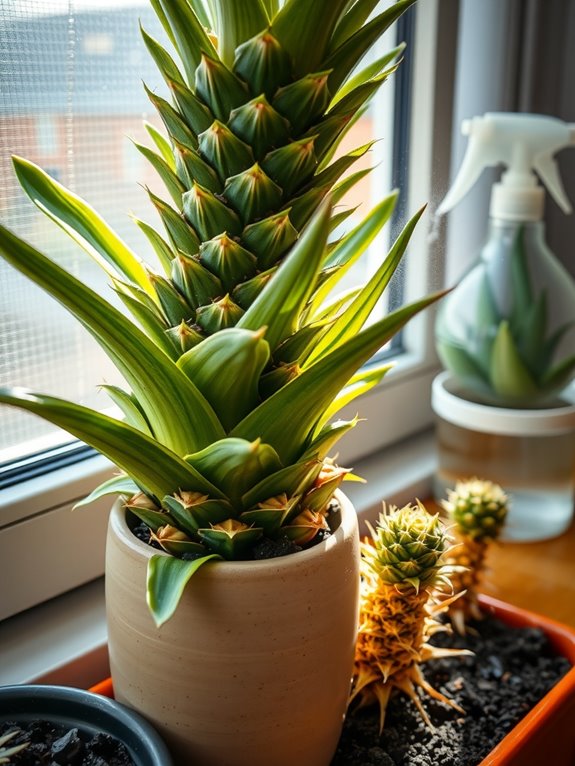
After your pineapple plant flowers and the main fruit develops, it produces small offshoots called pups around the base of the mother plant. These pups are how you grow new pineapples.
Wait until each pup develops its own root system before you separate it. You’ll know they’re ready when you can see roots clearly visible on the pup.
Here’s what to do:
- Use a clean, sharp knife to sever each well-rooted pup from the mother plant
- Let the cut surfaces air dry for a few hours to reduce the risk of rot
- Plant each pup in a container with well-draining soil, spacing them so water doesn’t pool around the base
Give each pup enough room in its container so it won’t sit in waterlogged conditions. This separation allows each pup to establish itself properly and access the water and nutrients it needs to grow into a healthy plant.
Pineapple Plant Fruiting Timeline
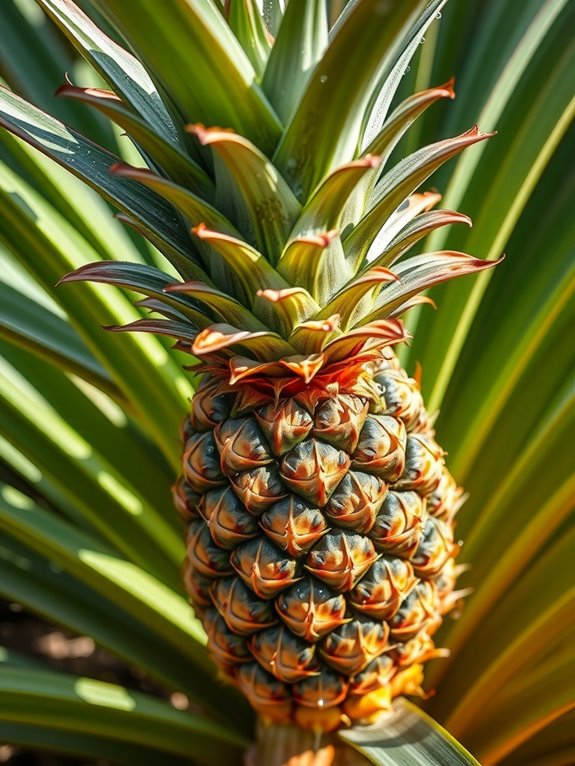
Your pineapple plant will take two to three years before producing fruit, though this timeline can extend longer based on your specific growing conditions. The speed at which your plant fruits depends on several factors: temperature, light exposure, soil quality, and whether you’re growing a fruiting or ornamental variety. By understanding what affects this timeline, you can set realistic expectations and adjust your care approach to encourage faster fruit development.
Timeline to First Fruit
Timeline to First Fruit
Plan on waiting two to three years or longer before your pineapple produces fruit. The exact timing depends on your plant variety and how well you meet its growing needs. This extended timeline is just part of growing pineapples indoors.
To move toward fruiting faster, focus on three things:
- Give your plant bright light every day, year-round. Place it near a south-facing window or under a grow light set for 12 to 14 hours daily.
- Keep temperatures between 65 and 80 degrees Fahrenheit. Never let the soil stay wet. Water when the top inch feels dry to the touch.
- Use soil that drains fast. Mix standard potting soil with perlite or sand at a 2-to-1 ratio so water moves through quickly.
Indoor plants need extra attention in winter. Move yours away from cold windows and drafty doors. The combination of steady warmth, bright light, and proper drainage is what actually determines whether your plant will eventually flower and fruit. Skip any of these, and you’ll add years to your wait.
Factors Affecting Fruiting Speed
Several factors control how fast your pineapple will fruit. The most important one is variety. Some pineapple types naturally produce fruit sooner than others, while ornamental varieties won’t produce edible fruit at all, no matter what you do.
Growing conditions matter just as much. Your pineapple needs bright light and steady warmth to grow properly. Dim lighting or cool temperatures will slow down growth. You can’t speed up the process itself, but you can help it along by giving your plant what it needs.
Plan for at least two to three years before you see fruit, even with perfect care. Some plants take longer depending on the specific variety you’re growing and your local climate. Knowing these details helps you set realistic timelines and care for your plant with the right expectations in mind.
When and How to Repot Into Larger Containers
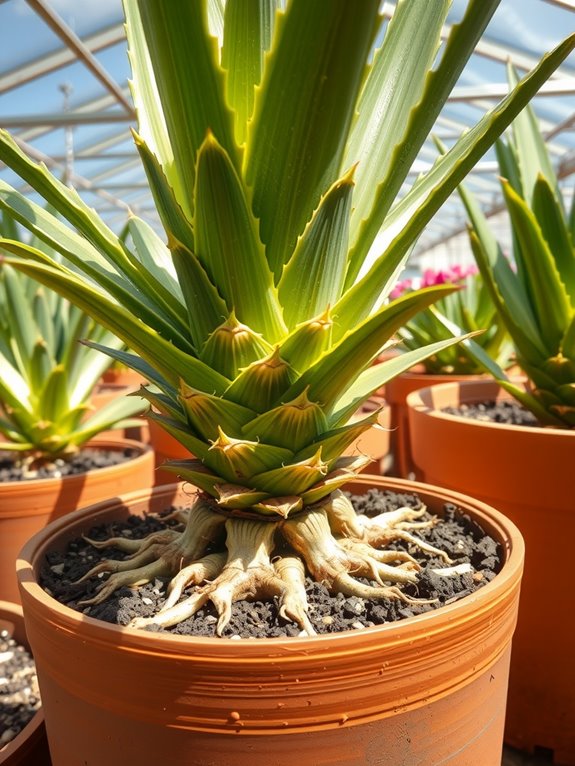
As your pineapple plant grows and develops roots, it will eventually outgrow its current container. Moving it to a larger pot gives the roots room to expand and allows the plant to absorb more nutrients and moisture from the soil.
Watch for signs that repotting is needed. Roots circling around the drainage holes or noticeably slower growth indicate your plant is ready. This typically happens every 12 to 18 months. Pick a container only one to two inches larger in diameter than the current one. Using a pot that’s too large causes soil to retain excess moisture, which can lead to root rot.
Here’s how to repot:
- Water your plant a few hours before repotting to make the root ball easier to work with.
- Gently slide the plant out of its current pot and use your fingers to loosen the roots around the edges of the soil ball.
- Fill your new pot halfway with fresh, well-draining potting mix made from peat moss, compost, and perlite in equal parts.
- Set your plant in the new pot at the same depth it was growing before. The top of the root ball should sit level with the soil surface.
- Fill in around the sides with more potting mix, pressing lightly to remove air pockets.
- Water thoroughly until water drains from the bottom holes.
The soil blend of peat moss, compost, and perlite creates the drainage your pineapple plant needs. This combination prevents waterlogging while holding enough moisture for steady growth.
Indoor or Outdoor: Where Should You Grow?
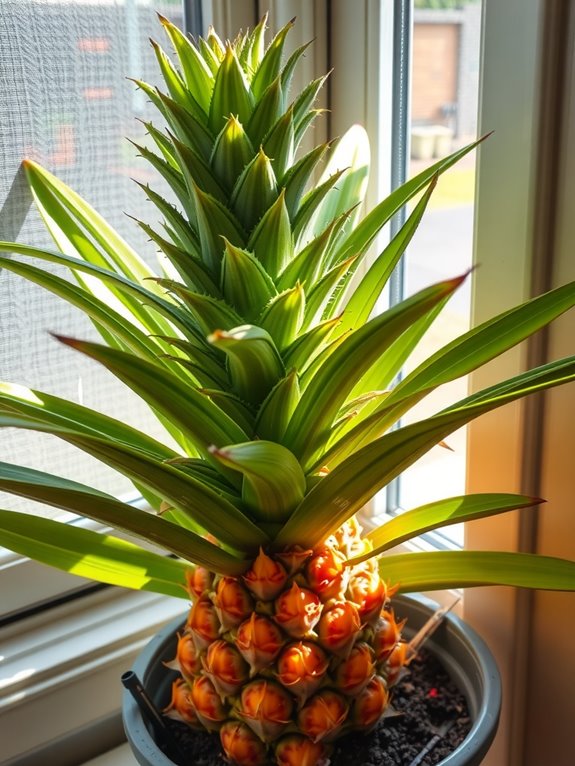
Where you decide to grow your pineapple plant depends on your climate and how much bright light you can provide. In warmer regions, pineapples grow well outdoors year-round with direct access to natural sunlight. If you live somewhere cold, move your plant indoors during winter to protect it from frost damage.
For indoor growing, your space needs at least six hours of bright light daily. A south-facing window works best for this. If natural light is limited, add grow lights to reach the six-hour minimum. Pineapples also need warm, stable temperatures to grow properly, so pick a location that stays consistently warm throughout the year.
Choose your growing spot based on whether you can reliably meet these two requirements: adequate bright light and warm conditions. The location itself—indoors or outdoors—matters less than your ability to provide what the plant needs.
Spotting Problems: What’s Wrong With My Pineapple?
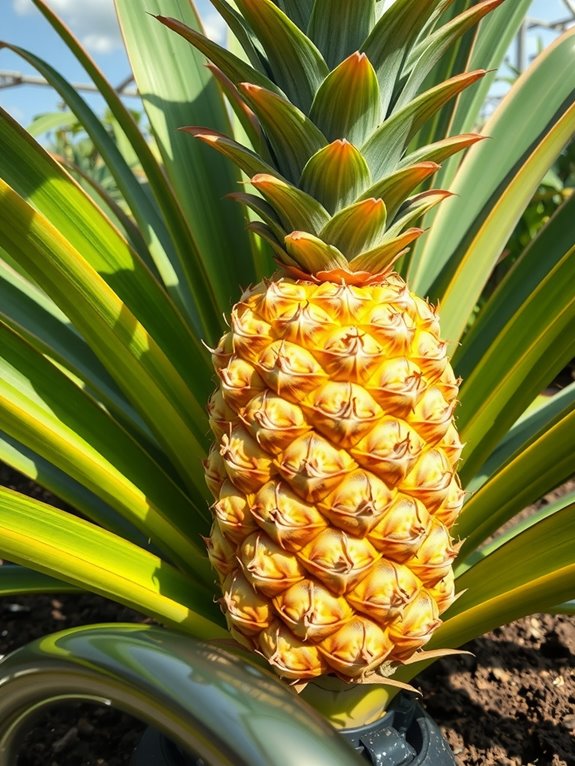
Even with proper care, your pineapple plant can develop issues that signal something’s off with its growing conditions or health. Understanding common problems helps you troubleshoot quickly and get your plant back on track.
Yellow or Brown Leaves
Yellow or brown leaves usually mean you’re watering too much. Check your soil—it should dry out between waterings. If the soil stays wet, your drainage may be poor. Adjust your watering schedule so the top inch of soil dries before you water again. If the pot doesn’t have drainage holes, repot your pineapple into one that does.
Pale or Slow Growth
When new leaves look pale or your plant grows slowly, it needs more light. Move your pineapple closer to a bright window where it gets at least 6 hours of indirect sunlight daily. A south-facing or west-facing window works best.
Soft or Mushy Stems
Soft, mushy stems indicate root rot, which happens when roots sit in wet soil too long. This problem requires immediate action. Remove your plant from its pot, cut away any dark or mushy roots with clean scissors, and repot it into fresh, well-draining soil. Let the soil dry more between waterings going forward.
Brown Leaf Tips and Low Humidity
Brown tips on leaves mean the air around your plant is too dry. Mist the foliage with water 2 to 3 times per week, or place your pineapple on a tray filled with pebbles and water—keep the pot above the waterline so roots don’t sit in moisture. Grouping plants together also raises humidity since they release moisture as they grow.
Spider Mites
Spider mites are small pests that sometimes appear indoors. Check the undersides of leaves regularly for tiny webs or speckling. If you spot them, spray the affected areas with water or apply insecticidal soap according to the product label. Repeat every 7 to 10 days until the mites disappear.
Catching problems early makes the difference between a quick fix and a serious setback.
Pests and Diseases: Identification and Treatment
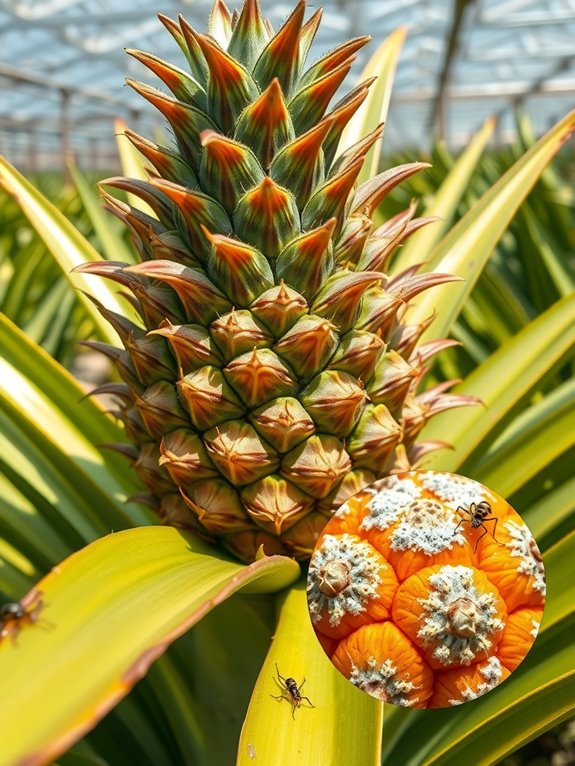
Pests and Diseases: Identification and Treatment
Common pests on pineapple plants include mealybugs and scale insects. Mealybugs appear as white cottony clusters on leaves and stems, while scale insects look like small brown bumps. Spider mites create fine webbing across foliage and cause leaves to turn yellow.
Mealybugs, scale insects, and spider mites commonly affect pineapple plants, causing cottony clusters, brown bumps, and yellow leaf damage.
To treat these pests, spray affected areas with insecticidal soap or neem oil. Apply the treatment every two weeks until the pests disappear. Cover both the tops and undersides of leaves for best results.
Root rot is the most serious disease threat, caused by overwatering. Signs include mushy roots and wilting leaves even when the soil is moist. Prevent root rot by using well-draining soil and allowing it to dry between waterings. Let the top inch of soil dry to the touch before watering again.
Fungal leaf spots show up as brown patches surrounded by yellow rings. Remove infected leaves right away and trim lower foliage to improve air flow around your plant. Better air circulation helps prevent fungal problems from spreading.
Check your pineapple plant every week for signs of pests or disease. Catching problems early makes them easier to handle and keeps your plant healthy.
Harvesting and Eating Your Homegrown Pineapple
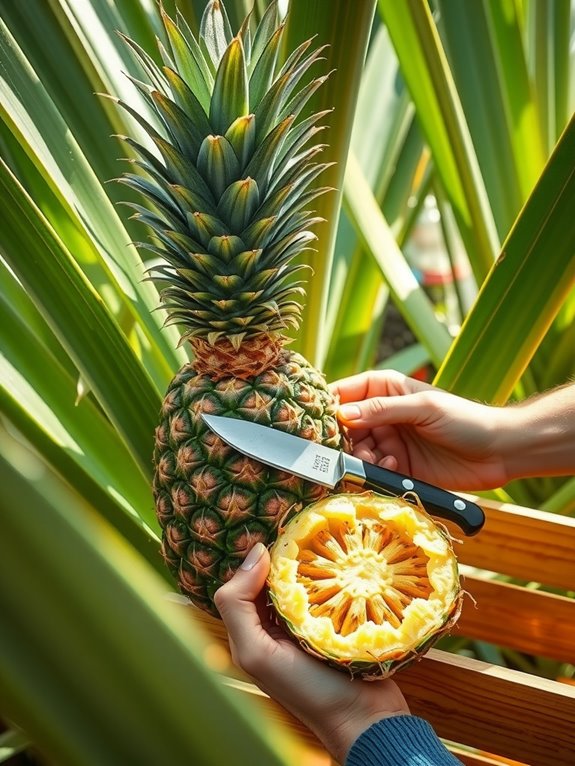
After two to three years of care, your pineapple plant will produce fruit. Knowing when and how to harvest it matters.
Recognizing Ripeness
Your pineapple is ready to harvest when the skin shifts from green to golden-yellow and releases a sweet smell. This color change happens gradually across the fruit’s surface. The fruit should feel slightly soft when you press it gently, but not mushy.
Harvesting the Fruit
Use a sharp knife to cut the fruit from the plant, leaving several leaves attached to the crown. Make a clean cut at the base where the fruit meets the plant. A serrated knife works well for this task. After cutting, wipe away any sap that leaks from the cut stem.
Ripening and Storage
Let the harvested fruit sit at room temperature for one day. This allows the flesh to develop maximum sweetness. After one day, move it to your refrigerator. Cold storage slows down ripening and keeps the fruit fresh for two to three weeks.
Growing New Plants
Once you harvest the fruit, your mother plant will not produce another pineapple. Instead, small shoots called pups will emerge around the base of the plant. When these pups reach 6 inches tall, separate them from the mother plant and replant them in potting soil. Each pup can develop into a new fruiting plant over the next two to three years.