

3 Steps to Take Care of a Rose Plant You Do Need
Pick a sunny spot with good drainage and aim for six to eight hours of direct sun daily. This is your starting point for healthy roses.
Water your roses about once weekly with roughly an inch of water. After watering, apply two to three inches of mulch around the base to lock in moisture and keep the soil cool.
Fertilize three times during the growing season: in spring, mid-June, and mid-July. Prune during dormancy in January to remove dead wood and improve air circulation. These steps work together to support plant health.
Choose a Sunny, Well-Drained Site Before Planting

Location matters because it determines whether your roses will struggle or do well from the start. Pick a spot that gets six to eight hours of direct sun each day. This amount of sunlight keeps roses healthy and leads to better blooming.
Check how water drains at your planting site. Roses need soil that doesn’t hold water, or the roots will rot. Mix compost or other organic matter into your soil before planting. This improves both drainage and adds nutrients your roses need.
In hot areas, give your roses afternoon shade to prevent leaf damage from intense sun. If you live in a cold climate, plant near south- or west-facing walls. These walls absorb heat during the day and release it at night, protecting your roses through winter.
Water Weekly and Mulch 2–3 Inches to Lock in Moisture
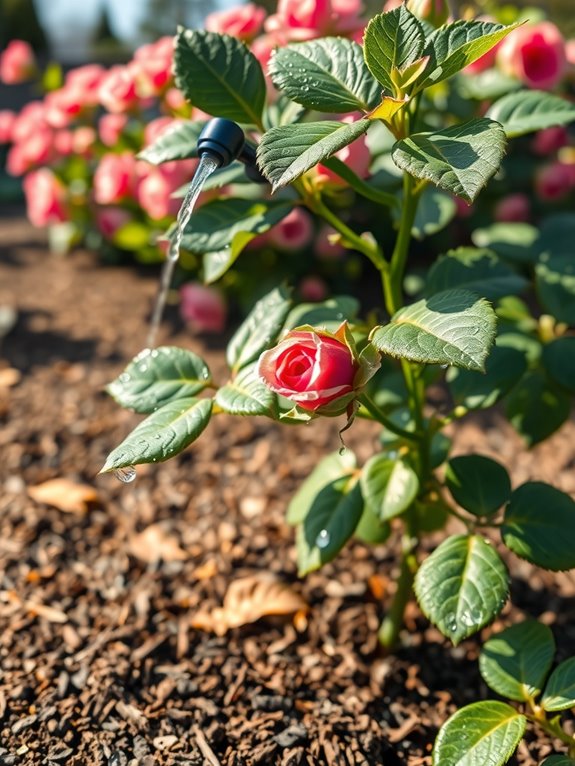
How often should you water your roses? Aim for about one inch of water per week, adjusting based on your soil type and summer conditions. Sandy soils dry out faster and need more frequent watering, while clay soils hold moisture longer.
Use soaker hoses at the base of your plants to deliver water directly to the soil, keeping the foliage dry and reducing disease risk. Water in the morning to minimize evaporation and plant stress.
After watering, apply 2–3 inches of organic mulch around your roses, leaving a 6-inch unmulched ring near the stem. This holds moisture in the soil and keeps it cooler. Keep in mind that organic mulch can bind nitrogen as it breaks down, so plan to add extra fertilizer during the growing season to make up for the nutrients that get tied up.
Fertilize Three Times and Prune in Dormancy

Once your watering and mulching routine is established, you can move on to fertilizing and pruning. These two practices keep your roses healthy and producing blooms consistently.
Fertilizing During Growing Season
Apply fertilizer three times: in spring, around June 15, and in mid-July. This schedule works for roses that bloom continuously. Spread 1/2 to 1 cup of fertilizer per plant in a band that starts 6 inches from the crown and extends 18 inches outward. Water thoroughly after applying to help the plant absorb the nutrients. Stop fertilizing after August 15 to prevent tender new growth that won’t survive winter.
Pruning While Dormant****
In January when roses are dormant, prune out any dead or damaged wood. Shape the plant to improve air circulation between branches. Clean your pruning tools with a sanitizer before and after use to prevent spreading disease. Avoid touching the fresh cuts more than needed. When you see new growth beginning in spring, go back to your regular watering schedule.