
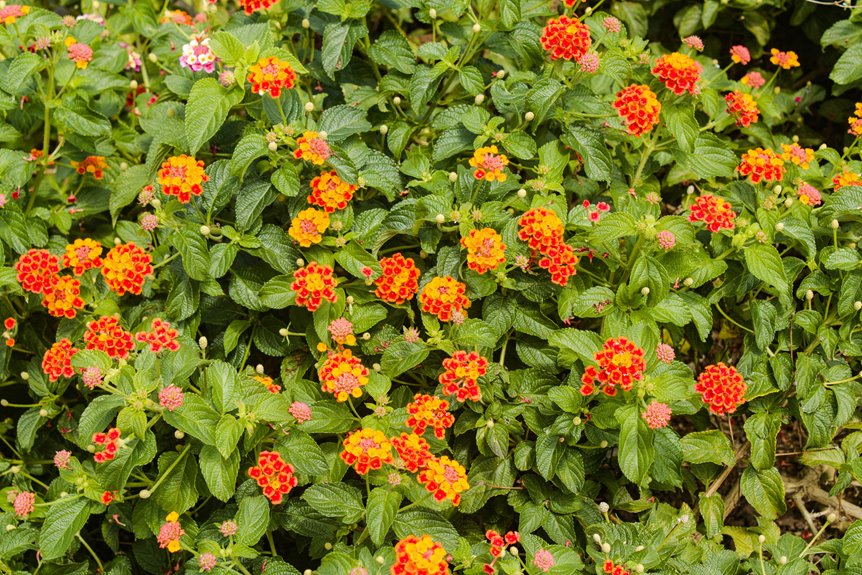
Growing lantana successfully comes down to meeting a few basic needs. Start by picking a spot that gets six to eight hours of direct sunlight each day. Lantana needs this much light to produce plenty of flowers. The soil should drain well and have a pH between 5.5 and 6.5. If your soil is too dense or acidic, the plant won’t perform as well.
Once your lantana is established, water it deeply but less frequently rather than giving it shallow, daily waterings. This approach encourages roots to grow deeper into the soil. Prune the plant regularly throughout the growing season to keep it shaped and to push out more blooms. At the same time, pinch off or cut away spent flowers consistently. This deadheading signals the plant to keep producing new flowers instead of focusing energy on seeds.
Spider mites and aphids are the pests you’re most likely to encounter. Check the undersides of leaves regularly for early signs of infestation. If you spot damage, treat affected areas with insecticidal soap, following the product label for application rates and frequency.
Winter care depends on where you live. In zones nine and above, lantana needs minimal protection and will often regrow from the roots each spring. In colder zones, apply heavy mulching around the base before the first frost, or dig up the plant and store it indoors in a cool, dry location until spring.
Choose the Right Spot for Lantana
Lantana needs full sun to grow well. Look for a spot that gets at least 6–8 hours of direct sunlight each day. The plant won’t bloom much in partial shade, so give it the brightest location you have available.
Before planting, test your soil. Lantana prefers well-draining soil with a pH between 5.5–6.5. Wet, poorly draining soil leads to root rot and plant death. If your soil drains slowly, work in sand or perlite to improve it.
Space upright varieties 4–6 feet apart. This spacing lets air move between plants and helps prevent disease problems. Crowded plants stay damp and attract fungal issues.
Plant in spring after frost danger passes if you live in a frost-free zone. In cooler regions, wait until the soil reaches at least 60°F. Cold soil slows root development and stalls growth.
Add 2–3 inches of mulch around the base of each plant to hold moisture in the soil. Keep the mulch pulled back a few inches from the stem. Mulch touching the stem can trap moisture and cause decay.
Plant Your Lantana Correctly
Now that you’ve picked the perfect sunny spot and prepared your soil, it’s time to plant your lantana. Dig a hole twice as wide as the root ball. This gives the roots room to spread out as they grow. Gently loosen the roots before you place your lantana in the hole. Keep the top of the root ball level with the soil surface—don’t plant it deeper. Backfill with your well-draining soil and water thoroughly to settle everything in place.
For container planting, fill pots with high-quality potting mix and make sure they have drainage holes. Keep the soil evenly moist but not waterlogged.
Space plants 4–6 feet apart for upright varieties. Ground-cover types can go closer together. Your spacing depends on what you want your landscape to look like.
Timing matters. Wait until frost danger has passed and soil temperature reaches at least 60°F before transplanting. Planting in warm soil helps your lantana get established properly.
Water and Feed Lantana Year-Round
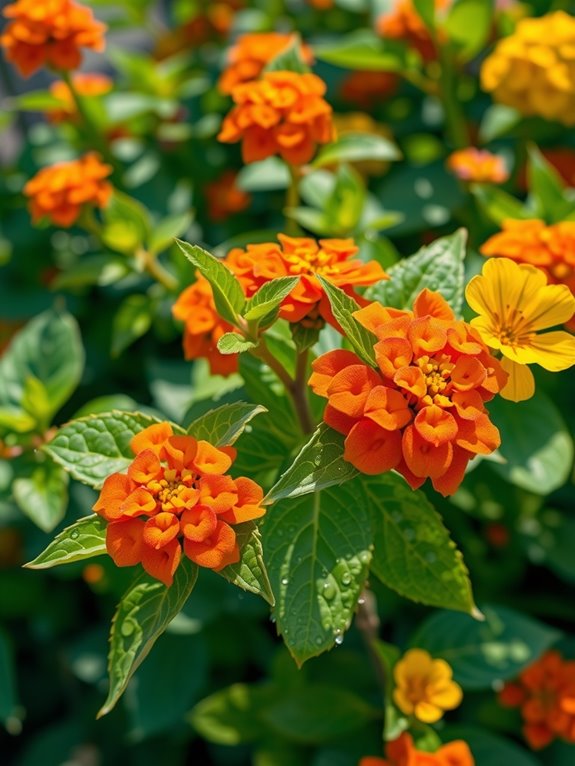
Once your lantana’s established, you’ll find it’s remarkably low-maintenance when it comes to watering. Give it about 1–2 inches per week, which might mean frequent irrigation at first. As the plant settles in, you can reduce how often you water. If you’re growing lantana in containers, water more often to keep the soil consistently moist but not soggy. During hot weather, check your soil regularly and adjust your watering schedule as needed.
For feeding, apply a balanced fertilizer like 10-10-10 in spring, then keep your applications light throughout the growing season. Skip high-nitrogen formulas because they encourage leaf growth instead of flowers. An established lantana planted in well-draining soil with full sun exposure becomes drought-tolerant over time. Container plants need more frequent watering than in-ground ones, so stay on top of moisture levels during active growth periods.
Prune Lantana for More Flowers
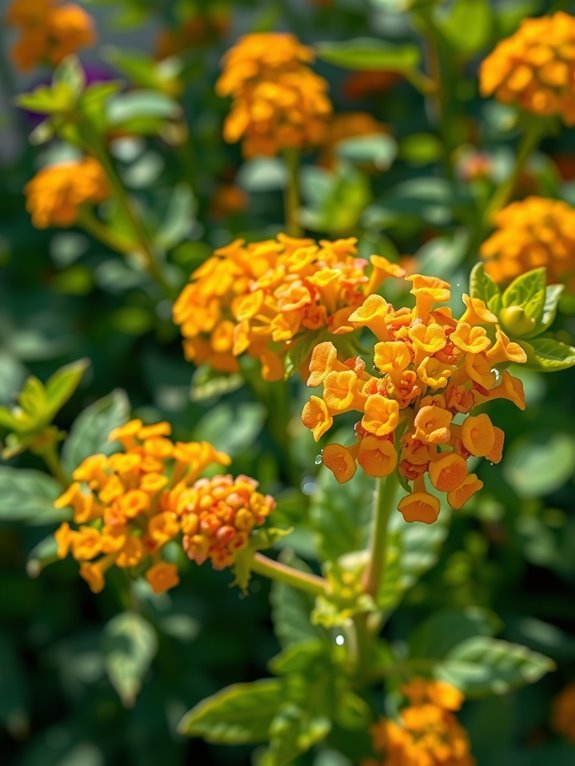
Pruning is one of the most practical ways to get lantana producing more flowers and keeping a neat appearance. When you prune strategically, you remove dead branches, spark new growth, and encourage the plant to produce denser blooms throughout the growing season.
When to Prune
In early spring, remove any dead wood and cut back about one-third of the plant’s growth. This sparks vigorous new shoots to develop. During summer, do light shearing and deadheading to encourage the plant to bloom again in new cycles. As late season approaches, hold back on heavy pruning since new tender growth can get damaged by frost.
How to Make Your Cuts
Use clean, sharp pruning shears or a pruning saw. Make each cut just above a bud or where a side branch connects to the main stem. This positioning helps the plant branch out more densely. When you deadhead spent flowers in summer, you stop the plant from making seeds. This pushes the plant to put its energy into making more flowers instead.
Caring for Trailing Varieties
Trailing lantana types need selective pruning to keep their shape and prevent them from becoming leggy and sparse. After hot, windy weather, these varieties especially benefit from light pruning to fill back in.
Lantana Pests and Diseases: Prevention and Treatment
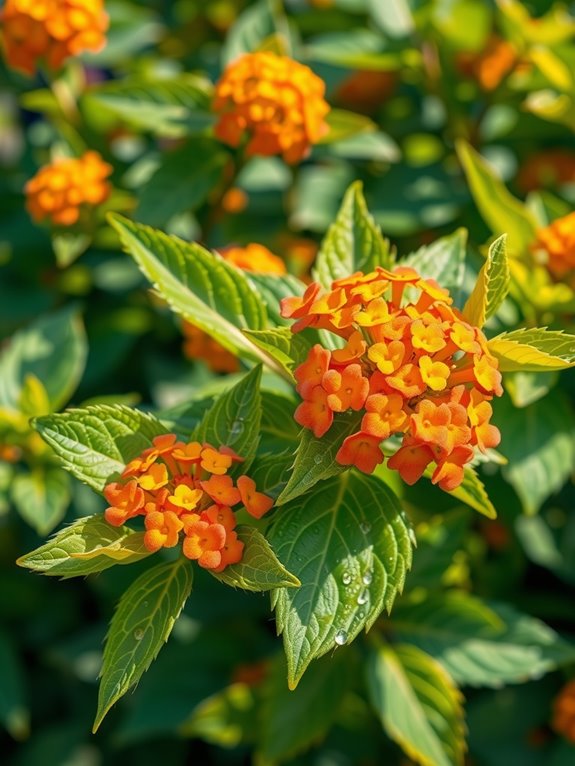
Watch for common pests like aphids, spider mites, mealybugs, lace bugs, and whiteflies. These insects feed on your lantana and cause yellowing leaves or stunted growth. Check your plants regularly so you can spot infestations before they spread.
Powdery mildew is a fungal disease that appears as a white coating on leaves and stems. It thrives in humid conditions, so improve air circulation around your plants and avoid watering the foliage. Root rot develops when soil stays too wet and can kill your plant quickly if left untreated.
For pest control, use insecticidal soap or horticultural oil. For fungal problems, apply fungicides made specifically for lantana. Choose only lantana-safe products to protect pollinators and beneficial insects that help your garden. Follow the product label instructions for application rates and timing.
Common Pests Affecting Lantana
Why do lantana plants sometimes develop yellowing leaves and stunted growth despite your best care efforts? Often, lantana pests are to blame.
Common Pests to Watch For
The main culprits are aphids, lace bugs, mealybugs, whiteflies, and spider mites. All of these are sap-feeding insects that weaken your plants by puncturing leaves and stems to drink the plant fluids inside. Lace bugs typically hide on leaf undersides and prefer humid conditions. Mealybugs cluster together in leaf axils—the angles where leaves meet stems—and usually need stronger treatment methods than other pests.
How to Spot Problems Early
Check your lantana plants at least twice a week, paying special attention to the undersides of leaves where lace bugs hide. Look for clusters of cottony white material in leaf joints, which indicates mealybugs. If you notice yellowing leaves, stunted growth, or sticky residue on stems, pests are likely present. Catching infestations early makes them much easier to control.
Treatment Methods
Spray affected plants with insecticidal soap or neem oil. Follow the product label directions for mixing and application rates. Apply the spray in early morning or late evening when beneficial insects are less active. You may need to repeat applications every 7 to 10 days for two to three weeks to fully eliminate the infestation.
Natural Pest Management
Introduce beneficial insects like ladybugs, which feed on aphids and other small pests. You can purchase these from garden supply stores. Also improve air circulation around your plants by spacing them properly and pruning lower branches. Better airflow reduces the humidity that many pests prefer.
Managing Powdery Mildew****
Watch for a white, powdery coating on leaves, which is a fungal disease rather than a pest. Treat it with a fungicide labeled for powdery mildew, applying according to package directions.
Fungal Diseases and Prevention
While pests weaken lantana through direct feeding, fungal diseases attack the plant in different ways—targeting leaves, stems, and roots. You need to watch for common fungal problems and know how to handle them.
Powdery mildew shows up as a white coating on leaves and spreads quickly in humid conditions. Root rot develops when soil stays wet too long, causing the plant to wilt and decline. Catching these problems early through regular inspection makes treatment much easier before the disease spreads.
Your best defense is prevention. Improve drainage so water doesn’t pool around the roots. Space plants far enough apart to allow air to flow between them, which keeps leaves drier. Water at the soil level instead of from above, so moisture doesn’t sit on the foliage where fungal spores can take hold.
When fungal disease does appear, use a fungicide labeled for lantana and follow the product instructions exactly. Switch between different types of fungicides when you treat repeatedly—this prevents the fungus from building resistance to one product. Combined with better air movement and smarter watering habits, these steps keep your lantana healthy.
Treatment Methods and Safety
Once you spot pests or diseases on your lantana, act quickly to stop the problem from spreading. For spider mites and whiteflies, use insecticidal soap, neem oil, or horticultural oil. These products work well and are relatively safe when applied correctly.
To prevent powdery mildew and root rot, focus on the conditions that cause them. Space your plants so air flows freely between them. Use soil that drains well. Avoid watering from overhead, since water sitting on leaves creates the wet environment these diseases need.
Always read the label before using any treatment product. Follow the directions exactly as written. Apply treatments only when needed to prevent pests from developing resistance to the product.
Prune and deadhead your lantana regularly. These practices remove dead plant material where pests hide and allow better air circulation through the branches. Check your plants weekly for early signs of problems. Catching issues early keeps your lantana healthy.
Protect Lantana Through Winter (Overwintering Guide)
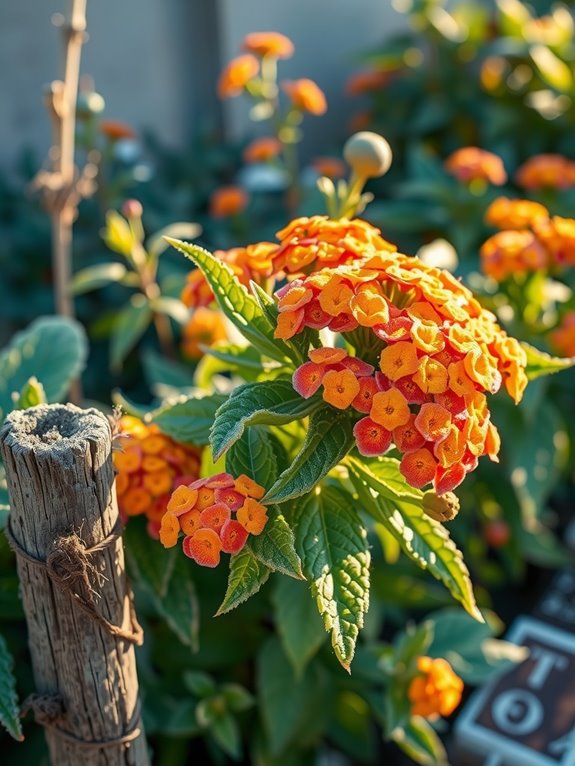
Your lantana’s winter survival depends on your climate zone. Where you live determines how you prepare your plant for the cold months.
Zones 9 and Above
In warmer climates, lantana can stay in the ground year-round. Apply light pruning to remove dead or damaged branches. The plant will remain semi-evergreen and continue growing slowly through winter.
Zones 7–8
These areas need more protection. Cut back the lantana heavily, removing most of the above-ground growth. Apply 4 to 6 inches of mulch around the base of the plant to insulate the crown and prevent it from freezing. This protects the root system so the plant can regrow in spring.
Colder Regions and Potted Plants
For zones 6 and colder, or for lantana grown in containers, move the plant indoors. Place it in a cool, bright location with temperatures between 50–60°F. A garage with a window, basement, or unheated room works well. Water sparingly—just enough to keep the soil from drying out completely.
Alternatively, dig up the plant and store it dormant. Shake off excess soil and place it in a box or pot filled with dry peat moss or sand. Store it in a cool, dark location at 40–50°F. Check on it monthly to make sure the storage medium stays dry. In spring, replant it outdoors once frost danger passes.
Zone-Specific Winter Protection
How much winter protection your lantana needs depends on your location. In USDA zones 7–8, treat lantana as a tender perennial and take steps to protect it through winter.
Start by cutting back any dead growth after the first frost arrives. Apply 3–4 inches of mulch around the base of the plant to insulate the roots. For container plants, move them indoors to a cool room kept between 50–60°F. When plants are inside, water less frequently to match their dormant state.
If you live in a coastal area or sheltered location within a colder zone, use windbreaks and thick mulch layers to help your lantana survive the season better.
Zone 9 and warmer areas require minimal effort. Your lantana will stay semi-evergreen with just light pruning. Give it basic maintenance rather than special winter care.
Indoor Overwintering Techniques
Bringing your lantana indoors is one of the best ways to protect it through winter in colder zones. Start by pruning back your plant to 6–12 inches, then move it to a bright, cool room or basement where it’ll enter dormancy.
Light
Use south-facing windows or grow lights to support root health during the dormant period. Position grow lights 6–12 inches above the plant and run them for 12–14 hours daily if natural light is limited.
Watering
Reduce watering frequency substantially. Check the soil before watering—it should feel slightly dry to the touch. Water only when the top inch of soil is dry. Never let the soil become soggy, as this leads to root rot.
Feeding
Stop feeding your plant entirely or feed it sparingly once in winter. Growth slows dramatically during dormancy, so your lantana needs far less nutrition than it does during the growing season.
Monitoring and Pest Control
Check your plant weekly for signs of trouble. Wipe the leaves with a soft, damp cloth every two weeks to remove dust and catch pest problems early. Spider mites and mealybugs thrive indoors, so look for webbing, sticky residue, or small insects on stems and leaf undersides. Avoid placing the plant near heating vents, doors, or windows where cold drafts and temperature swings can stress it. Keep the room temperature between 50–60°F if possible.
When spring arrives and outdoor temperatures stay above 50°F consistently, gradually reintroduce your lantana to outdoor conditions over 7–10 days before planting it back in the garden.
Spring Revival And Regrowth
Once your lantana’s dormant period ends and outdoor temperatures consistently stay above 50°F, it’s time to wake up your plant and prepare it for the growing season ahead.
Spring Revival Steps:
Start by removing winter mulch protection gradually as temperatures warm. This prevents sudden temperature swings that can shock the plant. Pull back the mulch over a week or two rather than all at once.
Next, prune back any dead or damaged stems. Use sharp pruning shears to cut these stems back to healthy green tissue. This encourages the plant to put energy into new growth instead of trying to revive damaged parts.
Check your lantana’s root health by gently inspecting the soil. If roots look strong and white, your plant is ready to move forward. If the roots appear dark or mushy, the soil has stayed too wet and you’ll need to repot the plant into fresh, well-draining soil.
Position your lantana where it will receive at least 6 to 8 hours of direct sunlight daily. This is important for healthy regrowth throughout the season.
Water moderately during the transition from dormancy to active growth. The soil should be moist but not soggy. As temperatures rise and new leaves appear, you can gradually increase watering frequency. If you planted your lantana outdoors, wait until frost danger passes in your area before moving it outside.
Best Companion Plants for Lantana Gardens
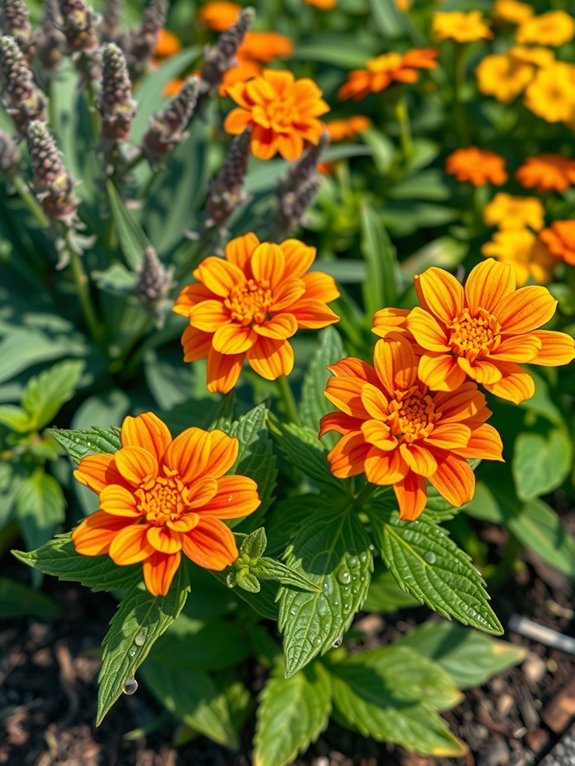
Choose plants that share lantana’s preferences for full sun and well-draining soil. Salvia, zinnias, lavender, petunias, and pentas work well as companions because they have the same basic needs. When plants want the same conditions, they grow better together and look coordinated in your garden.
Plants with matching growing requirements create better-coordinated gardens and healthier growth when grown together.
Add height to your lantana beds with taller plants like canna or cuphea. These plants create vertical contrast against lantana’s dark-green foliage and make your garden structure more interesting.
If you’re using containers, pair upright lantana with cascading lantana montevidensis to create layers and fullness. All companion plants should tolerate full sun and need soil that drains quickly.
Plant nectar-rich companions to attract bumblebees, butterflies, and hummingbirds. These pollinators visit your garden regularly when you include their food sources. Each plant you add should serve a purpose, whether that’s visual interest, height, or pollinator support.