
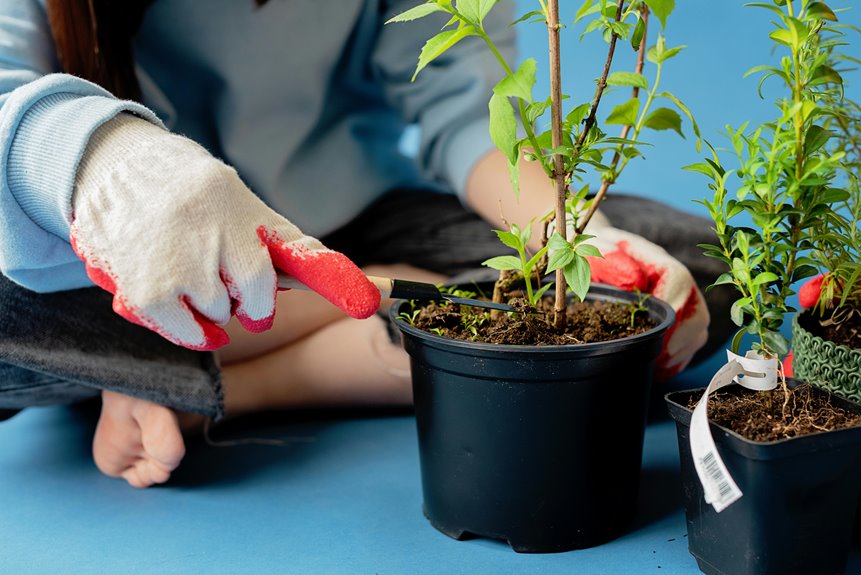
Place your calla lily in bright, indirect light. This prevents the leaves from getting scorched by direct sun exposure.
Water your plant weekly, but only when the top two inches of soil feel dry to the touch. Make sure water drains completely from the pot so the roots don’t sit in moisture.
Increase humidity around your plant by setting the pot on a pebble tray filled with water. Keep the air temperature between 60–80°F for best growth.
Feed your calla lily once a month during spring and summer using half-strength fertilizer. Stop fertilizing when fall arrives.
Pinch off spent blooms as they fade. This signals the plant to keep producing new flowers instead of putting energy into seed production.
As temperatures drop in fall, gradually reduce how often you water. Around 55°F, your calla lily will enter dormancy, which is its natural winter rest period. Water less frequently during this time but don’t let the soil dry out completely.
Every few years in spring, divide the rhizomes and repot them into fresh soil. This keeps the plant healthy and prevents it from becoming overcrowded in its container.
Find the Right Light: Bright and Indirect
Light affects how well your calla lilies grow, how their leaves look, and whether they’ll bloom. You need to understand this connection to keep your plants healthy.
For indoor calla lilies, position them near a window with bright, indirect light. This means the light reaches them without hitting them directly. You can achieve this by placing them where natural light filters through sheer curtains or bounces off other surfaces before reaching the plant. Direct sun exposure causes leaf scorching and browning, which signals you’re providing too much light or heat.
Check your plant’s leaves regularly. Brown spots tell you to move the plant farther from the window or add a sheer curtain between the plant and the light source.
Outdoor calla lilies handle full sun better than indoor varieties, but they still perform better with afternoon shade during the hottest part of the day. This prevents heat stress and keeps the plant from becoming stressed during summer months. The goal is finding a balance—enough light for growth and blooms without the damage that comes from intense, prolonged sun exposure.
Water Weekly, Checking Soil as You Go
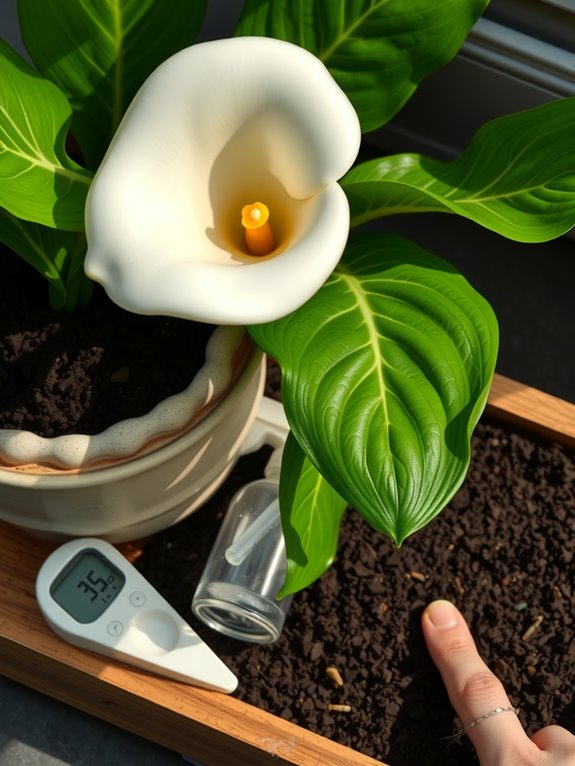
Because watering is one of the easiest ways to kill a calla lily, you need to get this right. Before you water, check the top two inches of soil. If it feels dry, your plant needs water. You’re aiming for moist, well-drained soil that prevents root rot.
Water your calla lily about once weekly during the growing season. Use a watering can to apply water carefully and measure the amount you use. Let excess water drain completely from the pot or bed. Never let your plant sit in standing water.
During late fall dormancy, reduce watering and let the soil dry out more between waterings.
To maintain humidity without creating wet conditions, place a pebble tray with water beneath your container pot. Fill the tray with pebbles and add water so it sits just below the top layer. Set your pot on the pebbles, not directly in the water. This keeps moisture in the air around your plant while preventing soggy soil that invites disease.
Keep Humidity High and Temperatures Warm
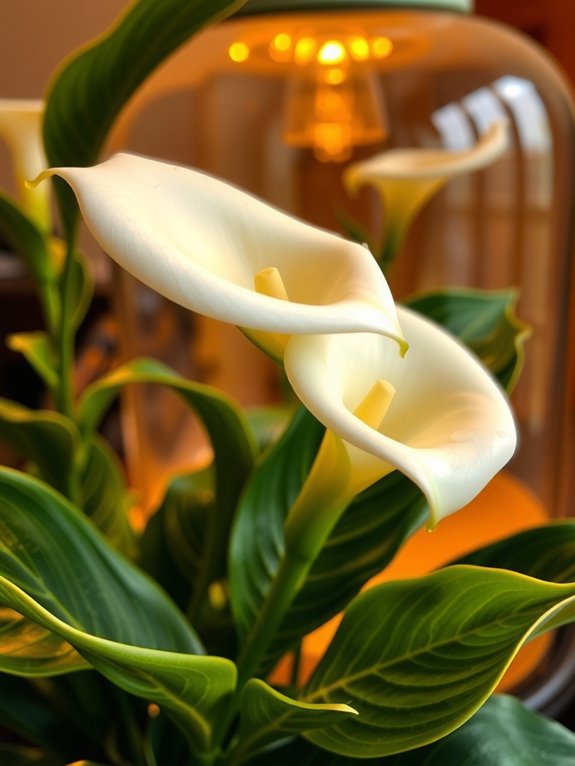
Since calla lilies grow naturally in wetland environments, they need higher humidity and consistent warmth to do well. Keep daytime temperatures between 60–80°F. This range supports steady growth without putting stress on your plant.
To increase humidity, try these methods. Set a water-filled tray with pebbles underneath your container. The water evaporates and raises moisture around the plant without soaking your soil. You can also run a room humidifier nearby to maintain ambient moisture in the air.
Misting the leaves helps too, but spray only the foliage—not the soil. Wet potting mix leads to root rot. Position your calla lily away from dry heat sources like heating vents and radiators. Keep it away from direct sun as well, since intense light overheats the plant and causes water loss through the leaves.
Feed Monthly During Growing Season
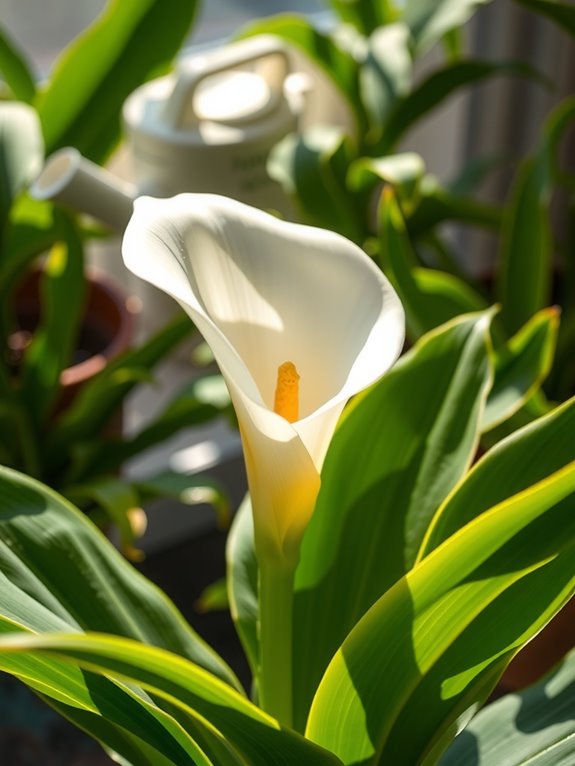
How does your calla lily get the nutrients it needs to bloom well? Monthly feeding during spring and summer keeps your plant healthy. Here’s what you need to know:
- Start with half-strength all-purpose fertilizer unless the label says otherwise
- Feed only during active growth periods in spring and summer
- Stop fertilizing in fall and winter when the plant goes dormant
- Watch for over-fertilizing, which reduces flowers by adding too much nitrogen
Use well-draining soil or regular potting mix as your foundation. For container-grown plants, follow the fertilizer schedule carefully to prevent salt buildup in the soil. This steady approach gives your calla lily the nutrition it needs without causing damage. Your plant will produce the blooms you’re looking for.
Deadhead Spent Blooms to Extend Flowering
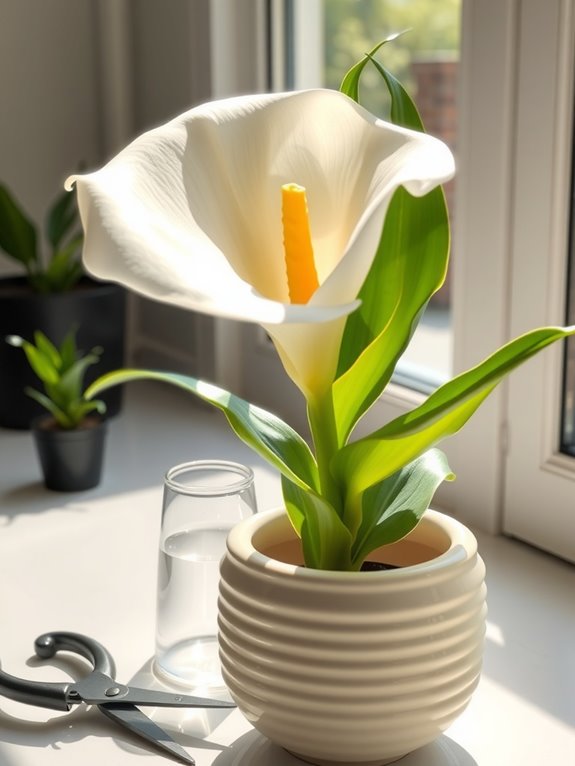
Remove spent flower stalks once their blooms fade. This signals your calla lily to produce new flowers instead of seeds. Use clean, sharp scissors to cut just above the first healthy leaf or node. This simple step makes a real difference in how long your plant keeps flowering.
Gently remove any withered spathes at the base of the plant. These dried parts can trap moisture and cause rot if left in place. Regular deadheading throughout the blooming season keeps your plant looking neat and extends your flower display considerably.
Identifying Spent Flower Stalks
When calla lily blooms start to fade and wilt, it’s time to deadhead them. Doing this correctly helps your plant put energy into new growth instead of seed production.
You need to know what a spent bloom looks like. Check for these signs:
- Petals losing color and becoming papery or translucent
- Flowers drooping downward instead of standing upright
- Blooms feeling soft or brittle to the touch
- The spadix (the center spike) turning brown or dark
Once you see these signs, use clean, sharp pruners to cut the entire flower stalk back to just above where the leaves start. This simple step directs your plant’s resources toward producing new flowers rather than developing seeds. The result is more blooms over the growing season.
Proper Removal Techniques
Once you’ve identified spent blooms, remove them properly. Use clean, sharp scissors or pruners—dull tools tear leaves and stems. Cut the flowering stalk just above the first set of healthy leaves. This technique directs your plant’s energy toward new blooms instead of maintaining faded flowers.
Remove faded flowers promptly. Spent blooms attract pests and disease, so address them right away. After deadheading, look over the plant for yellowing leaves and trim those back as well. Removing damaged foliage helps your plant focus resources on healthy growth.
Keep deadheading regularly throughout the blooming season. This practice keeps your calla lily looking fresh and extends flowering for weeks or even months. You’ll spend minimal time and see real results in how long your flowers last.
Extending Bloom Season Duration
Remove Spent Blooms Regularly
Deadheading spent spathes redirects your plant’s energy from seed production to creating new flowers. Pinch back fading spathes consistently throughout the growing season. This simple technique can add weeks or even months to your calla lily’s bloom period.
Support Continuous Flowering
Keep temperatures between 60–80°F for optimal performance. Maintain well-drained soil with steady moisture—water when the top inch of soil feels dry to the touch. Provide bright, indirect light, such as a few feet away from an east or west-facing window.
Maintain Plant Health
Remove discolored or damaged leaves at the same time you deadhead. This keeps the plant looking fresh and helps prevent disease. Apply a balanced fertilizer every two to three weeks during the active growing season to support consistent flower production.
Timing and Consistency
Check your plants every few days and remove spathes as soon as they begin to fade or show browning at the edges. The more regularly you deadhead, the more actively the plant will produce new blooms. Once you establish this routine, your calla lilies will reward you with months of consistent flowering.
Reduce Water and Prepare for Winter Dormancy
As fall approaches, gradually reduce how often you water your calla lily. Let the soil dry out more between waterings. This signals the plant that it’s time to rest.
Once the foliage starts to yellow and fade, cut it back. For potted plants, move them to a cool, dry indoor space. If you have calla lilies planted in the ground and live somewhere with cold winters, dig them up and store the rhizomes in a location that stays around 55°F.
During the dormancy period, water only minimally. Too much water causes rot and wastes the plant’s stored energy. The rhizome needs to conserve its resources so it can produce vigorous growth when spring arrives.
Gradual Watering Reduction
Why does your calla lily need less water when fall arrives? As days shorten and temperatures drop, your plant naturally prepares for dormancy. Reducing water gradually signals this seasonal shift, helping your calla lily conserve energy and rest.
To adjust your watering routine, start by checking soil moisture weekly. Feel the top 1–2 inches of soil with your finger. If it feels dry, water lightly. If it still feels moist, skip watering that week.
Cut your watering frequency in half as autumn progresses. The goal is to keep the soil barely moist, not wet. Watch how your plant responds. Some calla lilies need less frequent watering sooner than others, depending on your home’s temperature and humidity.
In late autumn, stop watering potted plants completely. This prevents root rot when the plant enters dormancy. If you’re growing calla lilies in the ground, reduce watering significantly but don’t stop entirely unless your region experiences freezing temperatures.
This gradual reduction prevents disease and prepares your plant for spring growth. The care you give now directly affects how well your calla lily performs next season.
Foliage Cutback Timing
Once you’ve gradually reduced watering through fall, your calla lily’s foliage will start to yellow and fade. This is the signal you’re waiting for—it means your plant is moving into dormancy. Let this happen naturally without cutting back early or trying to stop it.
When the foliage has completely yellowed, cut everything down to ground level using clean, sharp pruning shears or a knife. This removes dead material that can trap moisture and encourage disease. A clean cutback also helps your plant enter its resting phase in better condition.
After you’ve cut back the foliage, your calla lily officially enters dormancy. You can now prepare the rhizomes or bulbs for storage.
Cool Storage Environment
Now that your calla lily’s foliage has been cut back, it’s time to dig up the rhizomes and move them into storage for winter. Creating the right storage environment supports successful dormancy care and healthy blooms next season.
Follow these steps:
- Maintain a consistent 55°F temperature to prevent premature sprouting and keep your plants dormant
- Use a well-ventilated container or bag to stop moisture buildup that causes rot
- Check your stored rhizomes every few weeks for mold or shriveling
- Remove any damaged pieces immediately to protect healthy rhizomes
Keep temperatures below 60°F indoors, since warmth triggers early growth. Store your rhizomes in a dry location away from direct light. This controlled environment preserves your calla lilies through winter and prepares them to grow when you replant them in spring.
Divide and Repot Rhizomes Every Few Years
Every few years, divide and repot your calla lily rhizomes to keep them from crowding together and to get bigger, healthier blooms. The best time to do this is in spring when your plant is waking up or during its dormant period.
Start by carefully lifting the rhizomes out of the soil. Separate them by hand, making sure each piece has healthy growth points—these are the bumpy spots where new shoots will emerge.
When you’re ready to plant, position each division with the smooth side facing down and the nubby growth points facing up. Place them in well-draining soil at a depth of 3 to 4 inches. Space them 9 to 12 inches apart if planting in a garden bed, or 6 to 8 inches apart in containers.
Water the divisions thoroughly right after planting. Add slow-release fertilizer to help them establish themselves in their new spots. Good spacing between plants lets air move around them freely, which keeps your calla lilies healthy and reduces the chance of disease taking hold.