Start by picking a poinsettia that has no visible pests and shows bright, colorful bracts with green, healthy leaves. Look the plant over carefully before you buy or accept it.
Place your poinsettia where it gets bright, indirect light for 6 to 8 hours each day. Keep the room temperature between 65 and 70 degrees Fahrenheit during daytime hours and around 50 degrees at night. Steady temperatures matter more than occasional fluctuations.
Water the plant only when the top inch of soil feels dry to your touch. After watering, empty any water that collects in the saucer underneath the pot. Standing water leads to root rot, which kills the plant quickly.
Once you see new growth starting, feed the plant with a balanced, water-soluble fertilizer mixed at half the recommended strength. Apply this fertilizer every two to three weeks while the plant is actively growing. Skip fertilizing during winter months when growth slows down.
In October, give your poinsettia 14 hours of uninterrupted darkness each night for 6 to 8 weeks straight. This darkness period triggers the plant to produce its signature red coloring. You can achieve this by moving the plant to a dark closet or covering it with a box each evening, then returning it to light during the day. Without this darkness period, the bracts will stay green instead of turning red.
Start With a Healthy Poinsettia (No Pest Damage)
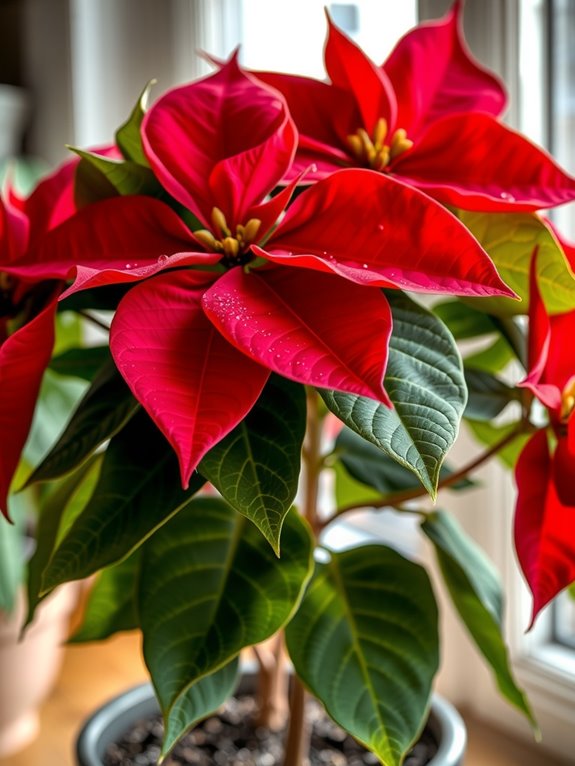
How do you know if you’re bringing home a poinsettia that’ll do well or one that’s already in trouble. Start by choosing a pest-free, healthy poinsettia with bright bracts and dark green foliage along the stems. Look for a sturdy stem and a full, balanced shape.
Before you purchase, inspect the plant carefully. Flip leaves over and check underneath for pests, eggs, or insect evidence. Avoid any plant showing wilting leaves, brown bracts, or yellowing foliage. These signs point to disease or pest damage that will harm your plant’s health.
When you’re at the store, select plants displayed away from cold drafts or automatic doors. Plants positioned in these locations haven’t faced stress before arriving home, which gives you the strongest foundation for success.
Provide Optimal Light and Stable Temperatures
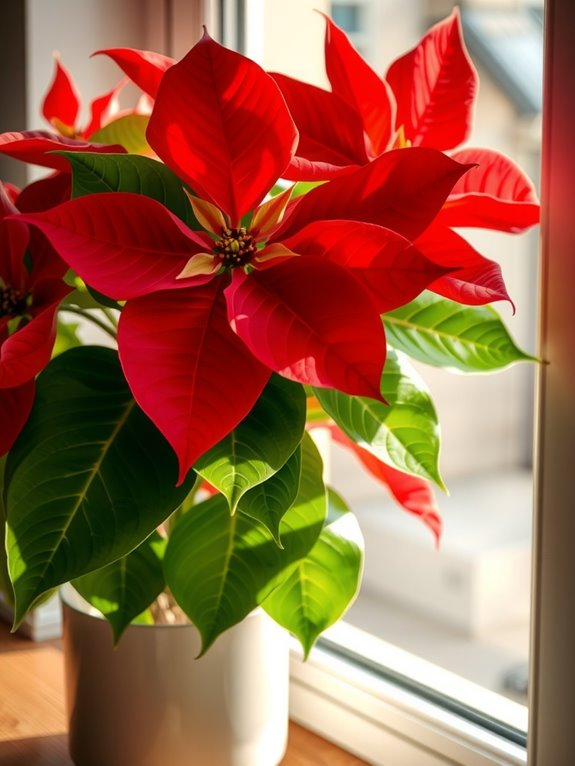
Since poinsettias are tropical plants, they need specific conditions to stay healthy. Place yours in bright indirect light near a sunny window, but keep it away from direct sun exposure. Direct sunlight will fade the colorful bracts.
Maintain daytime temperatures between 65–70°F. At night, drop the temperature to around 50°F. This temperature difference helps develop the plant’s color. Give your poinsettia 6–8 hours of light daily, and make sure it gets consistent dark periods at night.
Keep your plant in a stable location. Move it away from heaters, air vents, and doors where drafts create temperature swings. Temperature fluctuations cause leaf drop and color loss. A consistent environment is what your poinsettia needs to maintain its appearance throughout the season.
Water Wisely: Avoid Overwatering
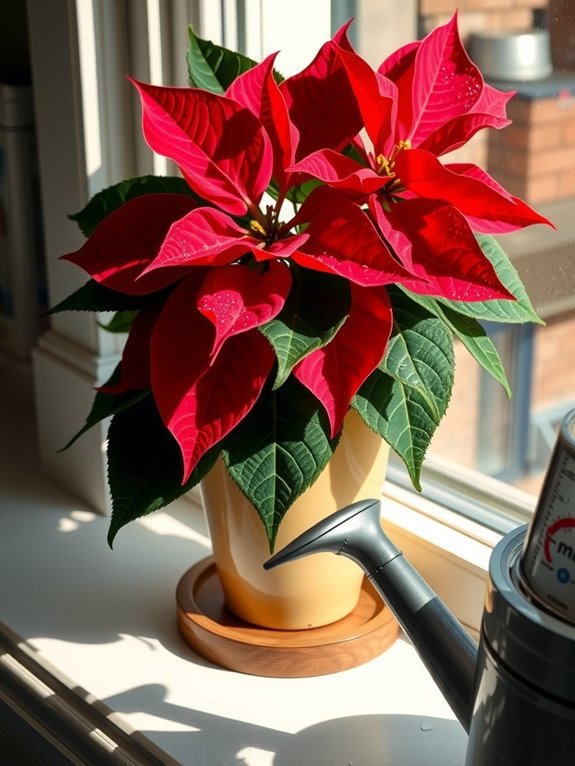
Why do so many poinsettia owners struggle with watering? The truth is straightforward: most people water too much. Here’s what you need to know.
Use the fingertip test to check soil moisture before watering. Push your finger about one inch into the soil. Water only when it feels dry at that depth. If the soil still feels moist, wait another day or two before checking again.
Your pot setup matters just as much as your watering technique. Remove any decorative foil wrapped around the pot because it blocks water drainage. If your pot lacks drainage holes, poke 3-4 holes in the bottom using a drill or nail. Standing water causes root rot, so empty the saucer immediately after watering rather than leaving it to sit.
| Watering Step | What to Do | Why It Matters |
|---|---|---|
| Check soil | Use fingertip test | Prevents overwatering |
| Water plant | When top inch is dry | Stops root rot |
| Drain excess | Empty the saucer | Prevents water pooling |
| Monitor moisture | Adjust based on conditions | Keeps roots healthy |
| Adjust seasonally | Reduce during dormancy | Supports plant recovery |
During winter dormancy, reduce watering frequency. Your poinsettia needs less water when temperatures drop and light decreases. Check soil moisture every few days, and water only when the top inch feels dry. This adjustment supports the plant through its natural rest period and prepares it for new growth.
Mastering moisture control keeps your poinsettia alive and healthy.
Fertilize Your Poinsettia After Growth Begins
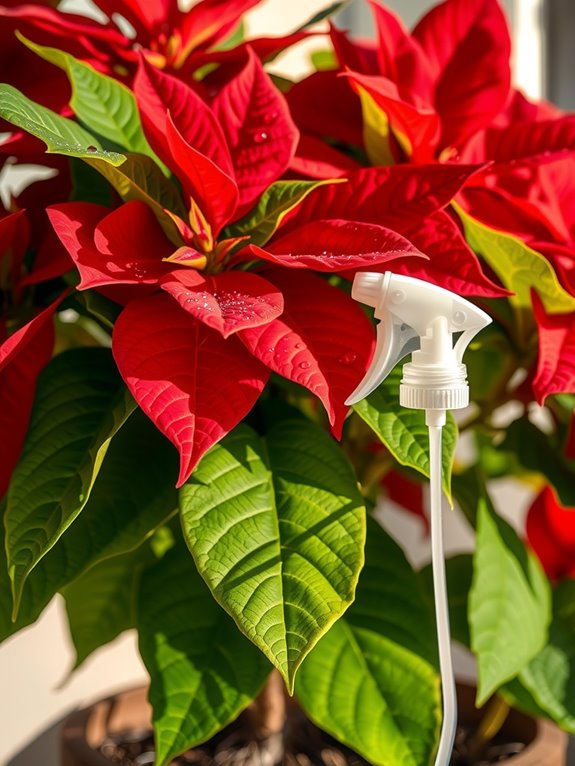
When your poinsettia starts pushing out new leaves in late winter or early spring, begin feeding it. Use a balanced, water-soluble fertilizer every 2–4 weeks during this active growth period.
Apply the fertilizer at half strength. This means mixing it to 50 percent of the package’s recommended concentration. Half-strength feeding prevents root burn while still delivering the nutrients your plant needs. Don’t feed your poinsettia during the holiday bloom phase—the plant doesn’t need fertilizer when it’s focused on producing flowers.
Continue regular feeding through spring and summer as new growth appears. Once fall arrives and your poinsettia begins its color-restoration cycle, stop fertilizing entirely. The plant naturally shifts its energy toward developing those red bracts (the colorful parts people mistake for flowers), and feeding during this time works against that process.
Think of half-strength feeding as matching your plant’s actual needs rather than overloading it. Consistent, gentle feeding supports the natural rhythm your poinsettia follows throughout the year.
Plan Your Poinsettia’s Seasonal Cycle: Rest, Growth, and Reblooming
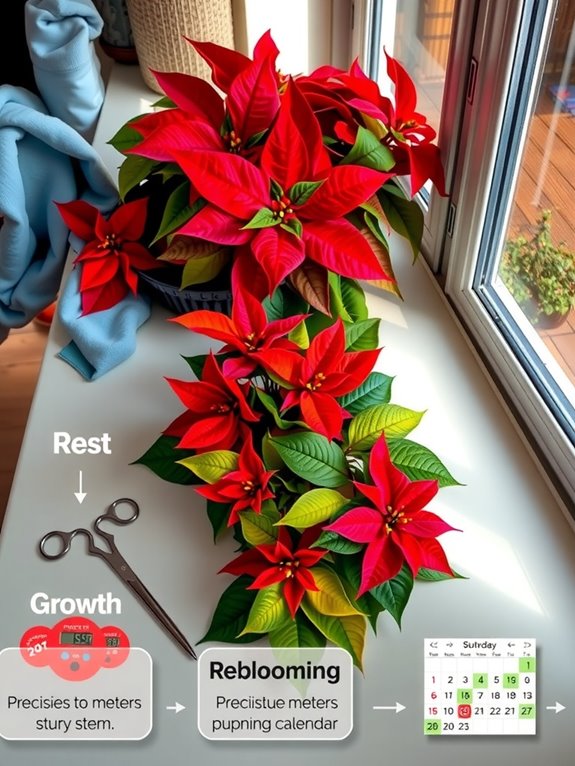
Your poinsettia needs different care depending on the time of year. Understanding these phases helps you keep the plant healthy through each season.
During the growth phase, give your poinsettia 6–8 hours of bright light daily and keep temperatures between 65–70°F. Water the soil so it stays moist but drains well. This is the foundation that supports the rest of the cycle.
Come October, shift your approach completely. The plant needs 14 hours of uninterrupted darkness for 6–8 weeks to develop its red, pink, or white color. Use timers or a dark box to block all light reliably. This darkness period is not optional if you want the plant to rebloom.
After the color appears, expect the leaves to drop. This is normal. Prune the stems back to 4–6 inches and reduce watering. Let the soil dry out more than during growth phase. This rest period gives the plant the break it needs before starting again.
When you see new growth beginning, return to warmer temperatures and resume regular watering. Spring and early summer are the time to repot and apply light fertilizer. Continue this care through the rest of summer.
Once October arrives again, restart the 14-hour darkness cycle to push the plant toward color development again. Repeating this annual pattern keeps your poinsettia cycling through its natural seasons year after year.