
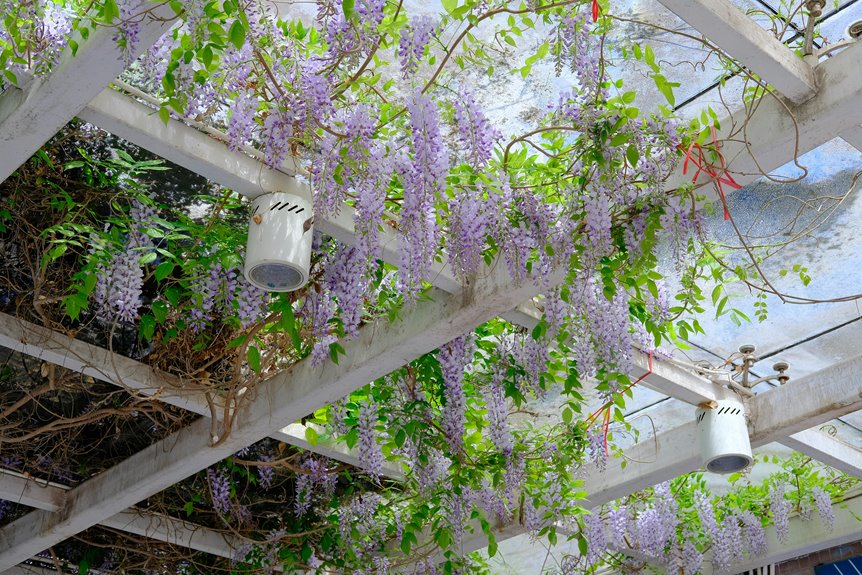
To grow wisteria successfully, start by selecting a grafted cultivar such as floribunda or sinensis. These varieties perform better than seed-grown plants. Plant in fall or spring when the plant is dormant or just beginning to grow.
Position your wisteria where it receives at least six hours of direct sun daily. Space plants 10 to 15 feet apart since they spread considerably. Install sturdy support structures like pergolas, arbors, or strong fences before planting. Wisteria vines become heavy and need reliable frameworks.
Use well-draining soil for planting. Water regularly during dry spells, especially in the first year while the plant establishes itself. Once established, wisteria tolerates some drought, but consistent moisture during growing season produces better blooms.
Avoid over-fertilizing. Rich soil actually suppresses flower production. If your soil is already fertile, skip fertilizer entirely. If soil is poor, add a light amount of balanced fertilizer in early spring only.
Prune in early summer right after the flowers fade. This timing removes spent blooms and prevents the plant from producing seed pods. Remove tangled or wayward growth to keep the vine manageable. Winter dormancy is a good time for heavier structural pruning if needed.
These basic steps address the problems that commonly frustrate gardeners: poor blooming, uncontrolled growth, and plant stress. Wisteria isn’t difficult if you provide sunlight, proper soil drainage, and regular pruning. The combination of these three elements keeps the plant healthy and flowering year after year.
Choose the Right Wisteria Species for Your Space
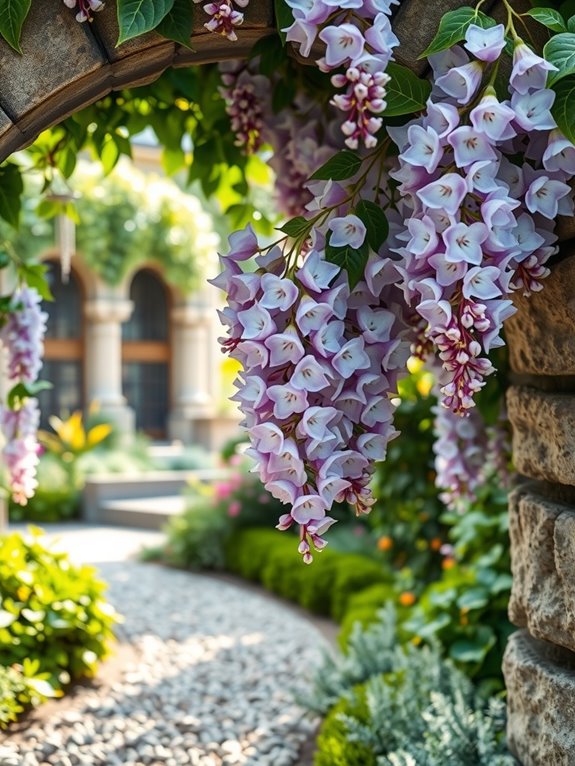
How do you know which wisteria will work in your garden? Start by looking at your space and what you want to grow. If you have a pergola or arch, Wisteria floribunda is the right pick. Its flower clusters stretch up to 1.2 meters long and create long cascades of lilac-blue flowers. For walls, Wisteria sinensis works well because it blooms before its leaves appear, showing dense violet-blue clusters. If you need something smaller, Wisteria brachybotrys fits tight spaces with delicate, fuzzy leaflets and short 10-15 centimeter flower clusters.
Pick named cultivars that were grown from cuttings, not from seeds. This matters because seed-grown wisteria often blooms unpredictably or takes years to flower. Named cultivars like Amethyst AGM give you reliable blooms and consistent results year after year.
When and Where to Plant Wisteria
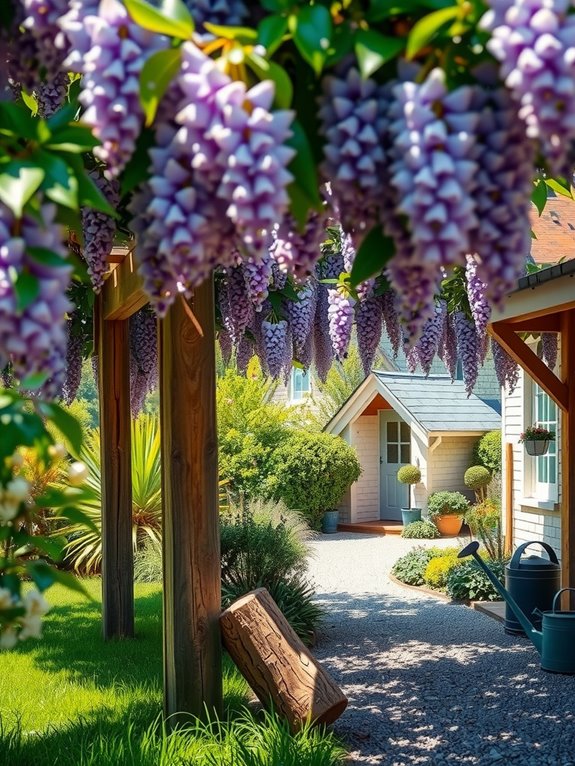
Plant wisteria between autumn and spring for best results. If you’re using container-grown plants, you can plant them any time of year since they’re already established. Choose a location that receives at least six hours of direct sunlight daily. South- and west-facing walls work best because they provide the warmth wisteria needs to flower reliably.
Set up your support structure before planting. Wisteria vines need something sturdy to climb on—a house wall, pergola, or trellis with a rough surface works well. The rough texture gives the vines something to grip. Space your plants 10 to 15 feet apart. Wisteria grows vigorously, and this spacing prevents overcrowding as the vines mature.
Optimal Planting Times
Optimal Planting Times
Plant wisteria during its dormant season from October through April. This timing allows the root system to establish itself before the plant enters active growth. If you’re using pot-grown wisteria, you have the option to plant it at any point during the year since it’s already established in a container.
Location and Soil Requirements
Find a spot that gets at least six hours of direct sunlight each day. Wisteria needs this light exposure to produce flowers reliably. The soil should drain well and contain organic matter mixed in. Poor drainage leads to root rot, which will kill your plant.
Spacing Your Plants
Space wisteria plants 10–15 feet apart from each other. Wisteria grows fast and spreads widely, so cramped spacing causes the vines to compete for water and nutrients. Proper spacing from the start prevents you from having to remove or relocate plants later.
Sunlight And Support Requirements
Where you plant your wisteria matters as much as when you plant it. The right location sets up your vine to grow well. You need to give your wisteria two main things: sunlight and sturdy support.
Plant your wisteria where it gets at least 6 hours of direct sun each day. A south- or west-facing wall or pergola works best for this. Wisteria grows vigorously—it can reach over 33 feet tall and wide—so you need a strong structure to hold it. Choose a trellis, pergola, wall, or system of wires that can handle this weight and growth.
Pick a support structure with a rough surface. Wisteria needs texture to grip as it climbs. You can train it against a wall, up a pergola, or even up a tree.
Space plants 10 to 15 feet apart to give each one room to spread without crowding its neighbors. This foundation matters because it determines how well your wisteria will bloom and how healthy it stays for years to come.
Create the Right Growing Conditions
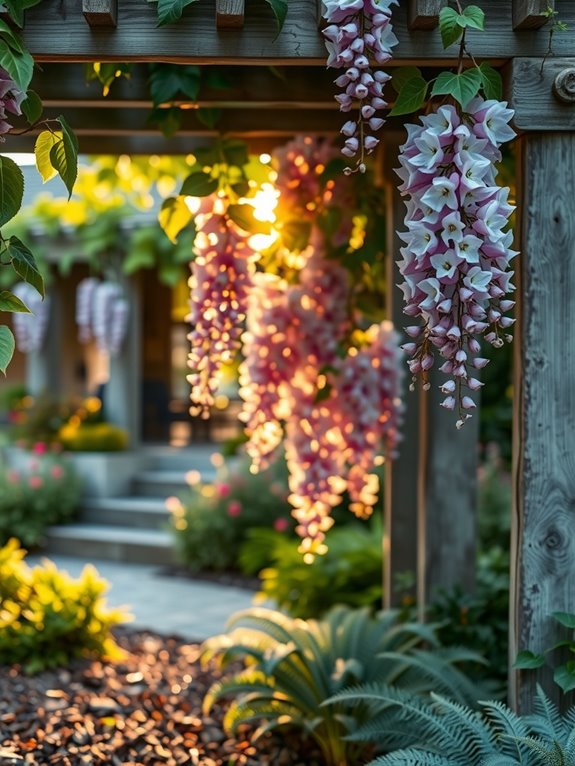
To get your wisteria growing well, you need to handle the basics properly: full sun, well-draining soil, and plenty of space. Put your plant where it gets at least six hours of direct sunlight each day. This matters for getting good flowers.
Wisteria thrives with full sun, well-draining soil, and ample space—at least six hours of direct sunlight daily ensures abundant blooms.
Your soil setup is just as important. Mix organic material into your soil to create a base that drains well and won’t hold water around the roots. Here’s the part that trips people up: don’t over-fertilize. Rich soil actually stops blooms from forming, so hold back on feeding.
Pick your planting time with purpose. Plant between autumn and spring for best establishment. Container plants can go in anytime during the year. Space plants ten to fifteen feet apart because they spread fast and need room.
Set up sturdy support like an arbor, pergola, or trellis. Prune the plant regularly and evenly to encourage flowers instead of just leaves.
Wisteria Watering and Fertilizer Schedule
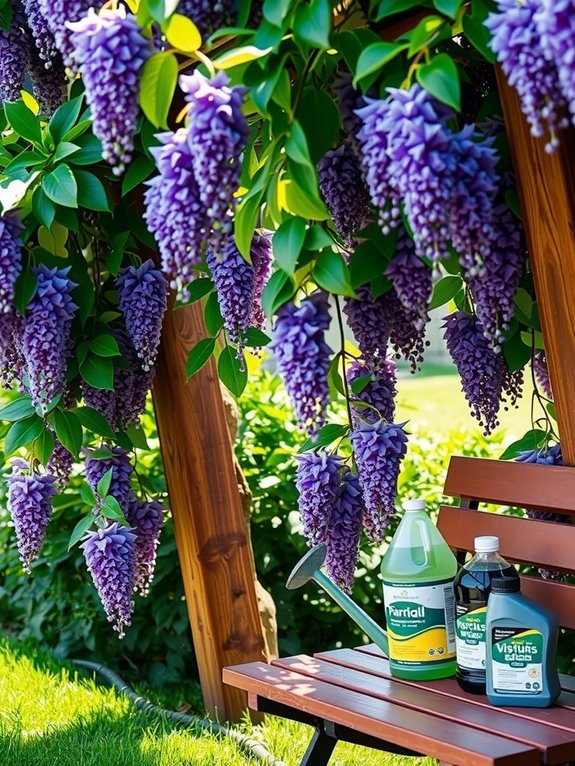
Water your wisteria regularly, especially during dry spells or when planted in sandy soil. This plant needs consistent moisture to perform well.
The watering schedule depends on where you grow it. Potted wisteria needs water once a week during the growing season. Ground-planted wisteria requires less frequent watering—check the soil and water when the top inch feels dry.
Feed your wisteria with a high-potash fertilizer during the growing season. Apply fertilizer monthly for ground plants and weekly for container plants. However, avoid over-fertilizing if your soil is already rich. Too many nutrients actually prevent flowering rather than encourage it. The goal is keeping your plant fed while still getting good blooms, so hold back on the fertilizer if you notice your wisteria produces lots of leaves but few flowers.
Watering Requirements And Timing
How much water does your wisteria really need? It depends on where you’re growing it and what your local climate is like.
In-ground plants need regular watering, especially during dry spells or when your soil is sandy. This consistent moisture helps your wisteria grow vigorously and produce flowers.
Potted wisterias require weekly watering. Containers dry out much faster than garden soil, so you’ll need to water more often. Check your potting soil regularly to see if the top inch feels dry before watering.
Mulching in autumn improves water retention. Spread 2 to 3 inches of well-rotted manure or compost around the base of your plant. This layer helps the soil hold moisture longer and breaks down over time to improve soil structure.
During the growing season, keep your soil moist but not waterlogged. Soggy soil can lead to root rot. In winter, water only enough to keep the soil from drying out completely. Your wisteria doesn’t need much water during its dormant period.
Fertilizer Application And Soil Management
Feed your wisteria monthly during the growing season with a high potash fertilizer. This supports blooming without encouraging excessive leaf growth. The key is restraint: overly rich soil actually reduces flowering. Use nutrient-light compost instead of heavy, dense soil mixes.
Build soil health with mulch in autumn. Spread 2 to 3 inches of well-rotted manure or finished compost around the base of your plant. This layer holds moisture and releases nutrients gradually as it breaks down.
For wisterias in containers, fertilize weekly rather than monthly since pots drain quickly and lose nutrients faster. Check the soil moisture before watering. Let the top inch dry slightly between waterings to prevent waterlogging, which stresses the plant and reduces flower production.
Why Your Wisteria Won’t Bloom (and How to Fix It)?
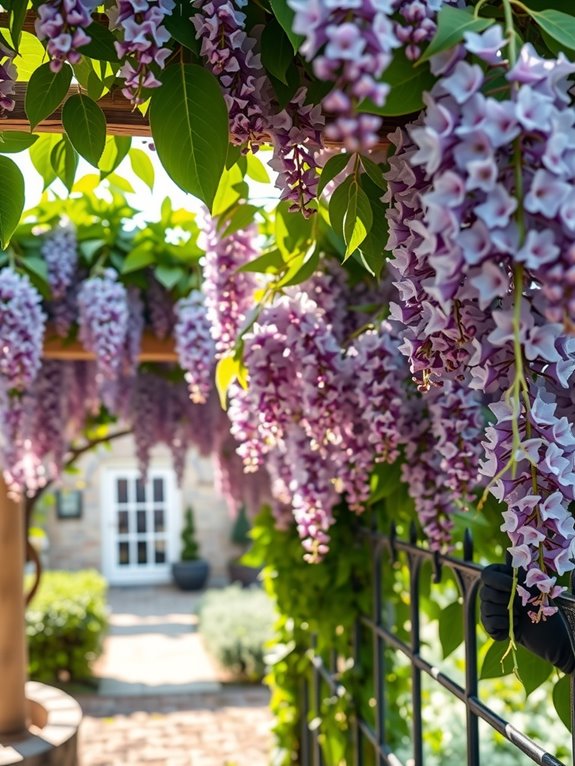
There’s nothing quite as frustrating as watching your wisteria grow vigorously—all leafy vines and vigor—while flowering refuses to show up year after year.
Sun exposure
Your wisteria needs a minimum of six hours of direct sunlight daily. Deep shade dramatically reduces flowering potential. If your plant sits in partial shade, consider relocating it to a sunnier spot or trimming back nearby trees and shrubs that block light.
Pruning mistakes
Incorrect timing or improper technique disrupts flower buds. Avoid pruning in late summer, which removes developing buds before they can open. Instead, prune in early summer after flowers fade, cutting back new growth to about six inches. This keeps the plant shaped while protecting next year’s blooms.
Plant age and source
Seed-raised plants take up to 20 years to bloom, while grafted specimens flower reliably within two to three years. If you’re starting from seed, expect a long wait. Buying an established grafted plant gives you blooms much sooner.
Soil and nutrients
Overly rich soil or excessive fertilizer actually suppresses blooming. Test your soil to check its nutrient levels. If nitrogen is high, stop feeding your plant. Instead, apply a balanced fertilizer like 10-10-10 once in spring and once in early summer. Too much food pushes leaf growth at the expense of flowers.
Support structure
Young wisteria needs proper training on sturdy supports to develop correctly. Use a strong trellis, arbor, or fence. Guide main stems horizontally along the support in the first year. This encourages flowering along the entire length rather than just at the top.
Prune Wisteria Twice for Peak Blooms
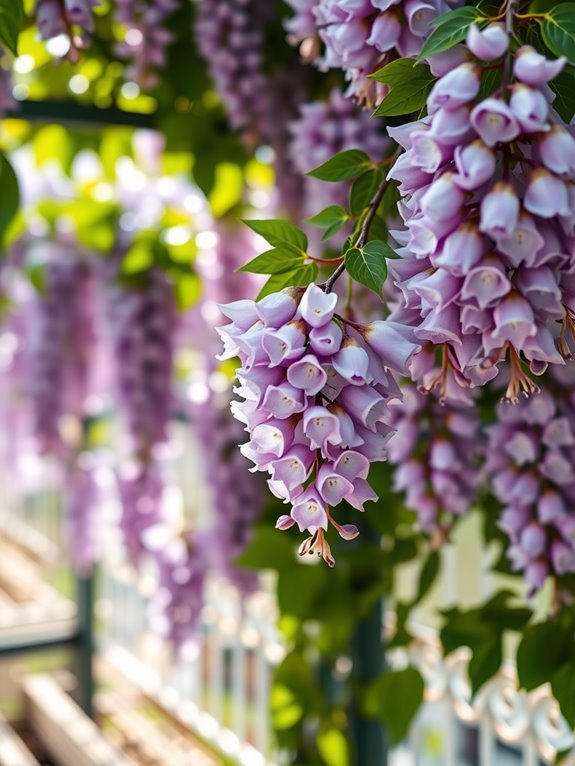
Getting the timing right on pruning matters just as much as the technique itself. You need to prune wisteria twice a year to get the most flowers possible.
Timing your wisteria pruning correctly is just as crucial as your technique for maximizing blooms.
Start with your summer prune in July or August. Cut the shoots back to about 30 centimeters. This step ripens the wood and gets it ready for the next growing season.
Then do your winter prune in late winter or early spring. Cut the shoots back to just 2 to 3 buds. This winter pruning directly stimulates the flower buds that will grow from last season’s wood.
Both pruning sessions are equally important. Skip either one, and you’ll notice fewer flowers the next year. By staying consistent with both cuts, you manage the plant’s growth while maximizing the blooms you get.
Train Wisteria as a Tree or Standard
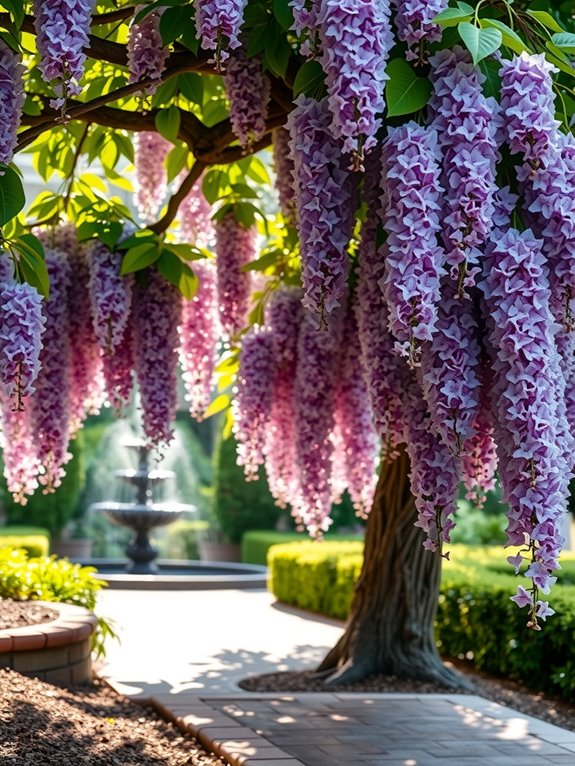
If you want a wisteria shaped like a tree or standard form, you need to plan ahead and train it from the beginning. This takes patience and regular work over time.
Start by selecting one strong central stem and remove all competing shoots around it. This gives you a clear main trunk to build from. As new growth appears, shorten the whips to about 1 foot regularly. This encourages the stems to thicken and helps you develop the framework branches you need.
Don’t wrap the whips around each other. When stems grow that way, they thicken too quickly and become hard to shape later. Instead, make selective cuts to keep the central trunk clear and strong.
Make hard, regular cuts during the first years of growth. These cuts establish your primary branches and determine where flowers will appear later. After the basic shape is set, keep pruning consistently to maintain the balanced tree form you’ve built. The ongoing pruning work is what keeps the structure looking right and supports flowering year after year.
Common Pests and Diseases: Identification and Control
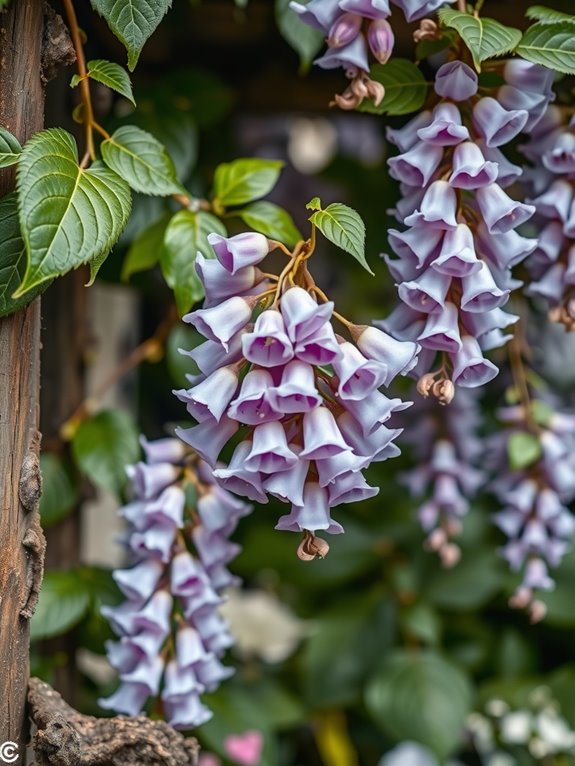
Several common pests and diseases can damage wisteria. Scale insects, aphids, and spider mites cause yellowing leaves and slow growth. Powdery mildew appears as a white or gray coating on leaf surfaces. Crown gall creates damage on stems, while phytophthora root rot develops in overly wet soil conditions. Honey fungus reduces flowering and plant vigor.
Inspect your plant regularly for these problems. Look at leaf undersides and stem joints where pests hide. Check for white powder, discolored spots, or unusual swelling on branches.
Prune your wisteria frequently to open up the plant. Better air circulation between branches reduces moisture that feeds fungal diseases. Remove any diseased or damaged sections you spot during inspections. Cut these parts back to healthy growth.
Water and feed your plant appropriately. Stressed plants attract pests more readily and succumb to disease more easily. Water at the base of the plant rather than from above, and let soil dry slightly between waterings. Apply balanced fertilizer according to package directions during the growing season. These basic care steps form your main defense against problems.
How to Prevent Wisteria From Taking Over
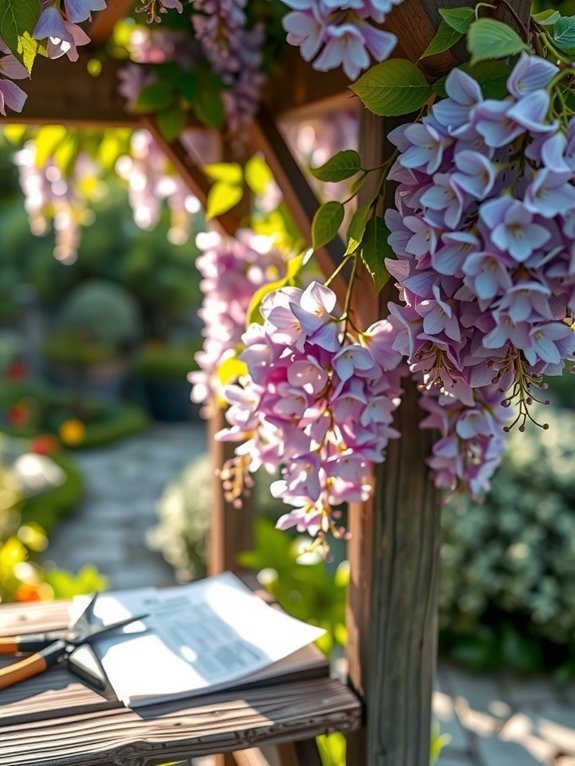
Wisteria grows fast and strong, which makes it both rewarding to grow and difficult to control. You’ll need to combine pruning, training, and physical barriers to keep it from spreading beyond where you want it.
Prune on a Schedule
Prune your wisteria twice a year—once in late winter and once in midsummer. This keeps the plant from getting out of hand and helps it produce more flowers. Remove any thick, tangled growth that forms whips. Thin out branches each year to maintain the plant’s shape and keep flowering strong.
Prune wisteria twice yearly—late winter and midsummer—to control growth and encourage abundant flowering.
Install Root Barriers
Wisteria spreads underground through its roots and sends up new shoots far from the main plant. To stop this, install corrugated plastic panels about 3 feet deep around the base. These barriers block the roots from traveling outward and popping up in unwanted spots.
Remove Suckers Regularly
Check the base of your wisteria every few weeks during the growing season. Remove any shoots that sprout from the roots or lower trunk. Pull these out as soon as you spot them to prevent them from becoming established.
Train the Plant Properly
Use sturdy supports and train your wisteria to grow on multiple main stems rather than allowing it to form a tangled mass. This structure makes it easier to prune and control in future years.
Choose the Right Type
Buy named cultivars instead of plants grown from seeds. Named varieties are more predictable in their growth and bloom faster, which means less time spent managing overgrowth. Seed-grown plants take longer to flower and tend to grow more aggressively.
Stick with these steps year after year, and you’ll have a wisteria that stays within bounds.