

Start by measuring your garden space and documenting how many hours of direct sunlight different areas receive throughout the day. Check your soil type by digging a small hole, filling it with water, and observing how quickly it drains. Sandy soil drains fast. Clay soil drains slowly. Most cottage gardens prefer soil that’s somewhere in the middle.
Use a garden hose to sketch out curved pathways before you dig or plant anything. This lets you see how movement flows through the space without making permanent changes. Step along the hose layout to make sure the paths feel natural to walk.
Select evergreen plants like boxwood, holly, or dwarf conifers as your anchors. These give your garden structure even in winter when other plants die back. Once you have your backbone in place, add seasonal bloomers like roses, coneflowers, and delphiniums. Stagger their bloom times so you have color from spring through fall.
Arrange plants by height, putting the tallest ones at the back and shortest at the front so everything gets light and is visible. This prevents taller plants from shading out smaller ones. Use trellises, arbors, or wall-mounted planters to add vertical interest and make better use of your space.
Place focal points like benches, birdbaths, or small sculptures at the end of pathways or corners where your eye naturally lands. These give people a reason to explore the garden.
Work 2 to 3 inches of compost into your beds before planting. This improves soil structure and feeds your plants over time. Once plants are established, deadhead spent flowers regularly, pull weeds when you see them, and water deeply but less often to encourage deep root growth. Shallow, frequent watering creates weak plants. These routines take 30 to 60 minutes weekly depending on your garden’s size.
Each step builds on the last. Good planning prevents problems later and means less work maintaining the garden year-round.
Define Your Cottage Garden Goals and Space
Start by asking yourself how you want to feel in your garden. This answer shapes every decision you’ll make. Spend time picturing your ideal space. Do you want a quiet place to relax, a garden that produces food for cooking, or both. Write down what matters most to you.
Ask yourself how you want to feel in your garden—this answer shapes every decision you’ll make.
Next, measure your available space and note three key factors: how many hours of direct sunlight it gets, what your soil is like, and what’s already there. Cottage gardens work in yards of any size. Even a 4-by-8-foot bed can hold plenty of plants.
Think about what you actually want to grow. Are you interested in culinary herbs like basil and thyme. Do you want medicinal plants such as chamomile or echinacea. Would you prefer flowers that attract bees and butterflies, or plants you can cut for indoor arrangements. Your priorities should match how you spend your time and what you use regularly.
Write down your answers. You’re building a garden for yourself, not copying someone else’s design. The plants you choose and the way you arrange them should reflect what you need and how you live.
Sketch Curvy Pathways to Frame Your Layout
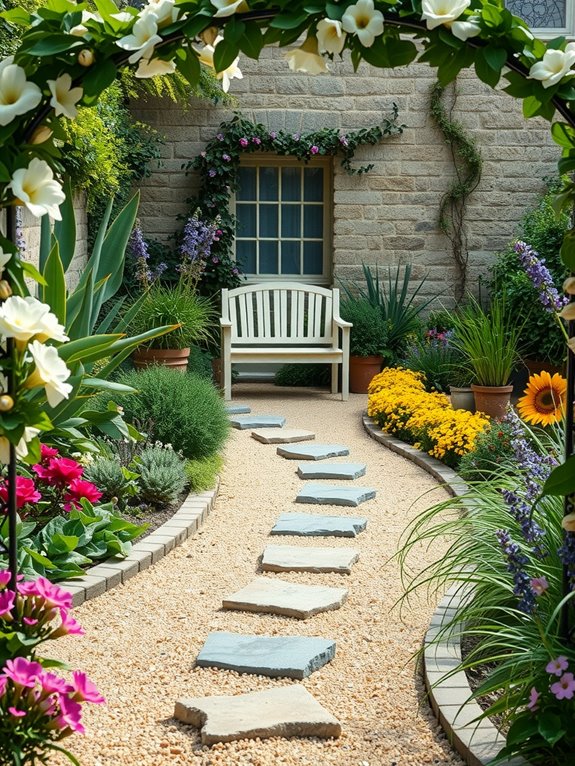
Now that you’ve got your goals and space figured out, it’s time to create the backbone of your garden design: a curvy pathway. This pathway becomes your framework, guiding where everything else goes.
Start by sketching flowing, curved lines along your home’s length rather than straight routes. This approach captures the cottage garden‘s informal feel and creates movement throughout your space. Use a garden hose or rope to lay out your curves on the ground first—this lets you see how the path actually looks before you commit to it.
As you sketch, walk through the planned pathway and observe what you see. Can you spot flowers and herbs from different points along the route. Does every plant catch your eye as you move. If certain areas feel hidden or blocked, adjust your curves.
Use your pathway to determine planting heights and spacing. Wider curves allow for taller plants—you might place specimens that reach 4 to 6 feet tall in these open sections. Tighter sections suit shorter plants that stay around 2 to 3 feet. This variation creates a dense, layered appearance that looks both organized and naturally arranged.
Select Anchor Plants for Cottage Garden Structure
Start by selecting evergreen plants like Boxwoods or Arborvitae. These provide structure that stays visible year-round, which is the foundation of any cottage garden layout.
Next, add deciduous plants such as Hydrangeas or Spirea. These give you seasonal blooms and changing shapes that keep visual interest fresh throughout the year.
Place your anchor plants in specific spots across your garden bed. Space them so they create distinct areas or “rooms” within the space. This approach does two things: it guides people’s eyes and movement through the garden, and it breaks up large areas into sections that feel less overwhelming to plant and maintain.
The key is combining plants that stay put with plants that change seasonally. This gives your garden a solid framework that works in winter when little else is visible, plus visual variety in spring, summer, and fall when deciduous plants leaf out and bloom.
Evergreen Options For Year-Round
Why do so many cottage gardens lose their structure come winter? They’ve relied too heavily on deciduous plants that disappear when frost arrives. You need evergreen anchor plants instead. They’re your garden’s backbone year-round.
Pick from these reliable options:
- Boxwoods – compact, versatile, and widely used by cottage gardeners
- Distylium – holds color through seasons with elegant foliage
- Arborvitae – tall varieties create natural garden rooms and visual depth
- Certain Hydrangeas – evergreen selections offer structure plus seasonal blooms
- Columnar conifers – vertical elements guide your eye through the space
Plant these anchors first. Space them strategically to create multiple garden rooms. Then fill around them with perennials for seasonal color. This pairing keeps your cottage garden looking purposeful and welcoming, whether it’s June or January.
Deciduous Anchors And Seasonal Interest
While evergreens provide winter structure, deciduous anchor plants deliver the seasonal changes that keep a cottage garden interesting year-round. These plants offer spring blooms, summer color, and fall foliage that shift the garden’s appearance through each growing season.
| Plant | Spring | Summer |
|---|---|---|
| Hydrangea | Emerging foliage | Bold blooms |
| Weigela | Pink flowers | Dense texture |
| Spirea | White clusters | Graceful form |
Place deciduous anchors throughout your beds to create visual interest during the growing seasons. Hydrangeas give you impressive blooms and color changes as temperatures shift. Weigela and Spirea provide delicate flowers and movement through their branching patterns. Columnar Rose of Sharon works well when you need height without taking up much width.
Layer these seasonal plants with your evergreens, alternating their placements to avoid a predictable pattern. Position taller deciduous plants toward the back or center of beds, depending on your viewing angle. Space them far enough apart so they don’t crowd each other as they mature. This arrangement builds a garden that changes noticeably through each season while maintaining its structure year-round.
Strategic Placement For Multiple Rooms
Now that you’ve layered your evergreens and deciduous plants for year-round interest, think about how your anchor plants create separate garden rooms that guide visitors through your space.
Position anchor plants strategically along pathways to define distinct zones. This approach divides your cottage garden into connected spaces, each with its own character and purpose. Space your anchor plants to reveal views gradually, which encourages exploration and discovery.
Use these specific placement strategies:
- Plant anchors at pathway curves to create natural stopping points where visitors naturally pause
- Stagger plant heights along routes to frame focal points ahead and guide the eye forward
- Position evergreens as visual breaks between garden rooms to signal transitions
- Use deciduous anchors to mark seasonal changes as visitors move from one area to another
- Align anchor placement with pathway rhythm for balanced, even flow through the garden
This method gives your garden clear structure while inviting visitors to wander and experience each room’s distinct character. The key is spacing—typically 8 to 12 feet between anchors along a pathway—which allows enough distance for each plant to stand out while maintaining visual connection between them.
Choose Your Color Palette (Season by Season)
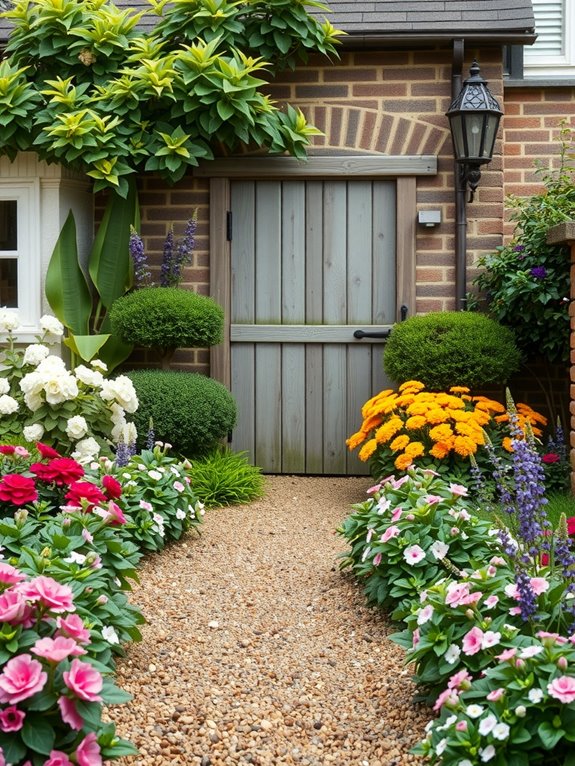
Map out your blooms across all four seasons to avoid bare spots in your garden. Start with early spring flowers like lilacs and primroses, then add mid-spring peonies and roses. Layer in summer color using lavender and daisies, and finish with fall chrysanthemums and asters.
Pick a color scheme that works across all seasons. You can blend analogous colors like purples and pinks, or use complementary contrasts such as orange and blue. Either approach keeps your garden looking intentional throughout the year.
Build your garden’s foundation with reliable perennials. These plants come back year after year and provide consistent structure. Fill gaps and change your color scheme month by month with annuals. This combination keeps your garden interesting from the first frost to the last one.
Year-Round Color Continuity
How do you keep a cottage garden looking vibrant when winter strips away the blooms? You’ll need to layer plants strategically across seasons so color continues year-round.
Start by selecting a cohesive color palette. Adjacent hues like purple and lavender create a calm feeling, while complementary pairs like orange and blue add visual interest. This choice affects how your garden feels and how well different plantings work together.
Build your garden structure with evergreens. These plants provide the backbone for winter color and texture when deciduous plants have dropped their leaves. Choose varieties like boxwood, holly, or dwarf conifers based on your climate zone and available space.
Layer your plantings by height to create visual depth. Place tall species toward the back or center, mid-height plants in the middle, and low-growing varieties in front. This arrangement lets you see all the plants and their colors without any being hidden behind others.
Fill seasonal gaps with spring bulbs and summer annuals. Plant tulips, daffodils, and crocuses in fall so they emerge in spring. Add annuals like zinnias and marigolds in late spring after the last frost to provide color through summer and early fall.
Include plants that attract pollinators. Fragrant flowers with accessible nectar like bee balm, coneflowers, and lavender bring insects that help your garden produce seeds and spread naturally. Pollinators also indicate a healthy garden ecosystem.
Arrange your color groups along pathways and garden edges. This placement makes the color transitions clear and easy to follow as you move through the space. Group three to five plants of the same color together rather than scattering single plants throughout.
Your cottage garden stays interesting when perennials provide consistent structure while seasonal plantings fill the gaps between them. This combination gives you color presence throughout the year as your garden changes with each season.
Seasonal Bloom Succession Planning
Since continuous color requires plants that bloom at different times, map out which flowers will shine in each season. Your cottage garden depends on choosing plants strategically throughout the year.
Spring calls for pale pinks and lavenders—think primroses and tulips. Summer shifts to bright purples, blues, and whites with dahlias and lavender. Autumn demands warm yellows and reds from asters and sedums.
Select evergreen shrubs as anchors to provide year-round structure between seasonal shifts. Plant early bloomers near pathways so you’ll encounter them naturally as you walk through your garden.
Mix short-lived annuals like cosmos with long-lived perennials such as peonies. This combination keeps color consistent while preventing bare patches. You’ll have something blooming every season.
Cohesive Palette Selection Strategy
A cottage garden stays visually connected through the seasons when you build it around a consistent color palette. Start by choosing purples, whites, blues, and pinks as your foundation colors. These work together to create visual harmony from spring through fall.
Building Your Color Plan
Group pinks and purples next to each other. This pairing creates calm transitions between different plants and beds. Use whites as neutral breaks throughout your borders—they give the eye a place to rest and separate stronger colors.
Reserve bold accent colors like red Gerbera daisies for specific focal points where you want attention. Don’t scatter them randomly across the garden. Instead, place them deliberately where you want people to look.
Layer analogous colors—purples, lavenders, and pinks that sit next to each other on the color wheel—to guide the eye naturally through your beds. This technique creates flow without feeling chaotic.
Maintaining Winter Structure
Plant evergreens throughout your garden beds to anchor the space during winter months. These plants keep your garden from looking bare and maintain the structure you’ve built during growing seasons.
Creating Seasonal Continuity****
Plan your planting so perennials, bulbs, and annuals bloom at different times. This overlap means something is always flowering. Use dense, multi-height plantings to fill gaps when one type of plant finishes blooming. Your consistent color palette ties these seasonal changes together, so the garden feels intentional and unified even as individual plants rest and change.
Arrange Plants by Height, Growth Rate, and Bloom Time
Once you’ve chosen your plants, it’s time to arrange them strategically. Plant from smallest to tallest, moving from the front edges outward. This keeps everything visible and leaves clear walkways throughout your garden.
Use this basic structure: place low-growing groundcovers in front, mid-height perennials in the middle rows, and taller plants toward the back. This layered setup creates natural depth and visual movement without extra work.
Stagger your bloom times so color appears from spring through fall rather than all at once. Check each plant’s flowering period before placing it. For example, if you plant tulips (spring), coreopsis (summer), and asters (fall) in the same bed, you’ll have continuous blooms across seasons.
Group plants by growth speed. Pair slow growers like boxwoods with faster spreaders like sedum. This balance prevents fast growers from taking over while slow growers catch up.
Build your layout around evergreen backbone plants such as boxwoods or hollies. These keep your garden looking full even when other plants fade. Fill in the remaining spaces with seasonal annuals and reliable perennials that work in your climate zone. This approach keeps your garden looking intentional and full while staying manageable across the year.
Plan Hardscape Elements on Your Budget
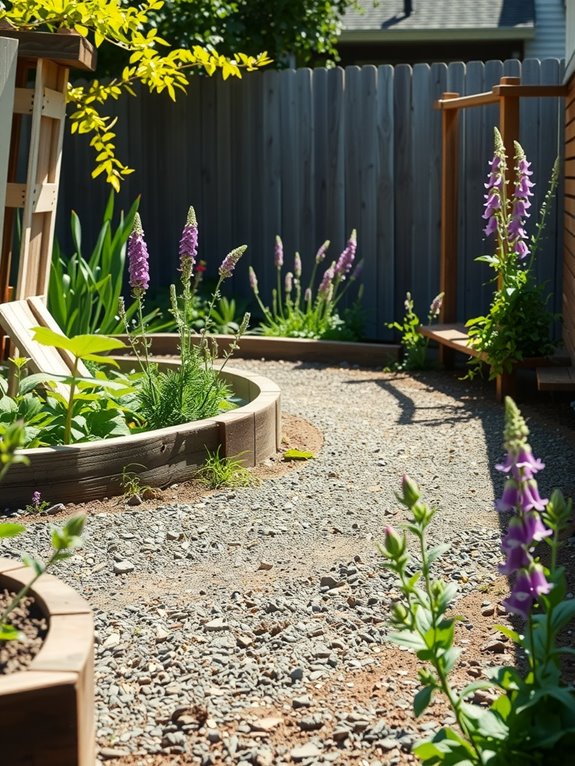
Plan your hardscape work in phases that match what you can spend. Start with materials that cost less, like river rocks and flagstone pavers. You can find these on Facebook Marketplace or at local stone yards. This approach saves money upfront.
Build your essential structures first. A 2-tier retaining wall works well as a foundation piece. Add a garden path next—this gives your space structure and function. These projects establish the bones of your design.
Once you finish the basic structures, add decorative elements as your budget allows. A birdbath, trellis, or stone seating area can come later. Wait until plants are more established before adding these finishing touches.
This method lets your hardscape grow alongside your plants. As your budget increases, you can upgrade materials or expand into new areas. Your garden develops naturally rather than all at once, and you avoid overextending yourself financially.
Budget-Friendly Hardscape Options
How can you build a cottage garden hardscape on a limited budget? The answer is to source affordable materials and plan in phases. By spreading your project across seasons, you’ll manage costs while creating a garden that feels intentional and welcoming.
Start with these budget-friendly material options:
- Clearance paving stones work well for retaining walls and cost less than full-price alternatives
- Flagstone paths from discount suppliers create functional walkways at reasonable prices
- River rock adds visual interest without major expense
- Facebook Marketplace and similar sites offer used benches, birdbaths, and trellises at low cost
- Drip irrigation systems provide practical watering at modest expense
Choose durable, weather-resistant materials. Concrete or secondhand pieces serve as focal points that anchor the space. A used bench or birdbath gives you something to build the rest of the garden around. This phased approach spreads your spending across multiple seasons so no single project strains your finances. You’ll end up with a cohesive garden that feels purposeful to both you and your neighbors.
Phased Implementation Strategy
Now that you know which materials work within your budget, it’s time to map out when and where you’ll install them. Start by prioritizing durable foundation elements first—think two-tier retaining walls, flagstone paths, and river rock borders. These pieces form the skeleton of your garden and need to come first. Hire a landscape company for these large-scale components since they require heavy equipment and expertise.
Once your foundation is set, tackle smaller decor items like obelisks and trellises through affordable sources like Facebook Marketplace as funds become available. This approach spreads costs over time and lets you adjust your design as you go.
Map your entire hardscape layout early, defining circulation patterns with curved, meandering pathways that guide movement through your cottage garden. This framework anchors everything else. Work out where people will walk and how they’ll move from one area to another before you place anything permanent.
Once pathways are set, layer in functional accents like drip irrigation and hummingbird feeders that integrate with planting beds. These additions serve a purpose beyond looks. Breaking the work into phases keeps costs manageable while building your garden steadily. You might complete your pathways in month one, add irrigation in month two, and install decorative pieces over the following months as your budget allows.
Add Vertical Interest With Trellises and Tall Plants
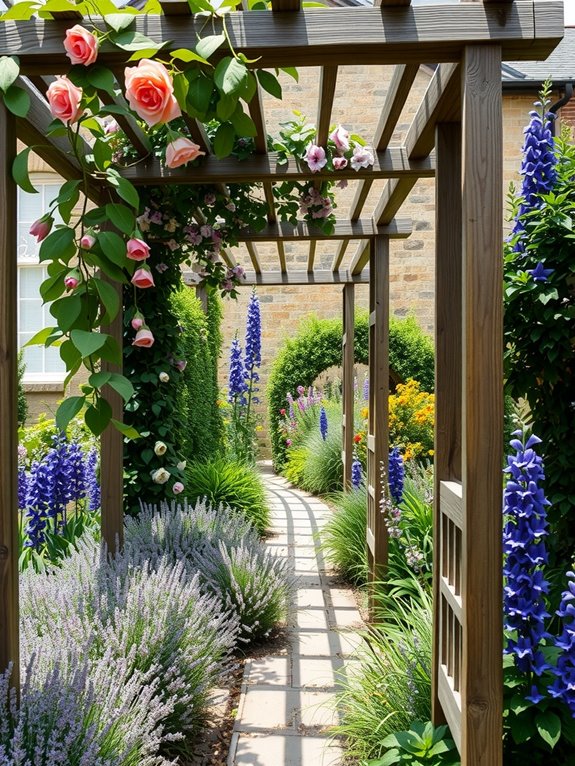
To give your cottage garden depth and structure, add height through trellises, climbing plants, and tall perennials. This layering creates the established look that makes cottage gardens feel like home.
Position tall plants toward the back or along pathways so they don’t block views while walking through. You’ll want to include:
- Trellises with climbing roses for vertical interest
- Hollyhocks and foxgloves as sturdy mid-to-back anchors
- Evergreen boxwood or hydrangeas for year-round structure
- Obelisks and arches to draw eyes upward and define spaces
- Columnar roses paired with deciduous plants for seasonal color changes
Check the mature height of each plant before planting. A hollyhock might reach 6 to 8 feet tall, while foxgloves typically grow 3 to 5 feet. Space plants so shorter varieties in front remain visible. This creates a balanced silhouette you can move through without difficulty.
When installing trellises, place them at least 6 inches away from walls to allow air circulation around climbing roses. Use sturdy materials like wood or metal that can support the weight of mature vines. Obelisks work well as standalone focal points in open beds, while arches naturally frame pathways. These structures guide the eye upward and break up horizontal lines in your garden.
Layer Fragrance, Texture, and Sound for All Senses
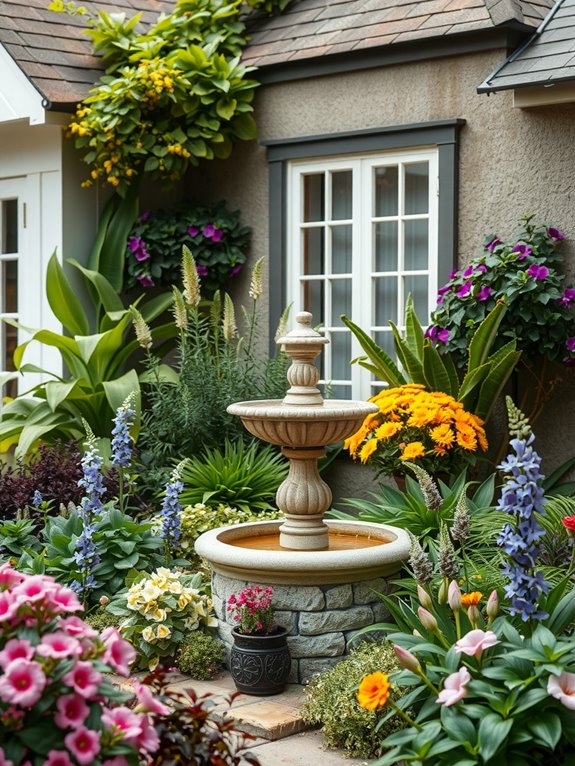
Once you’ve established the bones of your garden with height and structure, it’s time to engage the senses beyond sight. Plant fragrance-rich lavender, lilacs, and roses along your pathways to create aromatic zones that draw visitors deeper into your cottage garden. Choose varieties that bloom at different times so you have scent throughout the growing season.
Layer varied textures by combining evergreens, perennials, and ornamental grasses. This tactile contrast invites people to touch and explore. Pair fine-textured plants like feather reed grass with bold, chunky foliage such as hosta or sedum. The physical variety makes the garden more interesting to walk through.
Add a water feature or rain chain to introduce sound. A small fountain, birdbath with a dripper, or copper rain chain will produce gentle noise that brings movement and life to quiet areas. Position water features where they’re audible from seating spots.
Place fragrant plants near benches or seating areas so visitors can enjoy the scent while they rest. Group plants with complementary colors nearby so the visual appeal matches the sensory experience. Position auditory features like water sounds in corners or edges of the garden where people naturally pause and linger. This strategic placement creates multiple sensory stations rather than scattering elements randomly throughout the space.
Position Focal Points and Decorative Accents
Where should your eye naturally travel when you enter your cottage garden? Strategic focal points answer this question by creating destinations throughout your space. Position decorative accents—birdbaths, trellises, obelisks, and antique containers—along curving pathways to guide visitors naturally through your garden. These focal points anchor your design and give structure to your routes.
Place focal points at path bends and garden corners where they’ll catch attention. A birdbath nestled within flowering borders creates a peaceful gathering spot. A rustic obelisk draws eyes upward through climbing vines and roses. Vintage containers showcase specimen plants as conversation starters. Trellises frame garden entrances with architectural interest. Benches positioned at strategic spots invite people to stop and sit.
Layer your focal flowers by height to ensure they’re visible from walkways. Plant tall varieties in back, mid-height plants in the middle sections, and low plants in front. This depth creates visual stopping points. Cluster plants by color or texture near your focal features to reinforce them and strengthen your garden’s overall flow.
Build Soil Health and Set Up Maintenance
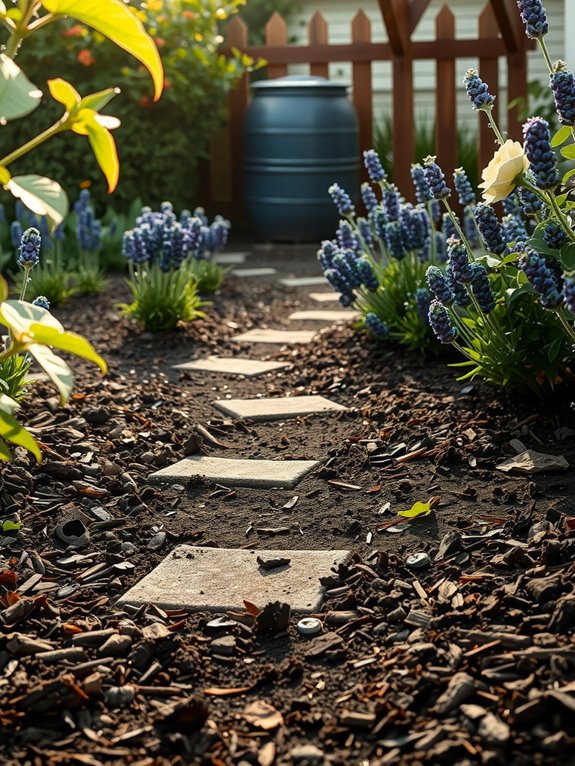
Start by testing your soil’s pH and nutrient levels before planting anything. You can use an inexpensive soil test kit from a garden center or send a sample to your local extension office for more detailed results. Once you know what your soil lacks, add compost to improve both structure and fertility. Spread 2 to 3 inches of compost across your garden bed and work it into the top 6 to 8 inches of soil.
Water plants deeply at the base rather than sprinkling the leaves. Water less frequently but more thoroughly to encourage roots to grow deeper into the soil. This approach also reduces leaf diseases that spread when foliage stays wet. Shallow watering only wets the surface and creates weak, shallow root systems that struggle during dry periods.
Apply 2 to 3 inches of mulch around plants, keeping it a few inches away from plant stems. Mulch slows water evaporation from the soil and suppresses weed growth, which means less work for you. Use materials like shredded bark, straw, or wood chips.
Space plants according to their mature size so air can flow between them. Crowded plants compete for water and nutrients, and poor air circulation invites fungal diseases. As plants grow, prune back branches that cross or rub against each other, and remove any dead or diseased wood as soon as you notice it.
Check your garden regularly for pest damage and feel the soil moisture a few inches down with your finger. Water when the top inch feels dry. This hands-on monitoring helps you catch problems early, when they’re easiest to manage.