You’ll keep your bougainvillea healthy by focusing on three core requirements. First, give it eight or more hours of direct sun each day. This amount of light is necessary for the plant to produce its colorful bracts. Without sufficient sunlight, you’ll get fewer blooms and duller colors.
Second, water deeply when you do water, then wait until the soil dries several inches down before watering again. Soggy soil causes root rot and stops the plant from flowering. Check the soil with your finger to gauge dryness.
Third, use a fertilizer made for blooming plants, one with lower nitrogen and higher phosphorus. This pushes the plant to make flowers instead of just growing leaves. Apply it every few weeks during the growing season.
Prune after each flush of blooms finishes. Cut just above the leaf nodes where you want new branches to grow. This encourages the plant to branch out and produce more flowering stems for next time. Regular pruning keeps the plant shaped and productive.
The Three Rules That Make or Break Your Bougainvillea
If you want your bougainvillea to bloom instead of staying as a green shrub, you need to handle three basic requirements correctly.
Sun Exposure
Give your bougainvillea full sun for eight or more hours each day. Without sufficient light, the colored bracts—the leafy parts people mistake for flowers—simply won’t develop. This is non-negotiable for blooming.
Soil Drainage and Watering****
Your bougainvillea needs fast-draining soil and a watering approach that lets roots dry between waterings. When you first plant it, water deeply and allow the top two inches of soil to dry out before watering again. Once the plant is established, wait until the soil is dry several inches down before adding more water. Soil that stays wet causes root rot, which stops blooming and can kill the plant.
Pruning and Fertilizing
After each bloom flush ends, prune back the plant to encourage new flowering shoots. Use a fertilizer formulated for blooms rather than general-purpose plant food. Bloom-focused fertilizers contain lower nitrogen levels, which promotes bracts over leafy growth. This combination of adequate light, proper watering, and strategic pruning is what moves your bougainvillea from struggling to producing regular blooms.
Watering and Drainage Done Right (So Your Plant Doesn’t Die)
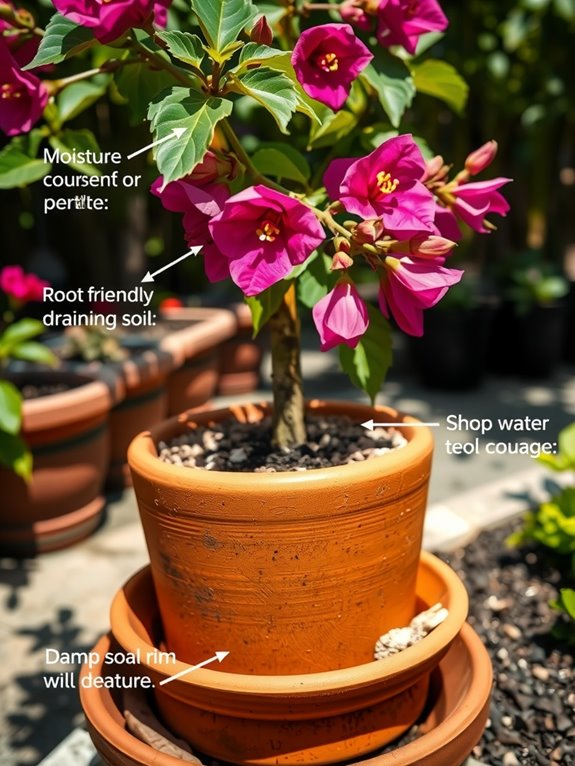
Getting the watering schedule right separates bougainvillea owners who succeed from those who accidentally kill their plants. Your bougainvillea tolerates drought well and actually prefers dry conditions over constant moisture. The approach is simple: water deeply, then let the soil dry significantly between waterings.
| Condition | Watering Frequency | Soil Check |
|---|---|---|
| Container Growing | When top 2 inches dry | Check regularly |
| In-Ground | Deep soak, then several inches dry | Less frequent |
| Hot Climates | Deeper, less frequent watering | Extended drying |
This wet-and-dry cycle triggers flowering in your plant. Soggy soil causes root rot and fungal problems that kill bougainvilleas.
To improve drainage, use fast-draining soil mixed into your planting area. In clay soil regions, plant on mounds to lift the root zone above dense soil. Keep mulch 3 to 4 inches away from the crown of the plant to prevent moisture buildup.
Adjust your watering based on what’s happening around you. Containers dry faster in heat than in-ground plants do. Monitor the soil moisture closely and let the root zone partially dry between waterings. This drying period is what your bougainvillea needs to stay healthy.
Feed Lightly to Maximize Blooms, Not Leaves
Why does your bougainvillea produce more leaves than blooms? Excessive nitrogen is likely the culprit. When a plant gets too much nitrogen, it directs energy into leaf growth rather than flower production.
Switch to a low nitrogen fertilizer with a ratio like 5-10-10, or use a bloom-focused fertilizer instead. The middle and last numbers represent phosphorus and potassium, which support bract and flower development.
Feed lightly during active growth in spring and summer. Once new shoots slow down in late summer or fall, reduce feeding or stop altogether. This shift tells the plant to put its energy into producing bracts instead of continuing to make new leaves.
Prune and Train for Non-Stop Blooms
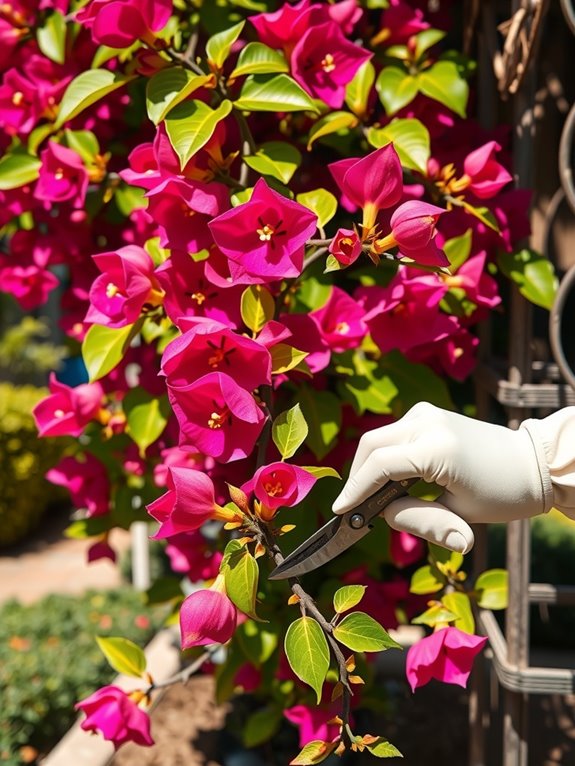
Set up a permanent framework of main canes and tie them to supports at horizontal or diagonal angles. This positioning naturally encourages lateral flowering shoots to develop along the stems.
Pinch back new growth once shoots develop 4–6 leaves. This creates denser branching and gives you more blooming sites across the plant throughout the season.
Remove 10–30% of the oldest, thickest canes at the base each year. Cut them out completely. This opens up the interior of the plant and triggers vigorous new growth that will produce more flowers. Time this renewal pruning during the plant’s dormant season for best results.
Framework Canes And Support
Bougainvillea plants won’t climb or cling on their own, so you need to build a permanent framework of canes to direct their growth. Start by choosing sturdy canes—bamboo or wood work well—and tie them securely to your support system using soft ties or garden twine. Angle the canes horizontally or diagonally rather than vertically. This positioning encourages lateral shoots to develop along the entire structure instead of just at the top.
Once lateral branches form, use pinching and tip pruning to build dense flowering growth where you want it. Pinch back new shoots when they’re 2-3 inches long to force branching. This systematic approach creates a controlled structure that produces blooms consistently.
After each flowering period, prune strategically to maintain your framework’s shape. Remove dead wood and any growth that strays from your intended design. Always wear protective gloves when handling bougainvillea—the thorns are sharp and can cut skin easily. Sanitize your pruning shears with rubbing alcohol or a 10-percent bleach solution between cuts to prevent spreading disease. This regular maintenance keeps your structure orderly and flowering throughout the growing season.
Pinching For Dense Growth
Once your framework’s in place, pinching becomes an effective technique for turning a sparse plant into one with plenty of flowers. You’ll stop apical dominance—the plant’s tendency to grow upward—by pinching shoots when they reach 4–6 leaves during the warm growing season. This pinching triggers branching and creates more spots where flowers can form.
The reason this works is straightforward. Pinching redirects the plant’s energy away from growing taller and pushes it toward growing outward with more side branches instead.
Combine pinching with tip pruning by removing 1–6 inches from the ends of branches. This keeps your bougainvillea’s shape neat while encouraging more flower production. After each bloom cycle finishes, do light pinching as fresh growth appears. This keeps the plant compact and promotes continuous flowering throughout the season.
Time your pruning and pinching work throughout the growing cycle. Coordinate these efforts so your plant stays dense and produces flowers consistently without becoming overgrown.
Renewal Pruning Timing
To keep an older bougainvillea flowering year after year, prune it in late winter to early spring. This timing works because the plant is about to enter its main growth period, so your cuts will trigger the most vigorous response.
What to Remove
Cut away 10–30% of the oldest, thickest canes at their base. These thick stems are where new growth starts, so removing them signals the plant to produce fresh shoots. At the same time, eliminate any crowded wood inside the plant that blocks light and air from reaching the center. Dense interior branches prevent air circulation and reduce flowering potential.
Tools and Technique
Use sharp pruning shears or a pruning saw, depending on cane thickness. Clean your tools with rubbing alcohol or a 10% bleach solution between cuts to stop disease from spreading from one branch to another. Make cuts at a slight angle just above where new growth will emerge.
Follow-Up Work
Once you’ve done the heavy removal, train the new shoots as they grow. Pinch back the tips of young branches to encourage branching and create a denser framework. This follow-up work builds the structure that produces more flowers throughout the season. The combination of removing old wood and shaping new growth gives you the best flowering display.
Bougainvillea in Pots: Adjusting the Foundation Rules
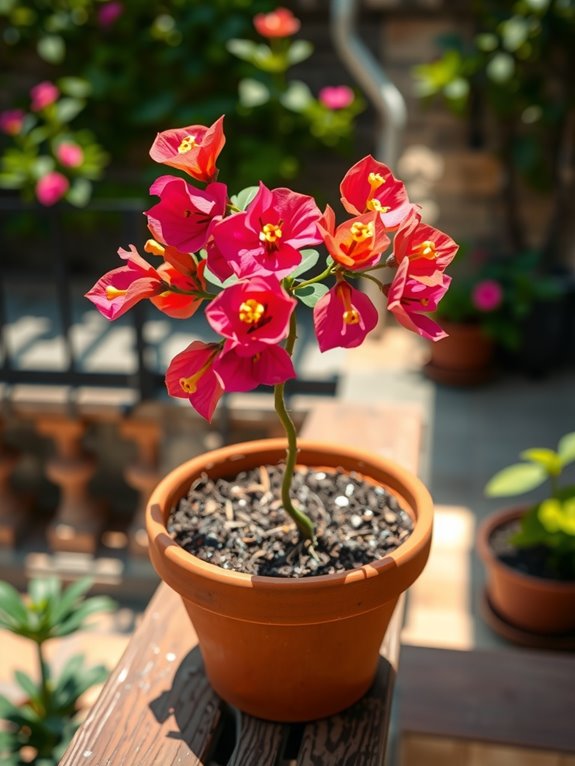
Container bougainvillea needs different care than varieties planted in the ground. You’ll adjust your soil mix, watering schedule, and pot choice to keep the plant healthy.
Start with fast-draining soil. Mix regular potting soil with perlite or coarse sand at a ratio of 2 parts soil to 1 part perlite or sand. This prevents water from sitting around the roots. Use a container with multiple drainage holes at the bottom—at least three quarter-inch holes work well. Drainage matters most in a pot because roots can’t escape excess moisture like they do in open ground.
Water only when the top inch of soil feels dry to the touch. Stick your finger into the soil to check. In warm weather, this might mean watering every 2 to 3 days. In cooler months, stretch it to once weekly or less. Container soil dries faster than ground soil, so you’ll water more often than you might expect, but never let water pool in the saucer beneath the pot.
Repot your bougainvillea every 2 years in spring. Move it to a container only 1 to 2 inches larger in diameter than the current pot. Bougainvillea actually flowers better when slightly root-bound, so resist the urge to jump to a much larger container. Use the same fast-draining soil mix you prepared initially. Water lightly after repotting and wait about a week before returning to your regular watering schedule.
Drainage And Soil Mix
Bougainvillea has delicate yellow roots that can’t handle wet soil. Your main job is to create a potting mix that drains quickly and doesn’t hold water around the roots.
Mix these components together:
- Add perlite or pumice. These materials create air pockets that stop water from sitting in the soil.
- Mix in coarse sand. This improves how fast water moves through the mix and gives better texture.
- Use quality potting soil as your base. Combine it with the perlite and sand.
- Test the drainage by pouring water through. It should flow through in seconds, not minutes.
When you’re ready to repot, be gentle with the root ball. Those yellow roots bruise easily and won’t recover quickly. Move your plant to a container that’s only slightly larger than the current one, and make sure it has drainage holes in the bottom. This approach gives your bougainvillea the conditions it needs to stay healthy.
Watering Cycles For Containers
Water your bougainvillea when the top two inches of soil feel dry to the touch. Then water until water runs out the drainage holes at the bottom—this ensures the soil is fully saturated. Let the soil dry down between waterings. This dry-down period prevents root rot, which is the main reason potted bougainvilleas fail.
During hot months, water more frequently since containers lose moisture quickly in heat. In cooler seasons, reduce how often you water and allow longer periods between waterings. Your fast-draining potting mix works with this watering cycle to keep roots healthy. Avoid soils that hold onto moisture, as they’ll keep bougainvillea roots too wet and invite root problems.
This pattern of thorough watering followed by drying time keeps your plant healthy and promotes blooming.
Sizing And Repotting Strategy
When should you move your bougainvillea to a larger pot? You’ll repot only when your plant becomes rootbound, typically every 2–4 years.
Check for rootbound signs – Look at the drainage holes at the bottom of your pot. If roots are poking through or you see roots circling tightly around the soil surface, it’s time to move your plant.
Upsize gradually – Pick a container that’s one size larger than your current pot. This small jump reduces transplant shock and keeps your plant growing steadily. Going too large at once can lead to overwatering problems.
Prioritize drainage – Use a fast-draining soil mix that includes perlite, pumice, or coarse sand. Your new container must have drainage holes. Poor drainage kills bougainvilleas quickly, so don’t skip this step.
Time your repotting – Do this work during the active growing season when your plant can recover quickly from the move. Spring is usually your best window.
This measured approach gives your plant the root room it needs without overwhelming it.
Why Your Bougainvillea Isn’t Blooming (And How to Fix It)
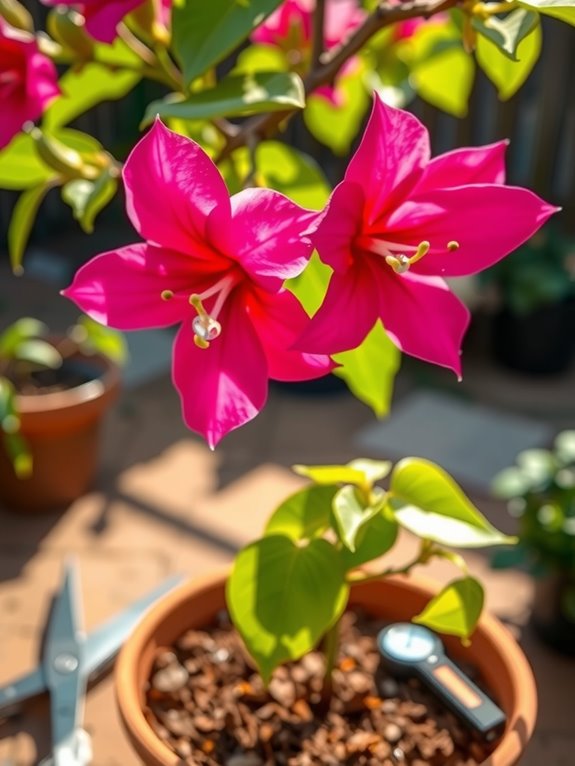
Your bougainvillea isn’t blooming because of one or more common problems. Learn what’s going wrong and how to fix it.
Light Requirements
Your plant needs 8 or more hours of direct sun each day. Insufficient light is the most common reason bougainvilleas stop producing bracts. If your plant sits in partial shade, move it to a sunnier location. This single change often solves the problem.
Fertilizer and Nitrogen Levels
High-nitrogen fertilizers push your plant to make leaves instead of bracts. Check your fertilizer label and switch to a bloom-focused formula with lower nitrogen content. Apply it according to package directions during the growing season.
Watering Practices
Overwatering suppresses flowering. Let the soil dry partially between waterings, and when you do water, water deeply but infrequently. Stick your finger 1 inch into the soil. If it feels wet, wait before watering again.
Pruning Timing
Prune selectively after a bloom flush ends or when bracts fade. Avoid heavy cutting during the active growth period, as this removes potential flowering sites. Make cuts just above a leaf node to encourage branching.
Growing Conditions
Check that water drains freely from your pot or planting area. Bougainvilleas perform best with a long, hot growing season and good air circulation. These conditions combined with the adjustments above will support regular blooming.