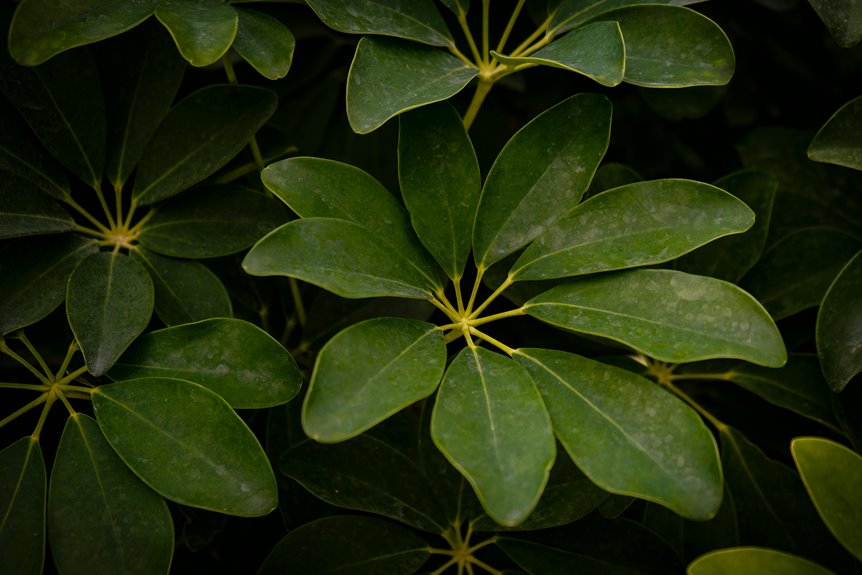
Place your Schefflera in bright, indirect light near a south or west-facing window. Rotate the pot weekly to encourage even growth on all sides.
Water when the top inch of soil feels dry to the touch. Use a pot with drainage holes at the bottom to prevent water from pooling around the roots, which causes rot.
Feed your plant three times yearly during spring and summer with a balanced liquid fertilizer mixed to the strength listed on the bottle label.
Keep the temperature between 60–80°F. Maintain average household humidity levels, or set the pot on a pebble tray filled with water if your home feels particularly dry.
Prune no more than 30 percent of the plant at one time to keep its shape balanced and healthy.
Bright, Indirect Light: The Foundation of Healthy Schefflera Growth
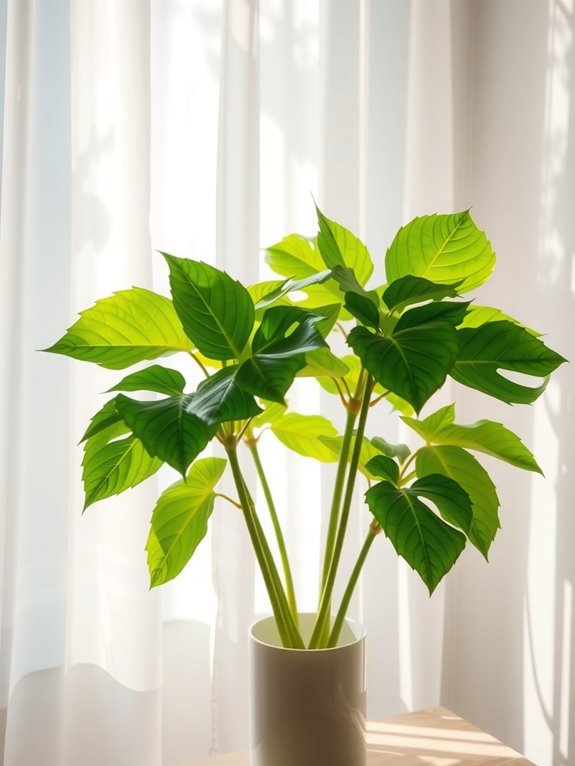
Light matters for your Schefflera because it directly affects how fast it grows, what shape it develops, and how healthy it stays overall.
Position your plant near a window where it gets bright, indirect light. This means the light reaches the plant without direct sun rays hitting the leaves. Direct sun will scorch and damage the leaves, but indirect light gives your plant what it needs to grow strong. If your window gets intense afternoon sun, use a sheer curtain or move the pot back a few feet from the glass.
Your Schefflera can survive in medium or low light conditions, but it won’t perform at its best. In dimmer spots, the plant grows more slowly and often develops long spaces between leaves on thin, weak stems. For the strongest growth with compact stems and full foliage, place your plant in a sunroom or within 3 to 5 feet of a bright south or west-facing window.
Rotate your plant a quarter turn every week or two. This simple step ensures all sides of the plant receive equal light exposure. Without rotation, one side grows fuller and the other becomes sparse and leggy. Regular rotation keeps the plant’s shape balanced and prevents it from leaning toward the light source.
Water When the Top Soil Dries: Finding Your Watering Rhythm
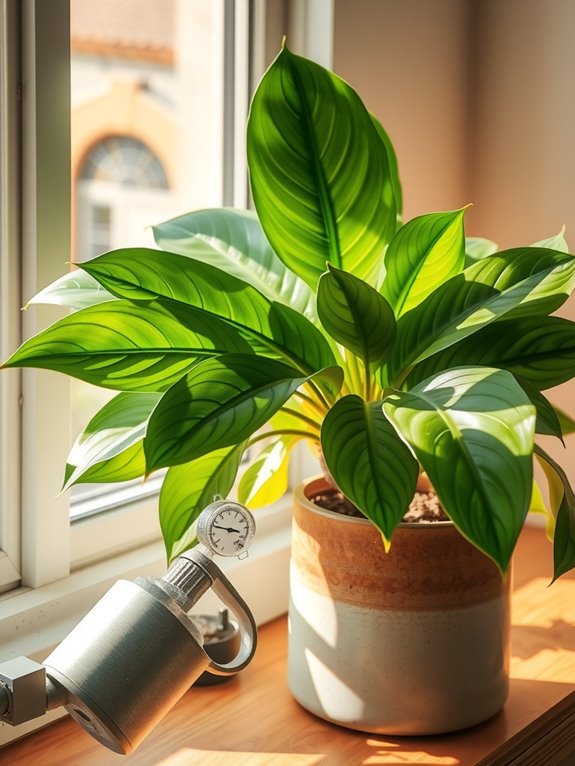
How often should you water your Schefflera? Your watering schedule depends on your setup and how quickly your soil dries out.
Your Schefflera’s watering schedule depends entirely on your setup and how quickly your soil dries out.
Check the top inch of soil. Push your finger into the soil to about one inch deep. Water only when it feels dry to the touch. Don’t water before this point arrives.
Adjust for your system. If you’re using a moss pole setup, water after the soil dries out completely. For lava rock trays, let the medium dry fully before refilling to three-quarters of the way up. This approach prevents water from sitting stagnant.
Handle roots near water. If any roots touch the water in your tray, trim them back. This redirects the plant’s energy toward absorbing moisture through the soil rather than relying on standing water.
Allow drying time between waterings. Space out your watering sessions so the medium dries between applications. This prevents root rot and keeps your plant healthy.
Resist watering frequently. This restraint protects your Schefflera from moisture-related problems and promotes strong, resilient growth.
Feed Three Times Yearly to Fuel Growth
Feed your Schefflera three times a year during spring and summer when the plant actively grows. Use a balanced liquid indoor plant fertilizer mixed to the strength listed on the label. This schedule keeps your plant healthy without giving it too much nutrition at once.
In fall and winter, skip feeding or cut back to half strength. Growth naturally slows during these months, so your plant needs less food. Check your plant’s leaves and how fast it’s growing to see if this routine works. Different varieties and how much light your plant gets will change what it needs, so adjust your feeding based on what you observe.
Optimal Feeding Schedule
Getting your Schefflera’s nutrition right means feeding it three times per year during its active growing season. Spring and summer are when your plant needs extra nutrients, so that’s when you’ll do most of your fertilizing work.
Water your plant thoroughly before you apply any fertilizer. This step prevents root burn, which happens when fertilizer sits directly against dry roots.
Use a balanced liquid fertilizer mixed to the strength listed on the label. Some labels recommend full strength, while others suggest half strength. Follow what the manufacturer says for your specific product.
Apply fertilizer every two to three weeks from spring through summer. This timing matches when your Schefflera actively grows and pulls nutrients from the soil.
Stop feeding your plant in fall and winter. Your Schefflera goes dormant during these months and doesn’t need extra nutrients. Feeding a dormant plant can actually cause problems, so skip fertilizer entirely until spring returns.
Seasonal Fertilizer Application
During spring and summer, your Schefflera grows actively and needs regular feeding. Apply a balanced liquid fertilizer every two weeks if you’re using a faster-acting formula, or every 4–6 weeks for slower-release products. You’ll typically feed your plant three times total during these warmer months. This schedule matches the plant’s natural growth cycle.
When fall and winter arrive, stop fertilizing completely. Your Schefflera slows its growth during cooler months and doesn’t require extra nutrients. Fertilizing during dormancy can actually damage the plant.
If you have variegated varieties with lighter leaf areas, dilute your fertilizer to half or three-quarters strength. The pale sections are prone to leaf burn when exposed to standard-concentration fertilizer. This adjustment preserves the distinctive coloring you want to keep.
Temperature, Humidity, and Placement for Thriving Plants
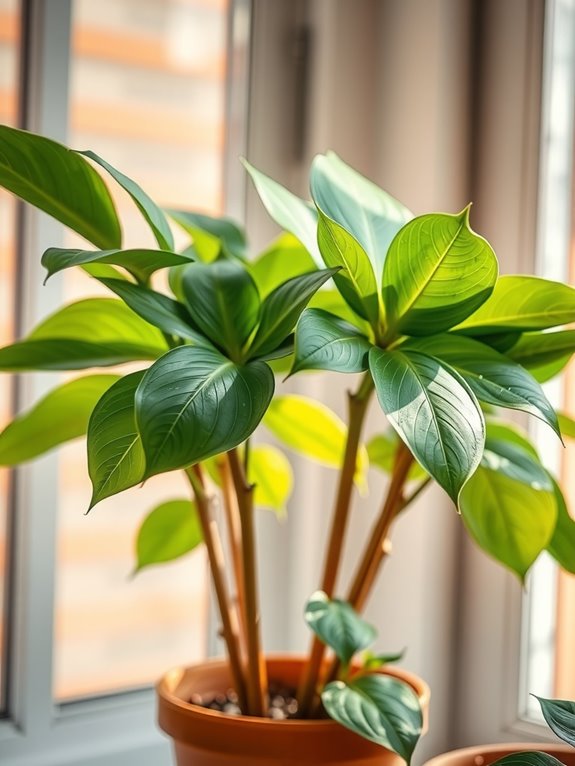
Keep your Schefflera between 18–24°C (60–80°F). Move it away from cold drafts, which stress the plant and slow its growth.
Humidity levels in most homes work fine for this plant. To improve growth, use a humidifier or place your Schefflera on a pebble tray filled with water. This method works especially well for varieties like Schefflera arboricola, which benefit from added moisture around their roots.
Position your plant in a warm, bright spot near a window. Kitchens and bathrooms are good locations because they naturally have higher humidity from steam. Rotate the plant every week or two so all sides receive light evenly. Without rotation, the plant will lean toward its light source and grow unevenly.
Ideal Temperature Range
What temperature range works best for Scheffleras? Keep your plant between 18–24°C (60–80°F). This range supports steady growth without the stress of temperature swings.
Scheffleras need consistent warmth. Avoid moving them between hot and cold spots, as fluctuations weaken the plant. Position your Schefflera away from windows, doors, and air vents where cold drafts occur. Keep it away from heating vents and direct heat sources too, since intense warmth dries out the leaves and stresses the plant.
During winter months, check your plant’s location. Cold spots near windows or exterior walls can drop below the ideal range. Move your Schefflera to a warmer interior location if needed. This simple adjustment prevents leaf drop and slowed growth that comes with cold exposure.
When you maintain steady temperatures in the right range, your Schefflera responds with healthy leaf growth and strong stems.
Humidity Requirements And Methods
Your Schefflera grows well in average household humidity, but it performs better with added moisture, especially if you live in a dry climate. You don’t need complicated solutions—straightforward methods work effectively.
| Method | How It Works | Best For |
|---|---|---|
| Pebble Trays | Place pot on pebbles, add water below soil line | Budget-friendly option |
| Humidifiers | Release moisture into surrounding air | Larger spaces |
| Bathroom Placement | Natural warmth and moisture from showers | Multi-benefit solution |
| Misting | Spray leaves with water regularly | Quick boost |
| Grouping Plants | Creates microclimate through transpiration | Space-efficient |
Position your Schefflera in bright indirect light. Kitchens and bathrooms work well because they naturally stay warmer and more humid than other rooms. When you combine proper placement with humidity methods, your plant’s leaves will look healthier.
Rotate your plant regularly so all sides receive even light exposure and growth stays balanced. This prevents the plant from leaning toward the light source and keeps its shape full and even.
Optimal Placement And Location
Beyond humidity, where you position your Schefflera matters just as much for its overall health and appearance. Your placement strategy directly influences how well your plant grows.
Position your Schefflera near windows that receive filtered sunlight. Avoid direct rays, which will scorch the leaves. Kitchens and bathrooms work well because they naturally provide warmth and steam that support growth.
Keep your plant in temperatures between 18–24°C (60–80°F). Move it away from cold drafts and areas with sudden temperature swings, as these stress the plant and slow its development.
Rotate your Schefflera once a week. This simple step promotes even growth across all sides and prevents the plant from becoming leggy—a condition where stems stretch toward one light source and develop fewer leaves.
Combining proper placement with consistent care helps your plant develop a balanced, attractive shape while staying healthy and strong.
Prune and Stake Your Schefflera for an Upright, Tidy Form
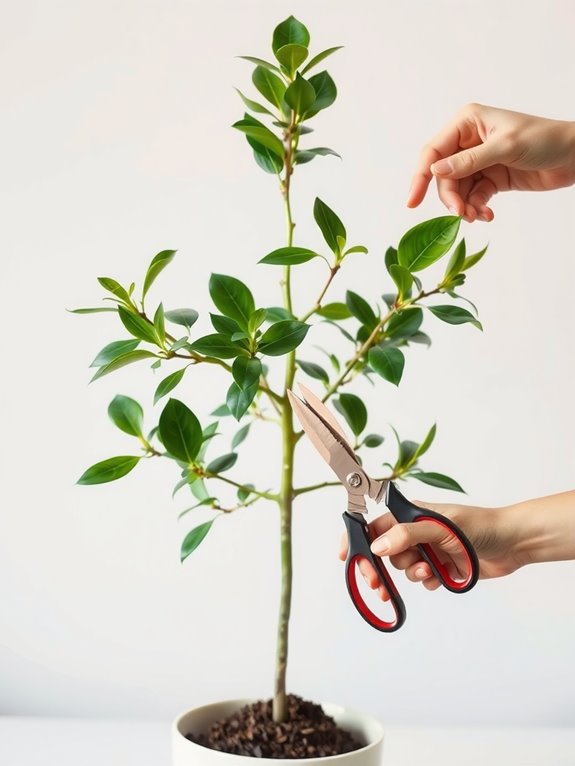
Why does your Schefflera sometimes grow leggy and uneven? Without pruning and staking, it’ll lean toward light and develop awkward gaps.
Start by removing excess or crossing growth to maintain shape. Never remove more than 30% of the plant at once. This prevents stress and shock to your plant. Use staking to support main stems with soft ties or plant clips, encouraging vertical growth instead of sprawling sideways.
| Task | Frequency | Benefit |
|---|---|---|
| Prune excess growth | As needed | Maintains tidy form |
| Rotate plant | Weekly | Promotes even growth |
| Inspect after pruning | Immediately | Prevents pest issues |
Rotate your plant weekly to combat one-sided leaning. This simple step makes a real difference in how evenly your Schefflera grows. After pruning, inspect the foliage and wipe leaves with a soft, damp cloth to prevent pests and disease that can slow new growth.
When to Repot Your Growing Schefflera
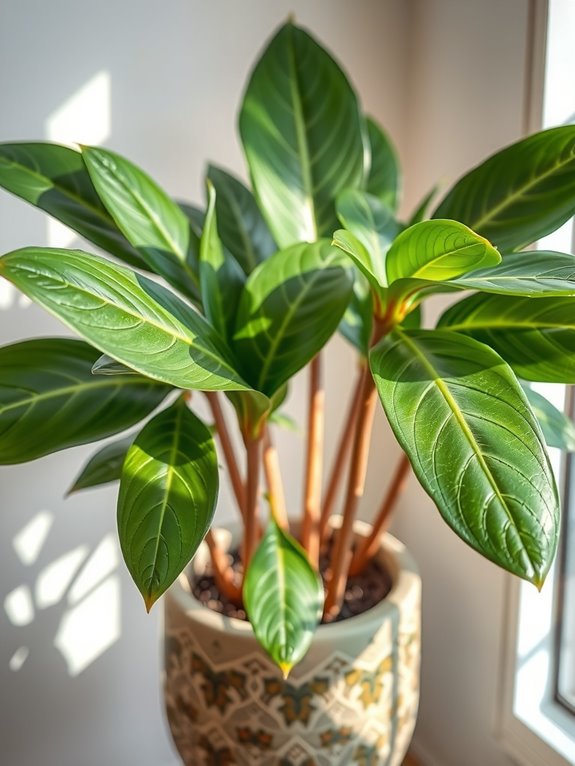
Knowing when your Schefflera has outgrown its container is important for keeping the plant healthy. Watch for these specific signs that repotting is needed:
Roots protruding from the drainage holes tell you the plant needs more space. When soil dries out at 50-75% of the way down, that’s another signal the roots have crowded the container and growth is restricted. For Scheffleras on moss poles, plan to repot every two to three years as the plant expands. Lava-on-rock setups are different—wait until roots genuinely outgrow the arrangement before repotting.
When you repot, select a container only slightly larger than the current one. A pot that’s too big causes soil to retain excess moisture and leads to waterlogging. Moving up gradually by just one or two inches in diameter helps your plant transition smoothly without experiencing transplant shock. The modest size increase keeps moisture levels stable while giving roots room to expand.
Propagate New Schefflera From Pruned Stems in Water
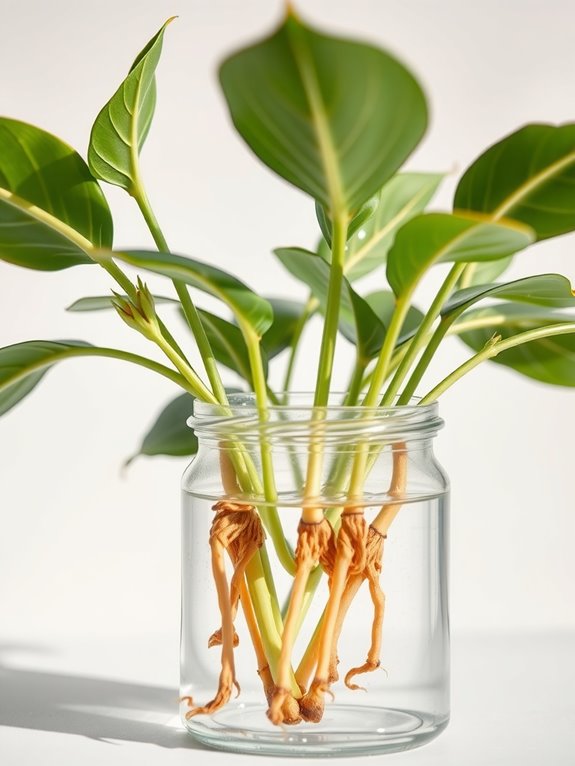
To propagate your Schefflera from pruned stems, start by using clean, sharp pruning shears to cut healthy stems from the parent plant. Remove the lower leaves from each cutting, leaving only a few leaves at the top. This reduces water loss while the cutting develops roots.
Fill a jar with room-temperature water and place your prepared stems in it so that the bottom nodes—the bumpy areas where leaves attach—sit fully submerged. Position the jar in a spot with bright, indirect light, away from direct sun. Change the water every few days to keep it fresh and prevent bacterial growth.
Roots typically develop over two to four weeks. Once the roots reach at least one to two inches long and look established with visible branching, your cuttings are ready for soil. Prepare a pot with a well-draining potting mix, make a small hole with your finger, and gently insert the rooted cutting. Water the soil lightly and place the new plant in bright, indirect light as it adjusts to soil growing.
Cutting And Preparation
If you’ve pruned your Schefflera and want to grow new plants from those trimmings, water propagation is a straightforward method that works well. Getting your cuttings ready the right way makes the difference between success and failure.
Start by using clean, sharp pruning shears to cut a healthy stem just below a node. The node is where roots will emerge, so this cut matters. Remove all the lower leaves from the cutting to prevent rot while it sits in water.
Select stems that are firm and show no signs of disease. Soft or discolored stems won’t root reliably, so pick the strongest growth you can find.
Prepare a jar of fresh, clean water and place your cutting in it right away. This limits the time the cut end sits exposed to air. Removing the lower leaves eliminates obstacles to rooting and reduces the risk of decay as your cutting develops roots over the coming weeks.
Water Rooting Process
Place your cut stems in a jar of clean water and position the jar in bright, indirect light. This setup gives your cuttings the conditions they need to develop roots.
Change the water every 2-3 days. Fresh water keeps oxygen levels high and prevents bacteria from building up, both of which slow root development. Remove any leaves that sit below the water line. Submerged leaves decay and waste the cutting’s energy—leaves on the stem above water can still photosynthesize and support growth.
Check your cuttings regularly over the next few weeks. You’ll see small white roots beginning to emerge from the stem under the water. Wait until roots are about 1-2 inches long and at least three or four are visible before moving to the next phase. Your cutting is then ready for soil.
Protect Your Schefflera From Spider Mites, Scale, and Mealybugs
Why do tiny pests seem to target Schefflera plants so often? Spider mites, scale, and mealybugs are attracted to the warm, dry conditions that indoor plants often experience. These pests thrive when humidity is low and air doesn’t move around your plant.
Inspect regularly – Check the undersides of leaves and new growth weekly for pest signs. Look for small dots, sticky residue, or white cottony clusters. Catching infestations early makes them much easier to handle.
Clean physically – Wipe leaves with a damp cloth to remove pests and the sticky honeydew they leave behind. You can also rinse your plant with water from a spray bottle or sink. This step alone stops many minor infestations from getting worse.
Treat infestations – If you spot pests, use insecticidal soap or horticultural oil. Follow the label instructions for mixing and application rates. Most treatments work best when applied every 7 to 10 days for 2 to 3 weeks. Spray the undersides of leaves thoroughly since pests hide there.
Improve growing conditions – Increase humidity around your plant by misting it a few times per week or grouping plants together. Make sure air can circulate around your Schefflera by spacing it away from walls and other plants. Dry, stagnant air is exactly what these pests prefer.
Quarantine new plants – Before placing any new plant near your Schefflera, keep it separate for 2 to 3 weeks. This waiting period lets you spot any hidden pests before they spread to your other plants.
Why Schefflera Leaves Turn Yellow or Brown: and How to Fix It
Yellowing or browning leaves on your Schefflera tell you that something in its care needs to change. The good news is that once you figure out what’s wrong, you can fix it.
Watering Problems
Improper watering causes most leaf issues. Underwatering makes leaf tips turn brown first, then yellowing spreads from the edges inward. Overwatering creates yellowing throughout the leaves, soft mushy roots, and eventual leaf drop. Check the soil before watering by pressing your finger 1 to 2 inches into it. Water only when the top inch feels dry. Use a pot with drainage holes so excess water can escape.
Light Issues
Insufficient light causes the plant to yellow as it redirects energy to survive. Move your Schefflera to a spot with bright, indirect light near a window. Too much direct sun scorches the leaves brown. If your plant sits in a south-facing window, filter the afternoon rays with a sheer curtain.
Humidity and Air
Low humidity dries out leaf edges, making them crispy and brown, especially on Amate and Arboricola varieties. Place your pot on a tray filled with pebbles and water so moisture rises around the plant without waterlogging the roots. Keep your Schefflera away from cold drafts, heating vents, and air conditioning units.
Pests and Drainage
Inspect the undersides of leaves for spider mites, mealybugs, or scale insects. Wipe affected leaves with a damp cloth or spray with insecticidal soap if needed. Make sure your pot has drainage holes and that you’re using well-draining soil mixed with perlite or sand.
Once you adjust watering frequency, light placement, or humidity levels based on what you find, your plant will stop deteriorating and begin to recover.
Schefflera Varieties: Amate, Arboricola, and Variegated Care Differences
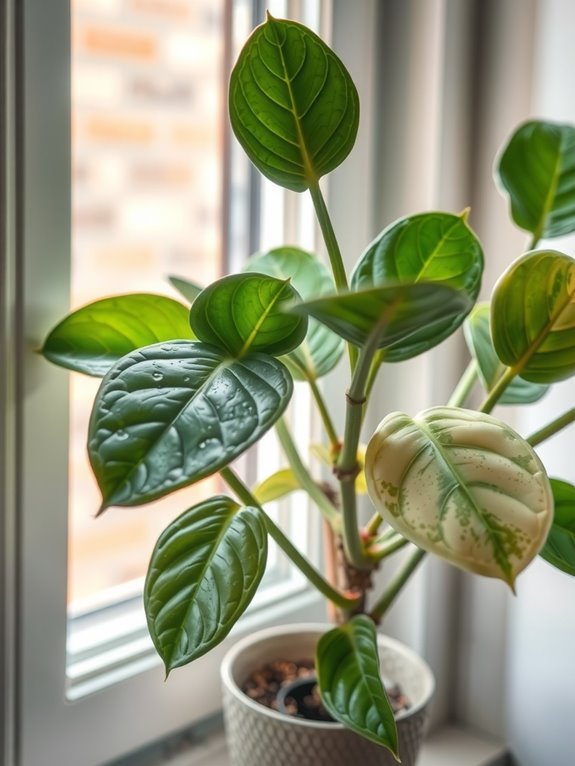
Not all Scheffleras are created equal—the variety you own matters more than you might think when it comes to keeping it healthy. Understanding the specific needs of each type helps you give your plant exactly what it needs.
Schefflera Amate
Keep temperatures between 60–80°F for best results. Water when 50–75% of the soil has dried out. During the growing season, feed your plant once a month. This variety tends to be the pickiest about its conditions, so stick to this routine consistently.
Schefflera Arboricola
This variety is more flexible with light—it handles lower light conditions better than Amate. Let the soil dry out completely before watering. The trade-off is that it needs more humidity to prevent legginess, so mist it regularly or place it on a pebble tray filled with water.
Variegated Arboricola
Expect slower growth with this variety. It tolerates medium to low light without suffering. Water only when 75% of the soil feels dry—this type prefers drier conditions than the standard Arboricola. Since growth is naturally slower, you’ll feed it less frequently than other varieties.
Pruning All Varieties
Prune regularly to maintain shape and encourage branching. Remove no more than 30% of the plant at once. Cutting away more than this can stress the plant and slow its recovery. Space out heavy pruning across multiple sessions if you need to remove significant growth.