Step 1: Get the Lighting and Temperature Right
Position your bromeliad where it gets bright indirect light. South or west-facing windows work well for this. Keep the plant away from temperature extremes—avoid placing it near heating vents, air conditioning units, or drafty windows. Room temperature between 60 and 75 degrees Fahrenheit is ideal.
Step 2: Water Correctly
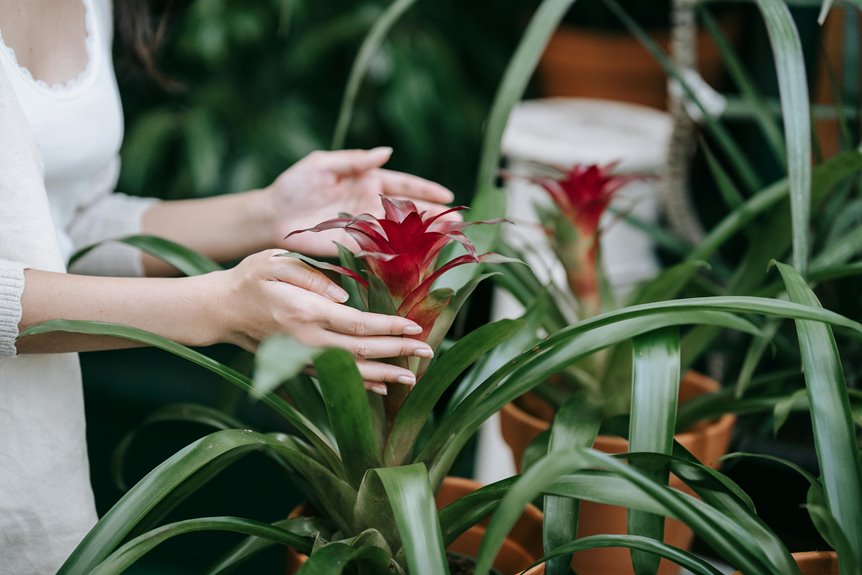
Bromeliads need water in two places. Fill the central cup (called the rosette) with water and keep it topped off. Empty out any stagnant water sitting in the cup every few days to prevent rot. Water the soil directly when it feels dry to the touch. Don’t let the soil stay soggy, but don’t let it dry out completely either.
Step 3: Watch for Brown Leaves****
Browning leaves usually mean one of two things: watering problems or dry air. If you see brown tips or edges, mist your plant every few days to increase humidity. Check your drainage to make sure water isn’t pooling around the roots. Both low humidity and poor drainage cause leaf damage, so address whichever issue applies to your setup.
Step 1: Get the Light and Temperature Right
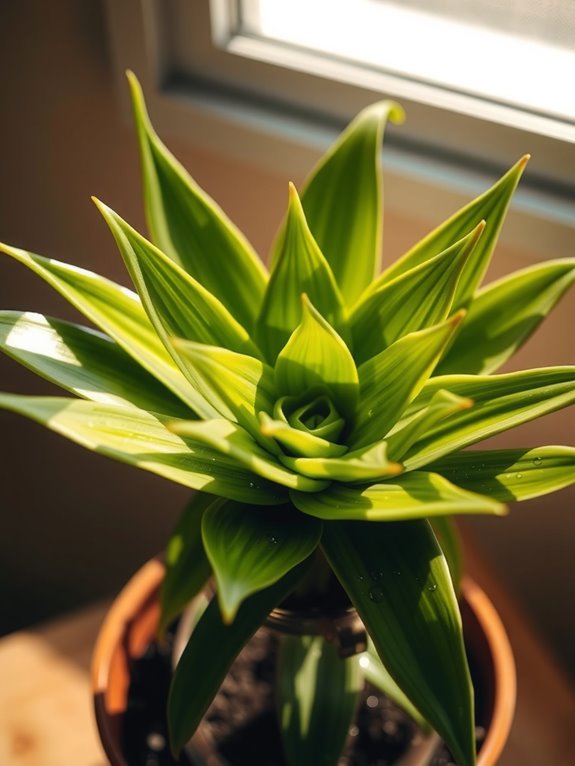
Light is important for bromeliads because it directly affects flowering, pup formation, and overall growth. Position your plants in bright indirect light to match their natural habitat in forest canopies. Place them near south or west-facing windows, but keep them away from direct afternoon sun, which can burn the leaves.
Different varieties have different light needs. Colorful, rosier types require stronger light to develop their vibrant pigmentation and produce blooms. The softer green varieties can manage with less light. If your home doesn’t get enough natural light, especially during winter months, set up grow lights to keep your plants healthy and encourage flowering.
Temperature control matters just as much. Keep your bromeliads in moderate conditions and avoid extreme heat or cold. This balanced approach to both light and temperature creates the right environment for your plants to grow well.
Step 2: Master the Watering Schedule (Soil and Central Cup)
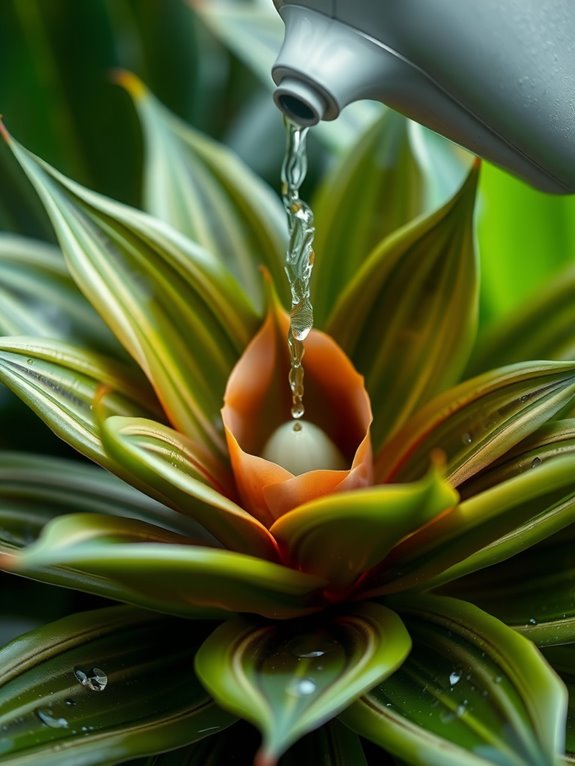
How do you know if your bromeliad’s getting the right amount of water? The answer depends on your plant type and where you live.
Tank-type bromeliads need their central cup filled and kept full. Non-tank bromeliads are different—let the soil dry between waterings and water the soil directly instead of the cup. When you water, soak the soil thoroughly and make sure the pot has at least one drainage hole.
If you’re growing bromeliads indoors, skip cup watering altogether. Water the soil and mist the plant 2–3 times per week instead.
Your climate matters. In dry climates, keep the cup about half full. In humid climates, fill it only one-quarter full to prevent rot from sitting water. When temperatures drop during cooler months, water less often—roughly every two months—and keep the cup nearly dry.
Getting this balance right stops rot and other moisture problems from developing.
Step 3: Troubleshoot Browning Leaves and Common Problems
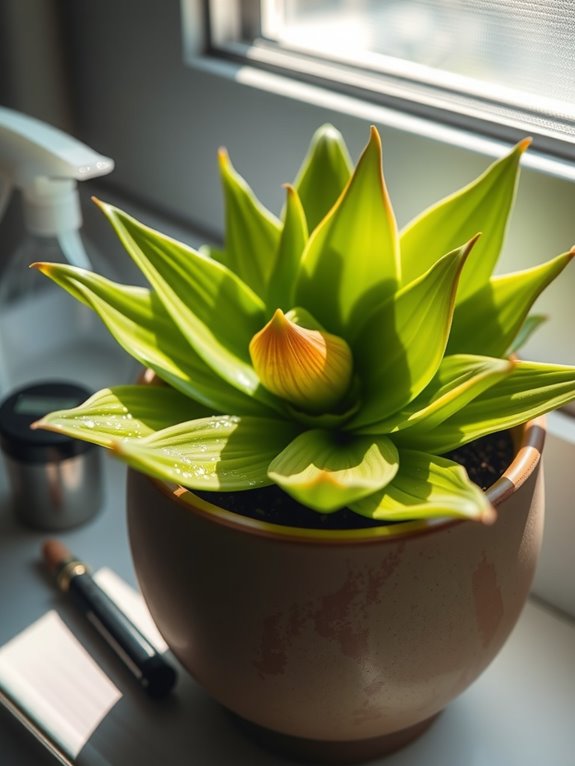
Browning leaves on your bromeliad signal that something needs your attention. The good news is that identifying and fixing the problem is straightforward.
Start by checking your watering habits. Bromeliads are sensitive to water sitting in their central cup. Empty any stagnant water and make sure your pot drains properly. Overwatering is one of the most common mistakes and leads directly to root rot and crown rot.
Low humidity causes the leaf tips to brown first. If you notice browning at just the tips, increase your misting routine. Mist your bromeliad every few days or place it on a pebble tray filled with water to raise the humidity around the plant.
If the browning spreads across entire leaves, check your roots. Wilting combined with yellowing usually means root rot. Remove the plant from its pot, inspect the roots for dark, mushy spots, and trim away any damaged roots with clean scissors. Repot the plant in fresh, well-draining soil and cut back on watering.
Poor airflow traps moisture and promotes disease. Prune away any dead leaves at the base of the plant to open up the interior. This simple step improves circulation and makes it easier to spot other problems.
If your bromeliad is sitting in a dim corner, move it to a brighter spot. Bromeliads need moderate to bright indirect light. A location near a window without direct afternoon sun works well.
Monitor your plant for the next few weeks. Brown leaves won’t turn green again, but new growth should come in healthy. If browning continues, review each of these points again. Usually, the problem stems from one of these factors.