
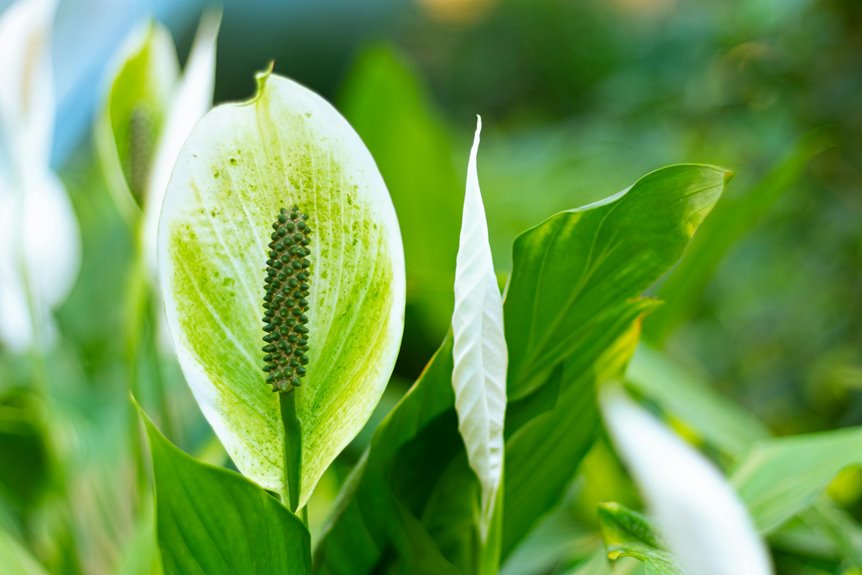
To care for your Easter lily, place it in bright, indirect light and keep temperatures between 60–70°F during the day and 55–60°F at night.
Water weekly when the top inch of soil feels dry, keeping it evenly moist but not soggy.
Remove the pollen-covered anthers from the center of each flower. This prevents yellow stains on petals and furniture, and it helps extend how long the blooms last.
Deadhead spent flowers as soon as they wilt, but leave the green stems and leaves in place. These continue to feed the bulb and support next year’s growth.
Apply diluted fertilizer every two to three weeks while the plant is blooming. Follow the package instructions for the correct dilution ratio.
If you have cats, keep this plant out of reach. Easter lilies are toxic to cats and can cause serious harm if ingested.
Once frost danger passes in your area, transition the plant outdoors gradually. Move it outside over six to seven days, starting in a sheltered spot with filtered light. This adjustment period prevents shock. Outdoor growing encourages summer blooms and sets up the bulb to flower again next year.
Choose a Healthy Easter Lily Plant
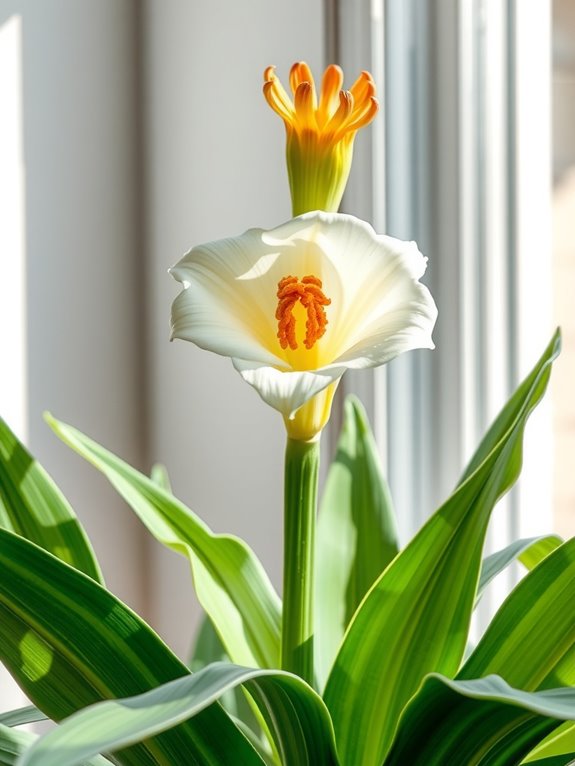
When you’re shopping for an Easter lily, look at the plant’s overall structure first. Pick one that’s compact with dark green foliage and lance-shaped leaves. The stems should be sturdy and thick, extending down the stalk with healthy leaves attached throughout.
Check the flower buds next. You want to see at least 1–2 open blooms already flowering, plus several unopened buds clustered on the plant. The open flowers should measure around 2–3 inches tall. This mix of open and closed buds means the plant is actively growing and will produce more flowers indoors for 2–3 weeks after you bring it home.
Inspect the plant for signs of weakness before you buy it. Look at the leaves closely—they should be bright green with no wilting, yellowing, or spotting. The stems should feel firm when you gently touch them. A healthy Easter lily in good condition will perform better in your home than a plant showing signs of stress.
Provide Easter Lilies Bright, Indirect Light
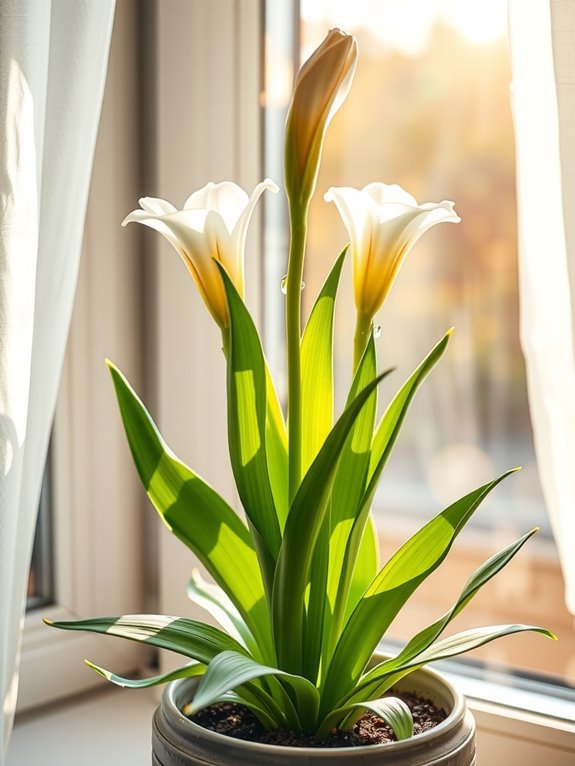
Where should you put your Easter lily to keep it healthy? Place it in a location with bright, indirect light. Position your plant near a sunny window, but avoid direct sun exposure that can damage the delicate flowers and leaves.
Think of a spot where sunlight filters through sheer curtains or reaches your lily without beating down on it directly. East-facing or north-facing windows work better than south or west-facing ones, which get strong afternoon sun that shortens how long your blooms last.
Pair this lighting setup with mild air movement and cooler temperatures between 60 and 65 degrees Fahrenheit. Check your plant regularly for signs that it’s not getting enough light. Legginess (tall, thin growth) or fading blooms both signal that your lily needs a brighter spot. Moving it to a location with more light will help extend its flowering period.
Keep Easter Lilies Cool (60–70°F Days, 55–60°F Nights)
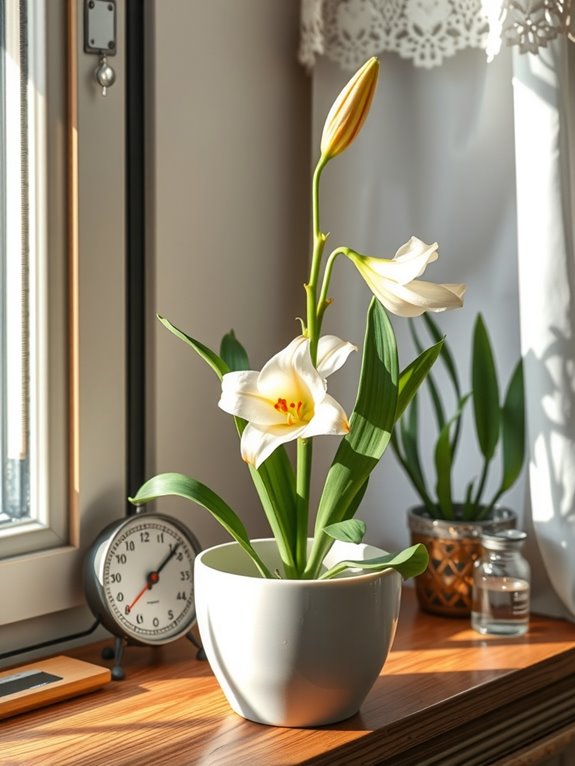
Why does temperature matter so much for your Easter lily? The right temperatures let your plant grow properly and produce flowers. Daytime temperatures between 60–70°F keep your Easter lily in its comfort zone, while cooler nights around 55–60°F help flowers last longer and reduce stress on the plant. You’ll see real results with consistent, cooler conditions.
| Temperature Range | Time of Day | What Happens |
|---|---|---|
| 60–70°F | Daytime | Optimal growth conditions |
| 55–60°F | Nighttime | Extended blooms, reduced stress |
| Above 70°F | Any time | Shortened flower life |
| Below 55°F | Nighttime | Plant damage risk |
| Fluctuating | All day | Increased plant stress |
Keep your lily away from hot or cold drafts. Place it in a bright location where the temperature stays steady throughout the day and night. Stable conditions directly extend how long your flowers will last.
Water Your Easter Lily Weekly
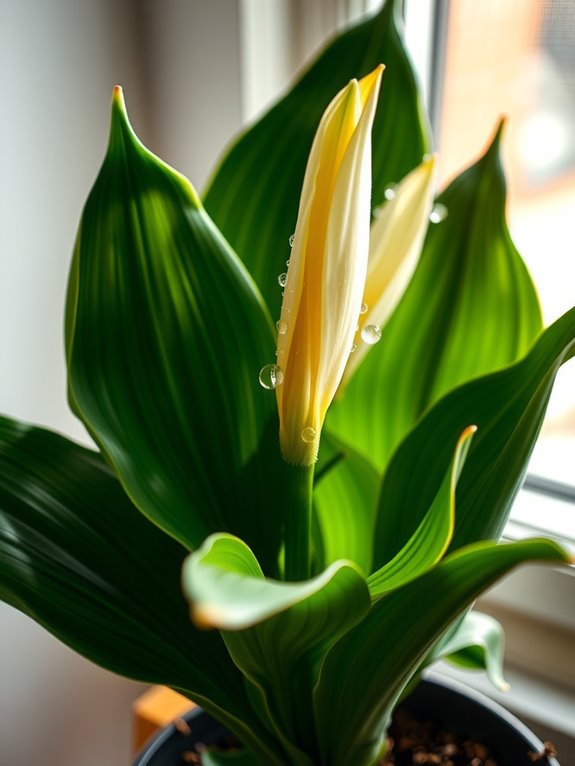
Water your Easter lily about once a week. The goal is to keep the soil evenly moist, but not wet.
Water your Easter lily weekly, aiming for evenly moist soil—never soggy.
Before you water, remove the decorative foil wrapper from the pot. This step matters because water needs to drain through the holes at the bottom. Without drainage, the soil stays too wet and the roots rot.
Water the plant thoroughly until water flows out the bottom of the pot. Let all that excess water drain completely before you do anything else. Once drainage stops, you can put the foil wrapper back on to protect your furniture and floors.
Between waterings, let the top inch of soil dry out a bit. When the soil feels dry to the touch at the surface, that’s when you water again. This cycle of slight drying between waterings keeps your lily in good condition and helps it produce blooms.
Remove Pollen-Covered Anthers to Prevent Stains and Extend Blooms
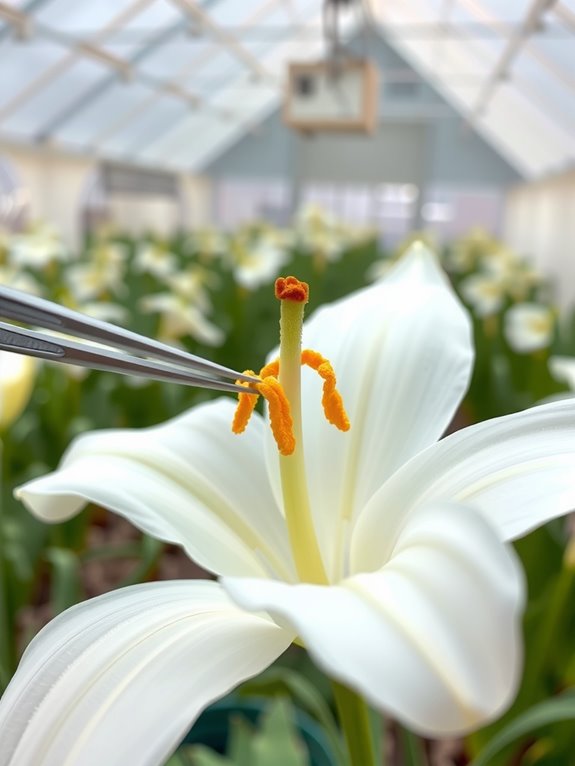
Remove the pollen-covered anthers from your Easter lily flowers using clean, sharp scissors or fingernail clippers. This prevents orange stains on your furniture and clothing.
To do this, pinch or cut away the anther tips carefully. The anthers are the small, pollen-laden parts at the center of the flower. Work slowly so you don’t damage the petals around them.
Removing the anthers has an added benefit: your flowers will last longer. Without the anthers, the blooms won’t shed pollen and will stay fresh for several more days. This protects both your plant’s appearance and your home from mess.
Anther Removal Technique
One simple step keeps your Easter lily looking good while extending its blooms: removing the pollen-covered anthers from the center of each flower. You’ll prevent yellow stains on delicate petals and reduce pollen transfer to surrounding surfaces.
Wait until flowers are fully open but still firm, not drooping. Gather clean, sharp scissors or pruning shears. Carefully snip each anther at its base without touching the filament. Remove all anthers from the flower’s center. Dispose of pollen safely away from fabrics.
Work gently to avoid damaging the flower’s structure. The process doesn’t affect bulb health, so your plant will continue to do well. Once you’ve removed the anthers, continue with regular watering and indirect light.
Bloom Longevity Benefits
Why does removing anthers matter so much for your Easter lily’s display? Pollen removal directly impacts how long your blooms last by preventing stains on your furniture, clothes, and nearby surfaces. When you snip those pollen-covered anthers early, you’re protecting your home while extending your flowers’ lifespan.
| Benefit | Result |
|---|---|
| Reduced staining | Cleaner indoor surfaces |
| Extended bloom time | Longer-lasting flowers |
| Less pollen fallout | Easier maintenance |
Flowers without anthers last longer indoors because the plant puts less energy into pollen production. Instead, it directs those resources toward keeping your blooms fresh and vibrant. This straightforward step lets you enjoy your Easter lily display for weeks rather than days.
Here’s what happens when you remove the anthers: The yellow pollen sacs sit at the tip of the stamen in the center of the flower. Use a small, clean pair of scissors or tweezers to carefully snip off each anther before the flower fully opens. Do this as soon as you notice the anthers turning yellow. You’ll see a noticeable difference in how long each bloom stays in good condition and how clean your surfaces stay throughout the flower’s lifespan.
Remove Dead Flowers to Keep Easter Lilies Fresh
Once your Easter lily’s blooms start to fade, remove them promptly. This keeps the plant looking neat and prevents pollen from staining your furniture or clothes. As you deadhead the spent flowers, pinch or cut them off at the base where the bloom meets the stem.
Leave the green stems and leaves on the plant. These continue to gather sunlight and send energy back down to the bulb. This process is what allows your lily to store nutrients for regrowth later.
After deadheading, focus on the basics. Place your lily in bright, indirect light for at least six hours daily. Water when the top inch of soil feels dry to the touch. Once a month, apply a balanced, water-soluble fertilizer mixed at half strength. These simple steps give your bulb the conditions it needs to rebloom in future seasons.
Timing of Flower Removal
How long should you let those beautiful Easter lily blooms stick around? You’ll want to remove spent flowers as soon as they fade, which typically takes about one to two weeks.
Remove petals once they begin to wilt or lose color. Snip the pollen-covered anthers immediately to prevent orange pollen from staining your furniture and clothes. The pollen drops easily and stains permanently, so this step matters.
Cut flowers at the base when they’ve completely faded. Leave the green stems and leaves intact because they support bulb health and help store energy for next season’s growth.
Check daily for new flowers ready for removal. By staying on top of dead blooms, you’ll keep your plant looking healthy while protecting your surfaces and clothing.
Extending Plant Appearance
Removing those faded blooms keeps your Easter lily looking good and helps the plant long-term. When you deadhead spent flowers, you stop the plant from making seeds. Instead, it sends energy toward stronger foliage and a healthier bulb. A stronger bulb gives you better chances for flowers next year.
While you’re caring for the plant, place it in bright light and keep the soil evenly moist. The soil should feel damp, not waterlogged. Every two to three weeks, apply a diluted fertilizer to support new leaf growth. Mix the fertilizer according to the package directions, usually at half or quarter strength.
Once all the green growth dies back, cut the dead stems down to soil level. Remove the entire stem rather than leaving stubs behind. These steps work together to help your plant recover and get ready for next season.
Feed Easter Lilies After Blooms Drop
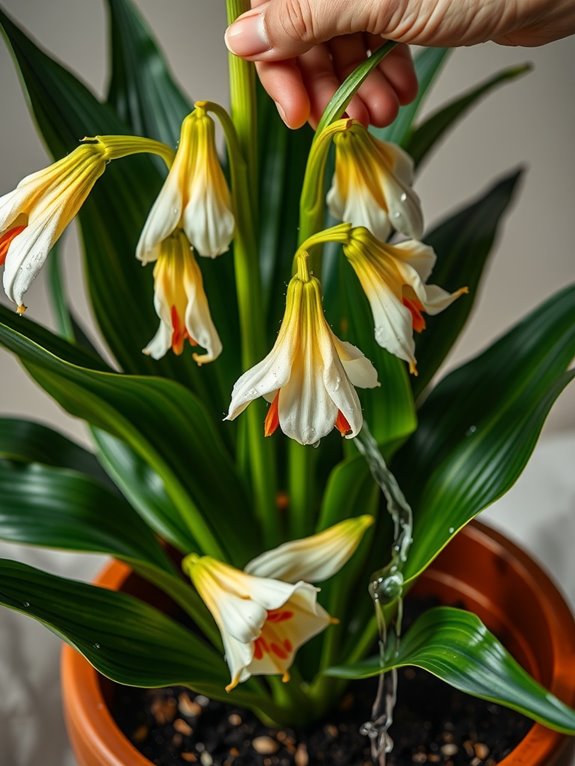
When those beautiful flowers finally drop, don’t just toss the whole plant aside. You’re at a point where you can keep your lily healthy and even encourage it to bloom again next year.
What to Do Right After the Blooms Fall****
Remove the spent flowers by pinching or cutting them off where they connect to the stem. Leave the green stems and leaves alone. These parts feed your bulb and store energy for next season’s flowers. Cutting them back too early will weaken your plant.
Leave green stems and leaves intact—they feed your bulb and store energy for next season’s blooms.
Watering and Light
Water your lily when the top inch of soil feels dry to the touch. The soil should stay evenly moist but never soggy or waterlogged. Place your plant in a bright location where it gets good light for several hours each day. This supports the green growth happening above ground.
Feeding Your Plant
Every 2 to 3 weeks, apply a balanced fertilizer mixed at half strength. Use a 10-10-10 formula or similar balanced option. Water your plant first, then apply the dilute fertilizer solution. This regular feeding helps replenish the nutrients your plant used during blooming.
Your attention to watering and feeding during these weeks directly affects whether you’ll see flowers next season. The stems and leaves are doing important work underground, so keeping them healthy matters.
Is Your Easter Lily Safe for Cats?
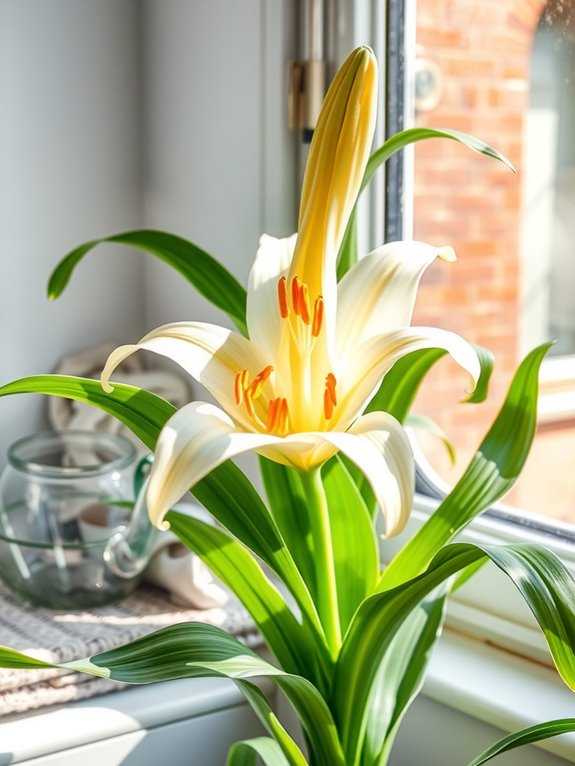
Easter lilies are toxic to cats. Even small amounts can cause serious health problems, so you need to act right away if you have cats at home.
Your first option is to keep the lily in a room your cat cannot access. Close the door and make sure your cat has no way to get in. If you don’t have a suitable room, move the plant to a cat-free area entirely—a garage, basement, or a friend’s house works well.
Cats are curious and will nibble on leaves and flowers if they get the chance. Removing temptation is the simplest way to prevent accidental poisoning.
You can also reduce the risk by removing the anthers, which are the pollen-producing parts at the center of each flower. Use clean scissors or your fingers to snip these off carefully. This step lowers exposure since pollen can drop onto surfaces and your cat might ingest it during grooming.
The safest approach combines both methods: keep the lily out of reach and remove the anthers for extra protection.
Toxicity And Cat Health
Lilies are extremely toxic to cats, and you shouldn’t have one of these plants in your home if you share your space with feline friends.
If your cat consumes any part of a lily, contact your veterinarian immediately. The toxicity of lilies poses serious health risks to your pets.
What You Need to Know
All parts of the lily plant are dangerous to cats—the petals, stems, leaves, pollen, and even the water in the vase. Even small amounts can cause severe harm. Symptoms may develop quickly after ingestion, sometimes within a few hours. This is why immediate veterinary care is essential if you suspect your cat has eaten any part of a lily.
How to Protect Your Cat
Prevention is your best option. Remove lilies from your home entirely. If you already own an Easter lily or any other lily variety, keep it completely out of reach in a locked room or cabinet where your cat cannot access it.
Instead, choose non-toxic plants for your space. Ask your veterinarian for a list of cat-safe plants, or check with your local garden center for alternatives that won’t put your pet at risk.
Your cat’s safety depends on your vigilance. Stay alert for signs of exposure, and act quickly if you think your cat has come into contact with lilies.
Protective Plant Placement Strategies
Now that you know lilies are toxic to cats, you need to decide where to put your Easter lily where your cat cannot reach it. Pick a location that stays completely out of your pet’s access.
| Placement Option | Safety Level | Best For |
|---|---|---|
| High shelf or plant stand | Excellent | Active cats |
| Closed room | Excellent | Curious kittens |
| Hanging basket | Good | Determined climbers |
| Locked cabinet | Excellent | Persistent cats |
Choosing Your Placement Strategy
A high shelf works well for active cats. Place the plant at least 5 feet high on a sturdy shelf or plant stand that won’t tip if your cat jumps near it. Make sure the shelf is not close to furniture your cat could use as a jumping platform.
A closed room is one of the safest options. Keep the lily in a room you can lock or keep shut at all times. This method works especially well if you have curious kittens that investigate everything.
Hanging baskets keep plants out of reach but require sturdy installation. Hang the basket from a ceiling hook rated for at least 10 pounds. Position it away from countertops, shelves, or other high surfaces your cat might jump from.
A locked cabinet provides the highest level of protection. Use a cabinet with a reliable lock or latch. This option works best for cats that are determined jumpers or climbers.
The key is creating a real barrier between your cat and the plant. Pick whichever method fits your home and your cat’s behavior best.
Will Your Easter Lily Bloom Again?
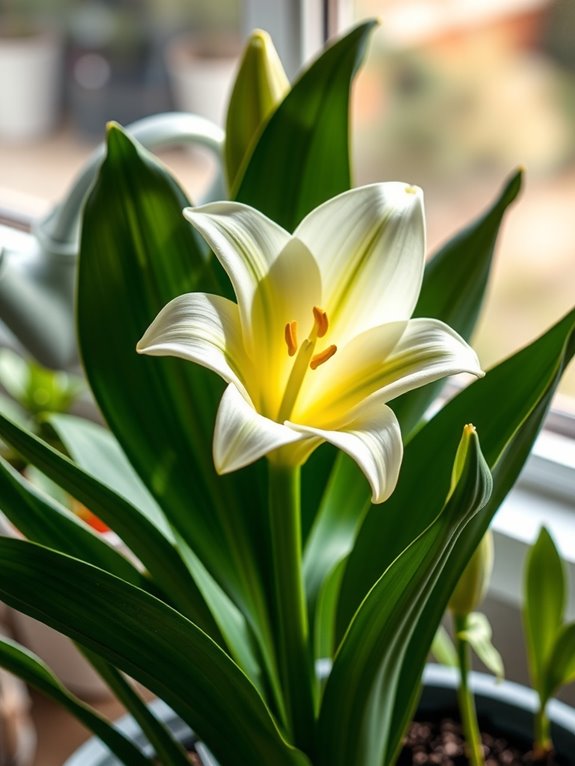
Will Your Easter Lily Bloom Again?
Can you get your Easter lily to flower a second time? Yes. Here’s what to do.
Remove the spent blooms
Once the flowers fade, pinch or cut them off at the base. Leave the green stems and leaves on the plant. These parts continue to feed the bulb underground, which you’ll need for next year’s flowers.
Provide proper light and temperature****
Place your lily in bright, indirect light. A windowsill that gets morning sun but afternoon shade works well. Keep daytime temperatures between 60–70°F and nighttime temperatures between 55–60°F. Cooler nights actually help with blooming.
Feed the bulb regularly
Apply a balanced fertilizer every 3 to 4 weeks while the plant is still green. Follow the package directions for how much to use. Feeding now builds up energy in the bulb for next season.
Move it outdoors when safe
After the last frost date in your area passes, plant your lily in the garden. Choose a spot with afternoon shade and well-draining soil. Some lilies rebloom in summer under good conditions, but most produce their main flowers in spring of the following year.
Don’t throw away the plant after the flowers drop. With these steps, your Easter lily becomes a perennial that comes back year after year.
Plant Outdoors After the Danger of Frost Passes
Once frost danger has passed in your area, you can move your Easter lily outside. Pick a spot that gets full sun and space the plants 12–18 inches apart.
Before you leave them outside permanently, harden your lilies over 6–7 days. This means gradually exposing them to outdoor conditions so they adjust without shock. Start by putting them outside for a few hours each day, then slowly increase the time over the week.
Easter lilies grow well in USDA Zones 5–11. They may survive in Zone 4 if you give them winter protection. Water your plants regularly once they’re in the ground, and fertilize them 1–2 times each month with dilute fertilizer. This feeding helps push new blooms. You’ll typically see flowers in July.
As temperatures drop in fall, spread mulch around the base of each plant. This layer protects the roots during the cold months and supports blooms in the following year.
Harden Easter Lilies to Outdoor Conditions (6–7 Days)
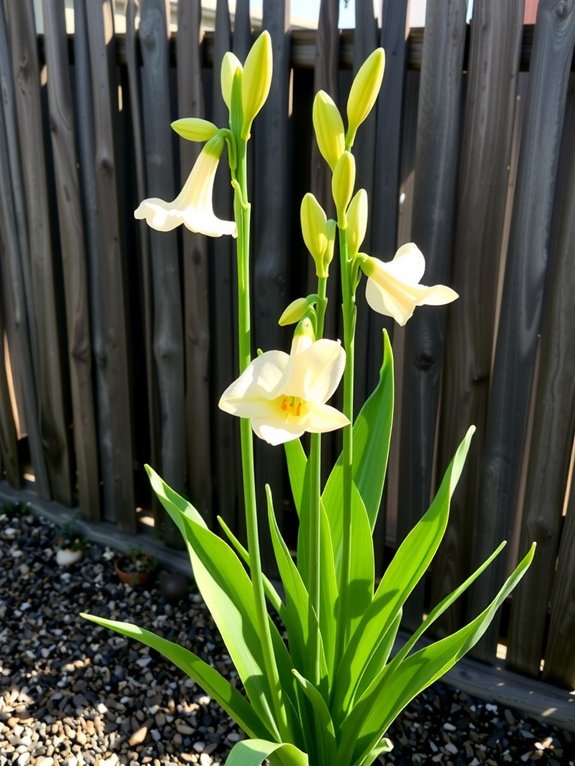
Before you plant your Easter lilies directly in the ground, you need to prepare them for outdoor living through a process called hardening. This 6–7 day transition helps your lilies adjust to outdoor conditions after the frost danger has passed.
Harden your Easter lilies over 6–7 days to help them adjust to outdoor conditions after frost danger passes.
Start by placing your lilies in a sheltered, shaded location. Over the next week, gradually increase their sun exposure each day. This means moving them from shade on day one, to partial sun by day three or four, to full sun by day six or seven. The gradual approach prevents shock and stress to the plants.
Water your lilies regularly throughout this entire process. Check the soil daily and water when the top inch feels dry. Feed them with a balanced, moderate-strength fertilizer every other day to support the transition. As you progress through the week, move your plants a bit closer to their final outdoor spot each day.
Once hardening is complete after 6–7 days, space your lilies 12–18 inches apart in their permanent outdoor location. This spacing allows them to develop strong bloom clusters without competing for nutrients or air circulation.