Keep your ivy in bright indirect light near a window with a sheer curtain. This prevents the leaves from scorching while giving the plant the light it needs to grow properly.
Water when the top quarter-inch of soil feels dry to the touch. Make sure your pot has drainage holes so water doesn’t sit at the bottom and rot the roots.
Mist your ivy two to three times per week to add moisture to the air. Ivy plants prefer higher humidity than most indoor environments naturally provide.
Trim the longest stems every few weeks during the growing season, which runs from spring through early fall. This encourages bushier, fuller growth instead of long, leggy vines.
Feed your ivy monthly with half-strength fertilizer during spring and summer only. Skip fertilizing in fall and winter when the plant grows more slowly.
Keep temperatures between 60 and 75 degrees Fahrenheit. Position your ivy away from heating vents, air conditioning units, and drafty windows, as sudden temperature changes stress the plant.
Different ivy varieties have their own specific needs, and care requirements shift with the seasons. Learning these details will help you maintain healthier plants over time.
What Healthy Ivy Actually Needs
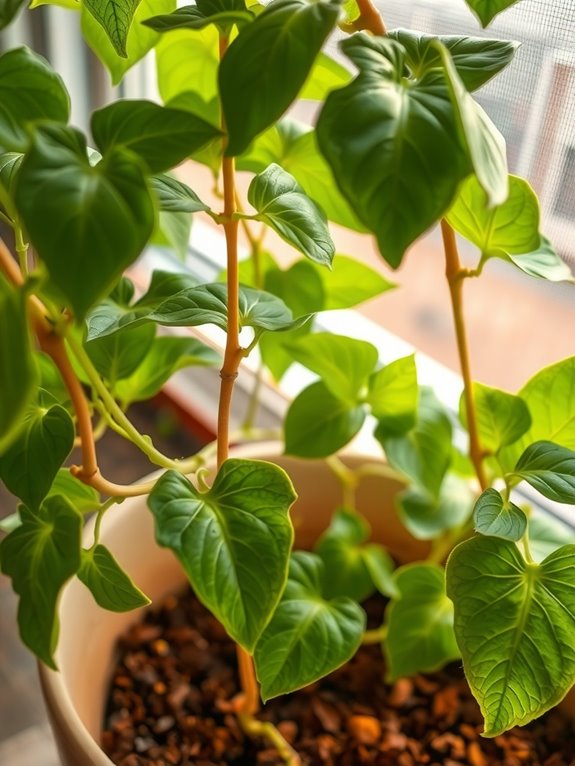
Getting your ivy to grow well comes down to handling a few basic care tasks correctly.
Light Requirements
Place your ivy where it gets bright indirect light. A spot near a window with a sheer curtain works well. The plant will develop fuller growth in good light, but it can handle lower light conditions if needed.
Watering
Water when the top quarter to half inch of your potting soil feels dry to the touch. This approach prevents both underwatering and root rot. Always use a pot with drainage holes at the bottom so excess water can escape. Check the soil every few days during growing season since pot size and room temperature affect how quickly it dries out.
Humidity and Leaf Care****
Mist your ivy with water two to three times per week to raise humidity around the leaves. Every month or so, rinse the leaves under lukewarm running water or wipe them with a damp cloth to remove dust buildup.
Pruning
Trim the longest stems every few weeks during the growing season to keep the plant bushy and compact. Use clean scissors and cut just above a leaf node. This regular pruning prevents the plant from becoming leggy and encourages it to fill out sideways instead of just growing upward.
Choosing the Right Ivy Variety for Your Home
Which ivy variety will work in your home depends on three main factors: how much light your space gets, what temperature stays consistent there, and how often you can tend to the plant. Pick the variety that matches your actual conditions.
Choosing the right ivy variety requires matching three factors: your space’s light, temperature consistency, and your ability to maintain the plant regularly.
Canary Island Ivy works best in rooms that stay between 60-75°F with bright indirect light. This option suits spaces with stable temperatures and reliable light sources near windows.
English Ivy is flexible with light and handles various conditions, but it grows strongest when placed near a window with indirect light. It adapts reasonably well to different room setups.
English Ivy Glacier handles temperature shifts from 45-80°F, making it your best choice if your home has unpredictable climate swings from season to season or room to room.
Algerian Ivy adapts to temperatures between 50-80°F and tolerates lower light areas. Growth will be slower in dim spots, but the plant will still survive.
If you pick a variegated variety—one with lighter or patterned leaves—place it in a brighter location. These types need more light to keep their color patterns visible. Lower light will fade their appearance.
All ivies do better with consistent humidity and regular misting to keep leaves healthy. Don’t guess at what conditions you have. Check your actual light levels throughout the day, measure your room temperature over a week, and be honest about how often you’ll mist. Pick the variety that fits what you can actually provide, not what sounds appealing. Your success depends on this match.
Light, Water & Temperature: Creating the Ideal Environment
Now that you’ve picked the right ivy variety for your home, you need to create the right conditions. Here’s what to do.
Place your ivy near a window where it gets bright indirect light. The plant will grow more slowly in lower light, but it will still survive. Water when the top quarter to half of the soil feels dry to your touch. Keep the soil slightly damp—not wet and not bone dry. Good drainage prevents root rot, so make sure your pot has drainage holes.
Humidity matters, especially in winter when indoor air gets dry. Mist your ivy two to three times per week, or set the pot on a tray filled with pebbles and water. The water should not touch the bottom of the pot. This creates humidity around the leaves without waterlogging the roots.
Temperature swings stress ivy plants. Keep your home between 50°F and 80°F. Move the plant away from cold windowsills, heating vents, and drafty doors. These spots cause leaves to drop and slow growth.
Prune your ivy regularly to control how far it spreads and to encourage bushier, fuller growth. Pinch back new growth at the tips, or cut stems back to a leaf node with clean scissors. This directs the plant’s energy toward side branches instead of just upward growth.
Humidity and Misting: The Often-Forgotten Essential
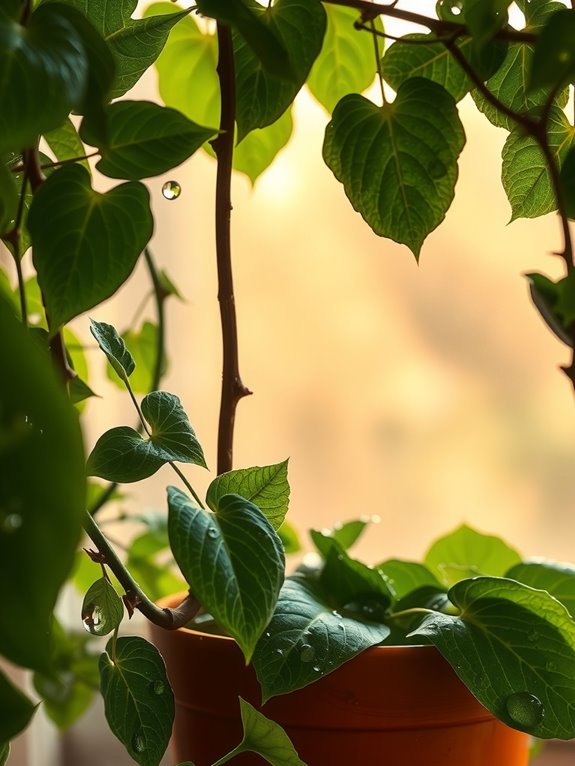
Your ivy needs consistent moisture in the air to stay healthy. Mist the leaves daily with room-temperature water. This mimics the humid conditions where ivy naturally grows.
To increase humidity around your plant, use a humidity tray. Place pebbles in a shallow dish and add water until it just reaches the bottom of the pot. As the water evaporates, it raises the moisture level around your plant.
Balance is important here. While ivy likes humidity, wet foliage invites fungal problems. Mist in the morning so leaves have time to dry during the day. This gives you the moisture your plant needs without creating conditions where fungus can take hold.
Daily Misting Best Practices
Misting your ivy plant daily keeps it healthy by improving humidity levels, reducing pest problems, and promoting better leaf growth. A consistent routine makes a real difference in how well your plant performs.
How to mist effectively
Use room-temperature water and apply it in a fine mist rather than soaking the leaves. Spray all the foliage gently, but skip the crown and stems where water can collect and cause rot. Avoid misting when direct sunlight hits your plant, since wet leaves in bright light can develop brown scorch marks.
Adjusting your routine
During winter or in dry indoor environments, mist more often to prevent leaf browning. Your plant needs extra humidity during these periods to stay healthy.
Combining misting with other humidity methods
Pair your misting routine with a humidifier or a pebble tray placed nearby. Fill a tray with pebbles and water, then set your plant pot on top so the water evaporates around the leaves. This keeps humidity levels high between misting sessions and creates the moisture-rich environment ivy needs.
Humidity Tray Setup Methods
While misting handles the immediate moisture needs of your ivy, a humidity tray works quietly in the background to maintain consistent moisture in the air around your plant. It’s one of the easiest setups you can create.
| Step | Action | Purpose |
|---|---|---|
| 1 | Fill a shallow tray with water and pebbles | Creates an evaporation surface |
| 2 | Place your pot on the pebbles, not directly in the water | Prevents root rot while allowing pot drainage |
| 3 | Refill the tray as water evaporates | Keeps humidity levels steady indoors |
| 4 | Pair this setup with your regular misting routine | Increases moisture your ivy receives |
Set up your humidity tray in a bathroom or kitchen where humidity is already higher. This location works with your tray rather than against it. Use a tray that’s at least 2-3 inches deep and wide enough to hold your pot plus a few inches of space on all sides. Add pebbles until they reach about halfway up the tray’s depth, then pour in water until it reaches the base of the pebbles but doesn’t cover them completely.
The combination of a humidity tray and regular misting creates a moist microclimate around your ivy. Water evaporates from the tray throughout the day, surrounding your plant with more moisture than typical indoor air provides. This mimics the conditions ivy experiences in its natural habitat and keeps humidity levels consistent year-round without requiring constant attention from you.
Feeding Your Ivy Through the Growing Season
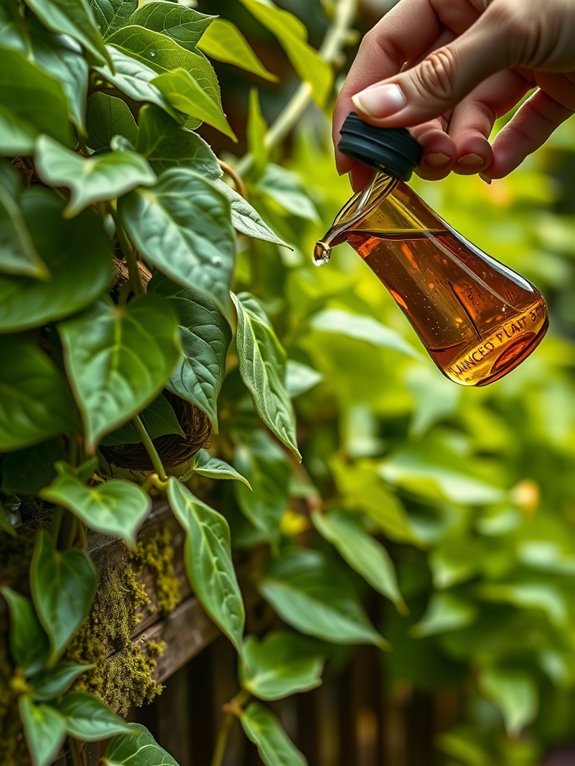
How often should you fertilize your ivy? Your feeding schedule depends on your ivy variety, but establishing a routine during the growing season keeps your plant healthy.
Follow these feeding guidelines:
- Feed common ivy once monthly at half-strength with balanced 20-20-20 fertilizer
- Apply fertilizer twice monthly for Canary Island, English, and Glacier varieties during spring and summer
- Stop feeding entirely during fall and winter rest periods
Before applying any fertilizer, water your soil first. Damp soil prevents root burn and helps your ivy absorb nutrients more effectively. Skipping this step can damage roots and reduce how well your plant takes in the fertilizer.
Pair your fertilizer routine with regular pruning and trimming. This maintains a bushier appearance and stops your ivy from becoming overcrowded. The work you put in during the growing season directly affects how full and healthy your plant becomes.
When Something Goes Wrong: Troubleshooting Common Ivy Problems
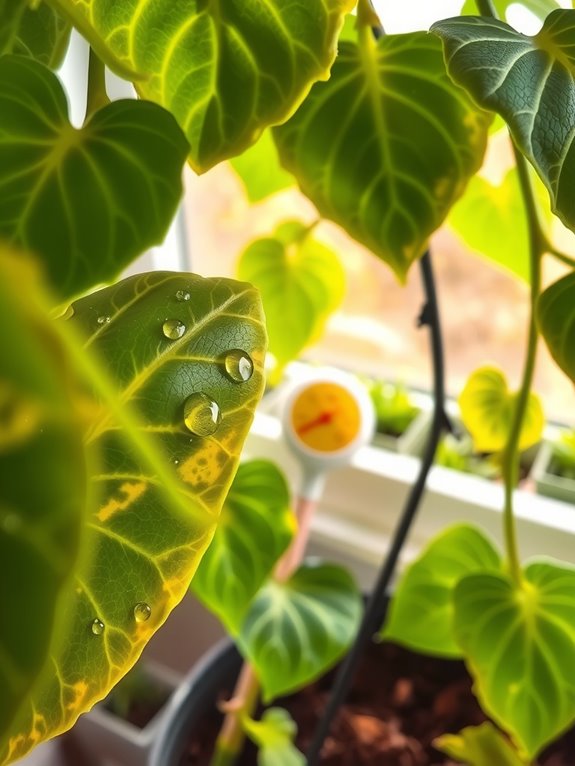
Even with proper care, your ivy can develop problems that affect how it looks and performs. Leggy growth—long stems with sparse leaves—signals insufficient light. Move your plant to a brighter spot, especially if you’re growing variegated ivy, which loses its color in dim conditions.
Check your watering habits next. Root rot indicates overwatering. Water only when the top 25-50% of soil feels dry to the touch, and make sure your pots have drainage holes so excess water can escape.
Prune overly long stems to keep your ivy full and bushy while supporting healthier growth. Regular misting is also important. Mist your ivy once or twice a week to maintain the humidity it prefers, particularly in dry indoor spaces.
When you trim your ivy, save those cuttings. Place them in a glass of water to develop roots, which takes about two to four weeks. Once roots form, plant them in soil to grow new ivy plants.
Address problems as soon as you notice them. The faster you act, the more quickly your ivy recovers.
Pruning and Training Ivy for Controlled Growth
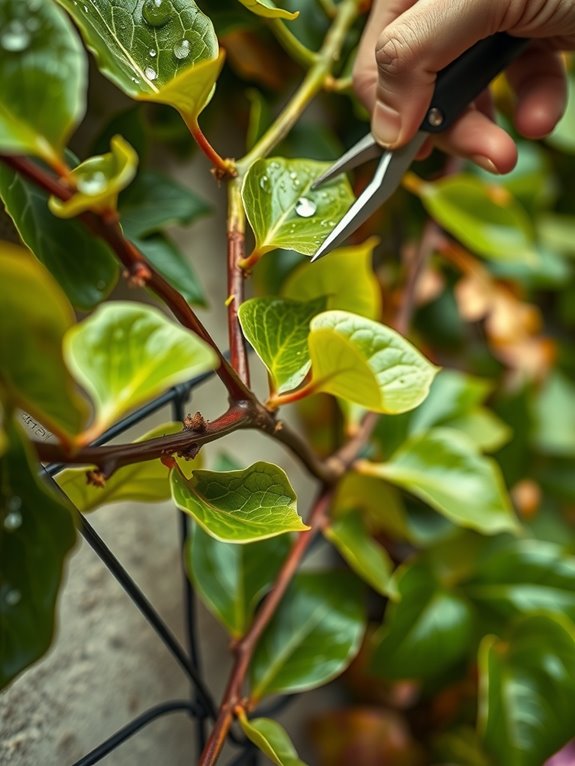
Use sharp scissors to trim your ivy’s longest stems regularly throughout the year. This keeps the plant full and bushy instead of thin and leggy. Make cuts about a quarter-inch above a leaf node, which is where new growth will emerge.
Prune every few weeks during the growing season to prevent trailing vines from spreading too far across walls or taking over your indoor space. This also stops aerial roots from attaching to and marking surfaces like paint or wallpaper.
After you prune, guide the remaining stems along supports or surfaces to direct how the ivy grows and spreads. You can use soft ties or clips to train vines onto trellises, stakes, or along wall-mounted guides. This training gives you control over the plant’s shape and prevents it from sprawling in unwanted directions.
Trimming For Bushier Growth
Regular pruning keeps ivy plants dense and well-shaped instead of letting them sprawl wildly. When you trim strategically, you encourage side shoots that create fuller, more compact growth.
The Monthly Trimming Routine****
Use sharp pruning shears to snip the longest stems once a month during spring and summer. Cut back trailing vines near your desired structure or support system. This redirects the plant’s energy toward new, branching growth instead of extending in one direction.
Removing Leggy Growth
Leggy sections—those long, bare stretches with sparse leaves—drain resources from the rest of the plant. Cut these areas back to encourage the plant to branch out and fill in. You’ll notice denser foliage developing within two to three weeks after you remove these problem spots.
Getting More Plants from Your Trimmings
Collect the cuttings you remove and root them in water. Once roots develop, pot them up. This gives you evenly shaped plants to fill in gaps or start new displays.
Why Sharp Tools Matter
Dull shears crush stems instead of cutting cleanly, damaging the plant tissue and slowing regrowth. Sharp blades make quick, clean cuts that heal faster and encourage healthy new shoots. A consistent pruning schedule keeps your ivy looking intentional and well-maintained, not neglected or overgrown.
Managing Trailing Vine Length
How long should you let your ivy vines grow before cutting them back? The answer depends on your goals and how much space you have. Trim trailing vines regularly to prevent them from taking over and to keep them looking neat and controlled.
| Growth Stage | Vine Length | Action | Frequency |
|---|---|---|---|
| Early growth | Under 12 inches | Monitor only | Weekly |
| Active growth | 12-18 inches | Light trimming | Bi-weekly |
| Established | 18+ inches | Strategic pruning | Monthly |
| Overgrown | 24+ inches | Major cutback | As needed |
Start monitoring your ivy when it first begins growing. Check it weekly to see how fast it’s moving. At this stage, you’re just watching to get a feel for the plant’s pace.
Once your ivy reaches 12 to 18 inches, begin light trimming every two weeks. Snip off the tips of longer stems to guide growth in the direction you want. This keeps the plant from getting leggy and spindly.
When your ivy is established at 18 inches or longer, switch to strategic pruning once a month. Cut back stems more deliberately to shape the plant and control its spread. By this point, you’re training the plant to grow along specific structures or in particular patterns.
If your ivy gets away from you and reaches 24 inches or longer, do a major cutback whenever it happens. Remove thick sections of vine and trim back to where you want new growth to start. Don’t hesitate to cut hard. Ivy recovers well from aggressive pruning.
A regular pruning schedule prevents your plant from becoming overgrown and messy. It also encourages fuller, bushier growth rather than long, thin stems. By cutting throughout the year, you keep your ivy in the shape and size you want for your space.
Propagating Ivy From Cuttings
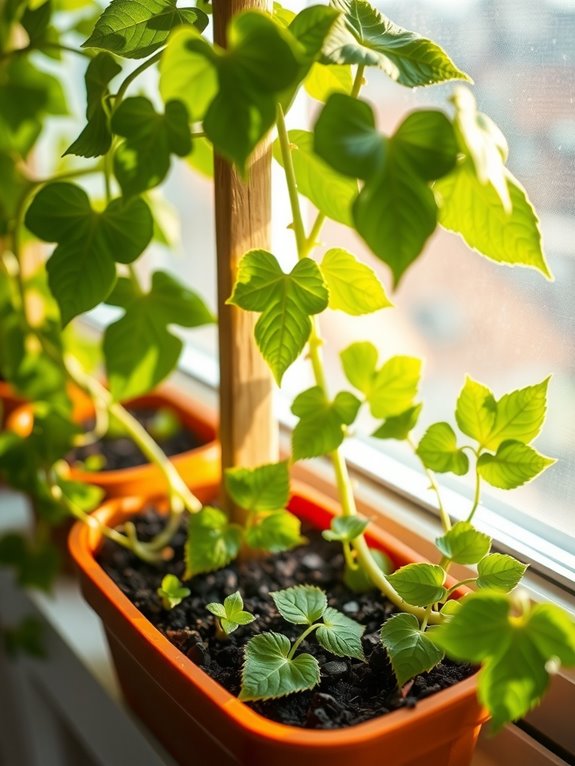
One of the easiest ways to grow new ivy plants is by taking cuttings from a healthy parent plant. You can do this successfully from February through September.
Growing new ivy plants from cuttings is one of the simplest propagation methods, achievable from February through September.
Prepare Your Cuttings
Cut sections that are 10-15 cm long with 3-4 leaves each. Remove the excess lower leaves so the plant directs its energy toward rooting rather than supporting foliage.
Set Up Your Pot
Fill a pot with moist potting soil. Keep the soil loose and airy instead of packing it down tight. Compacted soil makes it harder for roots to develop.
Plant Your Cuttings
Insert each cutting into the soil so the leaves sit above the surface. The nodes where you removed lower leaves should be buried in the soil, as this is where new roots will form.
Create a Humid Environment
Cover your pot with a perforated plastic bag. This traps moisture around the cuttings and speeds up root development. Make sure the bag has small holes so air can still circulate.
Maintain Moisture and Monitor Progress
Keep the soil consistently moist throughout the rooting process. Check it every few days and add water if the top feels dry. Within a few weeks, you should see new roots starting to form at the base of your cuttings.
Transition to Regular Care
Once roots develop, gradually remove the plastic bag over several days. Start by opening it for a few hours each day, then leave it off completely. Move your young ivy plants to regular care conditions once they’re established.
Best Temperature Ranges for Ivy Growth
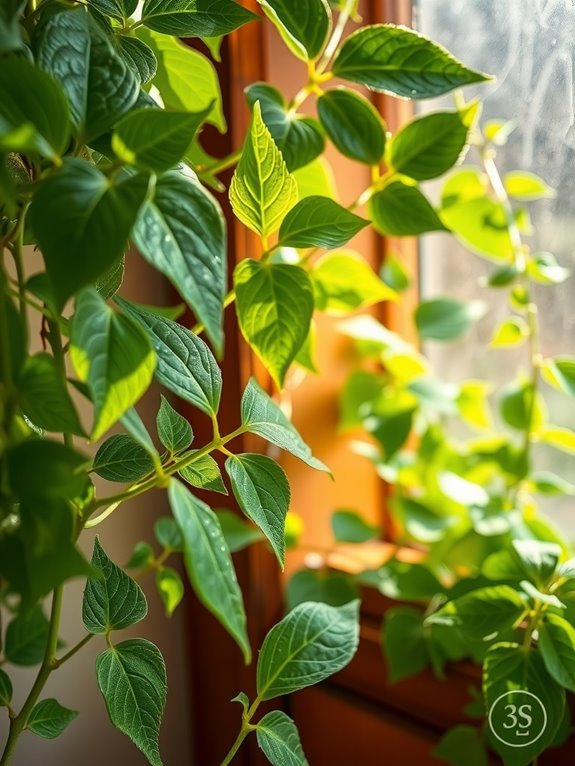
Why do some ivy plants thrive in your home while others struggle? Temperature stability is the answer. Most ivy varieties prefer 50°F to 70°F. Canary Island Ivy needs warmer conditions around 60–75°F. English Ivy Glacier tolerates cooler ranges between 45–80°F. Algerian Ivy adapts well from 50–80°F.
Keep temperatures consistent and avoid drafts near windows or vents. Sudden temperature swings stress your ivy, causing leaf burn and slowed growth. Stay away from heat sources like radiators and air conditioning vents. These environmental stressors weaken your plant’s ability to stay healthy.
Monitor your home’s temperature throughout the day. Adjust your ivy’s placement as seasons change. Move it away from direct drafts and heat sources. This attention to temperature keeps your ivy growing steadily with healthy foliage.
Seasonal Care: Adjusting Your Routine Year-Round
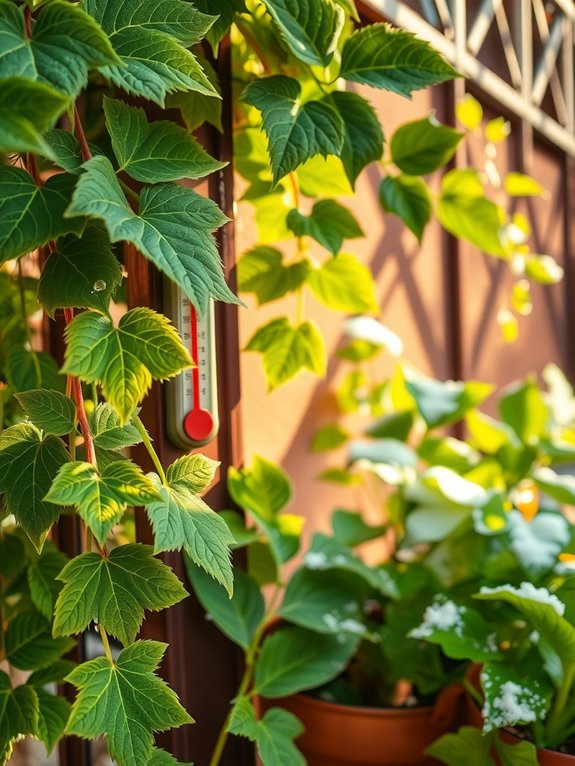
Your ivy’s needs change with each season, and adjusting your care routine keeps it healthy year-round. Different seasons bring different growth patterns and environmental conditions that affect how you water, light, and manage humidity.
Spring and Summer
During these months, your ivy grows faster and needs more water. Water more frequently, but always check that the soil feels dry before adding more. Provide bright indirect light—place your plant near a window with a sheer curtain between it and direct sun. Heat during these months dries out the air, so mist your ivy 2-3 times per week or place the pot on a humidity tray filled with pebbles and water.
Fall
Growth slows as temperatures drop. Reduce watering gradually—wait until the top inch of soil is dry before watering again. Keep your ivy in the same bright indirect light it had in summer. Humidity levels naturally decrease as heating systems kick in, so monitor your plant for dry leaf tips.
Winter
Water sparingly since your ivy is mostly dormant. Check soil moisture by pushing your finger about an inch into the soil. Only water when it feels dry at that depth. Days are shorter, so make sure your plant still receives bright indirect light, even if that means moving it closer to a window. Add a humidity tray or mist twice weekly to combat indoor heating dryness.
Year-Round Care
Prune actively during spring and summer when your ivy grows. Repot in early spring before the growing season starts, using a pot only 1-2 inches larger than the current one. Keep temperatures between 60-75°F and avoid placing your ivy near heating vents or drafty windows.